seamus dubhghaill

Promoting Irish Culture and History from Little Rock, Arkansas, USA


Leave a comment

Annie Moore Becomes First Immigrant Processed Through Ellis Island

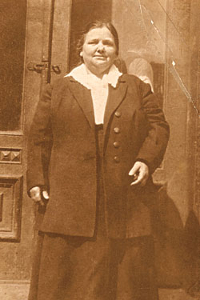
On January 1, 1892, Annie Moore, a 15-year-old Irish émigré from County Cork, becomes the first immigrant to the United States to pass through federal immigrant inspection at the Ellis Island station in New York Harbor.

Over 12 million immigrants are processed at the station that eventually closes in 1954. Third class and steerage passengers are processed at the Ellis Island station. First- and Second-class passengers are generally processed on the boats they arrive on as they are seen to be of lesser “risk.”

Moore arrives from County Cork aboard the Guion Line steamship Nevada in 1892. Her brothers, Anthony and Philip, who journey with her, have just turned 15 and 12, respectively. As the first person to pass inspection at the newly opened facility, she is presented with an American $10 gold piece from an American official.

Moore’s parents, Matthew and Julia, had come to the United States in 1888 and were living at 32 Monroe Street in Manhattan. Annie marries a son of German Catholic immigrants, Joseph Augustus Schayer (1876-1960), a salesman at Manhattan’s Fulton Fish Market, with whom she has eleven children, five of whom survive to adulthood. The rest all die before the age of three.

Moore dies of heart failure on December 6, 1924, at age 47 and is buried in Calvary Cemetery, Queens. Her previously unmarked grave is identified in August 2006. On October 11, 2008, a dedication ceremony is held at Calvary which celebrates the unveiling of a marker for her grave, a Celtic cross made of Irish blue limestone.

A woman named “Annie Moore” who died near Fort Worth, Texas, in 1924 had long been thought to be the one whose arrival marked the beginning of Ellis Island. Further research, however, establishes that the Annie Moore in Texas was born in Illinois.

The Irish American Cultural Institute presents an annual Annie Moore Award “to an individual who has made significant contributions to the Irish and/or Irish American community and legacy.” She is also honored by two statues sculpted by Jeanne Rynhart. One stands at Cobh Heritage Centre (formerly Queenstown), her port of departure, and another at Ellis Island, her port of arrival. The image is meant to represent the millions who pass through Ellis Island in pursuit of the American dream.

(Pictured: Statue of Annie Moore and her brothers on the quayside in Cobh, County Cork)

Leave a comment

Birth of Charlotte Grace O’Brien

charlotte-grace-obrien

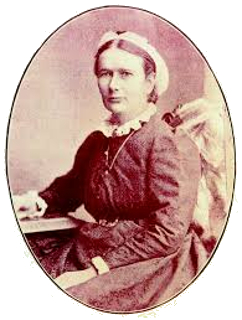
Charlotte Grace O’Brien, author, philanthropist, plant collector, and activist in nationalist causes and the protection of female emigrants, is born on November 23, 1845, at Cahirmoyle, County Limerick.

O’Brien is the younger daughter in a family of five sons and two daughters of William Smith O’Brien, Irish nationalist, and his wife Lucy Caroline, eldest daughter of Joseph Gabbett, of High Park, County Limerick. Upon her father’s return in 1854 from the penal colony in Tasmania, she rejoins him in Brussels and stays there until his removal to Cahirmoyle in 1856. Upon her mother’s death in 1861 she moves with her father to Killiney, near Dublin, and is his constant companion until his death at Bangor, Gwynedd in 1864.

From 1864 O’Brien lives at Cahirmoyle with her brother Edward, tending his motherless children, until his remarriage in 1880. She then goes to live at Foynes on the River Shannon and there devotes herself to literary pursuits. She has already published in 1878 her first novel, Light and Shade, a tale of the Fenian rising of 1867, the material for which had been gathered from Fenian leaders. A Tale of Venice, a drama, and Lyrics appear in 1880.

By 1881 her interests and pen are absorbed in Irish political affairs, in which she shares her father’s opinions. She contributes articles to the Nineteenth Century on The Irish Poor Man (December 1880) and Eighty Years (March 1881). In the spring of 1881, the attitude of the liberal government towards Ireland leads her to address many fiery letters to The Pall Mall Gazette, then edited by John Morley.

Another interest, however, soon absorbs O’Brien’s activities. The disastrous harvest in Ireland in 1879, combined with Irish political turmoil, leads to much emigration to the United States. At Queenstown, the port of embarkation, female emigrants suffer much from overcrowded lodgings and robbery. She not only induces the board of trade to exercise greater vigilance but also founds in 1881 a large boarding-house at Queenstown for the reception and protection of girls on the point of emigrating.

In order to improve the steamship accommodations for female emigrants, and to study their prospects in America, O’Brien makes several steerage passages to America. She also establishes in New York a similar institution to that in Queenstown for the protection of girls. Many experiences during this period find expression in her Lyrics (Dublin, 1886), a small volume of poems, which gives simple pictures of the emigrants and contains some stirring nationalist ballads.

On her retirement from active public work in 1886, O’Brien returns to Ardanoir, Foynes, on the bank of the Shannon, devoting her leisure to writing and to study of plant life. She contributes much on the flora of the Shannon district to the Irish Naturalist and joins the Roman communion in 1887.

Charlotte Grace O’Brien dies on June 3, 1909, at Foynes, and is buried at Knockpatrick. Selections from her Writings and Correspondence is published at Dublin in 1909. Her verses have dignity and grace, her polemical essays are vigorous and direct, and her essays on nature charm by their simple style.


8 Comments

Birth of Philanthropist Vere Foster

Vere Henry Louis Foster, English educationist and philanthropist is born in Copenhagen on April 25, 1819.

Foster is the third son of Sir Augustus John Foster, 1st Baronet and his wife, Albinia Jane, daughter of George Vere Hobart, and granddaughter of George Hobart, 3rd Earl of Buckinghamshire. He is educated at Eton College, and matriculated at Christ Church, Oxford, on May 30, 1838.

Leaving Oxford without a degree, Foster joins the diplomatic service. From 1842 to 1843 he is attached to the diplomatic mission of Sir Henry Ellis in Rio de Janeiro, and from 1845 to 1847 to that of Sir William Gore Ouseley in Montevideo.

In 1847 Foster visits a family estate in County Louth, Ireland at the time of the Great Famine, with his eldest brother, Sir Frederick George Foster. They become involved in famine relief. In 1848 their father dies and Foster undergoes a crisis in his life, and he comes to concentrate on philanthropy in Ireland.

Foster makes three voyages to the United States as a steerage passenger in a ship of emigrants, finding the accommodations bad, and the treatment of emigrants exploitative. Through his cousin Vere Hobart, Lord Hobart, he is able to influence parliament and the Passengers Act 1851. He also takes practical steps to promote Irish emigration to the United States.

Later, Foster takes up the improvement of education in Ireland. This is a time of Catholic suspicion of the national education system introduced by Richard Whately. Foster contributes to the provision of better school accommodation and apparatus, and gives grants in aid of building several hundred new school-houses. He agitates for improved wages and conditions for teachers, and develops the “Vere Foster copy-books” to improve and standardise the teaching of writing. The immense popularity of these texts draw him to the Belfast printing firm Marcus Ward & Company, and into personal friendship with John Ward, one of the firm’s owners.

In 1867, Foster settles permanently in Belfast where he continues to work as the president of the Congress of the Irish National Teachers’ Organisation. He fundraises for the Royal Belfast Hospital, and helps to establish a school of art in the town, while continuing to promote emigration.

In 1879, with the Land War in Ireland, Foster concentrates on promoting female emigration to the United States and the British colonies. He is supported in his projects by both Catholic and Protestant clergy.

Vere Foster dies, unmarried, in Belfast on December 21, 1900. He is buried in Belfast City Cemetery.


Leave a comment

Annie Moore Departs Queenstown for the United States

annie-moore

Fifteen-year-old Annie Moore departs Queenstown, now Cobh, County Cork, on December 20, 1891, and becomes the first immigrant to the United States to pass through the Ellis Island facility in New York Harbor.

Her parents, Matthew and Julia Moore, had come to the United States in 1888 and are living at 32 Monroe Street in Manhattan. Moore departs from Queenstown aboard the S.S. Nevada, one of 148 steerage passengers. Accompanied by her brothers, Anthony and Philip, she spends twelve days at sea, including Christmas Day, arriving in New York City on Thursday evening, December 31. It is reported that her arrival is on her 15th birthday, but records in Ireland reveal that her birthday is in May, and she is actually seventeen.

Ellis Island officially opens on January 1, 1892, and, as the first person to be processed at the newly opened facility, Moore is presented with an American $10 gold piece from an American official. All three children are soon reunited with their parents in New York. From 1820 to 1920, more than 4 million people leave their native shores of Ireland bound for the Port of New York and a new life in America.

Moore marries a son of German immigrants, Joseph Augustus Schayer, an employee at Manhattan’s Fulton Fish Market, with whom she has at least eleven children. She dies of heart failure on December 6, 1924, and is buried in Calvary Cemetery, Queens. Her previously unmarked grave is identified in August 2006. On October 11, 2008, a dedication ceremony is held at Calvary which celebrates the unveiling of a marker for her grave, a Celtic cross made of Irish Blue Limestone.

The Irish American Cultural Institute presents an annual Annie Moore Award “to an individual who has made significant contributions to the Irish and/or Irish American community and legacy.” Moore’s story is told in the song “Isle of Hope, Isle of Tears,” written by Brendan Graham. The song has been performed by Ronan Tynan and by The Irish Tenors, of which Tynan was formerly a member. Other artists performing the song include Seán Keane, Sean & Dolores Keane, Daniel O’Donnell, Celtic Thunder, Irish tenor Brian Dunphy, Celtic Woman, and Tommy Fleming.

A woman named “Annie Moore” who died near Fort Worth, Texas in 1924 had long been thought to be the one whose arrival marked the beginning of Ellis Island. Further research, however, established that the Annie Moore in Texas was born in Illinois.


Leave a comment

RMS Titanic Arrives At Queenstown

The RMS Titanic arrives at Queenstown, known today as Cobh, in County Cork on April 11, 1912, at 11:30 AM. The ship, on her maiden and only voyage, anchors two miles offshore at Roches Point as the port cannot accommodate a ship of its size. Queenstown is the last port of call for RMS Titanic prior to her transatlantic crossing.

Tenders are necessary to ferry goods and passengers from ship to shore and vice versa. One hundred twenty-three passengers are waiting on the White Star Line pier to board the tenders Ireland and America. Of the 123 passengers, three are traveling first class, seven are traveling second class, and the remainder are traveling third class (steerage). Seven passengers disembark at Queenstown.

After the passengers board, the tenders proceed to the deep-water quay to load 1,395 sacks of mail as well as many emigrants. The two tenders travel out to the anchored RMS Titanic to offload the mail.

At 1:30 PM, with all passengers and mail now on board, RMS Titanic gives three mighty blasts of her whistles signaling she is now ready to depart. The anchors are raised, and the engines slowly turn over. The ship makes a graceful turn to starboard and heads back out into the Irish Sea destined for her next port of call, New York City, where she is scheduled to arrive early the following Wednesday morning.

Of the 123 passengers who embark at Queenstown, only 44 survive the disaster of the horrible night of April 15, 1912.

(Pictured: The RMS Titanic as she departs Queenstown, quite possibly the last photograph ever taken of the liner)