seamus dubhghaill

Promoting Irish Culture and History from Little Rock, Arkansas, USA


Leave a comment

Premiere of Oliver Goldsmith’s Play “The Good-Natur’d Man”

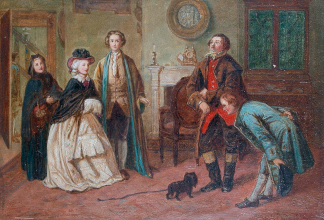
The Good-Natur’d Man, a play written by Oliver Goldsmith in 1768, is first performed at Central London’s Covent Garden on January 29, 1768. The play is written in the form of a comedy with Mary Bulkley as Miss Richland. It is released at the same time as Hugh Kelly‘s False Delicacy, staged at Drury Lane Theatre. The two plays go head-to-head, with Kelly’s proving the more popular. Goldsmith’s play is a middling success, and the printed version of the play becomes popular with the reading public.

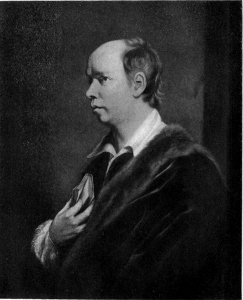
Although his birth date and year and birthplace are not known with any certainty, it is believed that Goldsmith is born on November 10, 1728, in Kilkenny West, County Westmeath. He is an Anglo-Irish essayist, poet, novelist, dramatist, and eccentric, made famous by such works as the series of essays The Citizen of the World, or, Letters from a Chinese Philosopher (1762), the poem The Deserted Village (1770), the novel The Vicar of Wakefield (1766), and the play She Stoops to Conquer (1773).

Goldsmith is the son of an Anglo-Irish clergyman, the Rev. Charles Goldsmith, curate in charge of Kilkenny West. At about the time of his birth, the family moves into a substantial house at nearby Lissoy, where he spends his childhood. Much has been recorded concerning his youth, his unhappy years as an undergraduate at Trinity College Dublin, where he received the BA degree in February 1749, and his many misadventures before he leaves Ireland in the autumn of 1752 to study in the medical school at Edinburgh. By this time his father has died, but several of his relations support him in his pursuit of a medical degree. Later on, in London, he comes to be known as Dr. Goldsmith, Doctor being the courtesy title for one who holds the Bachelor of Medicine, but he takes no degree while at Edinburgh nor, so far as anyone knows, during the two-year period when, despite his meagre funds, which are eventually exhausted, he somehow manages to make his way through Europe. The first period of his life ends with his arrival in London, bedraggled and penniless, early in 1756.

Goldsmith’s rise from total obscurity is a matter of only a few years. He works as an apothecary‘s assistant, school usher, physician, and as a hack writer, reviewing, translating, and compiling. Much of his work is for Ralph Griffiths‘s Monthly Review. It remains amazing that this young Irish vagabond, unknown, uncouth, unlearned, and unreliable, is yet able within a few years to climb from obscurity to mix with aristocrats and the intellectual elite of London. Such a rise is possible because he has one quality, soon noticed by booksellers and the public, that his fellow literary hacks do not possess – the gift of a graceful, lively, and readable style.

Goldsmith’s rise begins with the Enquiry into the Present State of Polite Learning in Europe (1759), a minor work. Soon he emerges as an essayist, in The Bee and other periodicals, and above all in his Chinese Letters. These essays are first published in the journal The Public Ledger and are collected as The Citizen of the World in 1762. The same year brings his The Life of Richard Nash. Already he is acquiring those distinguished and often helpful friends whom he alternately annoys and amuses, shocks and charms – Samuel Johnson, Sir Joshua Reynolds, Thomas Percy, David Garrick, Edmund Burke, and James Boswell.

The obscure drudge of 1759 becomes in 1764 one of the nine founder-members of the famous The Club, a select body, including Reynolds, Johnson, and Burke, which meets weekly for supper and talk. Goldsmith can now afford to live more comfortably, but his extravagance continually runs him into debt, and he is forced to undertake more hack work. He thus produces histories of England and of ancient Rome and Greece, biographies, verse anthologies, translations, and works of popular science.

Goldsmith’s premature death on April 4, 1774, may be partly due to his own misdiagnosis of a kidney infection. He is buried in Temple Church in London. A monument is originally raised to him at the site of his burial, but this is destroyed in an air raid in 1941. A monument to him survives in the centre of Ballymahon, also in Westminster Abbey with an epitaph written by Samuel Johnson.

Among Goldsmith’s papers is found the prospectus of an encyclopedia, to be called the Universal dictionary of the arts and sciences. He wishes this to be the British equivalent of the Encyclopédie and it is to include comprehensive articles by Samuel Johnson, Edmund Burke, Adam Smith, Edward Gibbon, Sir Joshua Reynolds, Sir William Jones, Charles James Fox and Dr. Charles Burney. The project, however, is not realised due to Goldsmith’s death.

(Pictured: “Mr Honeywell introduces the bailiffs to Miss Richland as his friends,”a scene from the play “The Good-Natur’d Man” by Oliver Goldsmith, oil on panel by William Powell Frith)
Leave a comment

Birth of John Kyan, Inventor in Wood Preservation

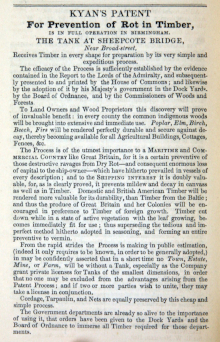
kyans-patent

John Howard Kyan, inventor of the ‘kyanising’ process for preserving wood, is born on November 27, 1774, in Dublin. His father, also John Howard Kyan, is the owner of valuable copper mines in County Wicklow. He is educated to take part in the management of the mines, but soon after he enters the company its fortunes decline, and in 1804 his father dies almost penniless.

For a time, Kyan is employed at some vinegar works at Newcastle upon Tyne, but subsequently removes to London. The decay of the timber supports in his father’s copper mines had already directed his attention to the question of preserving wood, and as early as 1812 he begins experiments with a view to discovering a method of preventing the decay. Eventually he finds that bichloride of mercury or corrosive sublimate, as it is commonly called, gives the best results and, without revealing the nature of the process, he submits a block of oak impregnated with the substance to the Admiralty in 1828. It is placed in the ‘fungus pit’ at Woolwich, where it remains for three years exposed to all the conditions favourable to decay. When taken out in 1831, it is found to be perfectly sound, and after further trials it still remains unaffected.

Kyan patents his discovery in 1832 (Nos. 8263 and 6309), extending the application of the invention to the preservation of paper, canvas, cloth, cordage, etc. A further patent is granted in 1836 (No. 7001).

The process attracts great attention. Michael Faraday chooses it as the subject of his inaugural lecture at the Royal Institution on February 22, 1833, on his appointment as Fullerian professor of chemistry. Dr. George Birkbeck gives a lecture upon it at the Royal Society of Arts on December 9, 1834, and in 1835 the Admiralty publishes the report of a committee appointed by the board to inquire into the value of the new method.

In 1836, Kyan sells his rights to the Anti-Dry Rot Company, an Act of Parliament being passed which authorises the raising of a capital of £250,000. Tanks are constructed at Grosvenor Basin, Pimlico, at the Grand Surrey Canal Dock, Rotherhide, and at the City Road Basin.

Among the early applications of the process is the kyanising of the palings around the Inner Circle, Regent’s Park, which is carried out in 1835 as an advertisement with small brass plates being attached to the palings at intervals stating that the wood has been submitted to the new process. The plates soon disappear, but the original palings still remain in good condition.

The timber used in building the Oxford and Cambridge Club, British Museum, Royal College of Surgeons, Westminster Bridewell, the new roof of the Temple Church, and the Ramsgate harbour works is also prepared by Kyan’s process. When wooden railway ties become general, a very profitable business for Kyan’s company is anticipated, and for a time these hopes are realised.

It becomes evident that iron fastenings cannot be used in wood treated with corrosive sublimate, on account of the corrosive action, and it is said that the wood becomes brittle. The salt is somewhat expensive and Sir William Burnett‘s method of preserving timber by zinc chloride, and afterwards the application of creosote for that purpose, proves severe competitors. Doubts begin to be expressed as to the real efficiency of kyanising, and the process gradually ceases to be employed.

John Kyan dies on January 5, 1850, in New York City, where he is engaged on a plan for filtering the water supplied to that city by the Croton Aqueduct.


Leave a comment

Birth of Oliver Goldsmith, Novelist, Playwright & Poet

Oliver Goldsmith, novelist, playwright and poet, is born on November 10, 1728. He is best known for his novel The Vicar of Wakefield (1766), his pastoral poem The Deserted Village (1770), and his plays The Good-Natur’d Man (1768) and She Stoops to Conquer (1771, first performed in 1773). He is thought to have written the classic children’s tale The History of Little Goody Two-Shoes (1765).

The location of Goldsmith’s birth is uncertain. He is born either in the townland of Pallas, near Ballymahon, County Longford, where his father is the Anglican curate of the parish of Forgney, or at the residence of his maternal grandparents, at the Smith Hill house near Elphin, County Roscommon. When Goldsmith is two years old, his father is appointed the rector of the parish of Kilkenny West in County Westmeath. The family moves to the parsonage at Lissoy, between Athlone and Ballymahon, and continues to live there until his father’s death in 1747.

In 1744 Goldsmith enters Trinity College, Dublin. Neglecting his studies in theology and law, he falls to the bottom of his class. In 1747, along with four other undergraduates, he is expelled for a riot in which they attempt to storm the Marshalsea Prison. He graduates in 1749 as a Bachelor of Arts, but without the discipline or distinction necessary to gain entry into a profession in the church or the law. He lives for a short time with his mother, tries various professions without success, studies medicine desultorily at the University of Edinburgh from 1752 to 1755, and sets out on a walking tour of Flanders, France, Switzerland and Northern Italy, living by his wits.

Goldsmith settles in London in 1756, where he briefly holds various jobs, including an apothecary‘s assistant and an usher of a school. Perennially in debt and addicted to gambling, Goldsmith produces a massive output as a hack writer on Grub Street for the publishers of London, but his few painstaking works earn him the company of Samuel Johnson, with whom he is a founding member of “The Club.” There, through fellow Club member Edmund Burke, he makes the acquaintance of Sir George Savile, who later arranges a job for him at Thornhill Grammar School. During this period, he uses the pseudonym “James Willington” to publish his 1758 translation of the autobiography of the Huguenot Jean Marteilhe.

In character Goldsmith has a lively sense of fun, is totally guileless, and never happier than when in the light-hearted company of children. The money that he sporadically earns is often frittered away or happily given away to the next good cause that presents itself so that any financial security tends to be fleeting and short-lived. His talents are unreservedly recognised by Samuel Johnson whose patronage aids his eventual recognition in the literary world and the world of drama.

Goldsmith is described by contemporaries as prone to envy, a congenial but impetuous and disorganised personality who once planned to emigrate to America but failed because he missed his ship. At some point around this time he works at Thornhill Grammar School, later basing the character Squire Thornhill in The Vicar of Wakefield on his benefactor Sir George Savile and certainly spending time with eminent scientist Rev. John Mitchell, whom he probably knows from London. Mitchell sorely misses good company, which Goldsmith naturally provides in spades.

Oliver Goldsmith’s premature death in 1774 may have been partly due to his own misdiagnosis of his kidney infection. He is buried in Temple Church in London. There is a monument to him in the centre of Ballymahon, also in Westminster Abbey with an epitaph written by Samuel Johnson.


Leave a comment

Death of Oliver Goldsmith, Novelist, Playwright & Poet

Oliver Goldsmith, Irish novelist, playwright, and poet best known for his novel The Vicar of Wakefield (1766), his pastoral poem The Deserted Village (1770), and his plays The Good-Natur’d Man (1768) and She Stoops to Conquer (1771, first performed in 1773), dies in London on April 4, 1774. He is thought to have written the classic children’s tale The History of Little Goody Two-Shoes (1765).

Goldsmith’s birth date and location are not known with certainty, although he reportedly tells a biographer that he was born on November 10, 1728. The location of his birthplace is either in the townland of Pallas, near BallymahonCounty Longford, where his father is the Anglican curate of the parish of Forgney, or at the residence of his maternal grandparents, at the Smith Hill House near Elphin, County Roscommon, where his grandfather Oliver Jones is a clergyman and master of the Elphin diocesan school, which is where Goldsmith studies. When Goldsmith is two years old, his father is appointed the rector of the parish of “Kilkenny West” in County Westmeath. The family moves to the parsonage at Lissoy, between Athlone and Ballymahon, and continues to live there until his father’s death in 1747.

In 1744 Goldsmith enters Trinity College, Dublin. His tutor is Theaker Wilder. Neglecting his studies in theology and law, he falls to the bottom of his class. In 1747, along with four other undergraduates, he is expelled for a riot in which they attempt to storm the Marshalsea Prison. He is graduated in 1749 as a Bachelor of Arts, but without the discipline or distinction that might have gained him entry to a profession in the church or the law. His education seems to have given him mainly a taste for fine clothes, playing cards, singing Irish airs, and playing the flute. He lives for a short time with his mother, tries various professions without success, studies medicine desultorily at the University of Edinburgh from 1752 to 1755, and sets out on a walking tour of FlandersFranceSwitzerland, and Northern Italy.

Goldsmith settles in London in 1756, where he briefly holds various jobs, including an apothecary‘s assistant and an usher of a school. Perennially in debt and addicted to gambling, Goldsmith produces a massive output as a hack writer for the publishers of London, but his few painstaking works earn him the company of Samuel Johnson, with whom he is a founding member of “The Club.” There, through fellow Club member Edmund Burke, he makes the acquaintance of Sir George Savile, who later arranges a job for him at Thornhill Grammar School. The combination of his literary work and his dissolute lifestyle leads Horace Walpole to give him the epithet “inspired idiot.” During this period, he uses the pseudonym “James Willington,” the name of a fellow student at Trinity, to publish his 1758 translation of the autobiography of the Huguenot Jean Marteilhe.

Goldsmith is described by contemporaries as prone to envy, a congenial but impetuous and disorganised personality who once planned to emigrate to America but failed because he missed his ship. At some point around this time he works at Thornhill Grammar School, later basing Squire Thornhill on his benefactor Sir George Savile and certainly spending time with eminent scientist Rev. John Mitchell, whom he probably knows from London. Mitchell sorely misses good company, which Goldsmith naturally provides in spades. Thomas De Quincey writes of him “All the motion of Goldsmith’s nature moved in the direction of the true, the natural, the sweet, the gentle.”

His premature death in 1774 is believed to have been partly due to his own misdiagnosis of a kidney infection. Goldsmith is buried in Temple Church in London. There is a monument to him in the centre of Ballymahon and also in Westminster Abbey with an epitaph written by Samuel Johnson.