seamus dubhghaill

Promoting Irish Culture and History from Little Rock, Arkansas, USA


Leave a comment

Death of Denis Santry, Architect & Cartoonist

Denis Santry, Irish architect and cartoonist, dies in Durban, South Africa, on April 14, 1960. He is a pioneer of animated cartoons in South Africa and the architect of the several prominent structures in Singapore, including the Sultan Mosque and The Cenotaph.

Santry is born in Cork, County Cork, on May 14, 1879, to Denis Santry, Sr., a carpenter and joiner. He studies at the Cork Municipal School of Art from 1894 to 1896 after serving an apprenticeship as a cabinetmaker. In 1895, he also studies at the Crawford School of Art. In 1897, he is articled to architect James Finbarre McMullen. From 1897 to 1898, he studies at the Royal College of Art in London under a Lane scholarship. While he is at the college, he wins the Queen’s prize for freehand drawing. After graduating, he returns to McMullen’s office and works there for the next two years.

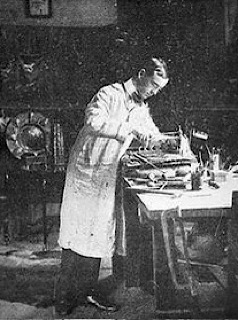
Santry comes to South Africa at the end of 1901 due to ill health. He settles in Cape Town and is employed at Tully & Waters, an architectural firm, from 1901 to 1902. He then spends a year working for architect William Patrick Henry Black. In 1903, his cartoons begin to appear in local newspapers and magazines, including the South African Review. He uses the pseudonym “Adam” in his cartoons. He continues to work as an architect until 1910 when he begins working as a cartoonist, as well as a metalworker, sculptor and filmmaker. He then moves to Johannesburg and is employed at the Sunday Times and The Rand Daily Mail as a cartoonist. During World War I, his cartoons are reproduced in several other countries. He becomes a pioneer of animated cartoons in South Africa. He is a member of the Royal Society of Arts and a council member of the South African Society of Artists.

Santry comes to Singapore in 1918 and joins the architectural firm Swan & Maclaren as a partner. While in Singapore, he serves as the architect of several prominent buildings and monuments, including the Sultan Mosque, The Cenotaph, the Maritime Building, the Hongkong and Shanghai Bank Building and the Telok Ayer Chinese Methodist Church. He serves as the first president of the St. Patrick’s Society Singapore, the first president of the Singapore Amateur Boxing Association, the chairman of the Singapore Art Club, a member of the board of control of the Victoria Theatre and Concert Hall, a member of the Censorship Appeal Board and the vice-president of the Straits Settlements Association. He is also a frequent contributor to the Straits Produce, a satirical magazine. He helps to found the Singapore Society of Architects and the Institute of Architects of Malaya and is the founder and the chairman of the Singapore Musical Society. He retires to England in March 1934.

Santry returns to South Africa in 1940. Following the end of World War II, he resumes his practice as a result of lost income caused by the Japanese occupation of Malaya. In 1950, he becomes a member of the Institute of South African Architects. He designs several private houses in Hillcrest, KwaZulu-Natal.

Santry marries Madeline Hegarty in 1904. From 1910 to 1918, he lives in Kleine Schuur on Rhodes Avenue in Johannesburg. The house is designed by prominent architect Herbert Baker. He dies in Durban, South Africa, on April 14, 1960.

Leave a comment

Death of Freeman Wills Crofts, Engineer & Mystery Author

Freeman Wills Crofts FRSA, Irish engineer and mystery author, remembered best for the character of Inspector Joseph French, dies in WorthingWest Sussex, England, on April 11, 1957.

A railway engineer by training, Crofts introduces railway themes into many of his stories, which are notable for their intricate planning. Although Raymond ChandlerAgatha Christie, and authors of the so-called golden age of detective fiction are more famous, he is esteemed by those authors, and many of his books are still in print.

Crofts is born at 26 Waterloo Road, Dublin. His father, also named Freeman Wills Crofts, is a surgeon-lieutenant in the Army Medical Services but dies of fever in Honduras before the young Freeman Wills Crofts is born. In 1883, his mother, Celia Frances (née Wise), marries the Venerable Jonathan Harding, Vicar of Gilford, County Down, later Archdeacon of Dromore, and Crofts is raised in the vicarage at Gilford. He attends Methodist College and Campbell College in Belfast. In 1912, he marries Mary Bellas Canning, daughter of the manager of the Coleraine branch of the Provincial Bank. They have no children.

In 1896, at the age of seventeen, Crofts is apprenticed to his maternal uncle, Berkeley Deane Wise, who is chief engineer of the Belfast and Northern Counties Railway. In 1899, he is appointed Junior Assistant on the construction of the Londonderry and Strabane Extension of the Donegal Railway. In 1900, he becomes District Engineer at Coleraine for the London, Midland and Scottish Railway (LMS) Northern Counties Committee at a salary of £100pa, living at 11 Lodge Road in the town. In 1922, he is promoted to Chief Assistant Engineer of the railway, based in Belfast. He lives at “Grianon” in Jordanstown, a quiet village some six miles north of Belfast, where it is convenient for him to travel by train each day to the railway’s offices at York Road. One of the projects he works on is the design of the “Bleach Green Viaduct” in Whiteabbey, close to his Jordanstown home. This is a significant ten arch reinforced concrete viaduct approved in 1927 and completed in 1934. It carries a new loop line which eliminates the need for trains between Belfast and the northwest to reverse at Greenisland. He continues his engineering career until 1929. In his last task as an engineer, he is commissioned by the Government of Northern Ireland to chair an inquiry into the Bann and Lough Neagh Drainage Scheme.

In 1919, during an absence from work due to a long illness, Crofts writes his first novel, The Cask (1920), which establishes him as a new master of detective fiction. He continues to write steadily, producing a book almost every year for thirty years, in addition to a number of short stories and plays.

Crofts is remembered best for his fictional detective, Inspector Joseph French, who is introduced in his fifth book, Inspector French’s Greatest Case (1924). Inspector French always solves each of the mysteries presented him in a workmanlike, precise manner – this method sets him apart from most other fictional sleuths.

In 1929, Crofts abandones his railway engineering career and becomes a full-time writer. He settles in the village of Blackheath, near Guildford, in Surrey, and a number of his books are set in the Guildford area, including The Hog’s Back Mystery (1933) and Crime at Guildford (1935). Many of his stories have a railway theme, and his particular interest in the apparently unfalsifiable alibi often emphasizes the intricacies of railway timetables. Near the end of his life, he and his wife relocate to Worthing, West Sussex, in 1953, where they live until his death in 1957, the year in which his last book is published.

Crofts also writes one religious book, The Four Gospels in One Story, several short stories, and short plays for the BBC.

Crofts is a member, with Dorothy L. Sayers and Agatha Christie, of the Detection Club which meets in Gerrard Street. In 1939 he is elected a fellow of the Royal Society of Arts.

Crofts is not only a railway engineer and writer, but also an accomplished musician. He is organist and choirmaster in Killowen Parish Church, Coleraine, St. Patrick’s Church, Jordanstown, and the parish church of St. Martin’s in Blackheath.

Crofts is esteemed, not only by his regular readers, but also by his fellow writers of the so-called Golden Age of Detective Fiction. Agatha Christie includes parodies of Inspector French alongside Sherlock Holmes and her own Hercule Poirot in Partners in Crime (1929).

Raymond Chandler describes Crofts as “the soundest builder of them all when he doesn’t get too fancy” (in The Simple Art of Murder). His attention to detail and his concentration on the mechanics of detection makes him the forerunner of the “police procedural” school of crime fiction. However, it has also given rise to a suggestion of a certain lack of flair – Julian Symons describing him as of “the humdrum school.” This may explain why his name has not remained as familiar as other more imaginative Golden Age writers, although he has fifteen books included in the Penguin Books “green” series of the best detective novels and 36 of his books are in print in paperback in 2000.


Leave a comment

Birth of Robert McCarrison, Physician & Nutritionist

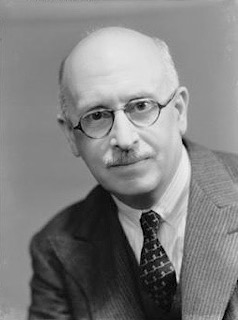
robert-mccarrison

Major General Sir Robert McCarrison, physician and nutritionist in the Indian Medical Service, is born in Portadown, County Armagh in what is now Northern Ireland on March 15, 1878.

McCarrison is credited with being the first to experimentally demonstrate the effect of deficient dietaries upon animal tissues and organs. He also carries out human experiments aimed at identifying the cause of goitre, and includes himself as one of the experimental subjects. Much of his work is pioneering. His 1921 book Studies in Deficiency Disease is considered notable at the time, being published at a time when knowledge of vitamins and their role in nutrition is crystallizing.

McCarrison qualifies in Medicine at Queen’s College, Belfast in 1900. At age 23, he goes to India, where he spends 30 years on nutritional problems. His research in India on the cause of goitre wins widespread recognition and in 1913 he is promoted to do research. He attains the rank of major-general in the Indian Medical Service and founds the Nutritional Research Laboratories in Coonoor, where he remains until his retirement from the Indian Medical Service in 1935. After retiring, he returns to England and gives a series of three Cantor lectures on successive Mondays at the Royal Society of Arts, about the influence of diet on health. The first lecture focuses on the processes of nutrition; the second, on food essentials and their relationship to bodily structure and function; the third on disease prevention and physique improvement by attention to diet. The lectures are subsequently published in book form under the title Nutrition and Health, and at the time of the third edition in 1962, are still seen as relevant, with the advances of the preceding 25 years largely filling the details of the principles previously recognised by McCarrison.

McCarrison is made a Companion of the Order of the Indian Empire (CIE) in 1923, receives a knighthood in July 1933, and is appointed as Honourable Physician to the King in 1935.

After World War II, from 1945 to 1955, McCarrison serves as director of postgraduate medical education at the University of Oxford. He dies on May 18, 1960.


Leave a comment

Birth of John Kyan, Inventor in Wood Preservation

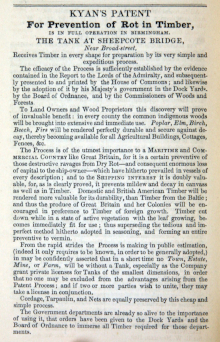
kyans-patent

John Howard Kyan, inventor of the ‘kyanising’ process for preserving wood, is born on November 27, 1774, in Dublin. His father, also John Howard Kyan, is the owner of valuable copper mines in County Wicklow. He is educated to take part in the management of the mines, but soon after he enters the company its fortunes decline, and in 1804 his father dies almost penniless.

For a time, Kyan is employed at some vinegar works at Newcastle upon Tyne, but subsequently removes to London. The decay of the timber supports in his father’s copper mines had already directed his attention to the question of preserving wood, and as early as 1812 he begins experiments with a view to discovering a method of preventing the decay. Eventually he finds that bichloride of mercury or corrosive sublimate, as it is commonly called, gives the best results and, without revealing the nature of the process, he submits a block of oak impregnated with the substance to the Admiralty in 1828. It is placed in the ‘fungus pit’ at Woolwich, where it remains for three years exposed to all the conditions favourable to decay. When taken out in 1831, it is found to be perfectly sound, and after further trials it still remains unaffected.

Kyan patents his discovery in 1832 (Nos. 8263 and 6309), extending the application of the invention to the preservation of paper, canvas, cloth, cordage, etc. A further patent is granted in 1836 (No. 7001).

The process attracts great attention. Michael Faraday chooses it as the subject of his inaugural lecture at the Royal Institution on February 22, 1833, on his appointment as Fullerian professor of chemistry. Dr. George Birkbeck gives a lecture upon it at the Royal Society of Arts on December 9, 1834, and in 1835 the Admiralty publishes the report of a committee appointed by the board to inquire into the value of the new method.

In 1836, Kyan sells his rights to the Anti-Dry Rot Company, an Act of Parliament being passed which authorises the raising of a capital of £250,000. Tanks are constructed at Grosvenor Basin, Pimlico, at the Grand Surrey Canal Dock, Rotherhide, and at the City Road Basin.

Among the early applications of the process is the kyanising of the palings around the Inner Circle, Regent’s Park, which is carried out in 1835 as an advertisement with small brass plates being attached to the palings at intervals stating that the wood has been submitted to the new process. The plates soon disappear, but the original palings still remain in good condition.

The timber used in building the Oxford and Cambridge Club, British Museum, Royal College of Surgeons, Westminster Bridewell, the new roof of the Temple Church, and the Ramsgate harbour works is also prepared by Kyan’s process. When wooden railway ties become general, a very profitable business for Kyan’s company is anticipated, and for a time these hopes are realised.

It becomes evident that iron fastenings cannot be used in wood treated with corrosive sublimate, on account of the corrosive action, and it is said that the wood becomes brittle. The salt is somewhat expensive and Sir William Burnett‘s method of preserving timber by zinc chloride, and afterwards the application of creosote for that purpose, proves severe competitors. Doubts begin to be expressed as to the real efficiency of kyanising, and the process gradually ceases to be employed.

John Kyan dies on January 5, 1850, in New York City, where he is engaged on a plan for filtering the water supplied to that city by the Croton Aqueduct.


Leave a comment

Birth of Painter James Barry

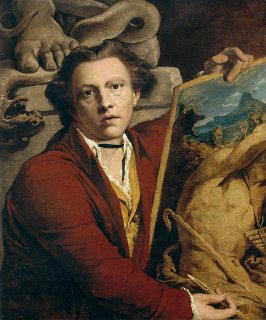
james-barry-self-portrait

James Barry, Irish painter best remembered for his six-part series of paintings entitled The Progress of Human Culture in the Great Room of the Royal Society of Arts in London, is born in Water Lane (now Seminary Road) on the northside of Cork, County Cork on October 11, 1741.

Barry first studies painting under local artist John Butts. At the schools in Cork to which he is sent he is regarded as a child prodigy. About the age of seventeen he first attempts oil painting, and between that and the age of twenty-two, when he first goes to Dublin, he produces several large paintings.

The painting that first brings him into public notice, and gains him the acquaintance and patronage of Edmund Burke, is founded on an old tradition of the landing of Saint Patrick on the sea-coast of Cashel, although Cashel is an inland town far from the sea, and of the conversion and Baptism of the King of Cashel. It is exhibited in London in 1762 or 1763 and rediscovered in the 1980s in unexhibitable condition.

In late 1765 Barry goes to Paris, then to Rome, where he remains upwards of three years, from Rome to Florence and Bologna, and thence home through Venice. He paints two pictures while abroad, an Adam and Eve and a Philoctetes.

Soon after his return to England in 1771 Barry produces his painting of Venus, which is compared to the Triumph of Galatea of Raphael, the Venus of Urbino of Titian and the Venus de’ Medici. In 1773 he exhibits his Jupiter and Juno on Mount Ida. His Death of General Wolfe, in which the British and French soldiers are represented in very primitive costumes, is considered as a falling-off from his great style of art.

In 1773 Barry publishes An Inquiry into the real and imaginary Obstructions to the Acquisition of the Arts in England, vindicating the capacity of the English for the fine arts and tracing their slow progress to the Reformation, to political and civil dissensions, and lastly to the general direction of the public mind to mechanics, manufactures and commerce.

In 1774 a proposal is made through Valentine Green to several artists to ornament the Great Room of the Society for the encouragement of Arts, Manufactures and Commerce (now the Royal Society of Arts), in London’s Adelphi Theatre, with historical and allegorical paintings. This proposal is rejected at the time. In 1777 Barry makes an offer, which is accepted, to paint the whole on condition that he is allowed the choice of his subjects, and that he is paid by the society the costs of canvas, paints and models. He finishes the series of paintings after seven years to the satisfaction of the members of the society. He regularly returns to the series for more than a decade, making changes and inserting new features. The series of six paintings, The progress of human knowledge and culture, has been described by critic Andrew Graham-Dixon as “Britain’s late, great answer to the Sistine Chapel.”

Soon after his return from the continent Barry is chosen a member of the Royal Academy of Arts. In 1782 he is appointed professor of painting in the room of Edward Penny with a salary of £30 a year. In 1799 he is expelled from the Academy soon after the appearance of his Letter to the Society of Dilettanti, an eccentric publication, full of enthusiasm for his art and at the same time of contempt for the living professors of it. He remains the only academician ever to be expelled by the Academy until Brendan Neiland in July 2004.

After the loss of his salary, a subscription is set on foot by the Earl of Buchan to relieve Barry from his difficulties, and to settle him in a larger house to finish his painting of Pandora. The subscription amounts to £1000, with which an annuity is bought, but on February 6, 1806 he is seized with illness and dies on February 22. His remains are interred in St. Paul’s Cathedral, London on March 4, 1806.

(Pictured: James Barry, Self-portrait, 1803, oil on canvas. National Gallery of Ireland, Dublin.)