seamus dubhghaill

Promoting Irish Culture and History from Little Rock, Arkansas, USA


Leave a comment

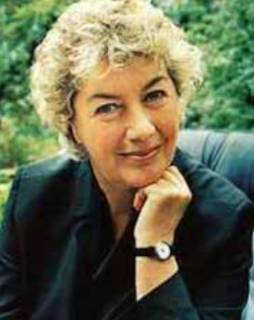
Birth of Nuala O’Faolain, Journalist, TV Producer, Teacher & Writer

Nuala O’Faolain, Irish journalist, television producer, book reviewer, teacher and writer, is born in Clontarf, Dublin on March 1, 1940. She becomes well known after the publication of her memoirs Are You Somebody? and Almost There. She also writes a biography of Irish criminal Chicago May and two novels.

O’Faolain is the second eldest of nine children. Her father, known as ‘TerryO’ is a well-known Irish journalist, writing the “Dubliners Diary” social column under the pen name Terry O’Sullivan for the Evening Press. She is educated at University College Dublin (UCD), the University of Hull, and the University of Oxford. She teaches for a time at Morley College in London and works as a television producer for the BBC and Raidió Teilifís Éireann.

O’Faolain describes her early life as growing up in a Catholic country which, in her view, fears sexuality and forbids her even information about her body. In her writings she often discusses her frustration at the sexism and rigidity of roles in Catholic Ireland that expect her to marry and have children, neither of which she does.

O’Faolain becomes internationally well known for her two volumes of memoir, Are You Somebody? and Almost There; a novel, My Dream of You; and a history with commentary, The Story of Chicago May. The first three are all featured on The New York Times Best Seller list. Her posthumous novel Best Love, Rosie is published in 2009.

O’Faolain’s formative years coincide with the emergence of the women’s movement, and her ability to expose misogyny in all its forms is formidable, forensic and unremitting. However, her feminism stems from a fundamental belief in social justice. Unlike most commentators, who maintain a detached, lofty tone, she places herself at the centre of things, a high-risk strategy that works because of her broad range of erudition, worn lightly, her courage and a truthfulness that sometimes borders on the self-destructive.

O’Faolain is engaged at least once but never marries. In Are You Somebody? she speaks candidly about her fifteen-year relationship with the journalist Nell McCafferty, who publishes her own memoir, Nell. From 2002 until her death, she lives much of the time with Brooklyn-based attorney John Low-Beer and his daughter Anna. They are registered as domestic partners in 2003.

O’Faolain splits her time between Ireland and New York City. She is diagnosed with metastatic cancer and is interviewed on the Marian Finucane radio show on RTÉ Radio 1 on April 12, 2008, in relation to her terminal illness. She tells Finucane, “I don’t want more time. As soon as I heard I was going to die, the goodness went from life.”

In a last attempt to grasp as much of life as she can, O’Faolain holidays with family members in Sicily and visits Berlin with a group of friends to hear music and see art. She previously tended to avoid Berlin because, through contact with Jewish friends and lovers, she associated it with the Holocaust. She dies at the Blackrock Hospice, Dublin, on May 9, 2008.

O’Faolain wins a Jacob’s Award in 1985 for her work as the producer of the RTÉ One television programme Plain Tales. In 2006, she wins the Prix Femina étranger, a French literary award, for The Story of Chicago May.

O’Faolain is the subject of a film documentary, Nuala: A Life and Death (2011), directed by Patrick Farrelly and Kate O’Callaghan, and produced and narrated by Marian Finucane. Hugo Hamilton‘s novel Every Single Minute (2014) is based on his experiences when accompanying O’Faolain to Berlin shortly before her death.


Leave a comment

Birth of Jim Norton, Film & Television Character Actor

Jim Norton, Irish stage, film and television character actor, is born in Dublin on January 4, 1938. He is known for his work in the theatre, most notably in Conor McPherson‘s The Seafarer, and on television as Bishop Brennan in the sitcom Father Ted.

Norton is educated at Synge Street CBS. From an early age he wants to be an actor, and regularly attends performances at the Abbey Theatre. His mother, Frances, plays the violin and his father, Eugene, is a baritone singer and works as a bakery manager. He has one sibling, the late acting teacher Betty Ann Norton.

Norton has been acting for over forty years in theatre, television, and film, and frequently plays clergymen, most notably Bishop Brennan in the sitcom Father Ted, as well as roles in The Sweeney (1975), Peak Practice (1993), Sunset Heights (1997), A Love Divided (1999), Rebus: Black and Blue (2000), Mad About Mambo (2000), Boxed (2003) and Jimmy’s Hall (2014). He stars as Finian McLonergan in the critically acclaimed New York City Center‘s 2009 production of Finian’s Rainbow, and in October 2009 reprises the role in the Broadway revival at the St. James Theatre. His co-stars are Cheyenne Jackson (Woody) and Kate Baldwin (Sharon).

As well as Bishop Brennan in Father Ted, Norton also plays Albert Einstein in two episodes of Star Trek: The Next Generation (namely “The Nth Degree” and “Descent“); the librarian Lieutenant James Porteous in the highly acclaimed 1970s British television drama series Colditz; Phil Harrister, a criminal involved in an intricate bank robbery, in The Sweeney episode “Contact Breaker”; O’Brady in the Minder episode “National Pelmet“; and Rory, a roguish but genteel Irishman who is diagnosed with cirrhosis of the liver, in The Royal episode “Beggars and Choosers.”

Norton has appeared in two episodes of Van der Valk. On Babylon 5 he appears in a number of roles, including that of Ombuds Wellington in the 1994 episodes “Grail” and “The Quality of Mercy“; a Narn in “Dust to Dust” (1996); and Dr. Lazarenn, a Markab doctor, in “Confessions and Lamentations” (1995). In Fall of Eagles he plays Alexander Kerensky.

Other television work includes: 1990, Agatha Christie’s Poirot, Waking the Dead, Cheers, Frasier, Midsomer Murders, Maigret and Rumpole of the Bailey as Fig Newton, Stan Laurel in the BBC drama Stan (2006), Larry Joyce in the 2013 television drama Deception, and as the timid Gardener in the first series of the long-running CITV children’s series T-Bag: “Wonders in Letterland” (1985).

Norton makee his film debut with a small role in the 1965 thriller The Face of Fu Manchu starring Christopher Lee, and later appears in the 1969 epic film Alfred the Great as Thanet. He plays the part of Pongo in the screen version of Spike Milligan‘s war-time memoir Adolf Hitler: My Part in his Downfall. In 1971 he plays Chris Cawsey (aka “The Rat Man”), one of several villains in the controversial Sam Peckinpah film Straw Dogs starring Dustin Hoffman. His character has a deviously infectious, deliberately irritating laugh that helps build tension throughout the film.

Norton appears in the movie Memoirs of an Invisible Man alongside Chevy Chase in 1992. In the same year he also appears in the Irish-made film Into the West. He appears in the comedy On the Nose as Patrick Cassidy, along with Dan Aykroyd and Robbie Coltrane, in 2001. He appears in a cameo in Harry Potter and the Chamber of Secrets in 2002 as Mr. Mason. He plays an Irish immigrant in the 2005 Australian/UK co-production, The Oyster Farmer. He plays Herr Liszt in the 2008 holocaust film The Boy in the Striped Pyjamas.

In 2011 Norton appears as the character Old Mr. Black in the film Extremely Loud & Incredibly Close directed by Stephen Daldry. He appears in the 2011 film Water for Elephants, in which he portrays a circus worker called “Camel” who befriends a character played by Robert Pattinson. In 2012 he appears as the character Tommy in the short film Homemade written by Matthew Roche and directed by Luke McManus. He is in the Ken Loach film Jimmy’s Hall which is released in 2014. He plays the role of Mr. Heelshire in the 2016 film The Boy. In 2018 he plays the role of Mr. Binnacle in Mary Poppins Returns.

Norton has a longtime partnership with playwright Conor McPherson, having originated roles in six of his plays in Dublin, London and New York, and for which he has won both the Tony and Olivier Award. Norton plays Jack in The Weir (1997), Joe in Port Authority (2001), Matthew in Come On Over (2001), Richard in The Seafarer (2006–7), Reverend Berkeley in The Veil (2011), and Maurice in The Night Alive (2013).


Leave a comment

Birth of Kevin Myers, Journalist & Writer

Kevin Myers, English-born Irish journalist and writer, is born in Leicester, England on March 30, 1947. He has contributed to the Irish Independent, the Irish edition of The Sunday Times, and The Irish Times‘s column An Irishman’s Diary. He is known for his controversial views on a number of topics, including single mothers, aid for Africa, and the Holocaust.

Myers grows up in England. His father, an Irish GP, dies when he is 15 and away at Ratcliffe College, a Catholic boarding school. His father’s early death creates financial difficulties, though he manages to stay at the school with the help of both the school and the Local Education Authority (LEA). He moves to Ireland to go to university, and graduates from University College Dublin (UCD) in 1969.

Myers subsequently works as a journalist for Irish broadcaster RTÉ, and reports from Northern Ireland during the height of the Troubles. He later works for three of Ireland’s major newspapers, The Irish Times, the Irish Independent, and the Irish edition of The Sunday Times. In 2000, a collection of his An Irishman’s Diary columns is published, with a second volume following in 2007. He is also a presenter of the Challenging Times television quiz show on RTÉ during the 1990s.

In 2001, Myers publishes Banks of Green Willow, a novel, which is met with negative reviews. In 2006, he publishes Watching the Door, about his time as a journalist in Northern Ireland during the 1970s. The book receives positive reviews in The Times, The Guardian, and the New Statesman, while The Independent publishes a more mixed review that wonders whether there is “an element of hyperbole” in Myers’ account.

Myers is a regular contributor to radio programmes on News Talk 106, particularly Lunchtime with Eamon Keane and The Right Hook. He regularly appears on The Last Word on Today FM. He is also a member of the Film Classification Appeals Board, formerly known as the Censorship Board.

Myers is a fervent critic of physical-force Irish republicanism. In 2008, he writes a column condemning the anniversary commemorations of the 1916 Easter Rising. He describes the Larne gun-running by Ulster Volunteers in 1914 as “high treason, done in collaboration with senior figures in the British army and the Conservative Party.” He has also written that it is a “myth” to say, when discussing Irish republicanism and Ulster loyalism, that “one side is as bad as the other.”

In 2005, Myers attracts considerable criticism for his column, An Irishman’s Diary, in which he refers to children of unmarried mothers as “bastards.” Former Minister of State Nuala Fennell describes the column as “particularly sad.” She says the word “bastard” is an example of pejorative language that is totally unacceptable. Myers issues an unconditional apology two days later. The Irish Times editor, Geraldine Kennedy, also apologises for having agreed to publish the article.

In July 2008, Myers writes an article arguing that providing aid to Africa only results in increasing its population, and its problems. This produces strong reactions, with the Immigrant Council of Ireland making an official complaint to the Garda Síochána alleging incitement to hatred. Hans Zomer of Dóchas, an association of NGOs, and another complainant, take a complaint to the Press Council on the grounds that it breaches four principles of the Council’s Code of Practice: accuracy, fairness and honesty, respect for rights, and incitement to hatred.

At the end of July 2017, Myers contributes an article entitled “Sorry, ladies – equal pay has to be earned” to the Irish edition of The Sunday Times about the BBC gender-pay-gap controversy. He further alleges that Claudia Winkleman and Vanessa Feltz are higher paid than other female presenters because they are Jewish. The editor of the Irish edition, Frank Fitzgibbon, issues a statement saying in part “This newspaper abhors anti-Semitism and did not intend to cause offence to Jewish people.” Martin Ivens, editor of The Sunday Times, says the article should not have been published. Ivens and Fitzgibbon apologise for publishing it. After complaints from readers and the Campaign Against Antisemitism, the article is removed from the website. The newspaper announces that Myers will not write for The Sunday Times again. Myers is defended by the chair of the Jewish Representative Council of Ireland, Maurice Cohen, who states, “Branding Kevin Myers as either an antisemite or a Holocaust denier is an absolute distortion of the facts.”

Myers is married to Rachel Nolan and lives in County Kildare. He is the brother-in-law of TV presenter, producer and UK Big Brother housemate Anna Nolan.