seamus dubhghaill

Promoting Irish Culture and History from Little Rock, Arkansas, USA


Leave a comment

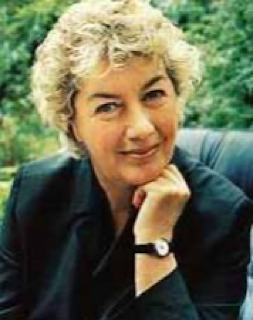
Death of Nuala O’Faolain, Journalist & Writer

Nuala Brigid Anne O’Faolainjournalist and writer, dies in Blackrock, Dublin, on May 9, 2008. Her debut memoirAre You Somebody?, published when she is in her mid-fifties, becomes a sensation in Ireland and a worldwide bestseller.

O’Faolain is born in Dublin on March 1, 1940, the second of nine children of Tomás O’Faolain and Kathleen O’Sullivan. Originally a schoolteacher and Army lieutenant, under the pen name Terry O’Sullivan, her father becomes a prominent social diarist for the Evening Press in Dublin. He is distant from his children and engages in extra-marital affairs which produce at least two half-siblings. Despite earning as much money as the newspaper’s editor, Douglas Gageby, he does not share his income with his family. The family lives in poor conditions, frequently going hungry. Her mother becomes an alcoholic, going to the pub every day at 4 p.m. and not returning home until midnight.

O’Faolain attends convent school in Dublin but is expelled at the age of fourteen after going home from dances with a married man. She then goes to a boarding school in County Monaghan, whose austere environment and strict educational standards benefit her. From there, she studies English literature at University College Dublin (UCD), where she runs in a social circle that includes Mary LavinJohn McGahernPatrick Kavanagh, and Louis MacNeice. Although she drops out of her studies temporarily and spends time working menial jobs in England, with financial assistance from Lavin and others, she graduates in 1961. On scholarships, she studies medieval English at the University of Hull before completing a postgraduate degree in 19th-century English literature at the University of Oxford. She then returns to Dublin to work at UCD as an academic in the English literature department, which brings her into contact with the bohemian Dublin literary scene of the late 1960s and early 1970s.

In 1970, O’Faolain moves to London to work for the BBC. She is a producer at the Community Programme Unit, which seeks to allow members of the public to create programmes for national broadcast on human interest topics like transgender people, anti-pornography protests, and community organising in the Bogside. She also makes programmes with the arts faculty of the Open University, and teaches evening classes at Morley College. During this period, she shows little interest in Ireland, regarding the country as backward and unsophisticated, but a visit to the Merriman Summer School in County Clare in 1974 sparks new enthusiasm. In 1977, she moves back to Dublin to work for the public broadcaster, RTÉ, where she becomes a colleague of female journalists like Doireann Ní BhriainMarian Finucane, and Nell McCafferty – later her partner – who are making programmes about Irish society with a feminist bent. She Is the producer of Women Today, a pioneering radio programme, from 1983 to 1986. One series she works on, Plain Tales, a televised interview programme in which women speak directly to camera about their life experiences, wins a Jacob’s Award in 1985.

O’Faolain has an interest in books from an early age, and credits voracious reading for helping her through a difficult childhood. She works as a book reviewer for The Times. Between 1990 and 1993, she co-presents Booklines, a television programme about books for RTÉ, a programme she says “nobody ever watched because it was on terribly late at night.”

In 1986, Conor Brady, the editor of The Irish Times, offers O’Faolain a newspaper column after hearing her being interviewed by Gay Byrne on the radio. Brady is struck by her ability to “infuse ordinary people’s everyday activities with value and interest.” The column becomes a major success and she is awarded journalist of the year in 1986.

O’Faolain acts as a roving commentator for The Irish Times, covering the 1994 Cregg Wood murders in County Clare, and visiting Northern Ireland at the time of the Good Friday Agreement in 1998. Following periods of leave while she works on her books, she leaves the paper in 2002, and writes a column in the Sunday Tribune from 2005 until her death.

O’Faolain never marries and has no children. Although she writes about her relationships with men and women, she does not identify as bisexual, though others have described her as such. She suffers from alcoholism. After Are You Somebody?, she divides her time between Ireland and New York City. During the final years of her life, she is in a relationship with a Brooklyn-based lawyer, John Low-Beer, whom she meets on Match.com.

O’Faolain is diagnosed with metastatic cancer while living in New York City in early 2008. She experiences a strange feeling in the right side of her body and presents at the emergency department of a hospital, where she is told that she has primary tumours in her lungs which has spread to her brain and liver, and that her cancer is incurable. She refuses chemotherapy.

O’Faolain returns to Ireland and is interviewed by her friend, Marian Finucane, on her radio show about her terminal illness on April 12, 2008. Both O’Faolain and Finucane are in tears during the interview, which is recorded in Galway, where she is undergoing radiotherapy. She tells Finucane: “I don’t want more time. As soon as I heard I was going to die, the goodness went from life”. Her frank discussion of her illness leads to the interview being preceded by a warning that her comments may be upsetting to others with life-threatening conditions. She says that she does not believe in God or an afterlife, but as in the song “Thíos i Lár an Ghleanna,” she is asking for help she knows will not come from a god she does not believe in. The interview has a major public impact in Ireland. After Finucane’s death in 2020, the Irish Independent describes it as “one of the most extraordinary [interviews] in the history of Irish broadcasting.”

In the final weeks of her life, O’Faolain travels Europe with close friends and family, staying in the Ritz Hotel in Paris and visiting the Berlin State Opera and the Prado Museum in Madrid for the first time. She dies in a hospice in Blackrock, Dublin, late on May 9, 2008. Her funeral takes place in the Church of Our Lady of the Visitation in Fairview in north Dublin on May 13. Her ashes are buried in Kilbarrack Cemetery in north Dublin with her maternal grandparents, Terence and Marion O’Sullivan, and her brother, Dermot Phelan.
Leave a comment

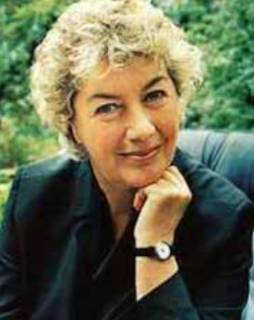
Birth of Nuala O’Faolain, Journalist, TV Producer, Teacher & Writer

Nuala O’Faolain, Irish journalist, television producer, book reviewer, teacher and writer, is born in Clontarf, Dublin on March 1, 1940. She becomes well known after the publication of her memoirs Are You Somebody? and Almost There. She also writes a biography of Irish criminal Chicago May and two novels.

O’Faolain is the second eldest of nine children. Her father, known as ‘TerryO’ is a well-known Irish journalist, writing the “Dubliners Diary” social column under the pen name Terry O’Sullivan for the Evening Press. She is educated at University College Dublin (UCD), the University of Hull, and the University of Oxford. She teaches for a time at Morley College in London and works as a television producer for the BBC and Raidió Teilifís Éireann.

O’Faolain describes her early life as growing up in a Catholic country which, in her view, fears sexuality and forbids her even information about her body. In her writings she often discusses her frustration at the sexism and rigidity of roles in Catholic Ireland that expect her to marry and have children, neither of which she does.

O’Faolain becomes internationally well known for her two volumes of memoir, Are You Somebody? and Almost There; a novel, My Dream of You; and a history with commentary, The Story of Chicago May. The first three are all featured on The New York Times Best Seller list. Her posthumous novel Best Love, Rosie is published in 2009.

O’Faolain’s formative years coincide with the emergence of the women’s movement, and her ability to expose misogyny in all its forms is formidable, forensic and unremitting. However, her feminism stems from a fundamental belief in social justice. Unlike most commentators, who maintain a detached, lofty tone, she places herself at the centre of things, a high-risk strategy that works because of her broad range of erudition, worn lightly, her courage and a truthfulness that sometimes borders on the self-destructive.

O’Faolain is engaged at least once but never marries. In Are You Somebody? she speaks candidly about her fifteen-year relationship with the journalist Nell McCafferty, who publishes her own memoir, Nell. From 2002 until her death, she lives much of the time with Brooklyn-based attorney John Low-Beer and his daughter Anna. They are registered as domestic partners in 2003.

O’Faolain splits her time between Ireland and New York City. She is diagnosed with metastatic cancer and is interviewed on the Marian Finucane radio show on RTÉ Radio 1 on April 12, 2008, in relation to her terminal illness. She tells Finucane, “I don’t want more time. As soon as I heard I was going to die, the goodness went from life.”

In a last attempt to grasp as much of life as she can, O’Faolain holidays with family members in Sicily and visits Berlin with a group of friends to hear music and see art. She previously tended to avoid Berlin because, through contact with Jewish friends and lovers, she associated it with the Holocaust. She dies at the Blackrock Hospice, Dublin, on May 9, 2008.

O’Faolain wins a Jacob’s Award in 1985 for her work as the producer of the RTÉ One television programme Plain Tales. In 2006, she wins the Prix Femina étranger, a French literary award, for The Story of Chicago May.

O’Faolain is the subject of a film documentary, Nuala: A Life and Death (2011), directed by Patrick Farrelly and Kate O’Callaghan, and produced and narrated by Marian Finucane. Hugo Hamilton‘s novel Every Single Minute (2014) is based on his experiences when accompanying O’Faolain to Berlin shortly before her death.


Leave a comment

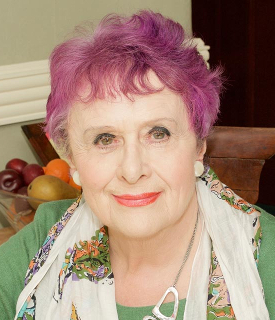
Birth of Author & Journalist Mary Kenny

mary-kenny

Mary Kenny, Irish author, broadcaster, playwright and journalist, is born in Dublin on April 4, 1944. She is a frequent columnist for the Irish Independent and is a founding member of the Irish Women’s Liberation Movement (IWLM). She has modified the radical ideas of her past but not rejected feminist principles.

Kenny grows up in Sandymount and is expelled from convent school at age 16. She begins working at the London Evening Standard in 1966 on the Londoner’s Diary, later as a general feature writer, and is woman’s editor of The Irish Press in the early 1970s.

Kenny is one of the founding members of the Irish Women’s Liberation Movement. Although the group has no formal structure of officials, she is often seen as the “ringleader” of the group. In March 1971, as part of an action by the IWLM, she walks out of Haddington Road church after the Archbishop of Dublin‘s pastoral is read out from the pulpit, confirming that “any contraceptive act is always wrong,” saying “this is Church dictatorship.” In a follow-up letter to The Irish Times she explains her actions by saying Ian Paisley was right, “Home Rule is Rome Rule.”

In 1971, Kenny travels with Nell McCafferty, June Levine and other Irish feminists on the so-called “Contraceptive Train” from Dublin to Belfast to buy condoms, then illegal within the Republic of Ireland. Later that year she returns to London as Features Editor of the Evening Standard.

In 1973, Kenny is allegedly “disturbed in the arms of a former cabinet minister of President Obote of Uganda during a party,” which leads poet James Fenton to coin the euphemism “Ugandan discussions” to mean sexual intercourse. The phrase is first used by the magazine Private Eye on March 9, 1973, but has been widely used since then and is included by the BBC in a list of “The 10 most scandalous euphemisms” in 2013.

Kenny has written for many British and Irish broadsheet newspapers, including the Irish Independent, The Times, The Guardian, The Daily Telegraph and The Spectator and has authored books on William Joyce and Catholicism in Ireland. She also writes for the weekly The Irish Catholic. She is known in the UK as a Roman Catholic journalist. Crown and Shamrock: Love and Hate between Ireland and the British Monarchy (2009), is described by R.F. Foster as “characteristically breezy, racy and insightful.” She is author of the play Allegiance, in which Mel Smith plays Winston Churchill and Michael Fassbender plays Michael Collins, at the Edinburgh Festival in 2006.

Kenny marries journalist and writer Richard West in 1974, and the couple raises two children, Patrick West and Ed West, both journalists.


Leave a comment

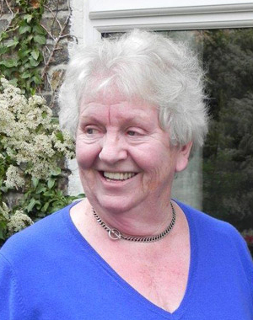
Birth of Nell McCafferty, Journalist & Feminist

nell-mccafferty

Nell McCafferty, Irish journalist, playwright, civil rights campaigner and feminist, is born in Derry, County Londonderry, Northern Ireland on March 28, 1944. In her journalistic work she has written for The Irish Press, The Irish Times, Sunday Tribune, Hot Press and The Village Voice.

McCafferty is born to Hugh and Lily McCafferty and spends her early years in the Bogside area of Derry. She is admitted to Queen’s University Belfast, where she takes a degree in Arts. After a brief spell as a substitute English teacher in Northern Ireland and a stint on an Israeli kibbutz, she takes up a post with The Irish Times.

McCafferty is a founding member of the Irish Women’s Liberation Movement. Her journalistic writing on women and women’s rights reflects her beliefs on the status of women in Irish society. In 1971, she travels to Belfast with other members of the Irish Women’s Liberation Movement in order to protest the prohibition of the importation and sale of contraceptives in the Republic of Ireland.

After the disintegration of the Irish Women’s Liberation Movement, McCafferty remains active in other women’s rights groups, as well as focusing her journalism on women’s rights. Her most notable work is her coverage of the Kerry Babies case, which is recorded in her book, A Woman to Blame. She contributes the piece “Coping with the womb and the border” to the 1984 anthology Sisterhood Is Global: The International Women’s Movement Anthology, edited by Robin Morgan.

In 1990, McCafferty wins a Jacob’s Award for her reports on the 1990 FIFA World Cup for RTÉ Radio 1‘s The Pat Kenny Show. She publishes her autobiography, Nell, in 2004. In it, she explores her upbringing in Derry, her relationship with her parents, her fears about being gay, the joy of finding a domestic haven with the love of her life, the Irish writer Nuala O’Faolain, and the pain of losing it.

In 2009, after the publication of the Murphy Report into the abuse of children in the Dublin archdiocese, McCafferty confronts Archbishop Diarmuid Martin asking him why the Catholic Church has not, as a “gesture of redemption,” relinquished titles such as “Your Eminence” and “Your Grace.”

McCafferty causes a controversy in 2010 with a declaration in a live Newstalk radio interview that the then Minister for Health, Mary Harney, is an alcoholic. This allegation leads to a court case in which Harney is awarded €450,000 the following year. McCafferty has very rarely been featured on live radio or television in Ireland as a commentator since the incident, despite being ever present in those media from 1990 forward. However, she has been featured on a number of recorded programs.

The Irish Times writes that “Nell’s distinctive voice, both written and spoken, has a powerful and provocative place in Irish society.”

McCafferty receives an honorary Doctor of Literature from University College Cork on November 2, 2016, for “her unparalleled contribution to Irish public life over many decades and her powerful voice in movements that have had a transformative impact in Irish society, including the feminist movement, campaigns for civil rights and for the marginalised and victims of injustice.”

McCafferty lives in Ranelagh, an area of Dublin.