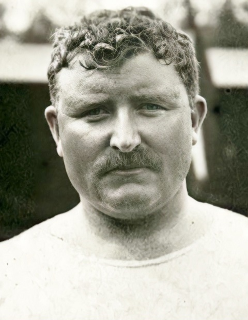
McDonald was born Patrick Joseph McDonnell in Killard, County Clare, on July 29, 1878. When his sister lands at Ellis Island after her sea voyage from Ireland, immigration officials pin a name tag on her with her name spelled “McDonald.” Taking no chances of being deported, she and all the McDonnells who come after her, accept the name McDonald.
McDonald competes for the United States in the 1912 Summer Olympics held in Stockholm, Sweden, in the shot put where he once again defeats Rose and wins the gold medal. He also takes part in the shot put competition where the distance thrown with each hand is added together. This is the only time this event is held in the Olympic program, and he finishes second behind Rose.
McDonald continues to be a nationally competitive athlete well into his 50s. At the age of 54, he beats his old rival Matt McGrath to win the weight throw for distance at the 1933 USA Outdoor Track and Field Championships. It is his 26th senior national championship meet, and the Omaha World-Herald notes that he has gray hair at the time of his last victory.
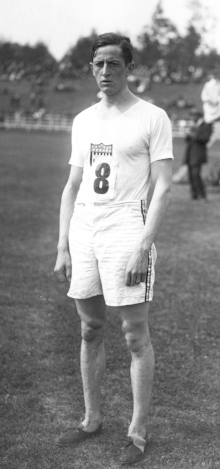
In 1909, at the Amateur Athletic Union (AAU) metropolitan senior championships, held at Travers Island, New York, Rosenberger takes first place in the 100- and 220-yard dash. The following week, he is part of the Irish American Athletic Club’s four-man relay team that breaks the world record for the one-mile relay with a time of 3 minutes, 20 2/5 seconds. The other three men on the record-breaking team are C. S. Cassara, Melvin Sheppard, and William Robbins.
On April 9, 1911, Rosenberger anchors the Irish American Athletic Club 4×440-yard relay team that breaks the world record at Celtic Park, Queens, New York City and sets the first International Amateur Athletic Federation– recognized world record for 4×440-yard or 4×400-meter relay race, in time of 3 minutes and 18.2 seconds. The other members of the world record-setting team are Harry Gissing, Melvin Sheppard and Harry Schaaf.
Rosenberger participates in the 1912 Summer Olympics in Stockholm but is eliminated in a 400 metres semifinal. The following year he competes in Australia with the AAU team, and in 1915, he becomes the coach for the Long Island Athletic Club.
Following his retirement from track and field, Rosenberger later works as an auditor and is a track coach at St. John’s University.
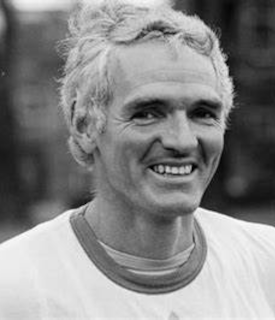
At Villanova, Carroll runs a sub-four-minute mile and in 1964, is the anchor for the team which breaks the 4 x 880-yard relay World Record. In the same year, he also sets the European Indoor record for the 880-yards and competes in the 1964 Summer Olympics in Tokyo, Japan, in the Men’s 800 metres finishing just outside of the qualifying places in heat 5 of the first round with a time of 1:51.1. When running against Bill Crothers in 1964, Sports Illustrated describes him as “one of the best middle-distance runners in the world.”
Carroll represents Ireland in the 400 metres (time: 46.8) and the 800 metres (time: 1:49) in the 1968 Summer Olympics in Mexico City, and continues to win national championships, fourteen in total. He wins a bronze medal in the 800m at the 1969 European Indoor Games in Belgrade.
In 1972, Carroll becomes the spokesman for the Dublin Corporation, now known as Dublin City Council, a post he holds until 1996, when he joins the Dublin Chamber of Commerce as its chief executive.
In 1980, Carroll leads a group which approaches the Business Houses Athletic Association and the Dublin Corporation with the idea for the Dublin Marathon. He is also among the 2,100 people who compete in the race that year. The winner of the Marathon receives the Noel Carroll Memorial Trophy presented each year by one of Carroll’s children.
Carroll dies on October 23, 1998, after suffering a heart attack while training at University College Dublin (UCD). In 2008, his four children take part in the Dublin Marathon to raise money for the Noel Carroll Building, the headquarters of a project in Kolkata, India, run by GOAL, a charity for which Carroll had served as the chairman.
Carroll’s grandson is the Irish rugby international player, Jordi Murphy.
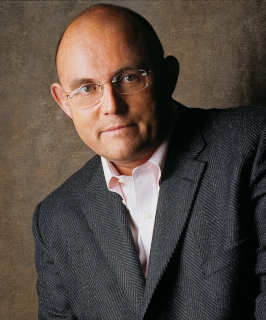
Although born in Dublin, Tynan’s family home is in Johnstown, County Kilkenny. He is born with phocomelia, causing both of his lower legs to be underdeveloped. Although now 6’4″ tall, his legs are unusually short, his feet are splayed outward, and he has three toes on each foot. He is one of a set of twins, his twin brother Edmond dying at 11 months old. At age 20, he has his legs amputated below the knee following a back injury in a car accident. The injury to his back makes it impossible for him to continue using prosthetic legs without the amputation. Within weeks of the accident, he is climbing stairs at his college dormitory on artificial legs. Within a year, he is winning in international competitions in track and field athletics. He represents Ireland in the 1984 and 1988 Summer Paralympics, winning four golds, two silvers, and one bronze medal. Between 1981 and 1984, he wins 18 gold medals from various competitions and sets 14 world records.
In the following years, Tynan becomes the first person with a disability to be admitted to the National College of Physical Education in Limerick. He works for about two years in the prosthetics industry, then goes to Trinity College, Dublin, becomes a physician specialising in Orthopedic Sports Injuries, and graduates in 1993. Encouraged to also study voice by his father Edmund, Tynan wins a series of voice competition awards and joins The Irish Tenors.
Tynan sings for George H. W. Bush at Bush’s Houston home on the day of the president’s death on November 30, 2018. The first song is “Silent Night,” while the second is a Gaelic song. Bush’s friend and former aide James Baker says that while Tynan is singing “Silent Night,” “believe it or not, the president was mouthing the words.”
While a real estate agent and prospective buyer Dr. Gabrielle Gold-von Simson are looking at an apartment in Tynan’s building on Manhattan‘s East Side, Tynan makes what is construed to be an anti-semitic remark. Shortly after this, the New York Yankees cancel Tynan’s performance of “God Bless America” for Game 1 of the 2009 American League Championship Series on October 16, 2009 because of the incident.
According to Tynan’s version of the event, two Jewish women came to view an apartment in his building. Some time afterwards, another real estate agent shows up with a potential client. The agent jokes to Tynan “at least they’re not (Boston) Red Sox fans.” Tynan replies, “As long as they’re not Jewish,” referring to the exacting women he had met earlier. The prospective client, Jewish pediatrician Dr. Gabrielle Gold-Von Simson, takes umbrage and says, “Why would you say that?” Tynan replies, “That would be scary,” and laughs, referring to the previous incident. He subsequently apologises for his remark. The Anti-Defamation League (ADL) accepts his apology. He performs at an ADL event in Manhattan soon thereafter.
Only July 4, 2010 Tynan performs “God Bless America” for the Boston Red Sox at Fenway Park with the support of some in the local Jewish community.
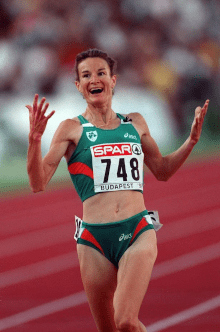
O’Sullivan first comes to prominence when winning the 1,500 metres at the 1991 Summer Universiade, before going on to finish fourth in the 3,000 metres final at the 1992 Summer Olympics in Barcelona. She then wins a silver medal in the 1,500 metres at the 1993 World Championships and a gold medal in the 5,000 metres at the 1995 World Championships. She is the favourite for the 5,000 metres title at the 1996 Summer Olympics in Atlanta but drops out of the final due to illness. Her 2,000 metres world record of 5:25.36, set in 1994, stands until 2017.
After a disappointing end to her 1997 season, O’Sullivan makes an impressive comeback in 1998. At the World Athletics Cross Country Championships at Marrakesh in March, she enters both the short course (4 km) and long course (8 km) events. On successive days, she wins both events, and her 4 km time of 12:20 is 14 seconds ahead of her nearest rival. She continues this form into the track season, where her performances in the 1,500 metres, 3,000 metres and 5,000 metres are close to those she had produced at her peak in 1994 and 1995.
At the European Athletics Championships in Budapest, the 1,500 metres and 5,000 metres finals, events at which O’Sullivan usually doubles at major championships, are scheduled to be run on the same day, thus denying her the opportunity of competing in both events. Undeterred, she enters the 5,000 metres and 10,000 metres, having never run the latter event before on the track. In the 10,000 metres final, on August 19, she shadows the leaders and then produces an astonishing 28.1 second final 200 metres to win the gold medal in 31:29.33 in her debut at the distance. Four days later, in the more familiar territory of the 5,000 metres, the pace is set by Romanian Gabriela Szabo, but again, O’Sullivan produces an explosive finishing sprint to defeat Szabo in 15:06.50.
At the IAAF World Cup held the following month in Johannesburg, South Africa, O’Sullivan wins her second major international 5,000 metres competition of the year, again sprinting clear of the opposition following a very slow pace. She concludes her year by winning the BupaGreat North Run.
At the 2000 Summer Olympics in Sydney, O’Sullivan wins a silver medal in the 5,000 metres. She wins silver medals in the 5,000 metres and 10,000 metres at the 2002 European Athletics Championships, and competes at her fourth Olympic Games in 2004. She is known for her dramatic kick, clocking 28-second final 200 metre splits in some of her races.
O’Sullivan is only one of two women (the other being Tirunesh Dibaba) who have won the short and long course World Cross Country title at the same championship (1998 in Marrakesh).
As of June 1900, the world record for the long jump is held by Myer Prinstein of Syracuse University, at 24′ 7-1/4″. In 1900 and 1901, competing with the Irish Amateur Athletic Association (IAAA), a rival association to the GAA, O’Connor sets several unofficial world records in the long jump. He sets an officially recognised world record of 24′ 9″ at the Royal Dublin Society’s grounds in Dublin on May 27, 1901. On August 5, 1901 he jumps 24′ 11-3/4″ in Dublin. This is the first IAAF-recognised long jump world record. It causes a sensation at the time, being only a fraction short of the 25-foot barrier, and remains unbeaten for 20 years, a longevity surpassed only by Jesse Owens‘s 25-year record and Bob Beamon‘s 23-year record. It remains an Irish record for a remarkable 89 years.
In 1906 O’Connor and two other athletes, Con Leahy and John Daly, are entered for the Intercalated Games in Athens by the IAAA and GAA, representing Ireland. However, the rules of the games are changed so that only athletes nominated by National Olympic Committees are eligible. Ireland does not have an Olympic Committee, and the British Olympic Council claims the three. On registering for the Games, O’Connor and his fellow athletes find that they are listed as Great Britain, not Irish, team members.
In the long jump competition, O’Connor finally meets Myer Prinstein of the Irish American Athletic Club who is competing for the U.S. team and whose world record O’Connor had broken five years previously. The only judge for the competition is Matthew Halpin, who is manager of the American team. O’Connor protests, fearing bias, but is overruled. He continues to protest Halpin’s decisions through the remainder of the competition. When the distances are announced at the end of the competition, Prinstein is declared the winner, with O’Connor in Silver Medal position.
At the flag-raising ceremony, in protest of the flying of the Union Flag for his second place, O’Connor scales a flagpole in the middle of the field and waves the Irish flag, while the pole is guarded by Con Leahy.
In the hop, step and jump competition two days later, O’Connor beats his fellow countryman, Con Leahy, to win the Gold Medal. At 34 he is the oldest ever Gold Medal winner in this event. Prinstein, the champion in 1900 and 1904, did not medal.
O’Connor wins no more titles after 1906. He remains involved in athletics all his life. He is a founder member and first Vice-President of Waterford Athletic Club, and attends later Olympics both as judge and spectator. He practises as a solicitor in Waterford and is married with nine children. He dies in Waterford on November 9, 1957.


 seamus dubhghaill