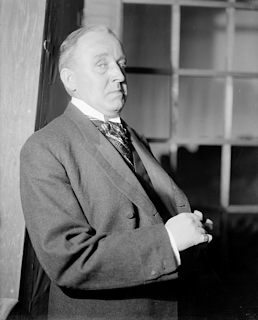
John Dudley Digges, Irish stage actor, director, and producer as well as a film actor, is born in Ranelagh, Dublin, on June 9, 1879. Although he gains his initial theatre training and acting experience in Ireland, the vast majority of his career is spent in the United States, where over the span of 43 years he works in hundreds of stage productions and performs in over 50 films.
Digges is the child of James Digges and Catherine Forsythe. He becomes acquainted with theatre directors William and Frank Fay and takes an interest in acting. He joins W. G. Fay’s Irish National Dramatic Company, along with others including Máire Nic Shiubhlaigh, James H. Cousins, Frederick Ryan and Maire Quinn (who becomes his wife). Their first production, Cathleen Ni Houlihan, with Maud Gonne in the lead role, and Déirdre, is on April 2, 1902. The company, which has no funds to speak of, acquires a couple of bare rooms at 34 Lower Camden Street, which with the help of friends from Irish-revival societies they turn into a small theatre. However, this proves too small for the plays they are planning to stage. They rehearse at the Coffee Palace in Westmoreland Street and also use the Molesworth Hall for productions.
In 1903, the playwrights and most of the actors and staff from these productions go on to form the Irish National Theatre Society, which has its registered offices in Camden Street. The society founds the Abbey Theatre.
Digges goes to the United States with a group of fellow-actors in 1904, and becomes successful as both actor and producer. He is stage manager for a time to both Charles Frohman and George Arliss, and by the 1920s he has become a notable performer on Broadway. One of his best-known roles there is as Ficsur in the original 1921 production of Ferenc Molnár‘s Liliom (later adapted into the musical Carousel by Rodgers and Hammerstein). In 1924, in Woodstock, New York, he founds the Maverick Theater with the assistance of Hervey White, who had established the Maverick Arts Colony. He is also artistic director of a company that includes Helen Hayes and Edward G. Robinson.
Digges expands his career into films by 1929, and over nearly two decades he performs in more than 50 films, including the original pre-Hays Code adaptation of The Maltese Falcon (1931). He Is cast in that feature as Casper Gutman, the character later portrayed by Sydney Greenstreet in the 1941 version. In The Invisible Man (1933) he plays the Chief Detective who plots to capture the title character, opposite the unseen Claude Rains. He plays the role of the Heavenly Examiner in both the original Broadway production and the 1930 screen version of Sutton Vane‘s Outward Bound. He also works as a director on Broadway.
Digges marries only once, to Irish actress Maire Quinn. The couple wed on August 27, 1907, in New York City and remain together until Maire’s death in August 1947. On October 24, 1947, just two months after his wife’s death, he dies of a stroke in his Manhattan apartment at 1 West 64th Street. He is survived by three siblings, all living in Ireland: a sister, Mrs. Mai Gannen, and two brothers, James and Ernst. Following a requiem mass at Blessed Sacrament Roman Catholic Church on October 28, he is buried next to his wife at Gate of Heaven Cemetery in Hawthorne, New York.
(Pictured: Digges as Boss Mangan in the 1920 Broadway production Heartbreak House, which he also directs)
Deegan studies architecture at Cooper Union. He marries Violet Secor (1889-1969) and has one son, William Secor Deegan (1909-85). At the age of 35 he serves in World War I as a staff officer in the 105th Field Artillery, rising to the rank of major.
Deegan later joins the United States Army Corps of Engineers as a major, where he supervises the construction of military bases in the New York area under the command of GeneralGeorge Washington Goethals. After the war he helps organize the American Legion in 1919, advancing to State Commander in 1921. In 1922 he is considered a strong candidate to become national commander of the Legion at their convention in New Orleans but is defeated due to his strong advocacy for admitting Black veterans into the organization. Advocacy for the rights of Black people is a strong theme throughout Deegan’s career, including during his position as Tenement House Commissioner.
Deegan works as an architect at a number of distinguished firms, including McKim, Mead & White, Post, Magnicke and Franke, and Starrett and van Vleck. Later in life he holds a number of political positions, most of them in the Bronx. He is President of the Bronx Chamber of Commerce until the chamber grows critical of MayorJimmy Walker, at which point he resigns. In 1928, Mayor Walker appoints him Tenement House Commissioner of New York City, a post he holds for the rest of his life, and in 1930, chairman of the Mayor’s Committee on Receptions to Distinguished Guests, or “official greeter,” a job in which he is preceded by his friend Rodman Wanamaker and eventually succeeded by Grover Whalen.
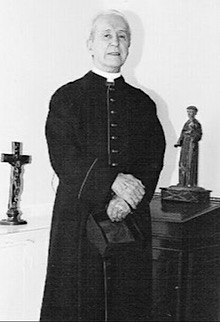
Martin is born on July 23, 1921, in Ballylongford, County Kerry, to a middle-class family in which the children are raised speaking Irish at the dinner table. His parents, Conor and Katherine Fitzmaurice Martin, have five sons and five daughters. Four of the five sons become priests, including his younger brother, Francis Xavier Martin.
Martin participates in the research on the Dead Sea Scrolls and publishes 24 articles on Semitic palaeography. He does archaeological research and works extensively on the Byblos syllabary in Byblos, in Tyre, and in the Sinai Peninsula. He assists in his first exorcism while working in Egypt for archaeological research. In 1958, he publishes a work in two volumes, The Scribal Character of the Dead Sea Scrolls.
In 1964, Martin requests a release from his vows and from the Jesuit Order. He receives a provisional release in May 1965 and a dispensation from his vows of poverty and obedience on June 30, 1965. Even if dispensed from his religious vow of chastity, he remains under the obligation of chastity if still an ordained secular priest. He maintains that he remains a priest, saying that he had received a dispensation from Paul VI to that effect.
Martin moves to New York City in 1966, working as a dishwasher, a waiter, and taxi driver, while continuing to write. He co-founds an antiques firm and is active in communications and media for the rest of his life.
In 1967, Martin receives his first Guggenheim Fellowship. In 1970, he publishes the book The Encounter: Religion in Crisis, winning the Choice Book Award of the American Library Association. He then publishes Three Popes and the Cardinal: The Church of Pius, John and Paul in its Encounter with Human History (1972) and Jesus Now (1973). In 1970, he becomes a naturalizedU.S. citizen.
In 1969, Martin receives a second Guggenheim Fellowship, allowing him to write his first of four bestsellers, Hostage to the Devil: The Possession and Exorcism of Five Living Americans (1976). In the book, he calls himself an exorcist, claiming he assisted in several exorcisms. According to McManus Darraugh, William Peter Blatty “wrote a tirade against Malachi, saying his 1976 book was a fantasy, and he was just trying to cash in.” Darraugh also says that Martin became “an iconic person in the paranormal world.”
Martin is a periodic guest on Art Bell‘s radio program, Coast to Coast AM, between 1996 and 1998. The show continues to play tapes of his interviews on Halloween.
The Vatican restores Martin’s faculty to celebrate Mass in 1989, at his request. He is strongly supported by some Traditionalist Catholic sources and severely criticized by other sources, such as the National Catholic Reporter. He serves as a guest commentator for CNN during the live coverage of the visit of Pope John Paul II to the United States in October 1995.
On July 27, 1999, Martin dies in Manhattan of an intracerebral haemorrhage, four days after his 78th birthday. It is caused by a fall in his Manhattan apartment. The documentary Hostage to the Devil claims that Martin says he was pushed from a stool by a demonic force.
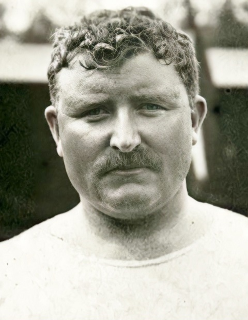
McDonald was born Patrick Joseph McDonnell in Killard, County Clare, on July 29, 1878. When his sister lands at Ellis Island after her sea voyage from Ireland, immigration officials pin a name tag on her with her name spelled “McDonald.” Taking no chances of being deported, she and all the McDonnells who come after her, accept the name McDonald.
McDonald competes for the United States in the 1912 Summer Olympics held in Stockholm, Sweden, in the shot put where he once again defeats Rose and wins the gold medal. He also takes part in the shot put competition where the distance thrown with each hand is added together. This is the only time this event is held in the Olympic program, and he finishes second behind Rose.
McDonald continues to be a nationally competitive athlete well into his 50s. At the age of 54, he beats his old rival Matt McGrath to win the weight throw for distance at the 1933 USA Outdoor Track and Field Championships. It is his 26th senior national championship meet, and the Omaha World-Herald notes that he has gray hair at the time of his last victory.
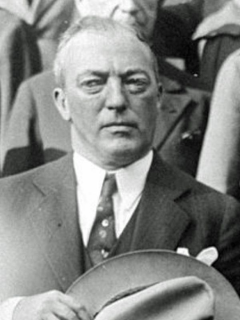
Deegan is born in the Bronx, Bronx County, New York, on December 28, 1882, to Irish immigrants. He studies architecture at Cooper Union. He marries Violet Secor (1889-1969) and has one son, William Secor Deegan (1909-85). At the age of 35 he serves in World War I as a staff officer in the 105th Field Artillery, rising to the rank of major.
Deegan later joins the United States Army Corps of Engineers as a major, where he supervises the construction of military bases in the New York area under the command of GeneralGeorge Washington Goethals. After the war he helps organize the American Legion in 1919, advancing to State Commander in 1921. In 1922 he is considered a strong candidate to become national commander of the Legion at their convention in New Orleans but is defeated due to his strong advocacy for admitting Black veterans into the organization. Advocacy for the rights of Black people is a strong theme throughout Deegan’s career, including during his position as Tenement House Commissioner.
Deegan works as an architect at a number of distinguished firms, including McKim, Mead & White, Post, Magnicke and Franke, and Starrett and van Vleck. Later in life he holds a number of political positions, most of them in the Bronx. He is President of the Bronx Chamber of Commerce until the chamber grows critical of MayorJimmy Walker, at which point he resigns. In 1928, Mayor Walker appoints him Tenement House Commissioner of New York City, a post he holds for the rest of his life, and in 1930, chairman of the Mayor’s Committee on Receptions to Distinguished Guests, or “official greeter,” a job in which he is preceded by his friend Rodman Wanamaker and eventually succeeded by Grover Whalen.


 seamus dubhghaill