seamus dubhghaill

Promoting Irish Culture and History from Little Rock, Arkansas, USA


Leave a comment

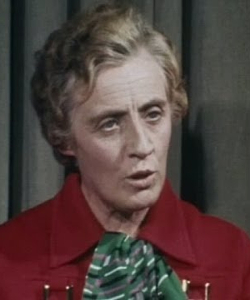
Assassination of Máire Drumm, VP of Sinn Féin

maire-drumm

Máire Drumm, vice president of Sinn Féin and a commander in Cumann na mBan, is shot dead on October 28, 1976, by Ulster loyalists dressed as doctors while recovering from an eye operation in Belfast‘s Mater Hospital.

Drumm is born in Newry, County Down to a staunchly Irish republican family. Drumm’s mother has been active in the Irish War of Independence and the Irish Civil War. Drumm grows up in the village of Killean, County Armagh, where she plays camogie. She is active in the republican movement after meeting her husband, a republican prisoner. She begins to speak at many rallies and protest meetings and is soon elected as Vice President of Sinn Fein. She becomes involved in the Northern Ireland Civil Rights Association in the 1960s and works to rehouse Catholics forced from their homes by loyalist intimidation.

Drumm is jailed twice for seditious speeches. After she is released from HM Prison Armagh, raids on her house by the security forces escalate. She is widely demonised in the British media and is already a target for assassination when she is admitted to Belfast’s Mater Hospital for eye treatment in October 1976.

While recovering from the operation, Drumm is shot at point blank range in a joint operation by the Ulster Volunteer Force and the Ulster Defence Association who are able to enter and leave the hospital undisturbed. No one has ever been convicted of her murder.

Drumm’s speeches and quotations can be found on murals across Northern Ireland, including:

“The only people worthy of freedom are those who are prepared to go out and fight for it every day, and die if necessary.”

“We must take no steps backward, our steps must be onward, for if we don’t, the martyrs that died for you, for me, for this country will haunt us forever.”


Leave a comment

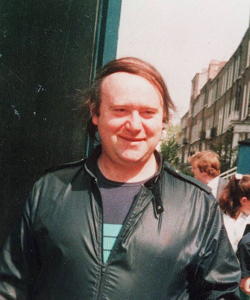
Assassination of Irish Criminal Martin Cahill

martin-cahill

Martin Cahill, prominent Irish criminal from Dublin, is assassinated on August 18, 1994. Cahill generates a certain notoriety in the media, which refers to him by the sobriquet “The General.” During his lifetime, Cahill takes particular care to hide his face from the media and is rarely photographed.

At age 16, Cahill is convicted of two burglaries and sentenced to an industrial school run by the Oblates of Mary Immaculate at Daingean, County Offaly. With his brothers, he continues to commit multiple burglaries in the affluent neighbourhoods nearby, at one point even robbing the Garda Síochána depot for confiscated firearms.

In 1983, Cahill and his gang famously steal gold and diamonds with a value of over €2.55 million from O’Connor’s jewelers in Harold’s Cross. The jewelers subsequently are forced to close, with the loss of more than one hundred jobs. He is also involved in stealing some of the world’s most valuable paintings from Russborough House in 1986 and extorting restaurants and hot dog vendors in Dublin’s nightclub district.

On November 1, 1993, Cahill’s gang abducts National Irish Bank CEO Jim Lacey, his wife, and four children and holds them hostage in an attempt to force the bank to hand over the estimated €10 million in cash in the bank’s vault. Ultimately, the plan fails, and the gang is arrested.

With all gang members from the Lacey kidnapping released on bail, on August 18, 1994, Cahill leaves the house at which he has been staying at Swan Grove and begins driving to a local video store to return a borrowed copy of Delta Force 3: The Killing Game. Upon reaching the intersection of Oxford Road and Charleston Road he is repeatedly shot in the face and upper torso and dies almost instantly. The gunman, who is armed with a .357 Magnum revolver, jumps on a motorbike and disappears from the scene.

There are a number of theories about who murdered Martin Cahill and why. Within hours of Cahill’s murder, the Provisional Irish Republican Army claims responsibility in a press release. The reasons cited are Cahill’s alleged involvement with a Portadown unit of the Ulster Volunteer Force, which had attempted a bomb attack on a south Dublin pub which was hosting a Sinn Féin fund-raiser.

Another theory surfaces that reputedly claims that two of Cahill’s underlings, John Gilligan and John Traynor, had put together a massive drug trafficking ring. When Cahill demanded a cut of the profits, the Gardaí believe that Traynor and Gilligan approached the IRA and suggested that Cahill was importing heroin, a drug that the IRA despised and were trying to prevent from being sold in Dublin. Gilligan reputedly paid the Provisional IRA a considerable sum in exchange for Cahill’s assassination. Frances Cahill’s memoir, Martin Cahill, My Father, alleges the General detested and steered clear of the drug trade.

After a Roman Catholic requiem mass, Martin Cahill is buried in consecrated ground at Mount Jerome Cemetery. In 2001, his gravestone is vandalised and broken in two.


Leave a comment

Death of Francis McCloskey, First Fatality of “The Troubles”

the-troubles

Francis McCloskey, a 67-year-old Catholic civilian, dies on July 14, 1969, one day after being hit on the head with a baton by an officer of the Royal Ulster Constabulary (RUC) during street disturbances in Dungiven, County Derry. McCloskey is sometimes considered to be the first fatality of The Troubles.

McCloskey is found unconscious on July 13 near the Dungiven Orange Hall following a police baton charge against a crowd who had been throwing stones at the hall. Witnesses later say they had seen police beating a figure with batons in the doorway where McCloskey is found, although police claim he had been unconscious before the baton charge and may have been hit with a stone.

The Troubles is the common name for the ethno-nationalist conflict in Northern Ireland that begins in the late 1960s and is deemed by most to end with the Good Friday Agreement of 1998. Although the Troubles mainly take place in Northern Ireland, violence spills over at times into parts of the Republic of Ireland, England, and mainland Europe.

The conflict is primarily political, but it also has an ethnic or sectarian dimension, although it is not a religious conflict. A key issue is the constitutional status of Northern Ireland. Unionists and loyalists, who are mostly Protestants and consider themselves British, generally want Northern Ireland to remain within the United Kingdom. Irish nationalists and republicans, who are mostly Catholic and consider themselves Irish, generally want it to leave the United Kingdom and join a united Ireland. The conflict begins amid a campaign to end discrimination against the Catholic/nationalist minority by the Protestant/unionist government and police force in 1968. The campaign is met with violence, eventually leading to the deployment of British troops and subsequent warfare.

The main participants in the Troubles are republican paramilitaries such as the Provisional Irish Republican Army (IRA) and Irish National Liberation Army (INLA), loyalist paramilitaries such as the Ulster Volunteer Force (UVF) and Ulster Defence Association (UDA), the British Army and Royal Ulster Constabulary (RUC), and political activists and politicians. The security forces of the Republic of Ireland play a smaller role. More than 3,500 people are killed in the conflict, of whom 52% were civilians, 32% are members of the British security forces, and 16% are members of paramilitary groups. There has been sporadic violence since the signing of the Good Friday Agreement, including a campaign by anti-ceasefire republicans.