After completing his secondary education at St. Joseph’s College, Galway, he enrolls at University College Dublin in 1900 where he receives an arts degree and then studies medicine. He transfers to University College, Galway and graduates in 1913. He is a member of the college Literary and Debating Society and participates in drama.
He begins his medical career in the County Infirmary in Galway and then moves to Holles Street Hospital. He joins the Royal Army Medical Corps and is badly affected by mustard gas in India. After the war he settles in Leicester, where he spends the rest of his career as a neurological specialist.
Colahan is also a composer of popular songs. He is a quiet man who is often homesick for his beloved Galway Bay. These feelings lead him to write his most famous work, “Galway Bay.” Popularised by Bing Crosby, it becomes the biggest selling record of all time at one point. Theories abound as to where the song is written or where it is first heard. Some say it is in the home of Dr. Morris at 1 Montpelier Terrace, while others believe it is in The Vicars Croft on Taylor’s Hill, from where one can see Galway Bay.
Other songs written by Colahan include “Maccushla Mine,” “Asthoreen Bawn,” “Until God’s Day,” “The Kylemore Pass” and “The Claddagh Ring.” Sadly, before his music is selling in the High Street he dies on September 15, 1952, and is buried in an unmarked grave back in his Irish birthplace.
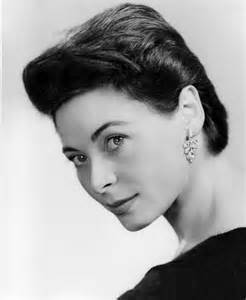
McKenna grows up in Galway, where her father is Professor of Mathematics at University College Galway, and in County Monaghan, speaking fluent Irish. She is still in her teens when she becomes a member of an amateur Gaelic theatre group and makes her stage debut at Galway’s Gaelic theatre, the Taibhdhearc na Gaillimhe, in 1940.
McKenna is remembered for her English language performances at the Abbey Theatre in Dublin where she eventually stars in what many consider her finest role in the George Bernard Shaw play, Saint Joan.
While performing at the Abbey Theatre in the 1940s, she meets actor Denis O’Dea, whom she marries in 1946. Until 1970 they live in Richmond Street South, Dublin. They have one child, a son Donnacha O’Dea, who swims for Ireland at the 1968 Summer Olympics and later wins a World Series of Poker bracelet in 1998.
In 1947, McKenna makes her debut on the London stage in The Chalk Garden. She reprises the role on Broadway in 1955, for which she receives a Tony Award nomination for “Best Actress in a Leading Role, Drama.” In 1956, she appears in the Cambridge Drama Festival production of Saint Joan at the Off-BroadwayPhoenix Theatre. Theatre critic Elliot Norton calls her performance the finest portrayal of Joan of Arc in memory. Siobhán McKenna’s popularity earns her the cover of Life magazine. She receives a second Tony Best Actress nomination for her role in the 1958 play, The Rope Dancers, in which she stars with Art Carney and Joan Blondell.
Although primarily a stage actress, McKenna appears in a number of made-for-television films and dramas. She also appears in several motion pictures such as King of Kings in 1961, as the Virgin Mary. In 1964, she performs in Of Human Bondage and the following year in Doctor Zhivago. She also appears in the miniseries The Last Days of Pompeii as Fortunata, wife of Gaius, played by Laurence Olivier. She stars in the title role of the Tales of the Unexpected episode “The Landlady.”
McKenna is awarded the Gold Medal of the Éire Society of Boston, for having “significantly fulfilled the ideals of the Éire Society, in particular, spreading awareness of the cultural achievements of the Irish people.”
McKenna’s final stage appearance comes in the 1985 play Bailegangaire for the Druid Theatre Company. Despite surgery, she dies of lung cancer on November 16, 1986, in Dublin, at 63 years of age. She is buried at Rahoon Cemetery in County Galway.
Delia Murphy Kiernan, singer and collector of Irish ballads, dies of a massive heart attack on February 11, 1971, five days before her 69th birthday. She records several 78 RPM records in the 1930s, 1940s, and 1950s. In 1962 she records her only LP record, The Queen of Connemara, for Irish Prestige Records, New York, on the cover of which her name appears alongside the LP title. Her notable voice gives her the nickname the “Queen of Connemara.”
Murphy is born on February 16, 1902, in Ardroe, Roundfort, County Mayo, to a well-off family. Her father, John Murphy, from nearby Hollymount, makes his fortune in the Klondike Gold Rush. While in America, he marries Ann Fanning from Roscrea, County Tipperary. They return to Ireland in 1901 and purchase the large Mount Jennings Estate in Hollymount. Murphy’s father encourages her interest in singing ballads from a young age. He also allows Irish travellers to camp on the estate. According to her own account, she learns her first ballads at their campfires.
Murphy is educated at Presentation Convent in Tuam, Dominican College in Dublin, and University College Galway (UCG), where she graduates with a Bachelor of Commerce degree. While at UCG she meets Dr. Thomas J. Kiernan, and they marry in 1924, on her 22nd birthday. Kiernan then joins the Irish diplomatic service, where his first posting is to London. While there Murphy sings at many venues including many gatherings of Irish emigrants and becomes quite well-known. In 1939 she records The Blackbird, The Spinning Wheel, and Three Lovely Lassies for HMV.
In 1941, Kiernan is appointed Irish Minister Plenipotentiary to the Holy See in Rome. The Irish legation is the only English-speaking legation to remain open after the United States enters World War II. Murphy becomes one of those who assist Monsignor Hugh O’Flaherty in saving the lives of 6,500 Allied soldiers and Jews. In 1943, when Italy changes sides, many escaped POWs are helped by the legation to leave Italy.
Kiernan later serves as Irish High Commissioner and later first Ambassador in Australia, and later to West Germany, Canada, and the United States. In 1961, while living in Ottawa, Murphy makes the recording of The Queen of Connemara produced by Ken Goldstein. Murphy and Kiernan purchase a farmhouse in Jasper, Ontario, near the Rideau Canal where she spends most of her time, even after Kiernan is posted to Washington, D.C. Tom Kiernan dies in December 1967.
By 1969 Murphy’s health is in decline. In November of that year, she sells her farmhouse in Canada and returns to Ireland. She lives in a cottage in Strawberry Beds, Chapelizod, County Dublin, until her death. During her lifetime she records upwards of 100 songs.
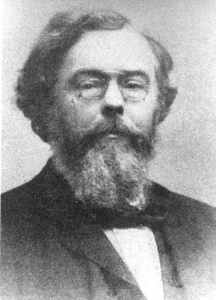
George Sigerson, Irish physician, scientist, writer, politician, and poet, is born at Holy Hill, near Strabane in County Tyrone on January 11, 1836. He is a leading light in the Irish Literary Revival of the late 19th century in Ireland.
Sigerson is the son of William and Nancy (née Neilson) Sigerson and has three brothers, James, John and William, and three sisters, Ellen, Jane, and Mary Ann. He attends Letterkenny Academy but is sent by his father, who developed the spade mill and who played an active role in the development of Artigarvan, to complete his education in France.
His first book, The Poets and Poetry of Munster, appears in 1860. He is actively involved in political journalism for many years, writing for The Nation. Sigerson and his wife Hester are by now among the dominant figures of the Gaelic Revival. They frequently hold Sunday evening salons at their Dublin home to which artists, intellectuals, and rebels alike attend, including John O’Leary, W.B. Yeats, Patrick Pearse, Roger Casement, and 1916 signatory Thomas MacDonagh. Sigerson is a co-founder of the Feis Ceoil and President of the National Literary Society from 1893 until his death. His daughter, Dora, is a poet who is also involved in the Irish literary revival.
Nominated to the first Seanad Éireann of the Irish Free State, Sigerson briefly serves as the first chairman on December 11-12, 1922, before the election of James Campbell, 1st Baron Glenavy. Sigerson dies at his home at 3 Clare Street, Dublin, on February 17, 1925, at the age of 89, after a short illness. On February 18, 1925, the day after his death, the Seanad Éireann pays tribute to him.
The Sigerson Cup, the top division of third level Gaelic football competition in Ireland is named in his honour. Sigerson donates the salary from his post at UCD so that a trophy can be purchased for the competition. In 2009, he is named in the Sunday Tribune‘s list of the “125 Most Influential People In GAA History.” The cup is first presented in 1911, with the inaugural winners being UCD GAA.