Cruise O’Brien follows his cousin Owen into Sandford Park School, which has a predominantly Protestant ethos despite objections from Catholic clergy. He subsequently attends Trinity College Dublin (TCD) before joining the Irish diplomatic corps.
Although he is a fierce advocate of his homeland, Cruise O’Brien is a strong critic of Irish Republican Army (IRA) violence and of what he considers the romanticized desire for reunification with Northern Ireland. His collection of essays Maria Cross: Imaginative Patterns in a Group of Modern Catholic Writers (1952; written under the pseudonym Donat O’Donnell) impresses UN Secretary-GeneralDag Hammarskjöld, who in 1961 appoints him UN special representative in the Congo, later the Democratic Republic of the Congo. He orders UN peacekeeping forces into the breakaway Katanga province, and the resulting scandal forces him out of office. Despite UN objections, he writes To Katanga and Back (1963) to explain his actions.
After serving as vice-chancellor of the University of Ghana (1962–65) and Albert Schweitzer Professor of Humanities at New York University (1965–69), Cruise O’Brien enters Irish politics. He holds a Labour Party seat in Dáil Éireann from 1969 to 1977 and then in the Senate from 1977 to 1979, representing Trinity College, of which he is pro-chancellor (1973–2008).
In 1979, Cruise O’Brien is named editor in chief of the British Sunday newspaper The Observer, but he leaves after three tumultuous years. He remains an active newspaper columnist, especially for the Irish Independent until 2007. His books include States of Ireland (1972) and On the Eve of the Millennium (1995), as well as perceptive studies of Charles Stewart Parnell, Edmund Burke, and Thomas Jefferson.
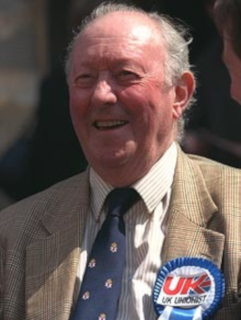
In early July 1996, in the period of Cruise O’Brien’s involvement as a UK Unionist Party (UKUP) representative in talks at Stormont, he suffers a mild stroke. He recovers well, but is left with anxiety about his recall of names. His last public appearance is on September 7, 2006, to deliver an address on the ninetieth anniversary of the death of Tom Kettle, in the old House of Lords chamber of the Bank of Ireland on College Green.
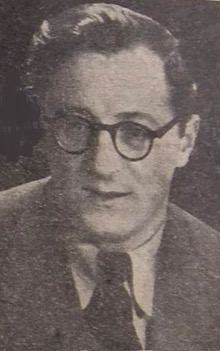
Born Leslie Yodaiken into a Russian–Jewish family in Portobello, Dublin, Daiken is the son of Samuel and Rosa Yodaiken. His father is a dealer in rubber and scrap metal, with premises in Dublin and Glasgow, and he is educated at two independent fee-paying schools, St. Andrew’s College and Wesley College, and then in 1930 he enters Trinity College Dublin. In his first year, one of his lecturers in French literature was Samuel Beckett. He is an active member of the Dublin University Socialist Society and a founding member of the college’s Gaelic Society.
In 1933, Daiken is present at the house of Charlotte Despard in Eccles Street, Dublin, also used as a Workers’ College, when it is attacked by a mob of Blueshirts. He leads the immediate defence of the building, which is saved on that occasion by the intervention of Irish Republican Army (IRA) men posing as the police.
In 1934, as Yodaiken, he graduates with a BA from Trinity in English and French Literature, with a Second Class degree. After graduating, Daiken works briefly as a schoolteacher in Dublin. In April 1935, his short story “Angela” is published in The New English Weekly under the pen name of Ned Kiernan. That year, he migrates to London.
Soon after his arrival in London, Daiken is one of the three founders of a duplicated publication called Irish Front, together with two other poets, Charles Donnelly and Ewart Milne.
In England, Daiken starts to shorten his surname from Yodaiken to Daiken, for his publications, but he does not make this change formally until doing so by deed poll in 1943.
In December 1935, The Irish Times reviews a production in Camden Town of Ireland Unfree, a stage version by Daiken of Patrick Pearse’s poem “The Rebel.” It states that “Mr. Daiken carries Pearse’s theme beyond his idealistic conclusion to the revolutionary viewpoint of the Irish workers.”
Daiken keeps up his links with leftist Irish writers and dissidents and edits the collection of working-class political verse Goodbye Twilight: songs of the struggle in Ireland (1936), illustrated by Harry Kernoff. The Irish Press describes this as “forty young poets with blazing eyes and clenched fists.” In another review, Louis MacNeice calls the book a “collection of proletarian poems – some communist, some Irish republican, and all written in a defiant spirit of opposition … a violent reaction against Yeats and all that he stood for.”
In 1939, Mairin Mitchell is highly critical of the Irish leftists, and in particular Daiken, for their views on the Molotov–Ribbentrop Pact, and writes to Desmond Ryan in September, “Brian O’Neill, Bloomsbury, and Daiken will sing Russia right or wrong.”
In October 1939, at the time of the wartime National Registration Act, Daiken is living in a studio at Old Castle Wharf, Twickenham, and describes himself as “Script-writer and advertising copywriter.”
During World War II, Daiken enlists in the Corps of Signals of the Irish Army, a neutral force, and also works for Reuters as a correspondent on education. In 1944, he edits They Go, the Irish, a collection of essays, including one from Seán O’Casey. In 1945, a collection of his verse is published under the title Signatures of All Things. In the summer of that year, Samuel Beckett gives Daiken his unpublished novel Watt, in the hope that he can find a publisher for it, but he fails to do so. They continue to write to each other and meet in London and Paris in the 1950s. He also keeps up with another friend from Trinity, Con Leventhal.
After he becomes a father in 1945, Daiken’s main interest moves on from political activism to children’s games and toys, and by 1951 the basement of his London home has become a toy museum. He writes on the subject and makes television and radio programmes for the BBC about it. His film One potato, two potato, a compilation of children’s street rhymes, wins the Festival Mondial du Film prize in 1958. His radio play The Circular Road is about a Jewish-Irish child.
In the 1950s Daiken founds the National Toy Museum and Institute of Play, today part of the Toy Collection at Hove Museum of Creativity.
Daiken returns to Ireland many times as a visitor. In the early 1960s he completes a radio play about the Jewish community of Dublin in the 1920s, which is broadcast on RTÉ.
In October 1963, Conor Cruise O’Brien, Vice Chancellor of the University of Ghana, recruits Daiken as a lecturer in education, and not long before his death he makes a film called The Piano about teaching white and black children in a school in Africa. He dies on August 15, 1964, while spending the summer vacation at home in London, leaving an estate valued at £3,865. He is cremated. His widow survives him until 1981.
In a tribute to Daiken, his 1930s communist associate Brian O’Neill writes, “He was always busy, always with a half dozen irons in the fire, always trying to give a hand to some Irish writer who needed it.”
In the early 1990s, Katrina Goldstone interviews Daiken’s brother, Aubrey Yodaiken, and later reports: “I was left with a faint sense of melancholy, as my interviewee had become distressed speaking about his brother, Leslie Daiken, and recalling his irrepressible and exasperating personality, his many projects, half-started novels…”
Aubrey Yodaiken is distressed by the lack of appreciation of his brother’s many cultural efforts and by the fact that his “scattershot literary endeavours” seem to have come to naught.
The National Library of Ireland holds a collection of Daiken’s papers, in particular his publications and correspondence, presented to it in 1995 by his elder daughter, by then Melanie Cuming, and his younger brother, Aubrey Yodaiken. The papers are mostly in English, French, German, Dutch, Italian, Hebrew, and Irish.
Although he is a fierce advocate of his homeland, Cruise O’Brien is a strong critic of Irish Republican Army violence and of what he considers the romanticized desire for reunification with Northern Ireland. His collection of essays Maria Cross: Imaginative Patterns in a Group of Modern Catholic Writers (1952; written under the pseudonym Donat O’Donnell) impresses UN Secretary-GeneralDag Hammarskjöld, who in 1961 appoints him UN special representative in the Congo, later the Democratic Republic of the Congo. He orders UN peacekeeping forces into the breakaway Katanga province, and the resulting scandal forces him out of office. Despite UN objections, he writes To Katanga and Back (1963) to explain his actions.
After serving as vice-chancellor of the University of Ghana (1962–65) and Albert Schweitzer Professor of Humanities at New York University (1965–69), Cruise O’Brien enters Irish politics. He holds a Labour Party seat in Dáil Éireann from 1969 to 1977 and then in the Senate from 1977 to 1979, representing Trinity College, of which he is pro-chancellor (1973–2008).
In 1979 Cruise O’Brien is named editor in chief of the British Sunday newspaper The Observer, but he leaves after three tumultuous years. He remains an active newspaper columnist, especially for the Irish Independent until 2007. His books include States of Ireland (1972) and On the Eve of the Millennium (1995), as well as perceptive studies of Charles Stewart Parnell, Edmund Burke, and Thomas Jefferson.
Conor Cruise O’Brien dies at the age of 91 on December 18, 2008, in Howth, Dublin.

 seamus dubhghaill