seamus dubhghaill

Promoting Irish Culture and History from Little Rock, Arkansas, USA


Leave a comment

Founding of the Dublin Women’s Suffrage Association

The Dublin Women’s Suffrage Association (DSWA), later the Irish Women’s Suffrage and Local Government Association (IWSLGA), a women’s suffrage organisation based in Dublin from 1876 to 1919, is founded on January 26, 1876. The organization also campaigns for a greater role for women in local government and public affairs.

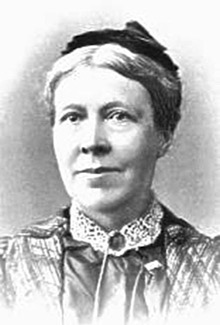
The association grows from a committee established by Anna Haslam and her husband, Thomas Haslam, after a meeting on 21 February 21, 1872, chaired by the Lord Mayor of DublinSir George Bolster Owens, and addressed by Belfast suffragist Isabella Tod.

The DSWA is formally founded at a meeting on January 26, 1876, in the Exhibition Palace, Earlsfort Terrace (now the National Concert Hall). After the Poor Law Guardians (Ireland) (Women) Act 1896 allows women to be elected to the boards of guardians of poor law unions, it renames itself the Dublin Women’s Suffrage and Poor Law Guardians’ Association. After the Local Government (Ireland) Act 1898 allows women to serve on local councils, it becomes the Dublin Women’s Suffrage and Local Government Association. It establishes branches outside Dublin in the 1890s and becomes the IWSLGA in 1901.

In 1919, after the Representation of the People Act 1918 provides full franchise at local elections and partial franchise at parliamentary elections, the IWSLGA merges with the Irish Women’s Association of Citizenship to become the Irish Women Citizens’ and Local Government Association, later renamed the Irish Women’s Citizens Association, which in 1949 merges into the Irish Housewives Association.

The association confines itself to constitutional, nonsectarian and peaceful methods, and attracts support from both unionist and nationalist suffragists. Its tactics include making friends in parliament, hosting meetings with important speakers, and issuing pamphlets and periodicals. Its first secretaries are Anna Haslam and Miss McDowell. Haslam serves as secretary until 1913. In regards to membership, Haslam suggests an annual subscription of one shilling per annum as membership in the association. Other goals include appointing women to positions “such as rate collectors and sanitary inspectors, while always pursuing the association’s main objective of the parliamentary vote.” Prominent members of the association in the 20th century are Lady Margaret DockrellMary Hayden, and Bridget Dudley Edwards (mother of Robert Dudley Edwards). Prominent supporters include Charles Cameron, Sir Andrew ReedWillie Redmond MP, and William Field MP. Following the Sex Disqualification (Removal) Act 1919, Lady Dockrell is one of the first women appointed Justice of the Peace.

(Pictured: Anna Haslam, co-founder of the DWSA along with her husband, Thomas)


Leave a comment

Birth of William Martin Murphy

william-martin-murphy

William Martin Murphy, Irish businessman, journalist and politician, is born on January 6, 1845, in Castletownbere, County Cork. A member of parliament (MP) representing Dublin from 1885 to 1892, he is dubbed “William Murder Murphy” among Dublin workers and the press due to the Dublin Lockout of 1913. He is arguably both Ireland’s first “press baron” and the leading promoter of tram development.

Murphy is educated at Belvedere College. When his father, the building contractor Denis William Murphy dies in 1863, he takes over the family business. His enterprise and business acumen expand the business, and he builds churches, schools and bridges throughout Ireland, as well as railways and tramways in Britain, West Africa and South America.

Murphy is elected as Irish Parliamentary Party MP for Dublin St. Patrick’s at the 1885 general election, taking his seat in the House of Commons of the United Kingdom of Great Britain and Ireland. He is a member of the informal grouping, the “Bantry Band,” a group of politicians who hail from the Bantry Bay area.

When the Irish Parliamentary Party splits in 1890 over Charles Stewart Parnell‘s leadership, Murphy sides with the majority Anti-Parnellites. However, Dublin emerges as a Parnellite stronghold and in the bitter general election of 1892, Murphy loses his seat by over three to one to a Parnellite newcomer, William Field.

Murphy is the principal financial backer of the “Healyite” newspapers the National Press and the Daily Nation. His support for Tim Healy attracts the hostility of the majority anti-Parnellite faction led by John Dillon. He makes two attempts to return to Parliament, at South Kerry in 1895 and North Mayo in 1900, but both are unsuccessful because of Dillonite opposition.

In 1900, Murphy purchases the insolvent Irish Daily Independent from the Parnellites, merging it with the Daily Nation. He re-launches this as a cheap mass-circulation newspaper, which rapidly displaces the Freeman’s Journal as Ireland’s most popular nationalist paper. In 1906, he founds the Sunday Independent newspaper.

Murphy is highly critical of the Irish Parliamentary Party. From 1914 he uses the Irish Independent to oppose the partition of Ireland and advocate Dominion Home Rule involving full fiscal autonomy.

Worried that the trade unions would destroy his Dublin tram system, Murphy leads Dublin employers against the trade unions led by James Larkin, an opposition that culminates in the Dublin Lockout of 1913. This makes him extremely unpopular with many, being depicted as a vulture or a vampire in the workers’ press.

After the 1916 Easter Rising, he purchases ruined buildings in Abbey Street as sites for his newspaper offices, however it is his viewpoints that make him even more unpopular, by calling for the executions of Seán MacDiarmada and James Connolly at a point when the Irish public is beginning to feel sympathy for their cause. He privately disavows the editorial, claiming it had been written and published without his knowledge.

In 1917 Murphy is invited to take part in talks during the Irish Convention which is called to agree terms for the implementation of the suspended 1914 Home Rule Act. However, he discovers that John Redmond is negotiating agreeable terms with Unionists under the Midleton Plan to avoid the partition of Ireland but at the partial loss of full Irish fiscal autonomy. This infuriates Murphy who criticises the intention in his newspaper, which severely damages the Irish Parliamentary Party. However, the Convention remains inconclusive, and the ensuing demise of the Irish party results in the rise of Sinn Féin, whose separatist policies Murphy also does not agree with.

William Martin Murphy dies in Dublin on June 26, 1919. His family controls Independent Newspapers until the early 1970s, when the group is sold to Tony O’Reilly.