Early in his career, Ryan is involved part-time in pirate radio, presenting a selection of programmes firstly for Alternative Radio Dublin (ARD) and then for Big D. When RTÉ Radio 2, now RTÉ 2fm, is launched in 1979, Ryan joins RTÉ as a DJ where he presents a selection of speech and music-based programmes.
In 1987, Ryan and a group of volunteers spend time in the countryside of Connemara as part of The Gay Byrne Show. Ryan claims to have killed and eaten a lamb to survive, earning him the nickname “Lambo,” though the story turns out to be a hoax.
The Gerry Ryan Show begins in March 1988 when he is offered a three-hour morning radio slot. Ryan’s style is considered by some to be that of a motor-mouth shock jock. The Gerry Ryan Show is subject to several upheld complaints to the Broadcasting Commission of Ireland (BCI). The Gerry Ryan Show becomes something of a national institution as the oldest show still running on 2fm. Despite repeated reshuffles which see all other presenters shifted around, RTÉ never moves The Gerry Ryan Show from its traditional slot.
In October 1990, Ryan receives a Jacob’s Award for The Gerry Ryan Show, described at the award ceremony as “unbelievably bizarre and unprecedented – and at the same time being serious, hilarious, and unpredictable.”
Ryan is noted for his love of fine food and wine. He battles a weight problem for several years. Ryan concedes in his autobiography, Would the Real Gerry Ryan Please Stand Up published in 2008, that he drinks too much for his own good.
Shortly after midday on April 30, 2010, Ryan is found dead in the bedroom of his home on Leeson Street, Dublin. His funeral takes place on May 6, and is broadcast on 2fm, the home of Ryan’s radio show and a first for the predominantly youthpop-oriented station.
U.S. President Ronald Reagan visits his ancestral home in Ballyporeen, County Tipperary, on June 3, 1984. Reagan’s great-grandfather, Michael Regan, who later changed the spelling of his name, is baptised in the village in 1829. Around 1851, after the Great Famine, he emigrates to London and ultimately the United States in 1857.
Surrounded by throngs of photographers and security people, Reagan slowly makes his way through the tiny village in the bright green hills of County Tipperary. Speaking to 3,000 applauding and cheering visitors gathered under drizzly skies at the main crossroads of Ballyporeen, Reagan explains that until recently he had never known of his roots because his father had been orphaned before reaching the age of six.
“And now,” Reagan tells the exuberant crowd, “thanks to you and the efforts of good people who have dug into the history of a poor immigrant family, I know at last whence I came. And this has given my soul a new contentment. And it is a joyous feeling. It is like coming home after a long journey.”
Reagan, joined by his wife, Nancy, aides, dignitaries, and townspeople worship at the modest Church of the Assumption in Ballyporeen, where his great-grandfather was supposedly baptized in 1829.
After the service, Reagan makes his way down Church Street, shaking the hands of well-wishers. Amid the handshaking, a marching bagpipe corps plays A Nation Once Again and other patriotic tunes.
At the town center, the Reagans visit the pub run by John O’Farrell, who first capitalizes on the news of the President’s lineage and names his establishment “The Ronald Reagan” in 1981. Reagan unveils a plaque for the President Reagan tourist center that is to be built here. While the building housing the pub still stands, the pub closes in 2004 and the following year its fittings and external signage are transported to the Ronald Reagan Presidential Library in Simi Valley, California, where it still stands today.
There is some opposition to Reagan’s visit to Ireland. Authorities keep approximately 600 protesters behind barriers on the outskirts of the village and they are not permitted into the village until after the presidential party had departed. The main focus of the protesters is toward the Reagan administration’s foreign policy, in particular its support of the Contras in Nicaragua.
The ambush is organized by Major General Michael Kilroy, later Commandant of the 4th Western Battalion of the IRA. He and his flying column of volunteers take up position between Widow Sammon’s House and that of Widow McGreal in Carrowkennedy and await a Royal Irish Constabulary patrol.
At 6:30 PM, a scout signals the approach of the patrol, which includes two Crossley tenders and a Ford motorcar. Jimmy O’Flaherty, a former Connaught Ranger, lines up his sights on District Inspector Edward J. Stevenson in the lead vehicle. Stevenson is killed by a bullet through the centre of his forehead. The lorry lurches forward and stops in the middle of the road and comes under heavy fire from the hillside above. Police tumble out quickly and get down behind a bank which gives them some cover. A Lewis gun is thrown out and trained on the third section of IRA men. After two short bursts of fire, the gunner lay dead beside his gun. A second gunner fires a burst of shots from the Lewis in the direction of the third section, then he swings the muzzle in the air to protect himself from the riflemen above. This is unsuccessful and he also falls dead beneath the gun. Four men in the lorry are now dead and the remaining men are led by Sergeant Creegan. They attach a grenade launcher to a Lee–Enfield rifle and keep the IRA at bay.
The second lorry is stopped by gunfire from both sides of the road as soon as shots are heard from the direction of the first lorry, killing the second driver. This lorry coasts to the ditch at the side of the road. After a while the men run towards McGrale’s thatched cottage facing the road. They poke rifles through the front windows and through a window high in the gable which looks down on the Westport road. They use up a lot of ammunition unnecessarily and then realize that they have left their spare ammunition in the lorry. They unsuccessfully try to persuade the Widow McGrale and her young son to fetch the ammunition.
The motorcar is some distance behind the second lorry and stops beyond the cottage. Three men jump off the exposed side and two remain on the sheltered side of the road which has a thicket beside it next to the cottage. One of the policemen advances towards the rebel position but is badly wounded.
Two hours later, Michael Kilroy is worried that if the first lorry does not surrender soon, the column might not have time to concentrate on the police in the McGrale cottage as enemy reinforcements could arrive at any time. A fresh assault on the lorry is made by Johnny Duffy and Tommy Heavey who have bayonets. A rifle grenade, which is hurled by the police, falls back into the lorry and explodes, killing the man who threw it and fatally wounding other police beside him. A handkerchief of surrender is hoisted on a rifle by Sergeant Creegan, who is fatally wounded in the legs and abdomen.
The captured Lewis gun is fired on the McGreal house from a covered position by O’Flaherty. The men inside come out with their hands above their heads.
The IRA column captures 22 rifles, eight drums for the Lewis gun, several boxes of grenades, 21 revolvers, and approximately 6,000 rounds of rifle ammunition. Petrol is poured over the two lorries and the motorcar and they are set ablaze.
Eight of the British are killed outright or die of their wounds and sixteen surrender. The Black and Tans who surrender are not killed, even though this policy has been endorsed by IRA General Headquarters due to the terror and mayhem they inflict on civilians. Many of the local people go into hiding to avoid the retribution of the Tans. The IRA volunteers escape arrest by sheltering in safe houses.
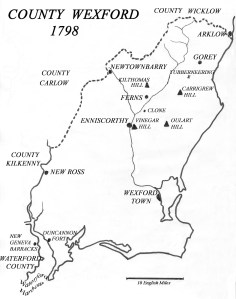
During the Irish Rebellion of 1798, the Battle of Bunclody, or Newtownbarry as it is called at the time, takes place on June 1, 1798 when a force of some 5,000 rebels led by Catholic priest Fr. Mogue Kearns attack the garrison at Bunclody as part of the Wexford rebels campaign against border garrisons.
The garrison is forewarned of the approaching rebels and have prepared defensive outposts facing the rebel line of advance. The rebel army occupies high ground to the west and stations an artillery piece, captured in their victory over the military at the Battle of Three Rocks, facing the approaches to town. As the bulk of the rebel army forms for the attack, their gunners open an accurate fire on the exposed lines of soldiers who retreat into the cover of the town.
Seizing the moment, the rebels quickly move in, forcing the garrison to flee across the bridge into County Carlow but crucially, fail to occupy this approach to the town. The rebels now have an almost bloodless victory and numbers of them began to celebrate, roaming the town in search of plunder and enemies. As rebel discipline begins to waver, trapped units of yeomen, some of whom have barricaded themselves into their own houses, open fire on the unsuspecting rebels milling in the streets outside.
Meanwhile, the garrison has paused in their retreat and, upon hearing the sound of gunfire from the town, turn about and launch a surprise attack back across the bridge, which catches the rebels, distracted by the unexpected pockets of resistance, completely by surprise. In the rout that follows, 400 of the rebels are killed and their army is scattered for the loss of no more than half a dozen of the military.
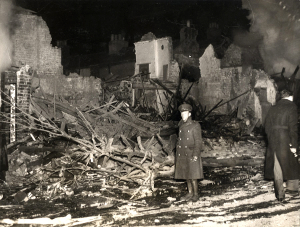
Four German bombs are dropped on north Dublin at approximately 2:00 AM on May 31, 1941. One bomb falls in the Ballybough area, demolishing the two houses at 43 and 44 Summerhill Park, injuring many but with no loss of life. A second bomb falls at the Dog Pond pumping works near the zoo in Phoenix Park, again with no casualties but damaging Áras an Uachtaráin, the official residence of the Irish President. A third bomb makes a large crater in the North Circular Road near Summerhill, again causing no injuries. A fourth bomb falls in North Strand destroying seventeen houses and severely damaging about fifty others, the worst damage occurring in the area between Seville Place and Newcomen Bridge. The raid claims the lives of 28 people, injures 90, destroys or damages approximately 300 houses, and leaves 400 people homeless.
The first bombing of Dublin during World War II occurs early on the morning of January 2, 1941, when German bombs are dropped on the Terenure area of south Dublin. This is followed, early on the following morning of January 3, 1941, by further German bombing of houses on Donore Terrace in the South Circular Road area of south Dublin. A number of people are injured, but no one is killed in these bombings.
After the war, what becomes West Germany accepts responsibility for the raid, and by 1958 it has paid compensation of £327,000. Over 2,000 claims for compensation are processed by the Irish government, eventually costing £344,000. East Germany and Austria, which are both part of Nazi Germany in 1941, make no contribution. The amounts are fixed after the 1953 London Agreement on German External Debts, allowing maximum compensation.
Several reasons for the raid have been asserted over time. German Radio, operated by the Ministry of Public Enlightenment and Propaganda, broadcasts that “it is impossible that the Germans bombed Dublin intentionally.” Irish airspace has been violated repeatedly, and both Allied and German airmen are being interned at the Curragh Camp. A possible cause is a navigational error or a mistaken target, as one of the pathfinders on the raid later recounts. Numerous large cities in the United Kingdom are targeted for bombing, including Belfast, which like Dublin, is across the Irish Sea from Great Britain. War-time Germany’s acceptance of responsibility and post-war Germany’s payment of compensation are cited as further indications that the causation is error on the part of the Luftwaffe pilots.
Another possible reason is that in April 1941, Germany has launched the Belfast blitz, which results in Belfast being heavily bombed. In response, Ireland sends rescue, fire, and emergency personnel to Belfast to assist the city. Éamon de Valera, the Taoiseach, formally protests the bombing to the German government, as well as making his famous “they are our people” speech. Some contend that the raid serves as a warning to Ireland to keep out of the war. This contention is given added credibility when Colonel Edward Flynn, second cousin of Ireland’s Minister for Coordination of Defensive Measures, recalls that Lord Haw Haw has warned Ireland that Dublin’s Amiens Street Railway Station, where a stream of refugees from Belfast is arriving, will be bombed. The station, now called Connolly Station, stands a few hundred metres from North Strand Road, where the bombing damage is heaviest. Flynn similarly contends that the German bombing of Dundalk on July 4 is also a pre-warning by Lord Haw Haw as a punishment for Dundalk being the point of shipment of Irish cattle sold to the United Kingdom.
First elected Mayor of Baltimore in 1999, O’Malley is re-elected as mayor in 2003. Considering a run for governor in 2002, O’Malley instead focuses on his mayoralty. In 2006, nearing the end of his second term as mayor, O’Malley announces his candidacy for Governor of Maryland, an office he wins by a sizeable margin. He is re-elected by a wider margin in a rematch against Bob Ehrlich in 2010. O’Malley has been seen as a potential presidential candidate since at least November 2012.
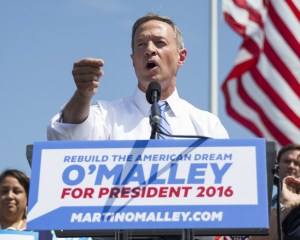
O’Malley’s announcement includes a swing at Democratic candidate Hillary Rodham Clinton and Republican candidate Jeb Bush, “Recently, the CEO of Goldman Sachs let his employees know that he’d be just fine with either Bush or Clinton. Well, I’ve got news for the bullies of Wall Street—the presidency is not a crown to be passed back and forth by you between two royal families.”
During his speech, O’Malley cast Baltimore’s recent racial unrest, including a night of riots after the funeral of Freddie Gray who died of injuries sustained in police custody, as a symptom of a larger American problem. “What took place here was not only about race…not only about policing in America. It’s about everything it is supposed to mean to be an American,” he said. “The scourge of hopelessness that happened to ignite here that evening, transcends race or geography.”
O’Malley also takes swings at Wall Street. “Tell me how it is, that you can get pulled over for a broken taillight in our country, but if you wreck the nation’s economy you are untouchable.”
Highlighting his record as Maryland’s governor, O’Malley notes that he supported a successful bid to legalize gay marriage and helped raise the minimum wage.
Circa 1189 de Lacy is appointed Viceroy of Ireland, a position previously held by his father, Hugh de Lacy, Lord of Meath. He is replaced in 1190 by Guillaume le Petil. He is later reappointed to serve as viceroy from 1205 to 1210.
In 1199, King John authorises de Lacy to wage war on John de Courcy, who has conquered much of Ulster without help or permission from the King. Hugh captures de Courcy in 1204. An account of the capture appears in the Book of Howth.
After King John creates him Earl of Ulster in 1205, he makes what was de Courcy’s territory in Ulster the Earldom of Ulster. He grants Drogheda its charter and continues the conquest of the northeastern over-kingdom of Ulaid, building on de Courcy’s success, with the earldom spanning across the modern counties of Antrim and Down and parts of Londonderry.
In 1207, war breaks out between the Earl of Ulster and the justiciar. This brings King John to Ireland, where he expels the earl’s brother, Walter de Lacy, from Meath, and compels the earl himself to flee to Scotland.
For several years Ulster takes part in the wars in France, and de Lacy does not return to Ireland until 1221, when he allies himself with the O’Neills against the English. In 1226, his lands in Ulster are handed over to his brother Walter, but they are restored to him in the following year, after which date, he appears to loyally serve the king, being more than once summoned to England to give advice about Irish affairs.
De Lacy purportedly separates from his first wife and lives in adultery. He has legitimate and natural children. In 1226, his daughter by his first wife marries Alan, Lord of Galloway. He marries his second wife, Emmeline de Riddlesford, the daughter of Walter de Riddlesford around 1242. Hugh de Lacy dies shortly thereafter in 1242 or 1243. Emmeline’s second marriage takes place around 1243 with Stephen Longespee, grandson of Henry II of England, by whom she has two daughters, Ela Longespee, Lady of Ashby, and Emmeline Longespee, Lady of Offaly.
Left with no surviving legitimate children, the earldom of Ulster reverts to the crown upon de Lacy’s death.
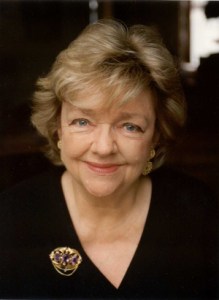
Maeve Binchy Snell, known as Maeve Binchy, Irish novelist, playwright, short story writer, columnist, and speaker best known for her sympathetic and often humorous portrayal of small-town life in Ireland, is born on May 28, 1939, in Dalkey, County Dublin.
Binchy is the oldest of four children born to William and Maureen (née Blackmore) Binchy. Educated at St. Anne’s, Dún Laoghaire, and later at Holy Child Convent, Killiney, she goes on to study at University College Dublin, where she earns a bachelor’s degree in history. She works as a teacher of French, Latin, and history at various girls’ schools.
A 1963 trip to Israel profoundly affects both her career and her faith. One Sunday, attempting to find the location of the Last Supper, she climbs a mountainside to a cavern guarded by an Israeli soldier. She weeps with despair and the soldier asks, “What’ya expect ma’am – a Renaissance table set for 13?” She replies, “Yes! That’s just what I did expect.” This experience causes her to renounce her Catholic faith and eventually turn to atheism.
In 1968, Binchy joins the staff at The Irish Times, and works there as a writer, columnist, the first Women’s Page editor, and the London editor reporting for the paper from London before returning to Ireland.
Binchy, tall and rather stout, never considers herself to be attractive. She ultimately encounters the love of her life, children’s author Gordon Snell, while recording a piece for Woman’s Hour in London. Their friendship blossoms into a cross-border romance, with her in Ireland and him in London, until she eventually secures a job in London through The Irish Times. They are married in 1977 and eventually return to live in Dalkey, not far from where she had grown up.
In all, Binchy publishes 16 novels, four short-story collections, a play, and a novella. A 17th novel, A Week in Winter, is published posthumously. Her literary career begins with two books of short stories, Central Line (1978) and Victoria Line (1980). She publishes her debut novel Light a Penny Candle in 1982.
Most of Binchy’s stories are set in Ireland, dealing with the tensions between urban and rural life, the contrasts between England and Ireland, and the dramatic changes in Ireland between World War II and the present day. Her books have been translated into 37 languages.
In 2002, Binchy suffers a health crisis related to a heart condition, which inspires her to write Heart and Soul. The book about a heart failure clinic in Dublin and the people involved with it, reflects many of her own experiences and observations in the hospital.
Binchy dies on July 30, 2012, at the age of 73, in a Dublin hospital with her husband at her side. She had suffered from various maladies, including painful osteoarthritis, which results in a hip operation. A month before her death she suffers a severe spinal infection and finally succumbs to a heart attack. Just ahead of that evening’s Tonight with Vincent Browne and TV3‘s late evening news, Vincent Browne and then Alan Cantwell, who respectively anchor these shows, announce to Irish television viewers that Binchy has died earlier in the evening.
Despite being an atheist, Binchy is given a traditional Requiem Mass which takes place at the Church of the Assumption, in her hometown of Dalkey. She is later cremated at Mount Jerome Cemetery and Crematorium.
Aer Lingus, the flag carrier airline of Ireland and the second-largest airline in Ireland, is founded on April 15, 1936, with a capital of £100,000. Its first chairman is Seán Ó hUadhaigh. Pending legislation for Government investment through a parent company, Aer Lingus is associated with Blackpool and West Coast Air Services which advance the money for the first aircraft, and operate with Aer Lingus under the common title Irish Sea Airways. Aer Lingus Teoranta is registered as an airline on May 22, 1936. The name Aer Lingus is an anglicisation of the Irish form Aer Loingeas, which means Air Fleet. The name is proposed by Richard F. O’Connor, who is County Cork Surveyor, as well as an aviation enthusiast.
Later that year, the airline acquires its second aircraft, a four-engined biplane De Havilland 86 Express named “Éire”, with a capacity of 14 passengers. This aircraft provides the first air link between Dublin and London by extending the Bristol service to Croydon. At the same time, the DH84 Dragon is used to inaugurate an Aer Lingus service on the Dublin-Liverpool route.
Aer Lingus currently operates an all-Airbus aircraft fleet serving Europe, North Africa, Turkey, and North America. The airline’s head office is on the grounds of Dublin Airport in Collinstown, County Fingal, Ireland.
The Gothic horror novel Dracula, written by Bram Stoker of Dublin, is first published on May 26, 1897. The novel tells the story of Dracula’s attempt to move from Transylvania to England so that he may find new blood and spread the undead curse, and of the battle between Dracula and a small group of men and women led by Professor Abraham Van Helsing.
Between 1879 and 1898, Stoker is a business manager for the world-famous Lyceum Theatre in London, where he supplements his income by writing a large number of sensational novels, including the vampire tale Dracula. Parts of the novel are set around the town of Whitby, where he spends summer holidays.
Throughout the 1880s and 1890s, authors such as H. Rider Haggard, Rudyard Kipling, Robert Louis Stevenson, Arthur Conan Doyle, and H. G. Wells write many tales in which fantastic creatures threaten the British Empire. Invasion literature is at a peak, and Stoker’s formula of an invasion of England by continental European influences is very familiar by 1897 to readers of fantastic adventure stories. Victorian readers enjoy Dracula as a good adventure story like many others, but it does not reach its iconic legendary status until later in the 20th century when film versions begin to appear.
Before writing Dracula, Stoker spends seven years researching European folklore and stories of vampires, being most influenced by Emily Gerard‘s 1885 essay Transylvania Superstitions. Later he also claims that he has a nightmare, caused by eating too much crab meat covered with mayonnaise sauce, about a “vampire king” rising from his grave.
Despite being the most widely known vampire novel, Dracula is not the first. It is preceded and partly inspired by Sheridan Le Fanu‘s 1871 Carmilla, about a lesbian vampire who preys on a lonely young woman, and by Varney the Vampire, a lengthy penny dreadful serial from the mid-Victorian period by James Malcolm Rymer. John Polidori creates the image of a vampire portrayed as an aristocratic man, like the character of Dracula, in his tale The Vampyre in 1819.
The Lyceum Theatre where Stoker works between 1878 and 1898 is headed by actor-manager Henry Irving, who is Stoker’s real-life inspiration for Dracula’s mannerisms and who Stoker hopes would play Dracula in a stage version. Irving never does agree to do a stage version, but Dracula’s dramatic sweeping gestures and gentlemanly mannerisms draw their living embodiment from Irving.
The Dead Un-Dead is one of Stoker’s original titles for Dracula, and the manuscript is entitled simply The Un-Dead up until a few weeks before publication. Stoker’s notes for Dracula show that the name of the count is originally “Count Wampyr”, but Stoker becomes intrigued by the name “Dracula” while doing research, after reading William Wilkinson‘s book An Account of the Principalities of Wallachia and Moldavia with Political Observations Relative to Them (London 1820), which he finds in the Whitby Library and consults a number of times during visits to Whitby in the 1890s. The name Dracula is the patronym of the descendants of Vlad II of Wallachia, who takes the name “Dracul” after being invested in the Order of the Dragon in 1431. In the Romanian language, the word dracul can mean either “the dragon” or, especially in the present day, “the devil.”
Dracula is copyrighted in the United States in 1899 with the publication by Doubleday & McClure of New York. However, when Universal Studios purchases the rights, it comes to light that Bram Stoker has not complied with a portion of U.S. copyright law, placing the novel into the public domain. In the United Kingdom and other countries following the Berne Convention on copyrights, the novel is under copyright until April 1962, fifty years after Stoker’s death.
F. W. Murnau‘s unauthorized film adaptation Nosferatu is released in 1922, and the popularity of the novel increases considerably, owing to the controversy caused when Stoker’s widow tries to have the film removed from public circulation. Florence Stoker sues the film company and wins; however, the company is bankrupt, and Stoker only recovers her legal fees and an order by the court for all copies of the film to be destroyed. Some copies survive and find their way into theatres. Eventually, Florence Stoker simply gives up the fight against public displays of the film.
Dracula has been assigned to many literary genres including vampire literature, horror fiction, gothic fiction, and invasion literature. Stoker does not invent the vampire, but he defines its modern form, and the novel has spawned numerous theatrical, film, and television interpretations.


 U.S. President
 Five days after being registered as an airline, the inaugural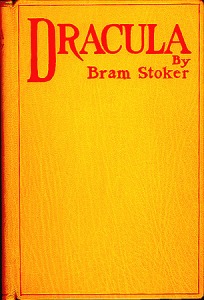
 seamus dubhghaill