seamus dubhghaill

Promoting Irish Culture and History from Little Rock, Arkansas, USA


Leave a comment

Sinking of the RMS Titanic

The RMS Titanic, four days into her maiden voyage from Southampton to New York City, sinks in the north Atlantic Ocean at 2:20 AM on the morning of April 15, 1912, after striking an iceberg just before midnight on April 14.

Titanic, the largest ship afloat at the time it enters service on April 2, 1912, is the second of three Olympic class ocean liners operated by the White Star Line, and is built by the Harland & Wolff shipyard in Belfast, Northern Ireland.

Titanic‘s maiden voyage, commanded by 62-year-old Captain Edward John Smith, begins shortly after noon on April 10, 1912 when she leaves Southampton on the first leg of her journey to New York City. A few hours later she reaches Cherbourg in France, where she takes on passengers. Her next port of call is Queenstown (now Cobh) in Ireland, which she reaches around midday on April 11. After taking on more passengers and stores, Titanic departs in the afternoon with an estimated 2,224 people on board.

Titanic receives six warnings of sea ice on April 14 but is traveling near her maximum speed when her lookouts sight the iceberg. Unable to turn quickly enough, the ship suffers a glancing blow that buckles her starboard side and opens five of her sixteen compartments to the sea. Titanic has been designed to stay afloat with four of her forward compartments flooded but not more, and the crew soon realises that the ship is going to sink. They use distress flares and wireless radio messages to attract help as the passengers are put into lifeboats. However, in accordance with existing practice, Titanic‘s lifeboat system is designed to ferry passengers to nearby rescue vessels, not to hold everyone on board simultaneously. With the ship sinking quickly and help still hours away, there is no safe refuge for many of the passengers and crew. Compounding this, poor management of the evacuation means many boats are launched before they are totally full.

At about 2:15 AM, Titanic‘s angle in the water begins to increase rapidly as water pours into previously unflooded parts of the ship through deck hatches. Her suddenly increasing angle causes a giant wave to wash along the ship from the forward end of the boat deck, sweeping many people into the sea. Titanic‘s stern lifts high into the air as the ship tilts down in the water, reaching an angle of 30–45 degrees. After another minute, the ship’s lights flicker once and then permanently go out, plunging Titanic into darkness. Shortly after the lights go out, the ship splits apart at one of the weakest points in the structure, the area of the engine room hatch. The submerged bow likely remains attached to the stern by the keel for a short time, pulling the stern to a high angle before separating and leaving the stern to float for a few minutes longer. The forward part of the stern floods very rapidly, causing it to tilt and then settle briefly before sinking.

Titanic sinks with over a thousand passengers and crew still on board. Almost all those who jump or fall into the water die from hypothermia within minutes. RMS Carpathia arrives on the scene about 90 minutes after the sinking and has rescued the last of the survivors by 9:15 AM on April 15, some nine and a half hours after the collision with the iceberg.

The death toll has been put at 1,513, including many Irish, although the number of casualties remains somewhat unclear due to a number of factors, including confusion over the passenger list, which includes some names of people who cancelled their trip at the last minute, and the fact that several passengers traveled under aliases for various reasons and were double-counted on the casualty lists.

The disaster causes widespread outrage over the lack of lifeboats, lax regulations, and the unequal treatment of the three passenger classes during the evacuation. Subsequent inquiries recommend sweeping changes to maritime regulations, leading to the establishment in 1914 of the International Convention for the Safety of Life at Sea (SOLAS), which still governs maritime safety today.


Leave a comment

Occupation of the Four Courts in Dublin

occupation-of-four-courtsAbout 200 Anti-Treaty Irish Republican Army militants led by Rory O’Connor occupy the Four Courts in the centre of Dublin on April 14, 1922 in defiance of the Provisional Government. They intend to provoke the British troops, who are still in the country, to attack them, which they believe will restart the war with Britain and re-unite the Irish Republican Army against their common enemy. They also occupy other smaller buildings regarded as being associated with the former British administration, such as the Ballast Office and the Freemasons’ Hall in Molesworth Street, but the Four Courts remains the focus of interest. On June 15, O’Connor sends out men to collect the rifles that belong to the mutineers of the Civic Guards.

Winston Churchill and the Cabinet of the United Kingdom apply pressure on the Provisional Government to dislodge the rebels in Four Courts, considering their presence there as a violation of the Anglo-Irish Treaty. Michael Collins, President of the Provisional Government Cabinet, tries desperately to persuade O’Connor and his men to leave the building over the next three months. At the Third IRA Convention, the executive is split over whether the Irish Government should demand that all British troops leave within 72 hours. The motion is defeated, but the IRA splits into two factions opposed to the government, one conciliatory, led by Liam Lynch, Sean Moylan, and Liam Deasy, and the other less moderate, led by Tom Barry and Joe McKelvey.

During the month of June 1922, the Provisional Government engages in intense negotiations with the British Cabinet, seeking to diffuse the threat of imminent civil war. However, the conservative British Cabinet refuses to cooperate.

On June 22, 1922, arch-Unionist Sir Henry Wilson is assassinated by two IRA men, both former British soldiers, Reginald Dunne and Joseph O’Sullivan. It is considered by some that this is done on the orders of Michael Collins, who has been a close friend of Dunne in the London Irish Republican Brotherhood. David Lloyd George writes an angry letter to Collins which includes the line “…still less can Mr. Rory O’Connor be permitted to remain his followers and his arsenal in open rebellion in the heart of Dublin… organizing and sending out from this centre enterprises of murder not only in the area of your Government…”

On June 28, 1922, after the Four Courts garrison has kidnapped J.J. “Ginger” O’Connell, a general in the new Free State Army, Collins begins shelling the Four Courts with borrowed British artillery. O’Connor and 130 men surrender on July 3 and are arrested and imprisoned at Mountjoy Prison. This incident sparks the Irish Civil War as fighting breaks out around the country between pro and anti-treaty factions.


Leave a comment

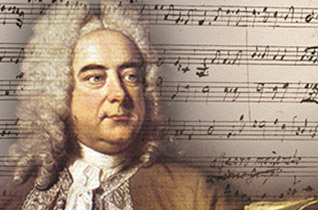
First Performance of Handel’s Messiah

george-friedrich-handel

George Friedrich Handel’s Messiah is performed for the first time at Mr. Neale’s Great Musick Hall on Fishamble Street in Dublin on April 13, 1742. It receives its London premiere nearly a year later. After an initially modest public reception, the oratorio gains in popularity, eventually becoming one of the best known and most frequently performed choral works in Western music.

Handel decides to give a season of concerts in Dublin in the winter of 1741–42 arising from an invitation from the Duke of Devonshire, then serving as Lord Lieutenant of Ireland. After arriving in Dublin on November 18, 1741, Handel arranges a subscription series of six concerts, to be held between December 1741 and February 1742 at the Great Musick Hall on Fishamble Street. These concerts are so popular that a second series is quickly arranged. Messiah figures in neither series.

In early March, Handel begins discussions with the appropriate committees for a charity concert, to be given in April, at which he intends to present Messiah. He seeks and is given permission from St. Patrick’s Cathedral and Christ Church Cathedral to use their choirs for this occasion. The women soloists are Christina Maria Avoglio, who sang the main soprano roles in the two-subscription series, and Susannah Cibber, an established stage actress and contralto who sang in the second series. The performance, also in the Fishamble Street hall, is originally announced for April 12, but is deferred for one day “at the request of persons of Distinction.” The orchestra in Dublin, the exact size of which is unknown, is comprised of strings, two trumpets, and timpani. Handel has his own organ shipped to Ireland for the performances.

The three charities benefit from the performance – the prisoners’ debt relief, the Mercer’s Hospital, and the Charitable Infirmary. In its report on a public rehearsal, the Dublin News-Letter describes the oratorio as “… far surpassing anything of that Nature which has been performed in this or any other Kingdom.” Seven hundred people attend the premiere on April 13. In order to accommodate the largest possible audience, gentlemen are requested to remove their swords and ladies are asked not to wear hoops in their dresses. The performance earns unanimous praise from the assembled press: “Words are wanting to express the exquisite delight it afforded to the admiring and crowded Audience.” A Dublin clergyman, Rev. Delaney, is so overcome by Susanna Cibber’s rendering of “He was despised” that he reportedly leaps to his feet and cries, “Woman, for this be all thy sins forgiven thee!” The takings amount to around £400, providing about £127 to each of the three nominated charities and securing the release of 142 indebted prisoners.

Handel remains in Dublin for four months after the premiere. He organises a second performance of Messiah on June 3, which is announced as “the last Performance of Mr. Handel’s during his Stay in this Kingdom.” In this second Messiah, which is for Handel’s private financial benefit, Cibber reprises her role from the first performance, although details of other performers are not recorded.


Leave a comment

Birth of Charles Gavin Duffy in County Monaghan

charles-gavin-duffy

Charles Gavan Duffy, Irish nationalist, journalist, poet, and Australian politician, is born on April 12, 1816, in Dublin Street, Monaghan Town, County Monaghan. Duffy is the 8th Premier of Victoria and one of the most colourful figures in Victorian political history.

Both of his parents die while he is still a child and his uncle, Fr. James Duffy, who is the Catholic Parish Priest of Castleblayney, becomes his guardian for a number of years. He is educated at St. Malachy’s College in Belfast and is admitted to the Irish Bar in 1845. Duffy becomes a leading figure in Irish literary circles.

Duffy, along with Thomas Osborne Davis and John Blake Dillon, founds The Nation and becomes its first editor. Davis and Dillon later become Young Irelanders. All three are members of Daniel O’Connell‘s Repeal Association. This paper, under Duffy, transforms from a literary voice into a “rebellious organisation.”

In August 1850, Duffy forms the Tenant Right League to bring about reforms in the Irish land system and protect tenants’ rights, and in 1852 is elected to the House of Commons for New Ross. By 1855, the cause of Irish tenants seems more hopeless than ever. Broken in health and spirit, Duffy publishes a farewell address to his constituency, declaring that he has resolved to retire from parliament, as it is no longer possible to accomplish the task for which he has solicited their votes.

In 1856, emigrates with his family to Australia, settling in the newly formed Colony of Victoria. A public appeal is held to enable him to buy the freehold property necessary to stand for the colonial Parliament. He is immediately elected to the Legislative Assembly for Villiers and Heytesbury in the Western District in 1856. He later represented Dalhousie and then North Gippsland. With the collapse of the Victorian Government‘s Haines Ministry during 1857, another Irish Catholic, John O’Shanassy, unexpectedly becomes Premier with Duffy his second-in-charge.

In 1871, Duffy leads the opposition to Premier Sir James McCulloch‘s plan to introduce a land tax, on the grounds that it unfairly penalised small farmers. When McCulloch’s government is defeated on this issue, Duffy becomes Premier and Chief Secretary.  The majority of the colony is Protestant, and Duffy is accused of favouring Catholics in government appointments. In June 1872, his government is defeated in the Assembly on a confidence motion allegedly motivated by sectarianism.

When Graham Berry becomes Premier in 1877, he makes Duffy Speaker of the Legislative Assembly, a post he holds without much enthusiasm until 1880, when he quits politics and retires to the south of France. Duffy remains interested in both the politics of his adoptive country and of Ireland. He is knighted in 1873 and is made KCMG in 1877. Sir Charles Gavan Duffy dies in Nice, France, at the age of 86 in 1903.


Leave a comment

RMS Titanic Arrives At Queenstown

The RMS Titanic arrives at Queenstown, known today as Cobh, in County Cork on April 11, 1912, at 11:30 AM. The ship, on her maiden and only voyage, anchors two miles offshore at Roches Point as the port cannot accommodate a ship of its size. Queenstown is the last port of call for RMS Titanic prior to her transatlantic crossing.

Tenders are necessary to ferry goods and passengers from ship to shore and vice versa. One hundred twenty-three passengers are waiting on the White Star Line pier to board the tenders Ireland and America. Of the 123 passengers, three are traveling first class, seven are traveling second class, and the remainder are traveling third class (steerage). Seven passengers disembark at Queenstown.

After the passengers board, the tenders proceed to the deep-water quay to load 1,395 sacks of mail as well as many emigrants. The two tenders travel out to the anchored RMS Titanic to offload the mail.

At 1:30 PM, with all passengers and mail now on board, RMS Titanic gives three mighty blasts of her whistles signaling she is now ready to depart. The anchors are raised, and the engines slowly turn over. The ship makes a graceful turn to starboard and heads back out into the Irish Sea destined for her next port of call, New York City, where she is scheduled to arrive early the following Wednesday morning.

Of the 123 passengers who embark at Queenstown, only 44 survive the disaster of the horrible night of April 15, 1912.

(Pictured: The RMS Titanic as she departs Queenstown, quite possibly the last photograph ever taken of the liner)


Leave a comment

Signing of the Good Friday Agreement

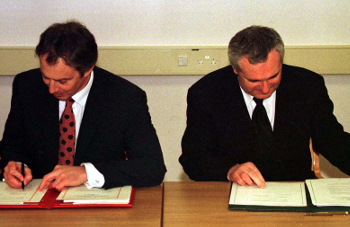
After nearly two years of talks, the Good Friday Agreement, a major political development in the Northern Ireland peace process of the 1990s, is signed by Irish Taoiseach Bertie Ahern and British Prime Minister Tony Blair on Good Friday, April 10, 1998 in Belfast, Northern Ireland.
The Good Friday Agreement brings to an end the 30 years of sectarian conflict in Northern Ireland known as “The Troubles.”  Northern Ireland’s present devolved system of government is based on the Agreement.

The Agreement is made up of two inter-related documents: (1) a multi-party agreement by most of Northern Ireland’s political parties and (2) an international agreement between the British and Irish governments called the British-Irish Agreement.

The Agreement sets out a complex series of provisions relating to a number of areas including the status and system of government of Northern Ireland within the United Kingdom (Strand 1), the relationship between Northern Ireland and the Republic of Ireland (Strand 2), and the relationship between the Republic of Ireland and the United Kingdom (Strand 3).

Issues relating to civil and cultural rights, decommissioning of weapons, justice and policing are central to the Agreement.

The Agreement is approved by voters across the island of Ireland in two referendums held on May 22, 1998. The people of both Northern Ireland and the Republic of Ireland need to approve the Agreement in order for it to come into effect. In Northern Ireland, voters are asked whether they support the multi-party agreement. In the Republic of Ireland, voters are asked whether they will allow the state to sign the agreement and allow necessary constitutional changes to facilitate it.

The British-Irish Agreement comes into force on December 2, 1999. The Democratic Unionist Party (DUP) is the only major political group in Northern Ireland to oppose the Good Friday Agreement.


Leave a comment

The SS Aud Begins Gun-Running Voyage to Ireland

the-ss-aud

The German merchant steam ship SS Libau, also known as SS Castro and masquerading under the cover name of SS Aud, sets sail from the Baltic port of Lübeck on April 9, 1916, loaded with guns and ammunition for the Irish Republican Brotherhood (IRB) as part of the preparation for the Easter Rising.

Masquerading as SS Aud, an existing Norwegian vessel of similar appearance, SS Libau sets sail from the port of Lübeck, under the command of Karl Spindler, bound for the southwest coast of Ireland. Under Spindler is a crew of 22 men, all of whom are volunteers. SS Libau, laden with an estimated twenty thousand rifles, one million rounds of ammunition, ten machine guns, and explosives under a camouflage of a timber cargo, evade patrols of both the British 10th Cruiser Squadron and local Auxiliary patrols.

After surviving violent storms off Rockall, SS Libau arrives in Tralee Bay on April 20. There they are due to meet Roger Casement and others, with Casement having been landed nearby by the German submarine U-19. The SS Libau has no communications equipment aboard, giving them no means of contacting the Irish while en route. As a result, they are unaware that the date for its arrival off Fenit has been altered from Thursday, April 20 to Sunday, April 23.

One of the two cars carrying Volunteers who are supposed to meet SS Libau crash into the River Laune, many miles away, at Ballykissane pier, Killorglin, resulting in the death of three of the four occupants of the car. This leads to no hope of an organised transfer of arms and the gun-running plan nears an end.

SS Libau, attempting to escape the area, is trapped by a blockade of British ships. Captain Spindler allows himself to be escorted towards Cork Harbour, in the company of the Acacia-class sloop HMS Bluebell. The German crew then scuttles the ship. Spindler and his crew are interned for the duration of the war. Roger Casement and his companions are captured in an old ringfort or rath between Ardfert and Tralee.

A number of rifles are recovered from SS Libau before the vessel is scuttled. Several examples exist in various museums in Britain and Ireland. Among these are the Cork Public Museum in Fitzgerald’s Park in Cork, a museum in Lurgan County Armagh, the National Museum of Ireland in Dublin, and the Imperial War Museum in London.


Leave a comment

William Gladstone Introduces the First Home Rule Bill

gladstone-introduces-home-rule-bill-1886

William Gladstone introduces the Government of Ireland Bill 1886, commonly known as the First Home Rule Bill, in the Parliament of England on April 8, 1886. It is the first major attempt by a British government to enact a law creating home rule for part of the United Kingdom of Great Britain and Ireland. The bill proposes to create a devolved assembly for Ireland which will govern Ireland in specific areas. The Irish Parliamentary Party under Charles Stewart Parnell has been campaigning for home rule for Ireland since the 1870s.

The Bill, like his Landlord and Tenant (Ireland) Act 1870, is very much the work of Gladstone, who excludes both the Irish MPs and his own ministers from participation in the drafting.

If passed, the 1886 Bill would create a unicameral assembly consisting of two Orders which could meet either together or separately. The first Order would consist of the 28 Irish representative peers plus 75 members elected through a highly restricted franchise. It could delay the passage of legislation for up to 3 years. The second Order would consist of either 204 or 206 members. All Irish MPs would be excluded from Westminster altogether.

Executive power would be possessed by the Lord Lieutenant of Ireland whose executive would not be responsible to either Order.

Britain would still retain control over a range of issues including peace, war, defence, treaties with foreign states, trade, and coinage. No special provision would be made for Ulster. Britain would retain control of the Royal Irish Constabulary (RIC) until it deems it safe for control to pass to Dublin. The Dublin Metropolitan Police would pass to Irish control.

When the bill is introduced, Charles Stewart Parnell has mixed reactions. He says that it has great faults but is prepared to vote for it. In his famous Irish Home Rule speech, Gladstone beseeches Parliament to pass it and grant Home Rule to Ireland in honour rather than being compelled to one day in humiliation. Unionists and the Orange Order are fierce in their resistance. For them, any measure of Home Rule is denounced as nothing other than Rome Rule.

The vote on the Bill takes place on 8 June 1886, after two months of debate. The Government of Ireland Bill is defeated by a vote of 341-311. In the staunchly loyalist town of Portadown, the so-called “Orange Citadel” where the Orange Order is founded in 1795, Orangemen and their supporters celebrate the Bill’s defeat by “Storming the Tunnel.”

Parliament is dissolved on June 26 and the U.K. general election of 1886 is called. Historians have suggested that the 1886 Home Rule Bill was fatally flawed by the secretive manner of its drafting, with Gladstone alienating Liberal figures like Joseph Chamberlain who, along with a colleague, resigned in protest from the ministry, while producing a Bill viewed privately by the Irish as badly drafted and deeply flawed.


Leave a comment

Attempted Assassination of Mussolini by Violet Gibson

violet-albina-gibson

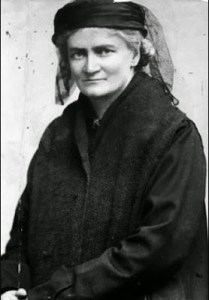
The Honourable Violet Albina Gibson, daughter of Lord Ashbourne, attempts to assassinate Benito Mussolini in Rome on April 7, 1926.

Gibson is born in Dublin in 1876. Her father, Edward Gibson, is an Irish lawyer and politician who is created Baron Ashbourne in 1886. She becomes a Roman Catholic in 1902.

In 1924, after spending two years in a mental institution, Gibson is released and goes to Rome accompanied by a nurse, Mary McGrath. They take up residence in a convent in a working-class neighborhood with a high crime rate. Her crisis of conscience grows as she becomes more convinced that killing is the sacrifice that God is asking of her. During this time, she somehow gains possession of a gun.

On February 27, 1925, Gibson goes to her room, reads the Bible, and then shoots herself in the chest. The bullet misses her heart, passes through her ribcage, and lodges in her shoulder. She tells McGrath that she wants to die for God. She recovers from the wound.

On Wednesday, April 7, 1926, Gibson leaves the convent after breakfast. In her right pocket she carries a revolver wrapped in a black veil. In her left pocket she carries a rock in case she has to break a windshield to get to Mussolini. She also clutches the address of the Fascist Party headquarters written on a scrap of envelope as she has read in the newspaper that Mussolini will be there in the afternoon.

Mussolini appears as scheduled and walks through the Palazzo del Littorio, soaking in the praise of the crowd. He stops about a foot from where Gibson is standing. Just before the gun goes off, Mussolini leans his head back to acknowledge the crowd’s adoration and the bullet grazes his nose. Gibson shoots again but the gun misfires.

Mussolini maintains his composure and consoles the crowd saying, “Don’t be afraid. This is a mere trifle.” Gibson is immediately captured and beaten by the crowd. The police gain control of the situation and take her away just before she succumbs to vigilante justice.

At the time of the assassination attempt Gibson is almost fifty years old and does not explain her reason for trying to assassinate Mussolini. It is theorised that Gibson is insane at the time of the attack and the idea of assassinating Mussolini is hers and that she worked alone. In a statement in reply to the questions of the Crown prosecutor, Gibson says she felt impelled by a “supernatural force entrusting her with a lofty mission.”

Gibson is later deported to Britain after being released without charge at the request of Mussolini. She spends the rest of her life in a mental asylum, St. Andrew’s Hospital in Northampton. She dies on May 2, 1956, and is buried in Kingsthorpe Cemetery, Northampton. No one attends her burial.


Leave a comment

Birth in Belfast of Ian Paisley

ian-paisley

Ian Richard Kyle Paisley, loyalist politician and Protestant religious leader from Northern Ireland is born on April 6, 1926, in Armagh, County Armagh.

Paisley becomes a Protestant evangelical minister in 1946 and remains one for the rest of his life. In 1951, he co-founds the fundamentalist Free Presbyterian Church of Ulster and is its leader until 2008. Paisley becomes known for his fiery speeches and regularly preaches and protests against Catholicism, ecumenism and homosexuality. He gains a large group of followers who are referred to as “Paisleyites.”

Paisley becomes involved in Ulster unionist/loyalist politics in the late 1950s. In the mid-late 1960s he leads and instigates loyalist opposition to the Catholic civil rights movement in Northern Ireland. This leads to the outbreak of The Troubles in the late 1960s, a conflict that engulfs Northern Ireland for the next thirty years. In 1970, he becomes Member of Parliament for North Antrim and the following year he founds the Democratic Unionist Party (DUP), which he leads for almost forty years. In 1979, he becomes a Member of the European Parliament.

Throughout the Troubles, Paisley is seen as a firebrand and the face of hard-line unionism. He opposes all attempts to resolve the conflict through power-sharing between unionists and Irish nationalists/republicans, and all attempts to involve the Republic of Ireland in Northern affairs. His efforts help bring down the Sunningdale Agreement of 1974. He also opposes the Anglo-Irish Agreement of 1985, with less success. His attempts to create a paramilitary movement culminate in Ulster Resistance. Paisley and his party also oppose the Northern Ireland peace process and Good Friday Agreement of 1998.

In 2005, Paisley’s DUP becomes the largest unionist party in Northern Ireland, displacing the Ulster Unionist Party (UUP), which has dominated unionist politics since 1905. In 2007, following the St. Andrews Agreement, the DUP finally agrees to share power with republican party Sinn Féin and consent to all-Ireland governance in certain matters. Paisley and Sinn Féin’s Martin McGuinness become First Minister and deputy First Minister respectively in May 2007. Paisley steps down as First Minister and DUP leader in May 2008 and leaves politics in 2011. Paisley is made a life peer in 2010 as Baron Bannside.

In November 2011, Paisley announces to his congregation that he is retiring as a minister. He delivers his final sermon to a packed attendance at the Martyrs’ Memorial Hall on December 18, 2011, and finally retires from his religious ministry on January 27, 2012.

Paisley dies in Belfast on September 12, 2014. He is buried in Ballygowan, County Down on September 15 following a private funeral and a public memorial for 800 invited guests is held in the Ulster Hall on October 19. An obituary in The New York Times reports that late in life Paisley had moderated and softened his stances against Roman Catholics but that “the legacies of fighting and religious hatreds remained.”