The bomb in the Horse and Groom pub detonates at 8:30 PM. It kills Paul Craig, a 22-year-old plasterer, two members of the Scots Guards and two members of the Women’s Royal Army Corps. The Seven Stars pub is evacuated after the first blast, and thus there are no serious injuries when the second bomb explodes at 9:00 PM.
These attacks are the first in a year-long campaign by an IRA Active Service Unit who are eventually captured after the Balcombe Street siege. A similar bomb to those used in Guildford, with the addition of shrapnel, is thrown into the Kings Arms pub in Woolwich on November 7, 1974. Gunner Richard Dunne and Alan Horsley, a salesclerk, die in that explosion. On August 27, 1975, the same IRA unit detonates a bomb in Surrey at the Caterham Arms pub which injures over 30 people. Surrey police say it is “a carbon copy of the Guildford bombs.”
In December 1974 the police arrest Gerry Conlon, Paul Hill, Patrick Armstrong and Carole Richardson, later known as the Guildford Four. The Guildford Four are falsely convicted of the bombings in October 1975 after the Metropolitan Police use the Prevention of Terrorism Acts to force false confessions. All four are sentenced to life in prison.
The Guildford Four are held in prison for fifteen years, although Gerry Conlon dies near the end of his third year of imprisonment. All the convictions are overturned years later in the appeal courts after it is proved the Guildford Four’s convictions had been based on confessions obtained by torture, while evidence specifically clearing the Four is not reported by the police.
On the afternoon of October 3, the Diamantis is torpedoed by U-35 and sinks 40 miles west of the Scilly Islands. Because the lifeboats are not suited for use in the bad weather, Lott decides to take all crew members aboard and lands them the next day at Dingle.
The realities of World War II reach the shores of the Dingle Peninsula as a crowd of local people are amazed when they see a German submarine coming within 10 yards of the shore at Ventry. What they do not know at the time is that they are witnessing a most humane and unwarlike act by the German captain on board the submarine.
Twenty-eight Greek sailors from the Diamantis are landed at Ventry, two at a time in a small lifeboat. The submarine pulls away, none of the German crew having set foot on neutral Irish soil. The Greeks are brought to a local farmhouse owned by Thomas Cleary and his mother Joan.
In 1984, Werner Lott makes a nostalgic first trip to Dingle and even meets Jimmy Fenton of Ballymore, one of the locals who had witnessed the drama of that night.
“I was about 11 at the time and I remember we had just come home from school when the excitement began. I had to run about a quarter of a mile to the harbour when I spotted the sub. I think the first person there was a local customs man called Browne.”
After all this time the German captain hears how grateful the Greeks are to him. “Their English was bad but they kept saying ‘German gut man’,” says Fenton.
In a major interview, Captain Lott, who is reared in an African colony where his father is one of the first white doctors, describes how he came so close to Dingle shore during World War II, how he was shortly afterwards taken prisoner himself and how a life long friendship with Lord Louis Mountbatten began.
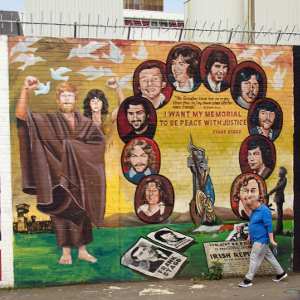
The Irish Republican Army (IRA) hunger strike is called off at Long Kesh prison – later known as HM Prison Maze – on October 3, 1981. While the IRA does not win immediate concessions, in some ways it is a Pyrrhic victory for Margaret Thatcher’s government. It galvanises support and membership for the IRA and generates huge sympathy for the strikers in the United States where fund-raising is a major priority. The death of the first hunger striker, Bobby Sands, creates a martyr and an iconic figure.
In January 1981, prison authorities begin to supply the prisoners with officially issued civilian clothing, whereas the prisoners demand the right to wear their own clothing. On February 4, the prisoners issue a statement saying that the British government has failed to resolve the crisis and declares their intention of a hunger strike. The hunger strike begins on March 1, when Bobby Sands, the IRA’s former officer commanding (OC) in the prison, refuses food. Unlike the first hunger strike the previous year, the prisoners join one at a time and at staggered intervals, which they believe would arouse maximum public support and exert maximum pressure on Prime Minister Margaret Thatcher.
The republican movement initially struggles to generate public support for the second hunger strike. The Sunday before Sands begins his strike, 3,500 people march through west Belfast. During the first hunger strike four months earlier, the marchers had numbered 10,000. Five days into the strike, Independent Republican MP for Fermanagh and South TyroneFrank Maguire dies, resulting in a by-election. There is debate among nationalists and republicans regarding who should contest the election. After negotiations they agree not to split the nationalist vote by contesting the election and Sands stands as an Anti H-Block candidate against Ulster Unionist Party candidate Harry West. Following a high-profile campaign, the election takes place on April 9, and Sands is elected to the British House of Commons with 30,492 votes to West’s 29,046.
Sands’ election victory raises hopes that a settlement can be negotiated, but Thatcher stands firm in refusing to give concessions to the hunger strikers. The world’s media descends on Belfast, and several intermediaries visit Sands in an attempt to negotiate an end to the hunger strike, including Síle de Valera, granddaughter of Éamon de Valera, Pope John Paul II‘s personal envoy John Magee, and European Commission of Human Rights officials. With Sands close to death, the government’s position remains unchanged.
On 5 May, Sands dies in the prison hospital on the 66th day of his hunger strike, prompting rioting in nationalist areas of Northern Ireland. More than 100,000 people line the route of his funeral, which is conducted with full IRA military honours. Margaret Thatcher shows no sympathy for his death.
In the two weeks following Sands’ death, hunger strikers Francis Hughes, Raymond McCreesh and Patsy O’Hara die. Following the deaths of Joe McDonnell and Martin Hurson, the families of some of the hunger strikers attend a meeting on July 28 with Catholic priest Father Denis Faul. The families express concern at the lack of a settlement to the priest, and a decision is made to meet with Gerry Adams later that day. The following day Adams holds a meeting with six of the hunger strikers to outline a proposed settlement on offer from the British government should the strike be brought to an end. The six men reject the settlement, believing that accepting anything less than the “Five Demands” would be a betrayal of the sacrifice made by Bobby Sands and the other hunger strikers who had died.
The hunger strike begins to break on July 31, when the mother of Paddy Quinn insists on medical intervention to save his life. The following day Kevin Lynch dies, followed by Kieran Doherty on August 2, Thomas McElwee on August 8 and Michael Devine on August 20. On September 6, the family of Laurence McKeown becomes the fourth family to intervene and asks for medical treatment to save his life, and Cahal Daly issues a statement calling on republican prisoners to end the hunger strike.
The strike is called off at 3:15 PM on October 3, 1981. Three days later, James Prior, the new Secretary of State for Northern Ireland, announces partial concessions to the prisoners including the right to wear their own clothes at all times. The only one of the “Five Demands” still outstanding is the right not to do prison work. Following sabotage by the prisoners and the Maze Prison escape in 1983, the prison workshops are closed, effectively granting all of the “Five Demands” but without any formal recognition of political status from the government.
(Pictured: A Belfast mural of the Long Kesh hunger strikers)
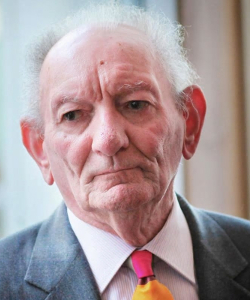
Recognised for early works such as Philadelphia, Here I Come! and Faith Healer, Friel has 24 plays published in a career of more than a half-century. He is elected to the honorary position of Saoi of Aosdána. His plays are commonly produced on Broadway in New York City throughout this time, as well as in Ireland and the United Kingdom. In 1980 Friel co-founds Field Day Theatre Company, and his play Translations is the company’s first production. With Field Day, Friel collaborates with Seamus Heaney, 1995 recipient of the Nobel Prize in Literature. Heaney and Friel first become friends after Friel sends the young poet a letter following publication of his book Death of a Naturalist. Friel’s play Dancing at Lughnasa wins three Tony Awards in 1992.
After a long illness Friel dies at the age of 86 in the early morning of Friday, October 2, 2015, in Greencastle, County Donegal. He is survived by his wife Anne and children Mary, Judy, Sally and David. A daughter, Patricia, predeceases him in 2012.
The statue of Charles Stewart Parnell on Sackville Street, now known as O’Connell Street, is unveiled in Dublin on October 1, 1911. It is one of the last sculptural initiatives in the city before independence.
On January 3, 1882 a resolution is passed by the Dublin City Council to grant the freedom of the city to Parnell. The plan for the Parnell monument is instigated by John Redmond, who succeeded Parnell as leader of the Irish Parliamentary Party, partly as a symbolic gesture to honour the “uncrowned king of Ireland” and to consolidate his aspiration to reunite the constitutionalists under his own leadership. The monument is funded through the efforts of a voluntary body, the Parnell Committee, founded in 1898. It is first proposed to place the monument on the site of the Thomas Moore statue, which would be moved to another location. The City Council refuses to grant this site and directs that the monument be erected on a site near the Rotunda Hospital, where it now stands.
Augustus Saint-Gaudens, an Irish-born sculptor and the most eminent in the art of public monuments in the United States, accepts the commission. It is however to prove a protracted project as the demand for Saint-Gaudens’ work in America is such that completion of the Parnell project is fraught with delays.
For the Parnell monument, Saint-Gaudens makes a scale replica of the buildings and square in Dublin and also a full scale model of the monument in wood in a field near his studio. In 1904 there is a disastrous fire in his studio and only the head of the statue is saved. The original concept is of an 8-foot high bronze figure placed by a bronze table and set against a 30-foot pyramid. However, as this form is already utilised in the Wellington Monumentobelisk in Phoenix Park, Saint-Gaudens and architect Henry Bacon propose a triangular shaft almost double the height of the original.
Saint-Gaudens finally presents Parnell in what he considers a noble and calm manner, depicted in an open frock coat, with one hand resting on a table and the other extended dramatically as if making a point at a parliamentary debate. The shaft of the monument is constructed in undecorated ashlar granite.
On October 1, 1911, the monument is unveiled to a large crowd, many of whom had been absent from the foundation stone ceremony, but there are also strikes and marches indicating the unrest to follow.
In June 1913, John Redmond, as Secretary to the Parnell Monument Committee, writes to the City Council requesting the council to take the Monument into their charge on behalf of the Citizens of Dublin. The Council agrees to this request and ever since then the Parnell Monument has been in the care of the Dublin Corporation.
The inscription on the monument reads:
To Charles Stewart Parnell
No Man has a right to fix the Boundary to the march of a nation No man has a right To say to his country Thus far shat thou Go and no further We have never Attempted to fix The ne-plus-ultra To the progress of Ireland’s nationhood And we never shall
At the base of the statue the Irish inscription reads:
The United States Navy commissions the Fletcher-class destroyerUSS The Sullivans (DD-537), on September 30, 1943. The ship commemorates the tragedy of the five Sullivan brothers (George, Francis, Joseph, Madison, and Albert), descendants of an Irish immigrant, who are killed November 13, 1942, after their ship, USS Juneau (CL-52), is hit by a Japanese torpedo at the Naval Battle of Guadalcanal. Only ten of the almost 700 crew survive. This is the greatest military loss by any one American family during World War II. The ship is also the first ship commissioned in the Navy that honors more than one person.
The Sullivans is originally laid down as Putnam on October 10, 1942, at San Francisco by the Bethlehem Shipbuilding Corporation. She is initially renamed Sullivan until President Franklin D. Roosevelt changes the name to The Sullivans to clarify that the name honors all five Sullivan brothers. The name is made official on February 6, 1943, and launches on April 4, 1943. The ship is sponsored by Mrs. Thomas F. Sullivan, the mother of the five Sullivan brothers. The Sullivans is commissioned on September 30, 1943, with Commander Kenneth M. Gentry in command.
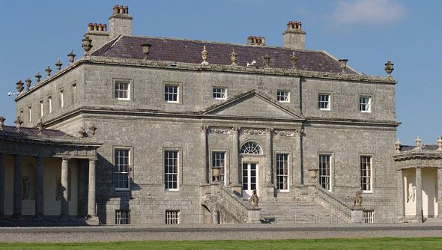
The priceless art collection at stately Russborough House in County Wicklow is the target of thieves for a fourth time on September 29, 2002. The thieves use a jeep to smash their way into the property and make off with a haul of art treasures.
The raid happens shortly before dawn, when the gang drives across the fields from a back road leading from Blessington to Ballymore Eustace in a four wheel drive Mitsubishi. The thieves mount the steps at the back of the house and smash a window leading to a room known as the salon. They take less than five minutes to snatch five paintings from the wall of the drawing room of the home. They speed away from the scene using the same route as the alarm alerts gardai in local stations to which the system is linked. The noise also wakes an elderly caretaker who also contacts the gardai.
The gang abandons the jeep on the side of the Ballymore Eustace road and switch to a waiting vehicle. They are on their way back to Dublin before the gardai reach the house.
Two paintings by the renowned artist Sir Peter Paul Rubens are stolen, including Portrait of a Dominican Monk, which had previously been stolen in 1986 by the notorious Dublin crime boss Martin Cahill, known as The General, but was subsequently recovered. Also missing is The Cornfield by Jacob van Ruisdael.
The heist at Russborough comes just days after two paintings, by Thomas Gainsborough and Belotto, are recovered from the last haul snatched from the house in June 2001. Detectives from the arts and antiques section of the national bureau of criminal investigation recover the two paintings in south Dublin.
There is widespread speculation that the latest heist is masterminded by a major Dublin criminal and former close associate of The General, who is responsible for the 1986 theft from the house. It is suggested that the latest robbery might be an act of revenge for the recovery of the earlier paintings two days earlier, although Gardai involved in this case say that is “pure speculation.” Another theory is that it is a copycat burglary inspired by publicity surrounding the previous thefts. Gardai believe that whoever is involved in the theft knew the layout of the house and the surrounding countryside as well as the value of the contents.
(Pictured: Russborough House in County Wicklow | Glanville, Lynn. “Fourth Robbery in 30 Years Art Heist from Russborough.” Independent.ie. 4 October 2002)
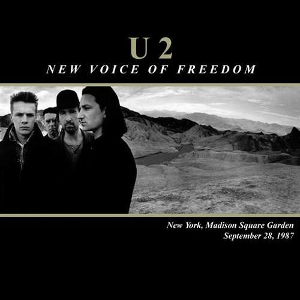
Dennis Bell, director of New York gospel choir The New Voices of Freedom, records a demo of a gospel version of “I Still Haven’t Found What I’m Looking For.” While in Glasgow, Scotland in late July during U2’s Joshua Tree Tour, Rob Partridge of Island Records plays the demo for the band. In late September, U2 rehearses with Bell’s choir in a Harlem church, and a few days later they perform the song together at U2’s Madison Square Garden concert.
Footage of the rehearsal is featured in the rockumentaryRattle and Hum, while the Madison Square Garden performance appears on the Rattle and Humalbum, the band’s sixth studio album. After the church rehearsal, U2 walks around the Harlem neighbourhood where they come across blues duo Satan and Adam playing on the street. A 40-second clip of them playing their composition “Freedom for My People” appears on both the movie and the album.
TaoiseachBertie Ahern officially inaugurates the institute on April 7, 2000. The college uses Tipperary Institute as its trading name. In 2010 the Irish government introduces rationalization measures to cut costs of third level bodies, and commences a merger between Tipperary Institute and Limerick Institute of Technology. The formal integration of Tipperary Institute into LIT on September 1, 2011, sees the two campuses become LIT Tipperary.
The college has two academic departments: Business, Education and Social Science and Technology, Media and Science. It is fully accredited by the Higher Education and Training Awards Council (HETAC) and offers National Framework of Qualifications Level 7 and Level 8 full-time degree courses, as well as a number of part-time and evening courses. The college also facilitates the joint-run BSc (Hons) in Strength & Conditioning (level 8) in conjunction with online sports college Setanta College.
The Queen, the first ship delivering Irish convicts, arrives at the penal settlement of Botany Bay in New South Wales, Australia on September 26, 1791. About 30% of all Australians are of Irish birth or descent. Many emigrated freely but many are descended from convicts transported there in the early years of the colony.
Britain has a policy of transportation. Up until the American Revolution most are sent to the American colonies or the West Indies. By the 1780s, Britain badly needs prison space. Petty criminals are housed on overcrowded prison ships anchored on the River Thames. In 1786, the government decides to start a prison settlement in the new colony at Botany Bay.
The transportation is arranged by a private company and those convicts who arrive there are actually the lucky ones, as conditions on the journey are horrendous and many die en route. The organisers of the transportation ships operate on a contract basis. They are paid a certain amount per head and the less provisions they give the prisoners the more profit they make.
The first two fleets of convict ships sail from England. The first ship to sail directly from Ireland is the Queen, which leaves Cork in April 1791 and joins the third fleet sailing from England. On board are 133 male convicts, 22 females and three children. The youngest on the ship is two-week-old Margaret, daughter of convict Sarah Brennan. The youngest convicts are 11-year-old David Fay and 12-year-old James Blake, convicted for stealing a pair of buckles. The oldest convict is 64-year-old Patrick Fitzgerald from Dublin, who is sentenced to seven years for stealing clothes. Seven men and one woman die on the voyage and within a year, half the men who had sailed on the Queen are dead. Young James Blake dies within a few months of landing.
The last convict ship sails from Ireland to Australia in 1853 and over the course of 60 years, 30,000 men and 9,000 women are transported for a minimum of seven years. While a good number of them are patriots and rebels – United Irishmen and Young Irelanders – the majority are transported for petty crimes.
Transportation continues for more than 60 years and is followed by assisted emigration. More than 100,000 travel on assisted passage during the 1850s alone. Some are assisted on their journey by charitable organisations in an effort to relieve distress. The last transportation ship, the Phoebe Dunbar, sails from Dún Laoghaire in 1853, bound for Perth.




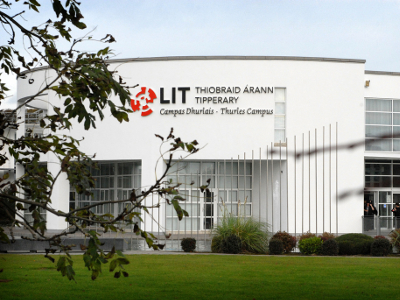 The Tipperary Rural & Business Development Institute (TRBDI), a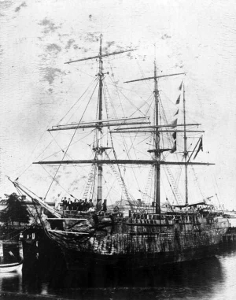
 seamus dubhghaill