seamus dubhghaill

Promoting Irish Culture and History from Little Rock, Arkansas, USA


Leave a comment

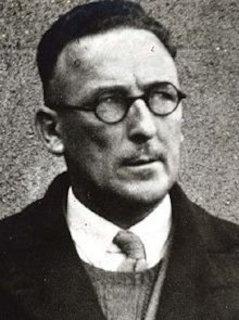
Death of Séamus O’Donovan, IRA Volunteer & Nazi Collaborator

James O’Donovan, a leading volunteer in the Irish Republican Army (IRA) and Nazi collaborator also known as Séamus or Jim O’Donovan, dies in Dublin on June 4, 1979. He is best known for his contacts with the Abwehr military intelligence of Nazi Germany.

Born on November 3, 1896, in County Roscommon, O’Donovan is an explosives expert and reputedly invents the “Irish War Flour” (named after the flour sacks in which it was smuggled into Dublin aboard ships) and “Irish Cheddar” devices. He subsequently becomes IRA Director of Chemicals in 1921. During the Irish War of Independence, he is imprisoned in Mountjoy Prison and Kilmainham Gaol and later interned in Newbridge, County Kildare.

In addition to fighting in the Irish War of Independence, O’Donovan fights on the Anti-Treaty side during the Irish Civil War. In 1930 he becomes manager at Electricity Supply Board (ESB) headquarters in Dublin.

In August 1938, at the request of IRA Chief of Staff Seán Russell, O’Donovan writes the S-Plan, a bombing campaign targeting the United Kingdom. In his unpublished memoirs he writes that he “conducted the entire training of cadre units, was responsible for all but locally derived intelligence, carried out small pieces of research and, in general, controlled the whole explosives and munitions end” of S-Plan. During this time, he and Russell are the only GHQ members of the old IRA still in the organisation.

As “Agent V-Held”, O’Donovan visits Germany three times in 1939 on behalf of the IRA. On February 28 he negotiates an arms and radio equipment delivery at the Abwehrstelle in Hamburg. On April 26 he concludes a new arms deal with the Abwehrstelle and establishes, with the help of a Breton, a secret courier connection to Ireland via France. On August 23, he receives the last instructions for the event of war.

On February 9, 1940, Abwehr II agent Ernst Weber-Drohl lands at Killala Bay, County Sligo aboard U-37. He is equipped with an ‘Ufa’ transmitter, cash, and instructions for O’Donovan, who by this time is the chief IRA contact for Abwehr I/II. The transmitter is lost upon landing, but when Weber-Drohl reaches O’Donovan at Shankill, Killiney, County Dublin, he is able to deliver new transmission codes, $14,450 in cash, and a message from “Pfalzgraf Section” asking that the IRA concentrate its S-Plan attacks on military rather than civilian targets.

O’Donovan becomes increasingly enamoured of Nazi ideology during this time, and visits Germany three times. In 1942 he writes an article arguing that Ireland’s future lay in an alliance with a victorious Germany and attacks Britain and the United States for being “centres of Freemasonry, international financial control and Jewry.” Even long after the pact with the Germans falls apart, he continues to express his sympathy for the Nazi regime. His son, Gerard O’Donovan, recalls that every Saturday night a visitor would come to the family home and send messages to Germany.

In 1940, O’Donovan is involved in setting up Córas na Poblachta, a minor Irish republican political party which proves unsuccessful.

O’Donovan dies in Dublin on June 4, 1979.


Leave a comment

The Kilmeena Ambush

The Kilmeena ambush takes place at Kilmeena, County Mayo, on May 19, 1921 during the Irish War of Independence. The ambush ends in defeat for the local West Mayo Irish Republican Army (IRA), with six IRA volunteers killed and seven wounded. Two members of the Royal Irish Constabulary (RIC) and one Black and Tan are also killed in the action.

The IRA in west Mayo is relatively quiet until January 1921, when Michael Kilroy, described as “a puritanical and ascetic blacksmith” takes over command of the Brigade after Thomas Derrig is arrested by the Royal Irish Constabulary. Kilroy forms a relatively large “flying column” of 40 to 50 men to carry out attacks on Crown forces in the area. On May 6 they suffer a reverse at Islandeady, when a police patrol comes upon the IRA men cutting a road. Three volunteers are killed and two captured.

On May 18, 1921, the IRA decides to attack an RIC/Black and Tan convoy at Kilmeena. Two small-unit attacks are made on the RIC barracks in Newport and Westport to try to draw the police out of their well-defended barracks. One RIC man dies in these attacks.

At 3:00 AM the next day, May 19, the column of 41 IRA men take up position close to Knocknabola Bridge. The British convoy, traveling from Newport to Westport, consists of two Crossley lorries and one Ford touring car and a total of about thirty men. The convoy does not arrive until 3:00 PM and its arrival sparks a two-hour fire-fight. In the battle, one RIC man is wounded and later dies. The British regroup around the house of the parish priest, Father Conroy, and launch a counterattack.

Four IRA volunteers are killed. They are Seamus Mc Evilly, Thomas O’Donnell, Patrick Staunton and Sean Collins. Paddy Jordan of the Castlebar battalion is injured and dies later at Bricens Hospital in Dublin. Seven more IRA men are wounded.

The remainder of the column, carrying their wounded, flee over the mountains to Skerdagh, where they have safe houses. However, the police track them there and, in another exchange of fire, another IRA man is killed, Jim Brown from Newport, along with one RIC Constable and a Black and Tan.

The Black and Tans throw the dead and wounded IRA men onto the street outside the RIC barracks in nearby Westport, causing widespread revulsion among the local people and local police. The Marquis of Sligo, no friend of the republican guerrillas, visits the barracks to complain of their treatment of enemy dead. At the funerals of those killed, in Castlebar, the authorities allow only close family to attend and forbid the draping of the Irish tricolour over the coffins.

The local IRA blames their defeat in the ambush on the failure of an IRA unit from Westport to show up in time.

Kilroy’s column manages to get some revenge for the setback at Kilmeena the following month in an action at Carrowkennedy on June 3, where they kill eight policemen and capture sixteen.


2 Comments

The Hollyford Barracks Attack

Irish Republican Army (IRA) volunteers destroy the Royal Irish Constabulary (RIC) barracks at Hollyford, County Tipperary, on May 11, 1920.

In 1920 twelve RIC Constables, or Peelers as they are called, are stationed in the barracks in Hollyford. They are regarded as the eyes and ears of the British establishment and therefore a thorn in the side of the local IRA. Since the previous year, the IRA has developed a policy of attacking police barracks throughout the country and forcing their closure thereby reducing the flow of information to Dublin Castle.

On the night of May 11, 1920, it is the turn of Hollyford Barracks. The local IRA with its leaders assembles at Phil Shanahan’s house on the Glenough road. At this time Shanahan is a member of the First Dáil, elected from a Dublin constituency as he is living and running a public house there. He fought in the Jacob’s Biscuit Factory under Thomas MacDonagh during the 1916 Easter Rising. It is decided the attack will be led by Ernie O’Malley, an organiser for the IRA who moves around to various Brigades throughout the country. His second in command is Séumas Robinson, commanding officer of the 3rd Tipperary Brigade. Other officers are Seán Treacy, whose mother Bridget Allis is from Lacknacreena, Dan Breen who is quartermaster general (QMG) of the Brigade, Comdt. Tadgh O’Dwyer, Captain Paddy O’Dwyer and Lt. Jim O’Gorman.

Roads are blocked in the vicinity and telephone lines are cut. Robinson and O’Malley, with the help of ladders, get on the roof and with lump hammers break holes in the slates. They then drop hand grenades and petrol in through the holes. They also ignite turf sods soaked in petrol and drop them through the holes. The fire on the upper floor escalates. While all this is happening, Seán Treacy, with his covering party, concentrate their fire on the port holes which keeps the occupants pinned down. The battle goes on all night and, as daylight approaches on the morning of May 12, the attackers have to withdraw without dislodging the police. While they do not achieve their aim to capture guns and ammunition, they do enough damage to ensure the RIC leaves Hollyford immediately never to return.

The next occupants, following the Anglo-Irish Treaty, are the Gárda Síochána in 1948. Various changes in personnel take place in the 1950s until Gárda Maurice Slattery is the only Gárda left in Hollyford. In 1965, after a lifetime in the Gárdí, he retires, and he and his family move to Limerick. He is the last Gárda to serve in Hollyford.

(From: “The Burning of Hollyford Barracks,” Third Tipperary Brigade Memorial (www.thirdtippbrigade.ie), July 12, 2018)


2 Comments

The Loughgall Ambush

The Loughgall ambush takes place on May 8, 1987 in the village of Loughgall, County Armagh, Northern Ireland. An eight-man unit of the Provisional Irish Republican Army (IRA) launch an attack on the Royal Ulster Constabulary (RUC) base in the village.

The IRA’s East Tyrone Brigade is active mainly in eastern County Tyrone and neighbouring parts of County Armagh. By the mid-1980s it had become one of the IRA’s most aggressive formations. The British security forces receive intelligence of the IRA’s plan weeks prior to the attack and learn the target at least 10 days before the attack. It has been alleged that the security forces had a double agent inside the IRA unit, and that he was killed by the British Army‘s Special Air Service (SAS) during the ambush. Other sources claim that the security forces had instead learned of the ambush through other surveillance methods.

Three local RUC officers work at the station, which is only open part-time, from 9:00 AM to 11:00 AM, and from 5:00 PM to 7:00 PM daily.The IRA’s attack involves two teams. One team is to drive a digger with a bomb in its bucket through the base’s perimeter fence and light the fuse. At the same time, another team is to arrive in a van and open fire on the base, with the intent of killing the three RUC officers as they come off duty.

The IRA unit arrives in Loughgall from the northeast shortly after 7:00 PM, when the station is scheduled to close for the night. They are armed and wearing bulletproof vests, boilersuits, gloves and balaclavas. The digger drives past the police station, turns around and drives back again with the Toyota van carrying the main IRA assault party doing the same. Not seeing any activity in the station, members of the IRA unit feel that something is amiss and debate whether to continue, but decide to go ahead with the attack. Tony Gormley and Gerard O’Callaghan get out of the van and join Declan Arthurs on the digger. At about 7:15 PM Arthurs drives the digger towards the station with the front bucket containing 300–400 lbs. of Semtex inside an oil drum, partially hidden by rubble and wired to two 40-second fuses. The other five members of the unit follow in the van with Eugene Kelly driving, unit commander Patrick Kelly in the passenger seat, with unit commander Jim Lynagh, Pádraig McKearney, and Seamus Donnelly in the back seat.

The digger crashes through the light security fence and the fuses are lit. The van stops a short distance ahead and, according to the British security forces, three of the team jump out and fire on the building with automatic weapons. At the same time, the bomb detonates, the blast destroying the digger and badly damaging the building.

Within seconds the SAS opens fire on the IRA attackers from the station and from hidden positions outside. All eight IRA members are killed in the hail of gunfire, each with multiple wounds to their bodies. Declan Arthurs is shot in a lane-way opposite Loughgall F.C. premises. Three of the IRA members are shot at close range as they lay either dead or wounded on the ground. Three other IRA members in the scout cars escape from the scene, managing to pass through British Army and RUC checkpoints set up after the ambush had been sprung. The two RUC Headquarters Mobile Support Unit (HMSU) officers are injured in the explosion and an SAS soldier receives a facial injury from glass after a window is broken by gunfire.

Two civilians, brothers Anthony and Oliver Hughes, traveling in a car that happens to drive into the scene of the ambush while it is underway are also fired upon by the British forces. Oliver is wearing overalls similar to those being worn by the IRA unit. About 130 yards from the police station, British soldiers open fire on their car from behind, killing Anthony and badly wounding Oliver. The villagers had not been told of the operation and no attempt had been made to evacuate anyone or to seal off the ambush zone, as this might have alerted the IRA.

The security forces recover eight IRA firearms from the scene. The RUC links the weapons to seven known murders and twelve attempted murders in the Mid-Ulster region. On of the weapons, a Ruger Security-Six, had been stolen from Reserve RUC officer William Clement, killed two years earlier in the IRA attack on Ballygawley RUC base. It is found that another of the guns had been used in the murder of Harold Henry, a builder employed by the British Army and RUC in facilities construction in Northern Ireland.

(Pictured: Mural commemorating the IRA members killed in the ambush)


Leave a comment

Birth of Joseph McGarrity, Irish American Political Activist

Joseph McGarrity, Irish American political activist best known for his leadership in Clan na Gael in the United States and his support of Irish republicanism back in Ireland, is born on March 28, 1874, in Carrickmore, County Tyrone.

McGarrity’s family grows up in poverty, motivating his need to immigrate later in life. He grows up hearing his father discussing Irish politics, including topics such as the Fenians, the Irish Parliamentary Party (IPP), and Irish Home Rule. By the time he is an adult, he has developed a keen interest in politics himself.

McGarrity immigrates to the United States in 1892 at the age of 18. He is reputed to have walked to Dublin before boarding a cattle boat to Liverpool disguised as a drover, and then sailing to the United States using a ticket belonging to someone else. He settles in Philadelphia, Pennsylvania and becomes successful in the liquor business. His business fails, however, on three occasions, twice due to embezzlement by his business partner.

In 1893 McGarrity joins Clan na Gael, an Irish organisation based in the United States committed to aiding the establishment of an independent Irish state. Clan na Gael had been heavily involved with the Fenian Brotherhood that McGarrity had grown up hearing about, and by the latter half of the 19th century had become a sister organisation of the Irish Republican Brotherhood (IRB). In the decade just before McGarrity joins, Clan na Gael and the Fenian movement had waged the Fenian dynamite campaign, where they attempted to force the British state to make concessions in Ireland by bombing British Infrastructure. However, this had caused a split within Clan na Gael that is not mended until seven years after McGarrity joins when, in 1900, the factions reunite and plead to support “the complete independence of the Irish people, and the establishment of an Irish republic.” In the years that follow the 1880s and 1890s, he is, amongst others, credited with helping to stitch the organisation back together and bring it renewed strength.

McGarrity helps sponsor several Irish Race Conventions and founds and runs a newspaper called The Irish Press from 1918-22 that supports the Irish War of Independence. He is the founder of the Philadelphia chapter of Clan Na Gael.

During World War I, while the United States is still neutral, McGarrity is involved in the Hindu–German Conspiracy. He arranges the Annie Larsen arms purchase and shipment from New York to San Diego for India.

When Éamon de Valera arrives in the United States in 1919 they strike up an immediate rapport and McGarrity manages de Valera’s tour of the country. He persuades de Valera of the benefits of supporting him and the Philadelphia branch against the New York branch of the Friends of Irish Freedom organisation led by John Devoy and Judge Daniel F. Cohalan. He becomes president of the American Association for the Recognition of the Irish Republic. He christens his newborn son Éamon de Valera McGarrity, although their relationship becomes strained upon de Valera’s entry back into Dáil Éireann in the Irish Free State.

McGarrity opposes the Anglo-Irish Treaty and travels to Dublin in 1922 and assists the development of the short-lived Collins/De Valera Pact by bringing de Valera and Michael Collins together before the 1922 Irish general election.

The Irish Civil War sees a split in Clan na Gael just as it had split Sinn Féin back in Ireland. McGarrity and a minority of Clan na Gael members support the anti-treaty side but a majority support the pro-treaty side, including John Devoy and Daniel Cohalan. Furthermore, in October 1920 Harry Boland informs the Clan na Gael leadership that the IRB will be cutting their ties to the Clan unless the IRB is given more influence over their affairs. Devoy and Cohalan resist this, but McGarrity sees the Clan’s connection with the IRB as vital. While McGarrity’s faction is initially labelled “Reorganised Clan na Gael,” they are able to inherit total control of the Clan na Gael name as Devoy is not able to keep effective organisation of the group. In general, however, the in-fighting amongst the Irish on both sides of the Atlantic is quite disheartening for Irish Americans and in the years to come neither pro or anti-treaty sides of Clan na Gael see much in the way of donations.

With the scope of Clan na Gael now narrowed, and Devoy and Cohalan removed from the picture, McGarrity becomes chairman of the organisation. He does not support the founding of Fianna Fáil in 1926 and opposes the party’s entry into the Dáil in 1927. Even after the Irish Civil War, he still supports the idea that a 32-county Irish Republic can be achieved through force. in the spring of 1926, he receives Chief of Staff of the Irish Republican Army Andrew Cooney to the United States. Cooney and Clan na Gael formally agree that each organisation will support the other and that Clan na Gael will raise funds, purchase weapons and build support for the IRA in the United States.

Going into the late 1920s though Clan na Gael, as are most Irish American organisations, is struggling. Having limped past the split caused by the Irish Civil War, the rejection of Fianna Fáil has caused a second split in the membership. Many Irish Americans see the IRA and Fianna Fáil as one and the same at that point and Clan na Gael and McGarrity’s hostility to them causes much friction.

By July 1929, the Clan’s membership in one of its strongholds, New York City, is down to just 620 paid members. Then in October of that same year Wall Street crashes and the Great Depression hits. In 1933 McGarrity is left almost bankrupt after he is found guilty of “false bookkeeping entries.” His livelihood is saved when he becomes one of the main ticket agents in the United States for the Irish Hospitals’ Sweepstake. He is a personal friend of Joseph McGrath, one of the founders of the Sweepstake. The sweepstakes allow him to turn his fortunes around.

Despite the trying times of both Clan na Gael and his personal life, McGarrity holds fast in his belief in physical force Irish Republicanism. In 1939 he supports the demand from Seán Russell for the “S-Plan” bombing campaign in Britain, which proves disastrous. He allegedly meets Hermann Göring in Berlin in 1939 to ask for aid for the IRA, which leads indirectly to “Plan Kathleen.”

McGarrity is a lifelong friend of fellow Carrickmore native and avid Republican, Patrick McCartan. When he dies on September 4, 1940, a mass is held in the St. Mary’s Pro-Cathedral in Dublin. He remains an unrepentant physical force republican all his life. A number of McGarrity’s papers are in the National Library of Ireland. He donates his personal Library to Villanova University.

The IRA signs all its statements ‘J.J. McGarrity’ until 1969 when the organisation splits into the ‘Official‘ and ‘Provisional‘ movements. Thereafter the term continues to be used by the Officials while the Provisionals adopt the moniker ‘P.O’Neill.’


Leave a comment

Death of Martin McGuinness, Irish Republican Sinn Féin Politician

Martin McGuinness, former member of the Provisional Irish Republican Army‘s (IRA) Army Council and Sinn Féin‘s chief negotiator in the peace process, dies on the morning of March 21, 2017 at Derry‘s Altnagelvin Area Hospital with his family by his bedside. He had been diagnosed with a rare heart disease in December 2016. In 2011, McGuinness contests the presidential election which is won by Michael D. Higgins.

McGuinness is born James Martin Pacelli McGuinness on May 23, 1950 in Derry. He attends St. Eugene’s Primary School and later the Christian Brothers technical college, leaving school at the age of 15.

McGuinness joins the IRA about 1970, and by 1971 he is one of its leading organizers in Derry. In 1973 a Special Criminal Court in the Republic of Ireland sentences him to six months in prison after he is caught in a car containing large quantities of explosives and ammunition. Although the IRA keeps secret the membership of its seven-person Army Council, few doubt that McGuinness is one of its most important members from the 1970s through the 1990s. Even while reportedly planning attacks on civilians in Northern Ireland and on the British mainland, McGuinness is involved in spasmodic secret talks with British government ministers and officials to end the conflict. In 1972 McGuinness, with fellow IRA leader Gerry Adams, privately negotiates with British Secretary of State for Northern Ireland William Whitelaw, but these and other talks over the next two decades are unsuccessful.

McGuinness contests seats in the British House of Commons on several occasions, losing in 1983, 1987, and 1992. However, in 1997 he is elected to the House of Commons to represent the constituency of Mid Ulster and, in line with party policy, he does not take his seat. He subsequently wins reelection to the seat in 2001, 2005, and 2010.

McGuinness is the IRA’s chief negotiator in the deliberations, also secret at first, that culminate in the Good Friday Agreement in 1998. This pact finally ends the conflict and eventually brings Sinn Féin into a coalition government to rule Northern Ireland. He is elected to the new Northern Ireland Assembly and in 1999 is appointed Minister of Education. In this post he eliminates the controversial eleven-plus examination, which determines which type of secondary school a child should attend. The test had been abolished in most of the rest of the United Kingdom more than 25 years earlier.

Disagreements over such issues as policing and the decommissioning of arms causes Northern Ireland’s Executive and Assembly to be suspended for some years, but a fresh agreement in 2006 paves the way for them to be revived. In elections in March 2007, both Sinn Féin and the antirepublican Democratic Unionist Party (DUP) gain seats, becoming the two largest parties in the Northern Ireland Assembly. McGuinness becomes Deputy First Minister, working with First Minister Ian Paisley, leader of the DUP. The two men, previously bitter enemies, perform so well together that they are dubbed the “Chuckle brothers.”

When Paisley retires in 2008, he is succeeded by the DUP’s Peter Robinson, who is considered to be even more militantly antirepublican. Once again, however, a shared need to rebuild the economy and attract international investment leads to cooperation between former opponents. In 2009 their government is in jeopardy as Sinn Féin and the DUP argue over the devolution of the police and justice system in Northern Ireland. McGuinness and Robinson are involved in the ensuing negotiations, and in February 2010 an agreement is reached for the transfer of powers from Britain to Northern Ireland in April.

In the Assembly elections in May 2011, McGuinness and Robinson are a formidable pair, and voters respond to their call for stability in a time of economic uncertainty. Sinn Féin gains an additional seat and increases its overall share of the vote, and McGuinness is assured an additional term as Deputy First Minister. In the autumn he steps down to run as Sinn Féin’s candidate for the presidency of Ireland. After finishing third in the election held on October 28, he returns to the position of Deputy First Minister a few days later. On June 27, 2012, in an event widely seen as having great symbolic importance for the ongoing reconciliation efforts in Northern Ireland, McGuinness and Elizabeth II shake hands twice, once in private and again in public, during a visit by the British monarch to Belfast.

In January 2017 McGuinness resigns as Deputy First Minister in response to First Minister Arlene Foster’s refusal to temporarily step down from her position during the investigation of a scandal relating to the government’s Renewable Heat Incentive (RHI), a mishandled program under which large amounts of state funds allegedly had been squandered. Foster had served as head of the department that oversaw the RHI before becoming First Minister. Under the power-sharing agreement the posts of First Minister and Deputy First Minister constitute a single joint office so that the resignation of one minister results in termination of the other’s tenure. When Sinn Féin chooses not to nominate a replacement for McGuinness within the required seven-day period, authority reverts to the British government’s Secretary of State for Northern Ireland in advance of a snap election on March 2.

Even before McGuinness’s resignation there had been speculation late in 2016 that he might step down for health reasons, and soon after resigning he confirms that he is suffering from amyloidosis, a rare disease brought about by deposits of abnormal protein in organs and tissue. With McGuinness removing himself from “frontline politics,” Michelle O’Neill leads Sinn Féin into the election. The disease claims McGuinness’s life only months later on March 21, 2017.


Leave a comment

The Bahaghs Incident

During the Irish Civil War, five prisoners from Irish Republican Army (IRA) Kerry No. 3 Brigade are killed at Bahaghs, near Cahersiveen, County Kerry, on March 12, 1923. They are taken from a National Army post in the town at gunpoint by Dublin Guard officers under protest from the garrison.

The government and military consistently claim the men died while clearing a land mine although it is generally believed, especially in Republican circles, that the five men were victims of a horrific war crime which saw them shot and strapped to a mine by an Irish Free State death squad.

The victims of the shocking and notorious incident are Michael Courtney Jnr, Eugene Dwyer, Daniel Shea, John Sugrue and William Riordan, all from the Waterville area. The five men are held by Free State troops at Bahaghs workhouse, then in use as a temporary detention centre, following their arrest for irregular activities several days earlier.

In the early hours of March 12 members of the Free State’s Dublin Guard, who had been tasked with defeating irregular forces in Kerry and who had earned a notorious reputation for brutality in the process, arrive at the workhouse and select five of the twenty men in custody there. The five are then brought to an irregular roadblock several miles away where the IRA men are, allegedly, shot in the legs before being laid over a land mine which is detonated by the Free state troops blowing the five men to pieces.

The Bahaghs killings are part of a series of deaths which begin with another horrific incident on March 6, 1923, in which five soldiers are killed by a booby trap bomb at the village of Knocknagoshel. Immediately after the Knocknagoshel incident the Free State commander for Kerry, Maj. Gen. Paddy O’Daly, previously head of Michael Collin‘s Dublin assassination squad, authorises the use of republican prisoners to clear mined roads, as “the only alternative left us to prevent the wholesale slaughter of our men.” Two separate incidents occur the following day in which thirteen additional Republican prisoners are killed by land mines.

When questioned in the Dáil by Labour Party leader Thomas Johnson, the National Army’s commander-in-chief, Gen. Richard Mulcahy, says he accepts the findings of a military court of inquiry which exonerates the troops of all wrongdoing in any of the incidents.

In recent years, previously confidential state papers have been released which shed new light on one of Kerry’s most terrible episodes. The evidence in the file sharply contradicts the official line on the killings and paints a damning portrait of Free State army brutality and subsequent government efforts to cover up three massacres perpetrated by its troops in Kerry.

Further documents prove that a top official in the Ministry of Home Affairs utterly dismissed the findings of a military inquiry into the killings, but the cabinet of the day took no action and rejected all claims for compensation by relatives.

Nothing has ever been done in relation to the three Kerry massacres after the executive council decision and, to this day, the true events of Bahaghs, Countess Bridge and, most famously, Ballyseedy have never been revealed.

(Pictured: Irish Republican Army Brigade in County Kerry)


5 Comments

The Ballyseedy Massacre

The Ballyseedy Massacre takes place near Ballyseedy, County Kerry, on March 7, 1923. Kerry had seen more violence in the guerrilla phase of the Irish Civil War than almost anywhere else in Ireland. By March 1923, 68 Free State soldiers had already been killed in Kerry and 157 wounded – 85 would die there by the end of the war.

The day after five Free State soldiers are killed by a booby trap bomb while searching a republican dugout at the village of Knocknagoshel, Paddy Daly, in command of the Free State’s Kerry forces, announces that prisoners will be used in the future to clear mined roads.

In Ballyseedy, nine Republican prisoners – Pat Buckley, John Daly, Pat Hartnett, Michael O’Connell, John O’Connor, George O’Shea, Tim Tuomey, James Walsh and Steven Fuller – are driven to the remote Ballyseedy Wood near Ballyseedy Cross to be executed. The troops make sure that they are ‘all fairly anonymous, no priests or nuns in the family, those that’ll make the least noise.’ As they are being loaded into the lorry, the Free State Army guards ask them if they would care to smoke, telling them it will be their last cigarette.

They are taken to a remote location near the banks of the River Lee, where a large log stretches across the Castleisland Road. The Republicans are all tied to the log alongside a mine which is then detonated. Several of the Republicans, however, survive the initial explosion. The Free State soldiers then proceed to throw a number of grenades and shoot at them ensuring they are dead.

They succeed in killing all but Steven Fuller. The force of the explosion hurls him clear across the road. Falling, dazed, but conscious that he is alive and unhurt he quickly realises that the blast had even burst apart the cords used to tie him. As the soldiers come out from their cover after the detonation he crawls along the shelter of the ditch into the river at the roadside, escaping to a nearby Irish Republican Army (IRA) hideout. For days afterwards the birds are eating human flesh off the trees at Ballyseedy Cross.

Eight anti-treaty volunteers and prisoners are killed in the explosion. The exact details are murky. Official government sources state that the men were killed while clearing mines left by anti-treaty forces. Conversely anti-treaty sources claim the men were attached to a mine which was then detonated in retaliation for an explosion the previous day which killed six government forces in Knocknagashel, 30 miles away. If anyone believes that the explosion at Ballyseedy had been an accident, they would have trouble explaining the deaths of nine more Republican prisoners in the next four days.

There is no way of knowing how many men had been killed. Eight prisoners of war are murdered that night at Ballyseedy Cross. Nine coffins are sent back to Tralee the next day. What are the people of Tralee to do with that ninth coffin? A mother wails, “But my son was six feet tall. How can he come home to me in such a small coffin?” They will not let the mother open that coffin.

For three generations following the Irish Civil War, the country is riven by the pain and anguish of the violent conflict. Ballyseedy is just one example of the horrors inflicted.

(From: Stair na hÉireann | History of Ireland, https://stairnaheireann.net/, Photo: Ballyseedy Massacre Monument, Curraghmacdonagh, County Kerry)


Leave a comment

The Sheemore Ambush

The Sheemore ambush is an ambush carried out by the Irish Republican Army (IRA) on March 4, 1921, during the Irish War of Independence. It takes place at Sheemore near Carrick-on-Shannon, County Leitrim.

The ambush is carried out by the IRA’s South Leitrim Brigade on a British Army and Auxiliary Division convoy. The British force suffers casualties and admits one fatality, a captain in the Bedfordshire and Hertfordshire Regiment, although some local sources claim several more are killed.

On Friday morning, March 4, 1921, as the congregation makes their way out of the ‘First Friday Mass’ in the Roman Catholic parish church in Gowel, they are met by three lorries carrying 30–40 Auxiliaries, Royal Irish Constabulary (RIC), and British Army members. The men are lined up for searching on one side while a ‘female searcher’ attends to the women. There is no panic and as nothing is found and there are no arrests. The church had been identified as a likely place for volunteers of the IRA’s South Leitrim Brigade to attend. Father Edward O’Reilly, the church’s curate, is openly friendly towards the volunteers. After they search the church interior, the police and soldiers remount their lorries and continue back to Carrick-on-Shannon.

About 2 kilometres down the road, on the slopes of Sheemore, volunteers of the South Leitrim Brigade await them. The day before, the Brigade had received word from Joe Nangle from Drumshanbo of the British operation. They take up position behind a low wall which runs on the brink of an eighty-foot-high rock face on the side of Sheemore. It is four hundred yards from the road. There are seven volunteers – Brigadier Seán Mitchel (who was in command), Charles E. McGoohan (from Ballinamore), Michael Geoghegan (from Aughacashel), Mattie Boylan (from Carrick-on-Shannon), Michael Martin (from Ballinamore), Joe Nangle and Harry McKeon.

At the command from Mitchell, the IRA opens fire on the convoy. The members of the convoy jump from their lorries, and take cover behind a wall which runs along the road. The police run despite the shouts from the soldiers to stand their ground. The officer in command tries to use field glasses to spot the positions of the IRA. After a forty-five-minute gunfight the IRA withdraws, and the British make no attempt to follow them. Instead they gather up their casualties and return to Carrick-on-Shannon, where Black and Tans later undertake reprisals, burning and looting, and burn both the premises of the Leitrim Observer newspaper and the local rowing club to the ground. They also burn the Temperance Hall in Gowel.

Nurse Alice Grey (or Gray), the ‘female searcher,’ who is a member of the ambushed convoy, is recognised by the British authorities for her role in the incident.

Contemporary newspaper reports indicate that one officer and four men of the Bedfordshire Regiment were wounded, as were two members of the RIC. The British officer died the following day, and some people reportedly left the area for fear of reprisals.

(Pictured: Monument in memory of the Volunteers who took part in the Sheemore Ambush)


Leave a comment

IRA Commander Seán Mac Eoin Captured at Mullingar

Seán Mac Eoin, Irish Republican Army (IRA) North Longford commander, is captured at Mullingar, County Westmeath, on March 1, 1921, and charged with the murder of a Royal Irish Constabulary (RIC) detective, dealing a severe blow to the IRA in that area.

Mac Eoin is born John Joseph McKeon on September 30, 1893, at Bunlahy, Granard, County Longford, the eldest son of Andrew McKeon and Catherine Treacy. After a national school education, he trains as a blacksmith at his father’s forge and, on his father’s death in February 1913, he takes over the running of the forge and the maintenance of the McKeon family. He moves to Kilinshley in the Ballinalee district of County Longford to set up a new forge.

Having joined the United Irish League in 1908, Mac Eoin’s Irish nationalist activities begin in earnest in 1913, when he joins the Clonbroney Company of the Irish Volunteers. Late that year he is sworn into the Irish Republican Brotherhood (IRB) and joins the Granard circle of the organization.

Mac Eoin comes to prominence in the Irish War of Independence as leader of an Irish Republican Army (IRA) flying column. In November 1920, he leads the Longford brigade in attacking Crown forces in Granard during one of the periodic government reprisals, forcing them to retreat to their barracks. On October 31, Inspector Philip St. John Howlett Kelleher of the RIC is shot dead in the Greville Arms Hotel in Granard. Members of the British Auxiliary Division set fire to parts of the town. The following day, Mac Eoin holds the village of Ballinalee situated on the Longford Road between Longford and Granard. They stand against superior British forces, forcing them to retreat and abandon their ammunition. In a separate attack on November 8, he leads his men against the RIC at Ballinalee. One constable is killed, and two others are wounded.

On the afternoon of January 7, 1921, a joint RIC and British Army patrol consisting of ten policemen appears on Anne Martin’s street. According to Mac Eoin’s own testimony at his trial he is in the house in partial uniform, wearing Sam Browne belt and revolver with two Mills No. 4 bombs in his pocket. Owing to some females being in the house, he has to get out as to not endanger them. He steps out on the street and opens fire with his revolver. The leading file falls and the second file brings their rifles to the ready. He then throws a bomb, after which he sees that the entire force has cleared away, save the officer who was dead or dying on the street.

On February 2, 1921, the Longford IRA ambushes a force of the Auxiliaries on the road at Clonfin, using a mine it had planted. Two lorries are involved, the first blown up, and the second strafed by rapid rifle fire. Four auxiliaries and a driver are killed and eight wounded. The IRA volunteers capture 18 rifles, 20 revolvers and a Lewis gun. At the Clonfin Ambush, Mac Eoin orders his men to care for the wounded British, at the expense of captured weaponry, earning him both praise and criticism. He is admired by many within the IRA for leading practically the only effective column in the midlands.

Mac Eoin is captured at Mullingar railway station on March 1, 1921, imprisoned and sentenced to death for the murder of an RIC district inspector in the shooting at Anne Martin’s street in January 1921.

In June 1921, Henry Wilson, the British Chief of the General Staff (CIGS), is petitioned for clemency by Mac Eoin’s mother, his brother Jemmy, and the local Church of Ireland vicar, but passes on the appeals out of respect for the latter two individuals. Three auxiliaries had already given character references on his behalf after he had treated them chivalrously at the Clonfin Ambush in February 1921. However, Nevil Macready, British Commander-in-Chief, Ireland, confirms the death sentence describing Mac Eoin as “nothing more than a murderer.”

While imprisoned Mac Eoin is elected to Dáil Éireann at the 1921 Irish elections, as a TD for Longford–Westmeath. He is eventually released from prison, along with all other members of the Dáil, after Michael Collins threatens to break off treaty negotiations with the British government unless they are freed.

Mac Eoin joins the National Army and is appointed GOC Western Command in June 1922. His military career soars after the Irish Civil War. He is appointed GOC Curragh Training Camp in August 1925, Quartermaster General in March 1927, and Chief of Staff in February 1929.

Mac Eoin resigns from the Army in 1929 and is elected at a by-election to Dáil Éireann for the Leitrim–Sligo constituency, representing Cumann na nGaedheal. At the 1932 Irish general election, he returns to the constituency of Longford–Westmeath and continues to serve the Longford area as TD until he is defeated at the 1965 Irish general election.

During a long political career Mac Eoin serves as Minister for Justice (February 1948 – March 1951) and Minister for Defence (March–June 1951) in the First Inter-Party Government, and again as Minister for Defence (June 1954 – March 1957) in the Second Inter-Party Government. He unsuccessfully stands twice as candidate for the office of President of Ireland, against Seán T. O’Kelly in 1945 and Éamon de Valera in 1959.

Mac Eoin retires from public life after the 1965 general election and dies in Dublin on July 7, 1973.