seamus dubhghaill

Promoting Irish Culture and History from Little Rock, Arkansas, USA


Leave a comment

Birth in Belfast of Ian Paisley

ian-paisley

Ian Richard Kyle Paisley, loyalist politician and Protestant religious leader from Northern Ireland is born on April 6, 1926, in Armagh, County Armagh.

Paisley becomes a Protestant evangelical minister in 1946 and remains one for the rest of his life. In 1951, he co-founds the fundamentalist Free Presbyterian Church of Ulster and is its leader until 2008. Paisley becomes known for his fiery speeches and regularly preaches and protests against Catholicism, ecumenism and homosexuality. He gains a large group of followers who are referred to as “Paisleyites.”

Paisley becomes involved in Ulster unionist/loyalist politics in the late 1950s. In the mid-late 1960s he leads and instigates loyalist opposition to the Catholic civil rights movement in Northern Ireland. This leads to the outbreak of The Troubles in the late 1960s, a conflict that engulfs Northern Ireland for the next thirty years. In 1970, he becomes Member of Parliament for North Antrim and the following year he founds the Democratic Unionist Party (DUP), which he leads for almost forty years. In 1979, he becomes a Member of the European Parliament.

Throughout the Troubles, Paisley is seen as a firebrand and the face of hard-line unionism. He opposes all attempts to resolve the conflict through power-sharing between unionists and Irish nationalists/republicans, and all attempts to involve the Republic of Ireland in Northern affairs. His efforts help bring down the Sunningdale Agreement of 1974. He also opposes the Anglo-Irish Agreement of 1985, with less success. His attempts to create a paramilitary movement culminate in Ulster Resistance. Paisley and his party also oppose the Northern Ireland peace process and Good Friday Agreement of 1998.

In 2005, Paisley’s DUP becomes the largest unionist party in Northern Ireland, displacing the Ulster Unionist Party (UUP), which has dominated unionist politics since 1905. In 2007, following the St. Andrews Agreement, the DUP finally agrees to share power with republican party Sinn Féin and consent to all-Ireland governance in certain matters. Paisley and Sinn Féin’s Martin McGuinness become First Minister and deputy First Minister respectively in May 2007. Paisley steps down as First Minister and DUP leader in May 2008 and leaves politics in 2011. Paisley is made a life peer in 2010 as Baron Bannside.

In November 2011, Paisley announces to his congregation that he is retiring as a minister. He delivers his final sermon to a packed attendance at the Martyrs’ Memorial Hall on December 18, 2011, and finally retires from his religious ministry on January 27, 2012.

Paisley dies in Belfast on September 12, 2014. He is buried in Ballygowan, County Down on September 15 following a private funeral and a public memorial for 800 invited guests is held in the Ulster Hall on October 19. An obituary in The New York Times reports that late in life Paisley had moderated and softened his stances against Roman Catholics but that “the legacies of fighting and religious hatreds remained.”


Leave a comment

The Curragh Incident

curragh-incident

The Curragh Incident occurs in the Curragh, County Kildare, on March 20, 1914. The Curragh Camp is the main base for the British Army in Ireland, which at the time forms part of the United Kingdom of Great Britain and Ireland. Ireland was about to receive a measure of devolved government, which included Ulster.

In early 1912, the Liberal British government of H. H. Asquith introduces the Third Home Rule Bill for Ireland, which proposes the creation of an autonomous Irish Parliament in Dublin. Unionists have objected to being under the jurisdiction of the proposed Dublin Parliament. Ulster Unionists found the Ulster Volunteers (UVF) paramilitary group in 1912, aided by a number of senior retired British officers, to fight against the British government and/or against a future Irish Home Rule government proposed by the Bill.

In September 1913, with Irish Home Rule due to become law in 1914, the Chief of the Imperial General Staff (CIGS) Sir John French expresses his concerns to the government and to the King that the British Army, if ordered to act against the UVF, might split. The British Cabinet contemplates some kind of military action against the Ulster Volunteers who threaten to rebel against Home Rule. Many officers, especially those with Irish Protestant connections, of whom the most prominent is Hubert Gough, threaten to resign rather than obey, privately encouraged from London by senior officers including Major-General Henry Hughes Wilson.

Although the Cabinet issues a document claiming that the issue has been a misunderstanding, the Secretary of State for War J.E.B. Seely and French are forced to resign after amending it to promise that the British Army will not be used against the Ulster loyalists.

The event contributes both to unionist confidence and to the growing Irish separatist movement, convincing Irish nationalists that they cannot expect support from the British army in Ireland. In turn, this increases renewed nationalist support for paramilitary forces. The Home Rule Bill is passed but postponed, and the growing fear of civil war in Ireland leads on to the British government considering some form of partition of Ireland instead, which eventually takes place.

The event is also notable in being one of the few incidents since the English Civil War in which elements of the British military openly intervene, as it turns out successfully, in politics.


Leave a comment

The 1981 Irish Hunger Strike Begins

hunger_strike_memorial

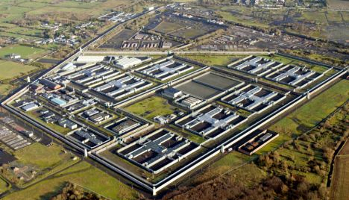
The 1981 hunger strike begins on March 1, 1981, when Bobby Sands, a former commanding officer of the Irish Republican Army (IRA) and prisoner at Long Kesh prison, refuses food. Other prisoners join the hunger strike one at a time at staggered intervals, which they believe will arouse maximum public support and exert maximum pressure on Prime Minister Margaret Thatcher.

The movement initially struggles to generate public support for the hunger strike. The Sunday before Sands begins his strike, only 3,500 people march through the streets of west Belfast as compared to 10,000 marchers during a previous hunger strike four months earlier.

Five days into the strike, however, Independent Republican Member of Parliament (MP) for Fermanagh and South Tyrone Frank Maguire dies, resulting in a by-election. There is debate among nationalists and republicans regarding who should contest the election, but they ultimately agreed not to split the nationalist vote by contesting the election and Sands stands as an Anti H-Block candidate against Ulster Unionist Party candidate Harry West. Following a high-profile campaign the election takes place on April 9, and Sands is elected to the British House of Commons with 30,492 votes to West’s 29,046.

Sands’ election victory raises hopes that a settlement can be negotiated, but Thatcher stands firm in refusing to give concessions to the hunger strikers. The world’s media descends on Belfast, and several intermediaries, including Síle de Valera, granddaughter of Éamon de Valera, Pope John Paul II‘s personal envoy John Magee, and European Commission of Human Rights officials, visit Sands in an attempt to negotiate an end to the hunger strike. With Sands close to death, the government’s position remains unchanged, and they do not force medical treatment upon him.

On May 5, Sands dies in the prison hospital on day 66 of his hunger strike, prompting rioting in nationalist areas of Northern Ireland. Over 100,000 people line the route of his funeral, which is conducted with full IRA military honours. Margaret Thatcher showed no sympathy for his death.

In the two weeks following Sands’ death, three more hunger strikers die – Francis Hughes on May 12, and Raymond McCreesh and Patsy O’Hara on May 21. The deaths result in further rioting in Northern Ireland, particularly Derry and Belfast. Following the May 21 deaths, Primate of All Ireland Tomás Ó Fiaich criticises the British government’s handling of the hunger strike. Despite this, Thatcher still refuses to negotiate a settlement.

On July 28, following the deaths of Joe McDonnell (July 8) and Martin Hurson (July 13), the families of some of the hunger strikers attend a meeting with Catholic priest Father Denis Faul. The families express concern at the lack of a settlement and a decision is made to meet with Gerry Adams later that day. At the meeting Father Faul puts pressure on Adams to find a way of ending the strike, and Adams agrees to ask the IRA leadership to order the men to end the hunger strike. The following day Adams holds a meeting with six of the hunger strikers to outline a proposed settlement on offer from the British government should the strike be brought to an end. The strikers reject the settlement, believing that accepting anything less than their original demands will be a betrayal of the sacrifice made by Bobby Sands and the other men who had died.

On July 31, the hunger strike begins to break when the mother of Paddy Quinn insists on medical intervention to save his life. The following day Kevin Lynch dies, followed by Kieran Doherty on August 2, Thomas McElwee on August 8, and Michael Devine on August 20. On September 6, the family of Laurence McKeown becomes the fourth family to intervene and asks for medical treatment to save his life, and Cahal Daly issues a statement calling on republican prisoners to end the hunger strike.

A week later James Prior replaces Humphrey Atkins as Secretary of State for Northern Ireland and meets with prisoners in an attempt to end the strike. Liam McCloskey ends his strike on September 26 after his family says they will ask for medical intervention if he becomes unconscious. It also becomes clear that the families of the remaining hunger strikers will also intervene to save their lives. The strike is called off at 3:15 PM on October 3. Three days later Secretary of State Prior announces partial concessions to the prisoners including the right to wear their own clothes at all times. The only one of their original five demands still outstanding is the right not to do prison work. Following sabotage by the prisoners and the Maze Prison escape in 1983, the prison workshops are closed, effectively granting all five of the demands but without any formal recognition of political status from the government.

Over the summer of 1981, ten hunger strikers die. Thirteen others begin refusing food but are taken off hunger strike, either due to medical reasons or after intervention by their families. Many of them still suffer from the effects of the strike, with problems including digestive, visual, physical and neurological disabilities.


Leave a comment

Armed Rocket Launcher Discovered in Co. Tyrone

co-tyrone-rocket-launcher

Army bomb experts recover a fully armed handheld rocket launcher in County Tyrone on the morning of February 29, 2000. It is found at the side of a house near the rear of Killymeal Army base in Dungannon. The discovery comes just hours after it is learned that large amounts of Semtex high explosive have been stolen from Provisional Irish Republican Army (PIRA) hides.

The weapon is linked to dissident republicans and is of a type not seen in the province before. It is believed to have originated in eastern Europe and has been abandoned by those about to carry out an attack at the rear of the army base. The weapon is similar to one recently seized by the security forces in the Republic of Ireland and linked to the Real IRA.

The rocket launcher is found just after pupils have finished traveling to three local schools. The nearby leisure centre is also closed. Families are removed from their homes on Killymeal Road while the device is investigated.

Superintendent Julie Lindsay says that to abandon such a device in the area is an “act of indescribable recklessness which clearly put the life of people living nearby in danger.” She says officers were able to prevent children from walking by the garden where the device was located as they were going to the leisure centre.

Ken Maginnis, Ulster Unionist Security spokesman and Member of Parliament (MP) for the area, says the discovery of the weapon vindicates his party’s insistence that paramilitaries should disarm. He also says it proves that republicans are “wedded to the past.”

Social Democratic and Labour Party councillor Vincent Currie says the find will bring back bad memories of a previous mortar bomb attack on the army base which devastated many houses in the area. He adds that it is lunacy to leave such a device on a road used by schoolchildren.


Leave a comment

The End of the “Border Campaign”

united-irishman-1962

On February 26, 1962, due to lack of support, the Irish Republican Army (IRA) ends what it calls “The Campaign of Resistance to British Occupation,” which is also known as the “Border Campaign.”

The Border Campaign is the first major military undertaking carried out by the IRA since the harsh security measures of the Republic of Ireland and Northern Ireland governments had severely weakened it in the 1940s.

The campaign is launched with simultaneous attacks by approximately 150 IRA members on targets on the Border in the early hours of December 12, 1956. A BBC relay transmitter is bombed in Derry, a courthouse is burned in Magherafelt, a B-Specials post near Newry is burned, and a half-built Army barracks at Enniskillen is blown up. A raid on Gough barracks in Armagh is beaten off after a brief exchange of fire.

On December 14, an IRA column under Seán Garland detonates four bombs outside Lisnaskea Royal Ulster Constabulary (RUC) station before raking it with gunfire. Further attacks on Derrylin and Roslea RUC barracks on the same day are beaten off.

On the evening of December 30, 1956, the Teeling Column attacks the Derrylin RUC barracks again, killing RUC constable John Scally, the first fatality of the campaign. The new year of 1957 begins with Seán Garland and Dáithí Ó Conaill planning an attack on the Police station at Brookeborough but they assault the wrong building. Two IRA men, Seán South and Fergal O’Hanlon, are killed in the abortive attack. Garland is seriously wounded in the raid. He and the remainder of the group are pursued back over the border by British soldiers.

The year 1957 is the most active year of the IRA’s campaign, with 341 incidents recorded. In November, the IRA suffers its worst loss of life in the period when four of its members die preparing a bomb, which explodes prematurely, in a farmhouse at Edentubber, County Louth. The civilian owner of the house is also killed.

By 1958, the campaign’s initial impetus has largely dissipated with many within the IRA in favour of calling the campaign off. By mid-year, 500 republicans are in gaol or interned. The decline in IRA activity leads the Fianna Fáil government in the South to end internment in March 1959.

Following their release, some of the interned leaders met Seán Cronin in a farmhouse in County Laois and are persuaded to continue the campaign “to keep the flame alive.” The number of incidents falls to just 26 in 1960, with many of these actions consisting of minor acts of sabotage.

The final fatality of the conflict comes in November 1961, when an RUC officer, William Hunter, is killed in a gun battle with the IRA in south County Armagh.

By late 1961, the campaign is over and has cost the lives of eight IRA men, four republican supporters, and six RUC members. In addition, 32 RUC members are wounded. A total of 256 Republicans are interned in Northern Ireland during the campaign and another 150 or so in the Republic.

The Campaign is officially called off on February 26, 1962, with a press release drafted by Ruairí Ó Brádaigh and several other persons including members of the Army Council. The statement is released by the Irish Republican Publicity Bureau and signed “J. McGarrity, Secretary.”


Leave a comment

Ireland’s First Ever Win in International Soccer

ifa-original-badgeIreland wins its first ever match in international soccer on February 19, 1887, beating Wales 4-1 in Belfast. Prior to 1921 and the partition of the country, all of Ireland is represented by a single side, the Ireland national football team, organised by the Irish Football Association (IFA).

On February 18, 1882, fifteen months after the founding of the Irish FA, Ireland makes its international debut against England, losing 13–0 in a friendly played at Bloomfield in Belfast. This remains the largest ever defeat for the team, and is also England’s largest winning margin.

Ireland competes in the inaugural British Home Championship in 1884 and loses all three games. Ireland finally wins its first game on February 19, 1887, with a 4–1 win over Wales in Belfast. Between their 1882 debut and this game, the Ireland team has a run of 14 defeats and 1 draw, the longest run without a win in the 1800s. Despite the end of the losing streak, heavy defeats continue. In March 1888 they lose 11–0 to Wales and 10–2 to Scotland. Further heavy defeats come in March 1890 when they lose 9–1 to England, in 1899 when they lose 13–2 to England, and in February 1901 when they lose 11–0 to Scotland.

Ireland is partitioned into Northern Ireland and Southern Ireland in 1920. Southern Ireland gains independence in 1922 as the Irish Free State, later to become a republic under the name of Ireland. Amid these political upheavals, a rival football association, the Football Association of Ireland, emerges in Dublin in 1921 and organises a separate league and international team. In 1923, at a time when the home nations have withdrawn from the Fédération Internationale de Football Association (FIFA), the FAI is recognised by FIFA as the governing body of the Irish Free State on the condition that it changes its name to the Football Association of the Irish Free State. The IFA continues to organise its national team on an all-Ireland basis.

Between 1928 and 1946 the IFA is not affiliated to FIFA and the two Ireland teams co-exist, never competing in the same competition. However, on March 8, 1950, in a 0–0 draw with Wales at the Racecourse Ground in Wrexham, North Wales in a World Cup qualifier, the IFA fields a team that includes four players who were born in the Irish Free State. All four players have previously played for the FAI in their qualifiers and as a result have played for two different associations in the same FIFA World Cup tournament.

After complaints from the FAI, FIFA intervenes and restricts players’ eligibility based on the political border. In 1953, FIFA rules that neither team can be referred to as Ireland, decreeing that the FAI team officially be designated as the Republic of Ireland, while the IFA team is to become Northern Ireland.


Leave a comment

Birth of N.I. Footballer Robert Dennis “Danny” Blanchflower

danny-blanchflower

Robert Dennis “Danny” Blanchflower, former Northern Ireland international footballer and football manager, is born on February 10, 1926 in the Bloomfield district of Belfast, the first of five children born to John and Selina Blanchflower.

Blanchflower is educated at Ravenscroft public elementary school and is awarded a scholarship to Belfast College of Technology. He leaves school early to become an apprentice electrician at Gallaher’s cigarette factory in Belfast. He also joins the Air Raid Precautions and, in 1943, joins the Royal Air Force after lying about his age. By 1946, after a trainee navigator course at St. Andrews University and further training in Canada, he is back at Gallaher’s in Belfast and building a reputation as an outstanding footballer.

Blanchflower signs with Glentoran F.C. in 1946 before crossing the Irish Sea and signing with Barnsley F.C. for £6000 in 1949 at the age of 23. He transfers from Barnsley to Aston Villa F.C. for a fee of £15,000 and makes his First Division debut in March 1951. He makes 155 senior appearances for Villa before being bought by Tottenham Hotspur F.C. in 1954 for a fee of £30,000. During his ten years playing at White Hart Lane he makes 337 League appearances and 382 total appearances.

The highlight of his time with the Spurs comes in the 1960–61 season, while serving as captain, the Spurs win their first 11 games and eventually win the league by 8 points. They beat Leicester City F.C. in the final of the FA Cup, becoming the first team in the 20th century to win the League and Cup double and a feat not achieved since Aston Villa in 1897.

In 1962, Blanchflower again captains the Spurs team to victory in the FA Cup in 1962, narrowly missing out on a second double when they finish a close third in the league behind Ipswich Town F.C. and Burnley F.C. In 1963, he captains the team to victory over Atlético Madrid in the final of the European Cup Winners’ Cup, making Spurs the first English team to win a European trophy.

Between 1949 and 1963, he earns 56 caps for Northern Ireland, often playing alongside his brother Jackie until the younger Blanchflower’s playing career is cut short as a result of injuries sustained in the Munich air disaster of February 1958. In 1958, captains his country when they reached the quarter-finals of the World Cup.

On December 4, 1957, he captains the Northern Ireland team against Italy in Belfast in a bad tempered game that comes to be known as the “Battle of Belfast.” Blanchflower attempts to keep the peace as the game turns nasty.

Blanchflower announces his retirement as a player on April 5, 1964, having played nearly 400 games in all competitions for the Spurs and captains them to four major trophies.

Following his retirement as a player, Blanchflower coachs for the Spurs for a number of years. Manager Bill Nicholson intends for Blanchflower to be his successor but, when Nicholson resigns in 1974, Blanchflower is passed over in favour of Terry Neill. He leaves the Spurs and becomes manager of Northern Ireland for a brief spell in 1978 before being appointed boss of Chelsea F.C. The team wins only three of fifteen games under his charge and he leaves the team in September 1979.

On May 1, 1990, Tottenham holds a testimonial match for Blanchflower at White Hart Lane, but at this point he is in the early stages of what is later diagnosed as Alzheimer’s disease and Parkinson’s disease. He is eventually placed in a Staines nursing home where he dies as a result of pneumonia on December 9, 1993, at the age of 67.

Blanchflower’s hometown of Belfast has honoured him with an Ulster History Circle plaque, located at his childhood home at 49 Grace Avenue, recognising the late sportsman as one of the greatest players in the history of Tottenham Hotspur FC.


1 Comment

The 1996 Docklands Bombing

docklands-bombing

The Docklands bombing, also known as the Canary Wharf bombing or the South Quay bombing, occurs on February 9, 1996, marking the end of the Irish Republican Army‘s (IRA) seventeen-month ceasefire.

At about 7:01 PM on February 9, the Provisional Irish Republican Army detonates a large bomb in a small lorry about 80 yards from South Quay Station on the Docklands Light Railway in the Canary Wharf financial district of London. The bomb, containing 500 kg of ammonium nitrate fertilizer and sugar and a detonating cord made of semtex, PETN, and RDX high explosives, is placed directly under the point where the tracks cross Marsh Wall.

The IRA sends telephone warnings 90 minutes prior to the detonation and the area is evacuated. However, two men working in the newsagents shop directly opposite the explosion, Inam Bashir and John Jeffries, are not evacuated in time and are killed in the explosion. Thirty-nine people require hospital treatment as a result of the blast and falling glass. A portion of the South Quay Plaza is destroyed, and the explosion leaves a crater ten metres wide and three metres deep. The shockwave from the blast causes windows to rattle five miles away.

Approximately £100 million worth of damage is done by the blast. The Midland Bank building is damaged beyond economic repair and is demolished. South Quay Plaza I and II are severely damaged and require complete rebuilding. The station itself is extensively damaged, but both it and the bridge under which the bomb is exploded are reopened within weeks.

The bombing marks the end of a 17-month IRA ceasefire during which Irish, British, and American leaders work for a political solution to the troubles in Northern Ireland. IRA member James McArdle is convicted of conspiracy to cause explosions and sentenced to 25 years in prison, but murder charges are dropped. McArdle is released under the terms of the Good Friday Agreement in June 2000 with a royal prerogative of mercy from Queen Elizabeth II.

dockland-bombing-damage

The IRA describes the deaths and injuries as a result of the bomb as “regrettable,” but says that they could have been avoided if police had responded promptly to “clear and specific warnings.” Commissioner of the Metropolitan Police Sir Paul Condon says, “It would be unfair to describe this as a failure of security. It was a failure of humanity.”

Gerry Adams, the leader of Sinn Féin, the political wing of the IRA, speaks of the need to continue the peace process. British Prime Minister John Major says there is now “a dark shadow of doubt” where optimism has existed.

On February 28, Prime Minister Major and Taoiseach of the Republic of Ireland John Bruton, announce that all-party talks will be resumed in June. Major’s decision to drop the demand for IRA decommissioning of weapons before Sinn Fein is allowed into talks leads to criticism from the press, which accuse him of being “bombed to the table.”


Leave a comment

Hillary Clinton Announced for Induction into Irish America Hall of Fame

hillary-clintonOn February 2, 2015, Irish America magazine announces that Hillary Rodham Clinton will be inducted into the Irish America Hall of Fame in March, in recognition of her work on the Irish peace process.

Clinton travels frequently to Ireland as First Lady and as U.S. Secretary of State, and often talks about the end of the civil strife, known as The Troubles, as a crowning foreign policy achievement of her husband’s administration. On her visit to Belfast in 2012, she pledges to continue to support peace in Ireland in whatever way possible.

“Hillary Rodham Clinton is one of the unsung heroes of the success of the Irish peace process,” says Niall O’Dowd, publisher of Irish America magazine. “As First Lady, U.S. Senator, and Secretary of State she always gave the issue top priority to help ensure it remained at the top of the U.S. foreign policy agenda. During that historic first trip to Northern Ireland with Bill Clinton in 1995, which I was privileged to be on, she galvanized women’s groups on both sides by meeting with them, shaping their agenda, and making sure they always had a friend in the U.S. administration. More than that, she constantly stayed involved, never giving up her focus on bringing an end to Europe’s longest conflict at the time.”

On the eve of St. Patrick’s Day, Clinton delivers the keynote address at the luncheon in Manhattan of high profile Irish-Americans who each year honor elected officials and others. She describes sitting at a table in Belfast, over cups of tea, with women from both sides of the conflict and watching as they discover how much they share.

She does not portray herself as instrumental to the Good Friday Agreement that President Clinton brokered in 1998, but says her outreach to women in Belfast on multiple visits during that period had played a critical role.

“You cannot bring peace and security to people just by signing an agreement,” she says. “In fact, most peace agreements don’t last.” She says that when “the work of peace permeates down to the kitchen table, to the backyard, to the neighborhood, around cups of tea, there’s a much greater chance the agreement will hold.”

Previous inductees into the Irish America Hall of Fame include former President John F. Kennedy, former President Bill Clinton, Vice President Joseph R. Biden, Jr., and former Maryland Governor Martin O’Malley, who addressed the luncheon in 2014 in a mix of English and Irish.


Leave a comment

Bloody Sunday in Derry, Northern Ireland

bogside-mural

Bloody Sunday, sometimes referred to as the Bogside Massacre, occurs on January 30, 1972, in the Bogside area of Derry, Northern Ireland. Twenty-six unarmed civilians are shot by British soldiers of the 1st Battalion, Parachute Regiment, as they march in protest of internment (imprisonment without trial). Thirteen people are killed on the spot, and another dies over four months later as a result of his injuries.

The march, organised by the Northern Ireland Civil Rights Association and the Northern Resistance Movement, begins at about 2:45 PM at Bishop’s Field and is to conclude at the Guildhall, in the city centre, where a rally is to take place. There are as many as 15,000 people in the march, with many joining along the route.

As the march makes its way along William Street and nears the city centre, its path is blocked by British Army barricades. The organisers then redirect the march down Rossville Street with the intention of holding the rally at Free Derry Corner instead. Some of the marchers, however, break away from the march and begin throwing stones at soldiers manning the barricades. The soldiers fire rubber bullets, CS gas, and water cannon to try and disperse the rioters and observers report that this rioting is not intense.

Some of the marchers spot British paratroopers hiding in a derelict three-story building overlooking William Street and begin throwing stones at the windows. At about 3:55 PM, the first shots are fired as these paratroopers open fire with real bullets. Civilians Damien Donaghy and John Johnston are shot and wounded while standing on waste ground opposite the building. The soldiers claim Donaghy is holding a black cylindrical object.

At 4:07 PM, the paratroopers are ordered to go through the barricades and arrest rioters. On foot and in armoured vehicles, the paratroopers chase people down Rossville Street and into the Bogside. Two people are knocked down by the vehicles. Although Brigadier Pat MacLellan orders that only one company of paratroopers be sent on foot through the barricades and that they should not chase people down Rossville Street, Lieutenant Colonel Derek Wilford disobeys this order. This results in no separation between the rioters and the peaceful marchers.

There are many claims of paratroopers beating people, clubbing them with rifle butts, firing rubber bullets at them from close range, making threats to kill, and hurling abuse. One group of paratroopers take up position at a low wall about 80 yards in front of a rubble barricade that stretches across Rossville Street. Some of the people near the barricade throw stones at the soldiers but they are not close enough to hit the soldiers. The soldiers then open fire on the people at the barricade, killing six and wounding another.

A large group of people flee or are chased into the car park of Rossville Flats, which is like a courtyard, surrounded on three sides by high-rise flats. The soldiers open fire, killing one civilian, Jackie Duddy, who is shot in the back, and wounding six others.

Other people flee into the car park of Glenfada Park, which is also a courtyard-like area surrounded by flats. From a distance of approximately 50 yards, the soldiers shoot at people across the car park. Two civilians are killed and at least four others wounded. The soldiers pass through the car park and out the other side. Some soldiers exit the southwest corner, where they shoot and kill two civilians. The remainder exit the southeast corner and shoot four more civilians, killing two.

Only about ten minutes elapse between the time soldiers first drive into the Bogside and the time the last of the civilians is shot. Under the command of Major Ted Loden, more than 100 rounds are fired by the soldiers.

Some of those shot are given first aid by civilian volunteers, either on the scene or after being carried into nearby homes. The first ambulances arrive at 4:28 PM. The injured are then driven to the hospital, either in civilian cars or in ambulances. The three boys killed at the rubble barricade are driven to hospital by the paratroopers after, as witnesses claim, they lifted the bodies by the hands and feet and dumped them in the back of their vehicle as if they were “pieces of meat.”

In April 1972, the British government releases a report exonerating British troops from any illegal actions during the protest. The shootings act as a rallying call for the Irish Republican Army (IRA) as their numbers swell and Irish indignation over Britain’s Northern Ireland policies grow. As a result, Britain increases its military presence in the North while removing any vestige of Northern self-rule. On July 21, 1972, the IRA explode 20 bombs simultaneously in Belfast, killing British military personnel and a number of civilians. Britain responds by instituting a new court system composed of trial without jury for terrorism suspects and conviction rates exceed 90 percent. No criminal charges have ever been brought against the participating members of the British military.