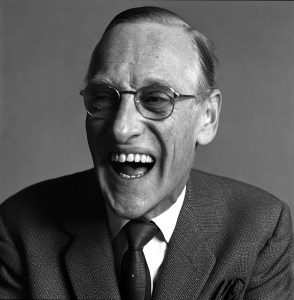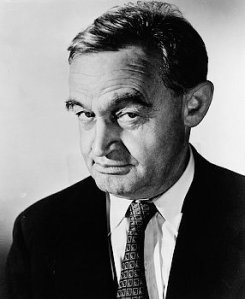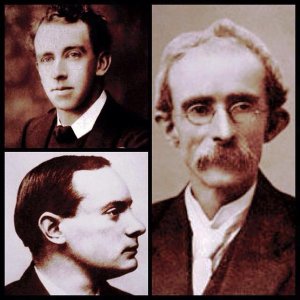
Patrick Pearse, Thomas Clarke, and Thomas MacDonagh are executed by firing squad in the Stonebreakers’ Yard at Kilmainham Gaol in Dublin on May 3, 1916. Pearse, Clarke, and MacDonagh are three of the seven signatories of the Proclamation of the Irish Republic.
Just three days after the end of the 1916 Easter Rising, the first military courts martial sits on May 2, 1916. Pearse, Clarke, and MacDonagh are immediately sentence to death. The three are taken that evening to the disused Kilmainham Gaol and are shot at dawn the following morning.
Patrick Pearse is born in Dublin in 1879, becoming interested in Irish cultural matters in his teenage years. In 1898, Pearse becomes a member of the Executive Commmittee of the Gaelic League. He graduates from the Royal University of Ireland in 1901 with a degree in Arts and Law. Pearse’s literary output is constant, and he publishes extensively in both Irish and English, becoming the editor of An Claidheamh Soluis, the newspaper of the Gaelic League. He is a keen believer in the value of education, and establishes two schools, Coláiste Éanna and Coláiste Íde, devoted to the education of Irish children through the Irish language. Pearse is one of the founding members of the Irish Volunteers and the author of the Proclamation of the Irish Republic. He is Commander in Chief of the Irish forces and headquartered in the General Post Office (GPO) during the 1916 Easter Rising.
Thomas Clarke is born on the Isle of Wight in 1857, the son of a soldier in the British army. During his time in America as a young man, he joins Clan na Gael, later enduring fifteen years (1883-1898) of penal servitude for his role in a bombing campaign in London. In 1907, having returned from a second sojourn in America, his links with Clan na Gael in America copper-fastens his importance to the revolutionary movement in Ireland. He holds the post of Treasurer to the Irish Republican Brotherhood (IRB) and is a member of the Supreme Council from 1915. Clarke is the first signatory of the Proclamation of the Irish Republic through deference to his seniority. Clarke is also stationed at the GPO during Easter Week. Clarke tells his wife during his final night that he is relieved he is going to be executed because his greatest dread is that he would be sent back to prison.
Thomas MacDonagh is a native of Tipperary, born in 1878. He spends the early part of his career as a teacher. He moves to Dublin to study and is the first teacher on the staff at St. Enda’s School, the school he helps to found with Patrick Pearse. MacDonagh is well versed in literature, his enthusiasm and erudition earning him a position in the English department at University College Dublin. His play When the Dawn is Come is produced at the Abbey Theatre. He is appointed director of training for the Irish Volunteers in 1914, later joining the Irish Republican Brotherhood (IRB). MacDonagh is appointed to the IRB military committee in 1916. He is commander of the Second Battalion of Volunteers that occupies Jacob’s Biscuit Factory and surrounding houses during the Rising.
Immediately after the executions, Irish Parliamentary Party leader John Redmond warns British Prime Minister Herbert Asquith that “if any more executions take place in Ireland the position will become impossible for any constitutional party or leader.”
Asquith himself warns Sir John Maxwell that “anything like a large number of executions would…sow the seeds of lasting trouble in Ireland.”
These warnings fall upon deaf ears as thirteen additional executions take place in the following days.