According to author Tony Geraghty, British authorities learn of the first horizontal mortar produced by the Provisional IRA, the Mark 12, in 1985. The weapon is recovered after an incident in which three IRA volunteers are killed by security forces. The launcher suffers from the limitation of a heavy recoil, which makes the handling of the device difficult. One British intelligence report says that while the launcher is quite crude, the grenade is made of “a number of components which require a high standard of machine manufacturing.” The projectile has a warhead of 40 ounces (1.1 kg) of Semtex and TNT. It is used basically as a standoff weapon, in which the grenade is lofted over the security bases’ fences or against armoured vehicles. The mortar has an effective range of 70 yards, within which it can pierce an armour plate or destroy a sangar.
Later in the conflict the IRA develops the Mark 16, a new version with improved armour-piercing capabilities, usually referred to as a “projected recoilless improvised grenade.”
On the evening of March 1, 1991, a two-vehicle mobile patrol belonging to the 2nd Battalion, Ulster Defence Regiment is approaching the western outskirts of Armagh on Killylea road. When driving along Mullacreevie housing estate, the two Land Rovers are held by temporary traffic lights at roadworks. Unknown to them, an IRA unit from the North Armagh Brigade has set a Mark 12 launcher on a hump of earth in the front garden of a house beside the lights. After the incident, IRA sources describe the device as a “directional missile.”
When the first Land Rover pulls off after the lights turn green, the mortar ‘s improvised grenade is fired by command-wire from the backyard of the house by IRA members concealed behind a digger. The projectile hits the coachwork, blowing away both sides and the roof of the military vehicle. Witnesses report that the Land Rover was “ripped apart.” The soldiers inside are immediately assisted by fellow UDR members, who help to drag the wounded out of the shattered wreckage.
Private Paul Sutcliffe, a 32-year-old Englishman who has served for four years with the Duke of Wellington’s Regiment before becoming a UDR soldier in 1989, dies on the spot. The driver, Private Roger Love, a 20-year-old from Portadown, succumbs to his injuries three days later. Two other servicemen are maimed by the explosion. One of them suffers severe chest wounds, and loses the use of one arm; the other has a leg amputated below the knee.
The ambush at Mullacreevie is the first time that a Mark 12 mortar is used successfully.
Roger Love’s family donates the deceased soldier’s kidneys after they authorize the medical staff to disconnect the life-supporting machine. A UDR party attends Paul Sutcliffe’s funeral at his hometown of Barrowford, Lancashire, the only UDR military funeral held outside Northern Ireland. His ashes are scattered in the Mourne Mountains.
Another horizontal mortar attack on a UDR mobile patrol takes place on November 6, when Private Michael Boxall is killed in Bellaghy, County Londonderry, after the Land Rover he is riding on is hit by a Mark 12 grenade. A fellow soldier loses one eye in the attack. Incidentally, constable Erik Clarke, another Englishmen who had also served in the British Army in Northern Ireland from 1973 to 1978, is killed that year by the same kind of weapon while riding on a combined Royal Ulster Constabulary (RUC) – British Army mobile patrol in an early Mark 12 attack. The incident takes place on September 17 at Swatragh, County Londonderry. Clarke had married a local woman and later joined the RUC.
The Mark 12 mortar is used by the IRA until 1993, when it is superseded by the Mark 16. The Mark 16 is fired on eleven occasions by the IRA from late 1993 to early 1994.
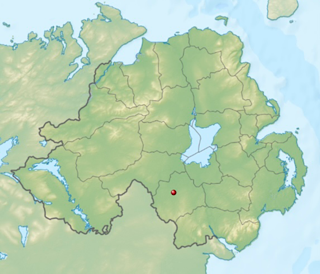
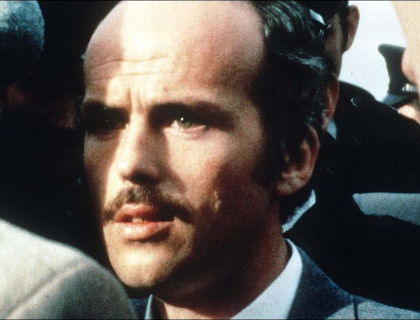
Hughes is born in Bellaghy, County Londonderry, Northern Ireland, on February 28, 1956, into a republican family, the youngest of four brothers in a family of ten siblings. His father, Joseph, had been a member of the Irish Republican Army in the 1920s and one of his uncles had smuggled arms for the republican movement. This results in the Hughes family being targeted when internment is introduced in 1971, and his brother Oliver is interned for eight months without trial in Operation Demetrius. He leaves school at the age of 16 and starts work as an apprentice painter and decorator.
Hughes is returning from an evening out in Ardboe, County Tyrone, when he is stopped at an Ulster Defence Regiment (UDR) checkpoint. When the soldiers realise he comes from a republican family, he is badly beaten. His father encourages him to see a doctor and report the incident to the police, but he refuses, saying he “would get his own back on the people who did it, and their friends.”
Hughes initially joins the Official Irish Republican Army but leaves after the organisation declares a ceasefire in May 1972. He then joins up with Dominic McGlinchey, his cousin Thomas McElwee and Ian Milne, before the three decide to join the Provisional Irish Republican Army in 1973. He, Milne and McGlinchey take part in scores of IRA operations, including daylight attacks on Royal Ulster Constabulary (RUC) stations, bombings, and attacks on off-duty members of the RUC and UDR. Another IRA member describes the activities of Hughes:
“He led a life perpetually on the move, often moving on foot up to 20 miles for one night then sleeping during the day, either in fields and ditches or safe houses; a soldierly sight in his black beret and combat uniform and openly carrying a rifle, a handgun and several grenades as well as food rations.”
On April 18, 1977, Hughes, McGlinchey and Milne are travelling in a car near the town of Moneymore when an RUC patrol car carrying four officers signals them to stop. The IRA members attempt to escape by performing a U-turn but lose control of the car which ends up in a ditch. They abandon the car and open fire on the RUC patrol car, killing two officers and wounding another, before running off through the fields. A second RUC patrol comes under fire while attempting to prevent the men from fleeing, and despite a search operation by the RUC and British Army the IRA members escape. Following the Moneymore shootings, the RUC name Hughes as the most wanted man in Northern Ireland, and issue wanted posters with pictures of Hughes, Milne and McGlinchey. Milne is arrested in Lurgan, County Armagh, in August 1977, and McGlinchey later in the year in the Republic of Ireland.
Hughes is arrested on March 17, 1978, at Lisnamuck, near Maghera in County Londonderry, after an exchange of gunfire with the British Army the night before. British soldiers manning a covert observation post spot Hughes and another IRA volunteer approaching them wearing combat clothing with “Ireland” sewn on their jackets. Thinking they might be from the Ulster Defence Regiment, one of the soldiers stands up and calls to them. The IRA volunteers open fire on the British troops, who return fire. A soldier of the Special Air Service (SAS), Lance Corporal David Jones, is killed and another soldier wounded. Hughes is also wounded and is arrested nearby the next morning.
In February 1980, Hughes is sentenced to a total of 83 years in prison. He is tried for, and found guilty of, the murder of one British Army soldier (for which he receives a life sentence) and wounding of another (for which he receives 14 years) in the incident which leads to his arrest, as well as a series of gun and bomb attacks over a six-year period. Security sources describe him as “an absolute fanatic” and “a ruthless killer.” Fellow republicans describe him as “fearless and active.”
Hughes is involved in the mass hunger strike in 1980 and is the second prisoner to join the 1981 Irish Hunger Strike in the H-Blocks at the Long Kesh Detention Centre. His hunger strike begins on March 15, 1981, two weeks after Bobby Sands began his hunger strike. He is also the second striker to die, at 5:43 p.m. BST on May 12, after 59 days without food, refusing requests from the IRA leadership outside the prison to end the strike after the death of Sands. The journey of his body from the prison to the well-attended funeral near Bellaghy is marked by rioting as the hearse passes through loyalist areas. His death leads to an upsurge in rioting in nationalist areas of Northern Ireland.
Hughes’s cousin Thomas McElwee is the ninth hunger striker to die. Oliver Hughes, one of his brothers, is elected twice to Magherafelt District Council.
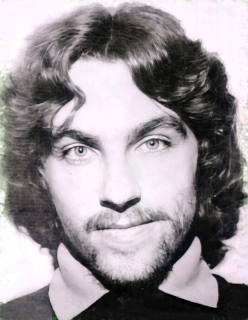
McGlinchey is one of eleven siblings born into a staunchly republican home in Ballyscullion Road, Bellaghy, in rural south County Londonderry, Northern Ireland. His father owns a garage and some of his father’s police customers later die at McGlinchey’s hands. His mother Monica is a devout Catholic. He is educated at the local school. When he was sixteen, he begins an apprenticeship in his father’s garage. About this time, he is joining the numerous civil rights marches that are taking place in the county. His precise reasons for doing so are unclear, but speculation is that he is reacting to events around him and the idea of participating in marches offers glamour and a close identification with his own community.
In 1971, McGlinchey is interned without charge for ten months in Long Kesh Detention Centre. Not long after his release the following year, he is imprisoned again on arms charges. On July 5, 1975, during his imprisonment, he marries Mary O’Neil, daughter of Patrick O’Neil from Toomebridge. Together they have three children.
Following his release, McGlinchey joins Ian Milne and future Provisional IRA hunger strikersFrancis Hughes and Thomas McElwee and wages a campaign of shooting and bombing throughout the county and beyond. Together, they later join the Provisional IRA. The gang spends the late 1970s on the run, carrying out operations and evading both the British Army and the Garda Síochána. Following a mailvan robbery, the latter force arrests McGlinchey in County Monaghan in 1977 for carjacking a Garda patrol vehicle and threatening the officer with a pistol, although he claims that the gun is actually a wheel brace. He fails to make bail at Dublin‘s Special Criminal Court after a Garda Superintendent argues that McGlinchey would fail to attend court if bailed. He is convicted and sent to the maximum-security Portlaoise Prison. In 1982, while serving his prison sentence, he clashes with the prison’s IRA leadership and is either expelled by them for indiscipline or leaves the organisation due to strategic differences.
Following his departure from the IRA and his release from prison, McGlinchey joins the INLA. Due to his experience, he rises through the ranks, becoming chief of staff by 1982. Under his leadership, the INLA, which had previously had a reputation for disorganisation, becomes extremely active in cross-borderassassinations and bombings. These include many individual assassinations and woundings, but also massacres such as the Droppin Well bombing of 1982 in which both civilians and soldiers die. There are some failed operations, and McGlinchey, who believes this is the result of an informer within the ranks, devotes much time and energy to finding the cause. Those suspected of betraying the organisation are treated brutally, often by McGlinchey personally. As a result of this resurgence of activity and his high profile, the press nicknames him “Mad Dog.” Under his tenure the Darkley massacre is carried out, ostensibly by another group but using a weapon supplied by McGlinchey. In late 1983, while still on the run, he gives an interview with the Sunday Tribune newspaper in which he condemns the Darkley killings but also lays out his political philosophy and plans for the future.
By 1984, McGlinchey has fallen out with members of a powerful Republican family from South Armagh over what he considers missing funds. Men loyal to this family are subsequently killed by McGlinchey’s unit, which includes his wife. In March of the same year, he is captured in Newmarket-on-Fergus, County Clare, following a gunfight with the Gardaí. At this time, he is wanted in Northern Ireland for the shooting of an elderly woman, but republicans have traditionally been able to avoid extradition by claiming their offences were political. The bloody war in the north is leading the Republic of Ireland to re-evaluate its position, however, and he becomes the first republican to be extradited to Northern Ireland. Although convicted and sentenced there to life imprisonment, this is overturned in 1985. As a result, he is returned to the Republic, where he is sentenced to ten years’ imprisonment on firearms charges. While he is incarcerated, his wife is shot dead at her Dundalk home.
McGlinchey is released in March 1993 and claiming to have no further involvement with the INLA, moves to Drogheda. He survives an assassination attempt soon after his release from prison, but in February 1994, his enemies catch up with him. At around 9:30 on the evening of Thursday, February 10, 1994, he visits and dines with friends of his in Duleek Road, near his home. He leaves about forty minutes later, intending to take a video back to a shop in Brookville, on the north side of town. At around 11:00 p.m. he and his 16-year-old son Dominic are returning home, when he pulls up to make a phone call from a public kiosk on Hardman’s Gardens, near Our Lady of Lourdes Hospital. Almost immediately and despite the presence of four witnesses, a red Mazda pulls up alongside him. While his son watches from the car, three men get out and beat McGlinchey. Once he is on the ground the men, who are armed with three pump action shotguns and a pistol, fire into him fourteen times. The attack finishes with a coup de grâce to the head, although he is already dead. His last words are reputed to be “Jesus, Mary help me.” His son yells for an ambulance.
The following day, an autopsy is carried out in Our Lady of Lourdes Hospital, which indicates McGlinchey had been hit in the neck, skull, the left upper chest, the left arm, and both legs. His inquest is held in Drogheda two weeks later, suspended and then reopened in November 1996. Gardaí forensic officers tell the coroner that they had compared the shell casings they had found with the database, but no matches have been made to other known weapons. The officer notes that no such information has been received from the Royal Ulster Constabulary (RUC). The shotguns used are impossible to trace ballistically, but it is ascertained that the Mazda was registered in the north. His and his wife’s killers have never been found.
McGlinchey’s funeral is held on February 13, 1994, in Bellaghy, with no republican accoutrements. There is no INLA colour guard, and only an Irish tricolor draped over the coffin. Over 1,500 people attend and are watched closely by 200 RUC. Police armoured vans are held on the perimeter. He is buried alongside his wife and their young daughter Máire. His coffin is carried from the McGlinchey family home to St. Mary’s Church by pallbearers who are swapped out from the crowd every 40-yards or so. Martin McGuinness is among them, as is Bernadette McAliskey and her daughter Róisín. His sons carry the coffin for the final yards.
McGlinchey’s posthumous reputation ranges from being a “psycho” to his enemies to being an inspiration to those who followed him. Commentators have speculated on what he would have contributed to Irish politics had he lived. Some have suggested that he would have contributed to the Northern Ireland peace process, while others have argued that dissident republicans, opposed to that process, would have found him a willing rallying point. He remains an influence on Irish fiction and music, with both Edna O’Brien and Martin McDonagh producing acclaimed pieces based on his life and career. He is also featured in popular songs.
During the mid-1970s, the Royal Ulster Constabulary (RUC) describes Milne as one of its three “most wanted.” In 1977, he is arrested and sentenced to life for killing a British soldier. Serving time at Long Kesh Detention Centre, he participates in the blanket protest. He is released in 1992.
McElwee, the sixth of twelve children, is born on November 30, 1957, into the small, whitewashed home built by his father, along the Tamlaghtduff Road in Bellaghy, County Derry, Northern Ireland. He attended St. Mary’s primary in Bellaghy, and then Clady intermediate. After leaving school he goes to Magherafelt technical college for a while but later changes his mind and goes to Ballymena training centre to begin an apprenticeship as a motor mechanic. Harassment from loyalist workers there forces him to leave and he then goes to work with a local mechanic.
McElwee and his cousin Francis Hughes form an independent Republican unit, which for several years carries out ambushes on British Army patrols as well as bomb attacks in neighbouring towns such as Magherafelt, Castledawson, and Maghera.
In October 1976, McElwee takes part in a planned bombing blitz on the town of Ballymena. Along with several colleagues, he is transporting one of the bombs, which explodes prematurely and blinds him in his right eye. He is transferred from the Ballymena hospital to the Royal Victoria Hospital in Belfast for emergency surgery to save his remaining eye. It is three weeks before he is able to see at all.
After six weeks McElwee is transferred again, this time to the military wing of the Musgrave Park Hospital. One week before Christmas, he is charged and sent to Crumlin Road Gaol.
At McElwee’s subsequent trial in September 1977, having spent over eight months on remand in Crumlin Road, he is charged and sentenced to 20 years’ imprisonment for possession of explosives and the murder of Yvonne Dunlop, who is killed when one of the firebombs destroys the shop where she is employed. His murder charge is reduced to manslaughter on appeal, although the original jail term stands. He returns to the blanket protest he had joined immediately after his trial, in the H-Blocks of Long Kesh.
Imprisonment is particularly harsh for McElwee and his brother Benedict who are frequently singled out for brutality by prison warders, outraged at the stubborn refusal of the two to accept any form of criminal status. On one occasion he is put on the boards for fourteen days for refusing to call a prison warder ‘sir.’ In a letter smuggled out to his sister Mary, Benedict writes of the imprint of a warder’s boot on his back and arms after a typical assault. However, throughout the brutality and degradation they have to endure serves only to deepen yet further, and harder, their resistance to criminalisation.
McElwee joins the 1981 Irish hunger strike on June 7, 1981, and died on August 8, 1981, after 62 days on the strike. Indicative of the callousness of the British government towards prisoners and their families alike, he is denied the comfort of his brother’s presence at that tragic moment. He dies after 62 days of slow agonising hunger strike with no company other than prison warders – colleagues of those who had brutalised, degraded and tortured him for three-and-a-half years.
In 2009, Republican Sinn Féin (RSF) name their Waterfordcumann after McElwee, replacing that of George Lennon, O/C of the Waterford Flying Column who led the IRA anti-Treaty Republicans into Waterford City in March 1922. The Waterford RSF had adopted the Lennon name without the permission of his son who noted that his father had, in later years, become a committed pacifist and opponent of the Vietnam War.
McElwee is the main subject of the song Farewell to Bellaghy, which also mentions his cousin Francis Hughes, other members of the independent Republican unit and deceased volunteers of the South Derry Brigade of the Provisional IRA. He is also the subject of The Crucifucks‘ song The Story of Thomas McElwee.
Heaney’s family moves to nearby Bellaghy when he is a boy. He attends Queen’s University Belfast and begins to publish poetry. In the early 1960s he becomes a lecturer at St. Joseph’s College in Belfast. He lives in Sandymount, Dublin from 1976 until his death. He also lives part-time in the United States from 1981 to 2006. He is recognised as one of the principal contributors to poetry during his lifetime.
American poet Robert Lowell describes Heaney as “the most important Irish poet since Yeats,” and many others, including the academic John Sutherland, have said that he is “the greatest poet of our age.” Robert Pinsky states that “with his wonderful gift of eye and ear Heaney has the gift of the storyteller.” Upon his death in 2013, The Independent describes him as “probably the best-known poet in the world.” One of his best-known works is Death of a Naturalist, published in 1966.
Seamus Heaney dies in Blackrock, Dublin on August 30, 2013, while hospitalized following a fall a few days earlier. He is buried at the Cemetery of St. Mary’s Church, Bellaghy, Northern Ireland. The headstone bears the epitaph “Walk on air against your better judgement,” from one of his poems, The Gravel Walks.
PresidentMichael D. Higgins, himself a poet, praises Heaney’s “contribution to the republics of letters, conscience and humanity.” TaoiseachEnda Kenny says that Heaney’s death has brought “great sorrow to Ireland, to language and to literature.”
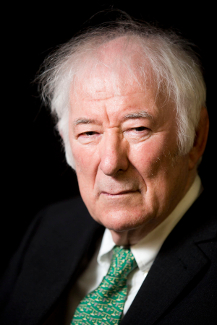
Heaney is born near Castledawson, County Londonderry, in Northern Ireland. The family moves to nearby Bellaghy when he is a boy. After attending Queen’s University Belfast, Heaney becomes a lecturer at St. Joseph’s College in Belfast in the early 1960s and begins to publish poetry. He lives in Sandymount, Dublin from 1976 until his death. He also lives part-time in the United States from 1981 to 2006. Heaney is recognised as one of the principal contributors to poetry during his lifetime.
American poet Robert Lowell describes Heaney as “the most important Irish poet since Yeats,” and many others, including the academic John Sutherland, have said that he is “the greatest poet of our age.” Robert Pinsky has stated that “with his wonderful gift of eye and ear Heaney has the gift of the storyteller.” Upon his death in 2013, The Independent describes him as “probably the best-known poet in the world.” One of his best-known works is Death of a Naturalist, published in 1966.
Seamus Heaney dies in the Blackrock Clinic in Dublin on August 30, 2013, aged 74, following a short illness. After a fall outside a restaurant in Dublin, he enters the hospital for a medical procedure, but dies at 7:30 the following morning before it takes place. His funeral is held in Donnybrook, Dublin, on the morning of September 2, 2013, and he is buried in the evening in the Cemetery of St. Mary’s Church, Bellaghy, County Londonderry, Northern Ireland, in the same graveyard as his parents, young brother, and other family members. His son Michael reveals at the funeral mass that his father texted his final words, “Noli timere” (Latin: “Do not be afraid”), to his wife, Marie, minutes before he died. Shortly after Heaney’s death, graffiti artist Maser paints a mural in Dublin referencing this message.
On September 1, the day after his death, a crowd of 81,553 spectators applaud Heaney for three minutes at a semi-final match of the 2013 All-Ireland Senior Football Championship. His funeral is broadcast live the following day on RTÉ television and radio and is streamed internationally at RTÉ’s website. RTÉ Radio 1 Extra transmits a continuous broadcast, from 8:00 AM until 9:15 PM on the day of the funeral, of his Collected Poems album, recorded in 2009. His poetry collections sell out rapidly in Irish bookshops immediately following his death.



 seamus dubhghaill