seamus dubhghaill

Promoting Irish Culture and History from Little Rock, Arkansas, USA


Leave a comment

First Mail Coach Run from Dublin to Waterford

On July 5, 1790, the Irish mail coach service makes its first run from Dublin to Waterford, marking a significant milestone in Ireland’s postal history. This is part of the broader expansion of the General Post Office’s (GPO) mail coach network, which had been introduced in Ireland in 1789.

A twice-weekly mail coach service operates between Dublin and Drogheda to the north, Kilkenny to the south and Athlone to the west as early as 1737 and for a short period from 1740, a Dublin to Belfast mail coach exists. In winter, this route takes three days, with overnight stops at Drogheda and Newry. In summer, travel time is reduced to two days. In 1789, mail coaches begin a scheduled service from Dublin to Belfast. They meet the mail boats coming from Portpatrick in Scotland at Donaghadee, County Down.

The Irish mail coach system is modeled on the successful English service introduced in 1784 by John Palmer, which uses specially built coaches to carry the Royal Mail under contract to independent operators. These coaches are designed for speed and efficiency, stopping only for mail collection and delivery, and are protected by armed guards. The Dublin–Waterford route is one of the early inland services added to the network, complementing other major routes such as LondonNorwich, LiverpoolLeeds, and London–Dover.

The July 5, 1790 run from Dublin to Waterford is notable because it is the first scheduled mail coach service on that route, replacing slower and less secure methods like mounted riders or carts. It demonstrates the GPO’s ability to extend its network to key inland towns, improving communication between Dublin and the southeast of Ireland. It also reflects the rapid expansion of the mail coach system in Ireland by 1790, with many towns already having daily mail delivery and collection.

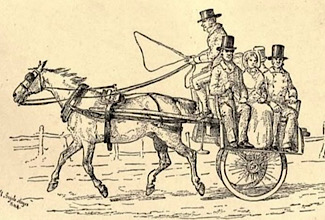
While the primary purpose is to carry the Royal Mail, passengers can also travel at a premium fare. The coaches can carry four seated passengers inside and more standing outside, with the driver and guard occupying the front seats. The journey from Dublin to Waterford is relatively short for the time, but still requires careful scheduling to meet the strict post office timetable.

This first run lays the foundation for a regular mail service that becomes a vital part of Ireland’s transport and communication infrastructure until the advent of railways in the 1830s. By the mid-19th century, most of the mail coaches in Ireland are eventually out-competed by Charles Bianconi’s country-wide network of open carriages, before this system in turn succumbs to the railways. The Dublin–Waterford route, like others, is eventually replaced by the faster rail services, but its role in modernizing Ireland’s postal system is crucial.

Leave a comment

Death of Charles Bianconi, Italo-Irish Entrepreneur

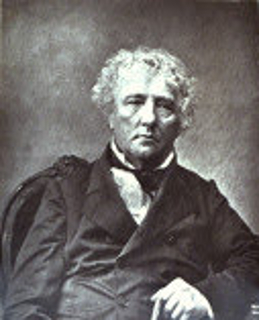
Charles Bianconi, Italo-Irish passenger car entrepreneur, dies on September 22, 1875, at Longfield House, Boherlahan, County Tipperary. Sometimes described as the “man who put Ireland on wheels,” he develops a network of horse-drawn coaches that become Ireland’s “first regular public transport” system.

Bianconi is born Carlo Bianconi in Tregolo, Costa Masnaga, Italy on September 24, 1786. He moves from an area poised to fall to Napoleon and travels to Ireland in 1802, by way of England, just four years after the Irish Rebellion of 1798. At the time, British fear of continental invasion results in an acute sense of insecurity and additional restrictions on the admission of foreigners. He is christened Carlo but anglicises his name to Charles when he arrives in Ireland.

Bianconi works as an engraver and printseller in Dublin, near Essex Street, under his sponsor, Andrea Faroni, when he is sixteen. In 1806 he sets up an engraving and print shop in Carrick-on-Suir, County Tipperary, moving to Clonmel in 1815.

Bianconi eventually becomes famous for his innovations in transport and is twice elected mayor of Clonmel.

Bianconi is the founder of public transportation in Ireland, at a time preceding railways. He establishes regular horse-drawn carriage services on various routes from about 1815 onward. These are known as “Bianconi coaches” and the first service, Clonmel to Cahir, takes five to eight hours by boat but only two hours by Bianconi’s carriage. Travel on one of his carriages cost one penny farthing a mile.

Bianconi also establishes a series of inns, the Bianconi Inns, some of which still exist in Piltown, County Kilkenny and Killorglin, County Kerry.

In 1832 Bianconi marries Eliza Hayes, the daughter of a wealthy Dublin stockbroker. They have three children – Charles Thomas Bianconi, Catherine Henrietta Bianconi and Mary Anne Bianconi, who marries Morgan John O’Connell and is the mother of his grandson John O’Connell Bianconi.

Bianconi’s transport services continue into the 1850s and later, by which time there are a number of railway services in the country. The Bianconi coaches continue to be well-patronised, by offering connections from various termini, one of the first and few examples of an integrated transport system in Ireland. By 1865 Bianconi’s annual income was about £35,000.

Charles Bianconi dies on September 22, 1875, at Longfield House, Boherlahan, County Tipperary. Having donated land to the parish of Boherlahan for the construction of a parish church, he wishes to be buried on the Church grounds. He, and his family, are buried in a side chapel, separate from the parish church in Boherlahan, approximately five miles from Cashel, County Tipperary.


Leave a comment

Birth of Charles Bianconi, Italo-Irish Entrepreneur

charles-bianconi

Charles Bianconi, Italo-Irish passenger car entrepreneur, is born Carlo Bianconi in Tregolo, Costa Masnaga, Italy on September 24, 1786.

Bianconi moves from an area poised to fall to Napoleon and travels to Ireland in 1802, by way of England, just four years after the Irish Rebellion of 1798. At the time, British fear of continental invasion results in an acute sense of insecurity and additional restrictions on the admission of foreigners. He is christened Carlo but anglicises his name to Charles when he arrives in Ireland.

Bianconi works as an engraver and printseller in Dublin, near Essex Street, under his sponsor, Andrea Faroni, when he is 16. In 1806 he sets up an engraving and print shop in Carrick-on-Suir, County Tipperary, moving to Clonmel in 1815.

Bianconi eventually becomes famous for his innovations in transport and is twice elected mayor of Clonmel.

Bianconi is the founder of public transportation in Ireland, at a time preceding railways. He establishes regular horse-drawn carriage services on various routes from about 1815 onward. These are known as “Bianconi coaches” and the first service, Clonmel to Cahir, takes five to eight hours by boat but only two hours by Bianconi’s carriage. Travel on one of his carriages cost one penny farthing a mile.

Bianconi also establishes a series of inns, the Bianconi Inns, some of which still exist in Piltown, County Kilkenny and Killorglin, County Kerry.

In 1832 Bianconi marries Eliza Hayes, the daughter of a wealthy Dublin stockbroker. They have three children – Charles Thomas Bianconi, Catherine Henrietta Bianconi and Mary Anne Bianconi, who marries Morgan O’Connell and is the mother of his grandson John O’Connell Bianconi.

Bianconi’s transport services continue into the 1850s and later, by which time there are a number of railway services in the country. The Bianconi coaches continue to be well-patronised, by offering connections from various termini, one of the first and few examples of an integrated transport system in Ireland. By 1865 Bianconi’s annual income was about £35,000.

Charles Bianconi dies on September 22, 1875 at Longfield House, Boherlahan, County Tipperary. Having donated land to the parish of Boherlahan for the construction of a parish church, he wishes to be buried on the Church grounds. He, and his family, are buried in a side chapel, separate from the parish church in Boherlahan, approximately 5 miles from Cashel, County Tipperary.


Leave a comment

First Horse-Drawn Coach Service in Ireland

charles-bianconi

Charles Bianconi, Italo-Irish entrepreneur, opens his first horse-drawn coach service, between Clonmel and Cahir, County Tipperary, a distance of 10 miles, on July 6, 1815.

Born Carlo Bianconi, in Tregolo, Costa Masnaga, Italy on September 24, 1786, he moves from an area poised to fall to Napoleon and travels to Ireland via England in 1802, just four years after the Irish Rebellion of 1798. At the time, British fear of continental invasion results in an acute sense of insecurity and additional restrictions on the admission of foreigners. He is christened Carlo but anglicises his name to Charles when he arrives in Ireland in 1802.

At the age of 16, Bianconi works as an engraver and printseller in Dublin, near Essex Street, under his sponsor, Andrea Faroni. In 1806 he sets up an engraving and print shop in Carrick-on-Suir, moving to Clonmel in 1815.

Bianconi eventually becomes famous for his innovations in transport and is twice elected mayor of Clonmel. He is the founder of public transportation in Ireland, at a time preceding railways. He establishes regular horse-drawn carriage services on various routes beginning in 1815. These are known as “Bianconi coaches” and the first service, Clonmel to Cahir, which takes five to eight hours by boat, takes only two hours by Bianconi’s carriage. Travel on a coach costs one penny farthing a mile.

Bianconi’s carriage services continue into the 1850s and later, by which time there are a number of railway services in the country. The Bianconi coaches continue to be well-patronised, by offering connections from various termini, one of the first and few examples of an integrated transport system in Ireland. By 1865 Bianconi’s annual income is about £35,000.

Bianconi also establishes a series of inns, the Bianconi Inns, some of which still exist; in Piltown, County Kilkenny and Killorglin, County Kerry.

In 1832 Bianconi marries Eliza Hayes, the daughter of a wealthy Dublin stockbroker. They have three children. Bianconi dies on September 22, 1875 at Longfield House, Boherlahan, County Tipperary.

Having donated land to the parish of Boherlahan for the construction of a parish church, Bianconi wishes to be buried on the Church grounds. He, and his family, are buried in a side chapel, separate from the parish church in Boherlahan, approximately 5 miles from Cashel, County Tipperary.