
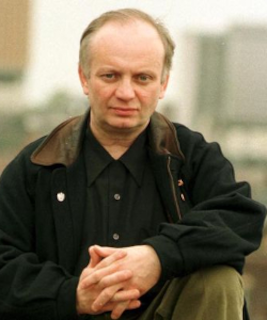
Eamon Collins, member of the Provisional Irish Republican Army (IRA) in the late 1970s and early 1980s, is beaten and stabbed to death by an unidentified assailant(s) in the early morning hours of January 27, 1999, in Newry, County Down, Northern Ireland.
Collins is born in 1954 in Camlough, County Armagh, Northern Ireland, the son of Brian Collins, a farmer, livestock trader, and cattle smuggler, and Kathleen Collins (née Cumiskey). His extended family has no history of political involvement, though his upbringing is fervently Catholic and nationalist. He leaves secondary school at age 16 and briefly works as a clerk in the Ministry of Defence in London. He returns home for family reasons and resumes his education in 1971 through a scholarship to St. Colman’s College, Newry, County Down. In 1973 he goes to Queen’s University Belfast (QUB) to study law.
Collins develops ultra-leftist political beliefs in his late teens and supports the Northern Ireland civil rights movement but retains reservations about the use of violence. He is further radicalised by being beaten up by soldiers searching his family’s farm at Easter 1974 and by the downfall of the power sharing executive. He loses interest in his studies, leaves QUB in 1976 without completing his degree, and drifts for two years, joining an anarchist collective in Belfast. He comes back into contact with the republican movement through the blanket protest by Long Kesh inmates; he had known hunger striker Raymond McCreesh as a teenager. In 1978 he joins the customs service in Newry and begins to pass information to the IRA, which he joins in 1979. He is central to IRA recruitment and intelligence in Newry and south Down. Without firing a shot himself he facilitates at least five murders, including that of a customs colleague.
In 1982 Collins marries and the couple has four children. By 1984 he has developed doubts about his activities. He antagonises the Belfast leadership, which is moving towards political engagement and away from the all-out revolutionary violence that he favours, and while he admires the hardline South Armagh IRA for its military professionalism, he regards its members as political primitives. On February 28, 1985, he is arrested after an IRA mortar attack in which nine Royal Ulster Constabulary (RUC) members are killed. He breaks down after six days of interrogation and is recruited as a “supergrass,” but retracts his evidence a fortnight later and is held on remand on the basis of his confessions.
In January–February 1987 Collins is tried for murder but acquitted after the judge rules his statements inadmissible. He completes an Open University degree while awaiting trial. After his release he is ostracised and is interrogated by the IRA, which in July 1987 orders him to leave Northern Ireland. He engages in youth work in Dublin from 1987 to 1990, taking a diploma in community work at Maynooth. His wife and children remain in Newry and he visits them regularly in defiance of the expulsion order. In 1990 he returns to live in Newry and teaches at the Ulster People’s College in Belfast. From 1992–94 he is a community worker in Edinburgh. His wife and children continue to live on the Barcroft Park estate in Newry.
In 1994 Collins returns permanently to Northern Ireland after securing a job at a youth club in Armagh. In April 1995 he describes his career in a television documentary, admitting the murders for which he had been tried. In 1997 he publishes a memoir, Killing Rage, a powerful account of life as a paramilitary, although it is not entirely reliable. After the 1995 documentary he experiences verbal and physical harassment. This intensifies after May 1998 when he testifies for The Sunday Times in a libel action by Thomas Murphy, whom the paper accuses of being a leading IRA member. Four months after Murphy loses the case, the family farmhouse in Camlough, which Collins is renovating, is burned down. After the Omagh bombing he publishes several articles denouncing the Real IRA, several of whose activists he had recruited into the IRA from the Irish National Liberation Army (INLA) in the early 1980s. Graffiti regularly appears outside his home in Newry denouncing him as a British agent.
Early in the morning of January 27, 1999, Collins paints out the latest graffiti, and is walking his dogs near the Barcroft Park Estate in Newry along a quiet stretch of country lane at Doran’s Hill, just within sight of Sliabh gCuircin (Camlough Mountain). His body also bears marks of having been struck by a car moving at speed. The subsequent police investigation and Coroner’s Inquest comments upon the extremity of weaponed violence to Collins’ head and face used during the attack.
Rumoured reasons behind the murder are that Collins had returned to Northern Ireland in breach of the IRA’s banning order, and further he had detailed IRA activities and publicly criticized in the media a multiplicity of Irish Republican paramilitary splinter groups that had appeared after the Provisional IRA’s 1994 ceasefire, and that he had testified in court against Murphy. Gerry Adams states the murder was “regrettable,” but adds that Collins had “many enemies in many places.”
After a traditional Irish wake, with a closed coffin necessitated due to the damage to his face, and a funeral service at St. Catherine’s Dominican Church in Newry, Collins’ body is buried at the city’s Monkshill Cemetery, not far from the grave of Albert White, a Catholic former Royal Ulster Constabulary Inspector, whose assassination he helped to organise in 1982.
In January 2014 the Police Service of Northern Ireland (PSNI) releases a statement that a re-examination of the evidence from the scene of the 1999 murder had revealed new DNA material of a potential perpetrator’s presence, and makes a public appeal for information, detailing the involvement of a specific car model, a white coloured Hyundai Pony, and a compass pommel that had broken off a hunting knife during the attack and had been left behind at the scene. In February 2014 detectives from the Serious Crime Branch arrest a 59-year-old man at an address in Newry in relation to the murder, but he is subsequently released without charge. In September 2014 the police arrest three men, aged 56, 55 and 42, in County Armagh in relation to inquiries into the murder, all of whom are subsequently released without charges after questioning. In January 2019 the police release a statement regarding the murder that one of the assailants had been seriously injured by an accidentally sustained knife wound during the attack, and had left traces of his own blood at the scene, and that recent scientific advances in DNA evidence had increased the possibility of his identification. In May 2019, three men aged 60 to 62 are arrested and questioned, but then released unconditionally.

 seamus dubhghaill