seamus dubhghaill

Promoting Irish Culture and History from Little Rock, Arkansas, USA


Leave a comment

Death of Lucius Gwynn, Academic & Sportsman

Lucius Henry Gwynn, Irish academic and sportsman who is noted for his prowess in both rugby union football and cricket, dies in Davos Platz, Switzerland, on December 23, 1902.

Gwynn is born in Ramelton, County Donegal, on May 5, 1873. He is a member of a family well known in Dublin at the time for its academic and sporting achievements. He is the fourth son of the Very Rev. John Gwynn, Regius Professor of Divinity at Trinity College Dublin (TCD), and Lucy Josephine, daughter of the Irish patriot William Smith O’Brien. He and his three immediate younger brothers, Arthur, Robin and Jack, all in turn captain their school and university cricket teams and play the game at first class level. He is also a talented rugby player.

Gwynn’s academic career outshines even his sporting achievements. He enters Trinity College Dublin as a foundation Scholar and achieves a double first in his degree finals. In 1899 he is elected a Fellow of Trinity College and commences what promises to be a distinguished academic career.

At school Gwynn is mainly a bowler, his brother Arthur being the superior bat, though this inequality is ironed out at university. He is captain of the Dublin University Cricket Club XI for two seasons, 1894 and 1895, then plays under Arthur’s captaincy. The three brothers make up a formidable threesome in those years.

Primarily noted for his bowling prowess during early outings with the Dublin University XI, Gwynn takes 44 wickets at an average of 8.14 in Trinity’s annus mirabilis of 1893, a season which witnesses victories over Leicestershire, Oxford University, Warwickshire (dismissed for a paltry total of 15 runs) and a draw against Essex.

Gwynn, a right-handed batsman, who records the highest first-class average (56.87) among those batsmen who complete ten innings or more during the English season of 1895, enjoys another remarkably productive season in 1896, plundering over a thousand runs in Trinity flannels, a superlative effort complemented by a haul of 93 wickets at 9.37. His irrepressible form reputedly earns him an invitation to represent England against Australia in the second Ashes Test at Old Trafford in July 1896. However, concurrent university examinations render him unable to participate. Instead, English cricket is introduced to the wizardry of K. S. Ranjitsinhji, who takes Gwynn’s place.

Gwynn makes his debut for Ireland against I Zingari in July 1892 and goes on to play for Ireland 13 times, his last game coming in May 1902 against Marylebone. Two of his matches for Ireland have first-class status.

Gwynn also plays first-class cricket in two Gentlemen v Players matches, representing the gentlemen, and four matches for Dublin University in 1895, for whom he makes his top score of 153 not out against Leicestershire. In all, he amasses 3,195 runs and 311 wickets for Dublin University, in addition to 499 runs and 14 wickets for Ireland.

Remarkably, Gwynn also represents Ireland seven times at rugby union, debuting against Scotland at Belfast in February 1893. He features in all three legs of Ireland’s 1894 Triple Crown-winning campaign.

In 1901 Gwynn marries Katharine Rawlins of Bristol. He is already suffering from persistent symptoms of debility and fatigue. A few months later a Harley Street physician diagnoses tuberculosis. He is admitted to a sanatorium at Davos Platz in Switzerland, but the illness has progressed too far for any treatment to succeed. He dies on December 23, 1902, at the age of 29. The couple’s only child, a daughter named Rhoda, is born in September 1902, just three months before his death.

Leave a comment

Death of Harry Clarke, Stained-Glass Artist & Illustrator

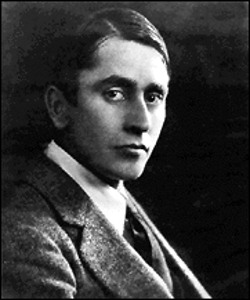
Henry Patrick (Harry) Clarke, Irish stained-glass artist and book illustrator, dies on January 6, 1931, in Chur, Switzerland. He is a leading figure in the Irish Arts and Crafts movement.

Clarke is born in Dublin on March 17, 1889, the younger son and third child of Joshua Clarke and Brigid Clarke (née MacGonigal). Church decorator Joshua Clarke moves to Dublin from Leeds, West Yorkshire, England, in 1877 and starts a decorating business, Joshua Clarke & Sons, which later incorporates a stained-glass division. Through his work with his father, Clarke is exposed to many schools of art but Art Nouveau in particular.

Clarke is educated at the Model School in Marlborough Street, Dublin, and Belvedere College, which he leaves in 1905. After his mother’s death in 1903, he is apprenticed into his father’s studio and attends evening classes in the Metropolitan College of Art and Design. His The Consecration of St. Mel, Bishop of Longford, by St. Patrick wins the gold medal for stained-glass work in the 1910 Board of Education National Competition. At the art school in Dublin, he meets fellow artist and teacher Margaret Crilley. They marry on October 31, 1914.

Clarke moves to London to seek work as a book illustrator. Picked up by London publisher George G. Harrap and Co., he starts with two commissions which are never completed. Difficulties with these projects makes Fairy Tales by Hans Christian Andersen his first printed work, in 1916. It includes 16 colour plates and more than 24 halftone illustrations. This is followed by illustrations for an edition of Edgar Allan Poe‘s Tales of Mystery and Imagination, the second version of which, published in 1923, makes his reputation as a book illustrator. His work can be compared to that of Aubrey Beardsley, Kay Nielsen, and Edmund Dulac. His final book, Selected Poems of Algernon Charles Swinburne, is published in 1928.

Clarke also continues to work in stained-glass, producing more than 130 windows. His glass is distinguished by the finesse of its drawing and his use of rich colours. He is especially fond of deep blues. His use of heavy lines in his black-and-white book illustrations echoes his glass techniques.

Clarke’s stained-glass work includes many religious windows, including the windows of the Honan Chapel in University College Cork. He also produces much secular stained-glass such as a window illustrating John KeatsThe Eve of St. Agnes (now in the Hugh Lane Gallery in Dublin) and the Geneva Window, (now in the Wolfsonian Museum, Miami Beach, Florida). Perhaps his most seen works are the windows he creates for Bewley’s on Dublin’s Grafton Street.

Clarke is plagued with ill health, in particular respiratory problems. He is diagnosed with tuberculosis in 1929 and goes to a sanatorium in Davos, Switzerland. Fearing that he will die abroad, he begins his journey back to Dublin in 1931, but dies on this journey on January 6, 1931, in Chur where he is buried. A headstone is erected but local law requires that the family pledge to maintain the grave 15 years after the death. This is not explained to the Clarke family and Harry Clarke’s remains are disinterred in 1946 and reburied in a communal grave.


Leave a comment

Birth of Kitty Kiernan, Fiancée of Michael Collins

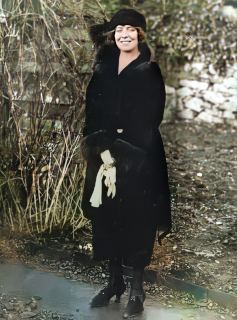
Catherine Brigid “Kitty” Kiernan, Irish woman widely known as the fiancée of Irish revolutionary leader and Chairman of the Provisional Government of the Irish Free State, Michael Collins, is born on January 26, 1892, in Granard, County Longford.

Kiernan is born to Peter Kiernan and Bridget (née Dawson). She is educated at Loreto Convent, County Wicklow. Hers is a very comfortably off merchant family with five sisters and one brother. Her parents enjoy a happy marriage, and life in the Kiernan home is joyous until Kitty reaches her teens. On November 27, 1907, her sister, Elizabeth Mary (a twin), dies at the age of eighteen of pulmonary tuberculosis, while Elizabeth’s twin sister, Rose, apparently dies the same year in Davos, Switzerland, which would also indicate tuberculosis as a cause of death. Her mother dies on November 29, 1908, of apoplexy, while her father dies almost exactly a year later, on November 9, 1909, of pneumonia. The Kiernan family owns the Greville Arms Hotel in the town, as well as a grocery shop, a hardware store, a timber and undertaking business and also a bar. Around the corner from the hotel, they operate a bakery which supplies the town and most of the surrounding countryside. All the family works in one capacity or another.

Michael Collins, one of the principal founders of the independent Irish state, is introduced to the vivacious Kiernan sisters by his cousin Gearóid O’Sullivan, who is already dating Maud Kiernan. Collins initially falls for the captivating Helen Kiernan, but she is already engaged to someone else. He then turns his interests to Kitty, who has already captured the interest of Collins’ friend Harry Boland. However, it is Collins to whom Kitty becomes engaged, with plans to marry Collins in a November 1922 double ceremony to include the nuptials of Maud and Gearóid. Collins’ assassination four months earlier, on August 22, 1922, near Béal na Bláth, County Cork, results in a single wedding taking place.

On June 10, 1925, Kiernan marries Felix Cronin, who is Quartermaster General in the Irish Army. They have two sons, Felix Jnr. and Michael Collins Cronin. Felix Jnr. and his son Rex are interred with his parents in Glasnevin Cemetery.

Kiernan dies, aged 52, of a cerebral hemorrhage on July 24, 1945, and her grave is close to that of Collins. Felix Cronin dies suddenly on October 22, 1961, while playing golf at Woodbrook Golf Club and is also buried in Glasnevin.

Kiernan and Michael Collins keep up a lengthy correspondence and while Collins is in London during the Anglo-Irish Treaty negotiations, he writes to her every day. The bulk of these letters are written between 1919 and 1922, and through their almost daily contact emerges a picture of the dreams and aspirations of the man often called Ireland’s “lost leader” and the woman with whom he wanted to share a “normal” life. These letters are the subject of a book written by Leon Ó Broin entitled In Great Haste. In 2000, some of the 300 letters sent by Kiernan and Collins to each other go on permanent display at the Cork Public Museum. These letters give a great insight into her attitude to life and into the political events of this time.

Former Fine Gael minister Peter Barry donates his collection of historic letters to the Lord Mayor of Cork, on behalf of the municipal museum. The collection, purchased from the Cronin family in 1995, is conserved at the Delmas bindery at Marsh’s Library in Dublin. The letters are also catalogued and then returned to the Cork Public Museum. The Peter Barry collection also contains letters from Harry Boland, a friend of Collins and former suitor of Kiernan.

In the 1996 film Michael Collins, Kiernan is played by American actress Julia Roberts though some reviewers are critical of the character’s development.

A number of Irish pubs are named in memory of Kiernan, such as one in Donnycarney, Dublin, one in Waterford, and one in the Bay Ridge section of Brooklyn in New York. A similar pub in Linz, Austria is closed in 2009.


Leave a comment

Birth of Artist & Illustrator Harry Clarke

harry-clarke

Henry Patrick (Harry) Clarke, Irish stained-glass artist and book illustrator, is born in Dublin on March 17, 1889. He is a leading figure in the Irish Arts and Crafts movement.

Clarke is the younger son and third child of Joshua Clarke and Brigid Clarke (née MacGonigal). Church decorator Joshua Clarke moves to Dublin from Leeds in 1877 and starts a decorating business, Joshua Clarke & Sons, which later incorporates a stained-glass division. Through his work with his father, Clarke is exposed to many schools of art but Art Nouveau in particular.

Clarke is educated at the Model School in Marlborough Street, Dublin and Belvedere College, which he leaves in 1905. After his mother’s death in 1903, he is apprenticed into his father’s studio and attends evening classes in the Metropolitan College of Art and Design. His The Consecration of St. Mel, Bishop of Longford, by St. Patrick wins the gold medal for stained glass work in the 1910 Board of Education National Competition. At the art school in Dublin, he meets fellow artist and teacher Margaret Crilley. They marry on October 31, 1914.

Clarke moves to London to seek work as a book illustrator. Picked up by London publisher George G. Harrap and Co., he starts with two commissions which are never completed. Difficulties with these projects makes Fairy Tales by Hans Christian Andersen his first printed work, in 1916. It includes 16 colour plates and more than 24 halftone illustrations. This is followed by illustrations for an edition of Edgar Allan Poe‘s Tales of Mystery and Imagination, the second version of which, published in 1923, makes his reputation as a book illustrator. His work can be compared to that of Aubrey Beardsley, Kay Nielsen, and Edmund Dulac. His final book, Selected Poems of Algernon Charles Swinburne, is published in 1928.

Clarke also continues to work in stained-glass, producing more than 130 windows. His glass is distinguished by the finesse of its drawing and his use of rich colours. He is especially fond of deep blues. His use of heavy lines in his black-and-white book illustrations echoes his glass techniques.

Clarke’s stained-glass work includes many religious windows, including the windows of the Honan Chapel in University College Cork. He also produces much secular stained glass such as a window illustrating John KeatsThe Eve of St. Agnes (now in the Hugh Lane Gallery in Dublin) and the Geneva Window, (now in the Wolfsonian Museum, Miami Beach, Florida). Perhaps his most seen works are the windows he creates for Bewley’s on Dublin’s Grafton Street.

Clarke is plagued with ill health, in particular respiratory problems. He is diagnosed with tuberculosis in 1929 and goes to a sanatorium in Davos, Switzerland. Fearing that he will die abroad, he begins his journey back to Dublin in 1931, but dies on this journey on January 6, 1931, in Chur where he is buried. A headstone is erected but local law requires that the family pledge to maintain the grave 15 years after the death. This is not explained to the Clarke family and Harry Clarke’s remains are disinterred in 1946 and reburied in a communal grave.