seamus dubhghaill

Promoting Irish Culture and History from Little Rock, Arkansas, USA


Leave a comment

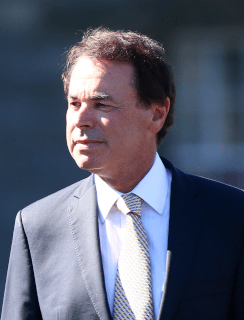
Birth of Alan Shatter, Lawyer, Author & Fine Gael Politician

Alan Joseph Shatter, Irish lawyer, author and former Fine Gael politician who serves as Minister for Justice and Equality and Minister for Defence (2011-14), is born into a Jewish family in Dublin on February 14, 1951. He also serves as a Teachta Dála (TD) for the Dublin South constituency (1981-2002, 2007-16). He leaves Fine Gael in early 2018 and unsuccessfully contests the 2024 Irish general election as an independent candidate for Dublin Rathdown.

Shatter is the son of Reuben and Elaine Shatter, an English couple who meet by chance when they are both on holiday in Ireland in 1947. He is educated at The High School, Dublin, Trinity College Dublin (TCD) and the Europa Institute of the University of Amsterdam. In his late teens, he works for two months in Israel on a kibbutz. He is a partner in the Dublin law firm Gallagher Shatter (1977-2011). As a solicitor he acts as advocate in many seminal and leading cases determined both by the Irish High and Supreme Courts. He is the author of one the major academic works on Irish family law which advocates substantial constitutional and family law reform.

Shatter enters politics at the 1979 Irish local elections, winning a seat on Dublin County Council for the Rathfarnham local electoral area. He retains this seat until 1999, becoming a member of South Dublin County Council in 1994. He is first elected to Dáil Éireann in 1981 as a Fine Gael TD and is re-elected at each subsequent election until he loses his seat in the 2002 Irish general election. He is re-elected at the 2007 Irish general election.

Shatter is Fine Gael Front Bench spokesperson on Law Reform (1982, 1987–88), the Environment (1989–91), Labour (1991), Justice (1992–93), Equality and Law Reform (1993–94), Health and Children (1997–2000), Justice, Law Reform and Defence (2000–02), Children (2007–10) and Justice and Law Reform (2010–11).

On March 9, 2011, Shatter is appointed by Taoiseach Enda Kenny as both Minister for Justice and Equality and Minister for Defence.

Under Shatter’s steerage, a substantial reform agenda is implemented with nearly 30 separate pieces of legislation published, many of which are now enacted including the Personal Insolvency Act 2012, Criminal Justice Act 2011, DNA Database Act, and the Human Rights and Equality Commission Act.

Under Shatter’s guidance, major reforms are introduced in 2011 into Ireland’s citizenship laws and a new Citizenship Ceremony is created. He both devises and pilots Ireland’s first ever citizenship ceremony which takes place in June 2011 and a new inclusive citizenship oath which he includes in his reforming legislation. During his time as Minister, he clears an enormous backlog of citizenship applications, and 69,000 foreign nationals become Irish citizens. Some applications had lain dormant for 3 to 4 years. He introduces a general rule that save where there is some real complication, all properly made citizenship applications should be processed within a six-month period. He also takes steps to facilitate an increased number of political refugees being accepted into Ireland and creates a special scheme to facilitate relations of Syrian families already resident in Ireland who are either caught up in the Syrian civil war, or in refugee camps elsewhere as a result of the Syrian civil war, to join their families in Ireland.

Shatter enacts legislation before the end of July 2011 to facilitate access to financial documentation and records held by third parties in investigations into banking scandals and white-collar crime. The legislation is first used by the Gardaí in September 2011.

During Ireland’s Presidency of the Council of the European Union in 2013, Shatter chairs the Justice and Home Affairs Council (JHA) meetings and, in January 2013, in Dublin Castle, the meeting of EU Defence Ministers. Under his guidance, Ireland plays a more active role than in the past in EU defence matters and in deepening Ireland’s participation in NATO’s partnership for peace. During the Irish Presidency, substantial progress is made at the European Union level in the adoption and development of new legislation and measures across a broad range of Justice and Home Affairs issues.

Shatter implements substantial reform in the Department of Defence and restructures the Irish Defence Forces. He is a strong supporter of the Irish Defence Forces participation in international peacekeeping and humanitarian engagements and is an expert on the Middle East. As a member of the Irish Parliament and as Minister on many occasions, he visits Irish troops participating in United Nations (UN) missions in the Middle East. Under his watch contracts are signed for the acquisition of two new naval vessels with an option to purchase a third. All three naval vessels are now part of the Irish Naval Service and have been actively engaged in recent years in rescuing drowning refugees in the Mediterranean Sea attempting to enter Europe.

As Minister for Defence he enacts legislation to grant a pardon and an amnesty to members of the Irish Defence Forces who deserted during World War II to fight on the allied side against Nazi Germany and gives a state apology for their post-war treatment by the Irish State.

Shatter is the minister responsible for two amendments to the Constitution of Ireland which are passed in referendums: the Twenty-ninth Amendment in 2011 to allow for the reduction of judges’ pay, and the Thirty-third Amendment in 2013 to establish a Court of Appeal. Just prior to his resignation from government, the draft legislation to create the court is published and the court is established and sitting by October 2014.

The jurisdictions of the courts are extended for the first time in 20 years and the maximum civil damages payable for the emotional distress of bereaved relations following a negligent death is increased.

As a politician, Shatter plays a lead role in effecting much of the constitutional and legislative change he advocates. He is a former chairperson of FLAC (the Free Legal Advice Centres), a former chairperson of CARE, an organisation that campaigns for childcare and children’s legislation reform in the 1970s and a former President of the Irish Council Against Blood Sports.

Shatter is a founder member of the Irish Soviet Jewry Committee in 1970 and pioneers a successful all party Dáil motion on the plight of Soviet Jewry (1984) and visits various refuseniks in Moscow in 1985. He is a former chairperson of the Oireachtas Foreign Affairs Committee (1996-97) and initiates the creation of an Ireland/Israel Parliamentary Friendship group in 1997, leading a number of visits to Israel by members of the Dáil Éireann and Seanad Éireann.

Shatter is the author of the satirical book Family Planning Irish Style (1979), and the novel Laura (1989). In 2017 his biography, Life is a Funny Business, is published by Poolbeg Press and in 2019 Frenzy and Betrayal: The Anatomy of a Political Assassination is published by Merrion Press. In 2023, his book Cyril’s Lottery of Life, a comedic book with an English solicitor from a small town as its protagonist, is published.

Leave a comment

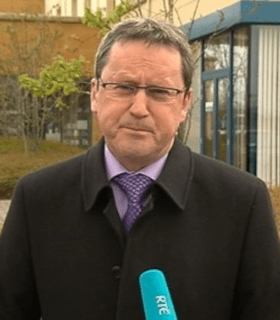
Birth of George Lee, Journalist, Presenter & Former Fine Gael Politician

George Lee, Irish economist, journalist, television and radio presenter, and former Fine Gael politician, is born in Templeogue, Dublin, on September 27, 1962. He has worked for RTÉ since 1992. Since 2019, he has been Environment Correspondent for RTÉ News. He previously was Economics Editor in 1996.

Lee’s father is a motor mechanic, and his mother is a hairdresser. He is the seventh in a family of eight children and grows up in Templeogue, Dublin. He attends Coláiste Éanna, a Christian Brothers’ School in the Dublin suburb of Ballyroan. He is a graduate of University College Dublin (UCD) and holds an MSc in Economics from the London School of Economics (LSE) where his specialist area is labour economics and unemployment.

Lee is married to Mary Lee (née Kitson) and they have two children, Alison and Harry, and live in Cabinteely. He famously travels to work at RTÉ using a Segway, once giving it a test ride live on Tubridy Tonight.

Lee joins the civil service as an executive officer in the Central Statistics Office (CSO). Two years later he enters University College Dublin where he studies economics under academics such as Brendan Walsh and Peter Neary.

Prior to his move into broadcasting, Lee lectures at NUI Galway and then works as a journalist with The Sunday Business Post. He is also a Senior Economist at Riada Stockbrokers. He also works as Treasury Economist with FTI and as a research economist with the Central Bank of Ireland.

From 1992 to 2009 Lee worked at RTÉ, the public broadcasting service of Ireland. He is appointed Economics Editor with RTÉ in 1996. He is named Irish Journalist of the Year, along with Charlie Bird, in 1998 after they uncover a major tax evasion and overcharging scandal at National Irish Bank. He has devised, researched and presented several television series, including Moneybox, More to Do, Winds of Change, and Beyond the Berlin Wall. He is thought of as an “economics guru.” He leaves RTÉ in the late 1990s to work for BCP Stockbrokers. He leaves the job and returns to his RTÉ post the next day.

Before embarking on his political career, Lee films a four-part series based on the fall of the Berlin Wall in 2008. It is aired on RTÉ One in November 2009.

Lee is parodied in the 1990s comedy Bull Island, where he is seen “menacingly staring down the lens of a camera,” and is also featured on RTÉ 2fm‘s Nob Nation.

On May 5, 2009, on RTÉ News at One on RTÉ Radio 1, Lee announces that he is resigning as Economic Editor with RTÉ and announces his intention to seek the Fine Gael nomination for the Dublin South by-election in 2009. He takes a year’s unpaid leave from RTÉ in May 2009. On May 6, 2009, he is chosen as the Fine Gael candidate for the by-election. He is the only candidate for the nomination.

Lee is elected on the first count to represent Dublin South on June 6, 2009. He receives over 53% of the 1st preference vote. In total he receives 27,768 1st preference votes. When elected, he is referred to as a “Celebrity TD.” His RTÉ position is filled by Europe editor Sean Whelan, but only as correspondent. Instead, David Murphy is promoted to Business Editor.

In an opinion poll concerning support for possible candidates in the 2011 Irish presidential election conducted by the Sunday Independent in October 2009, Lee places third, receiving 12% support, ahead of former Taoiseach Bertie Ahern and other high-profile politicians.

Lee highlights the failure of EMPG, the holding company for U.S. publisher Houghton Mifflin Harcourt, and the potential impact on the Irish taxpayers of the loans given by Anglo Irish Bank to the investors in EMPG on January 13, 2010. He sees this as another example for the urgent need of an investigation into the Irish banking crisis.

On February 8, 2010, Lee announces his resignation from Fine Gael and from Dáil Éireann, due to having “virtually no influence or input” into shaping Fine Gael’s economic policies at a time of economic upheaval. It emerges that on February 2, he met with the Fine Gael leader Enda Kenny and told him of his intention to resign. Kenny then offered Lee the frontbench position as spokesman on economic planning. Speaking to reporters outside Leinster House soon after his announcement, Lee says it would have been dishonest of him to accept the position. “I had absolutely no input for nine months. I think I had to be honest with myself and honest with the electorate about that and not pretend.” Asked if his resignation is a vote of no confidence in Kenny, he says there are “certainly lots of large mutterings at the moment in relation to the leader’s position.” He says he had “minimal involvement” with Fine Gael finance spokesman Richard Bruton.

Kenny notes Lee had been appointed chair of the party’s committee on economic policy and also its forum. “I had anticipated a very important role for [George Lee] in the coming period with Fine Gael.” Kenny’s spokesman later dismisses the proposition that the resignation had implications for his leadership. He cited the public endorsement of Kenny by 20 Dáil deputies over the course of the weekend. Former Fine Gael leader Michael Noonan says he is surprised at the decision. “I thought that George Lee was fitting in well,” adding that he believes he would have been a cabinet member in a Fine Gael-led government.

Lee is criticised after his resignation by Senator Eoghan Harris, who is speaking on the Lunchtime programme of Newstalk Radio. Harris suggests financial considerations and long working hours of politicians are the reasons for Lee’s resignation. Fine Gael TD Brian Hayes, who is Lee’s campaign manager in the Dublin South by-election, says that in discussions with Lee, the latter had complained about “a major reduction in his income” since leaving RTÉ to become a Dáil backbencher. Lee denies that financial considerations had anything to do with his decision to quit politics.

RTÉ receives a letter from Lee confirming his intentions to return after his leave of absence. The Sunday Tribune says on February 14, 2010, that he will have to wait for three months before returning to RTÉ. Exactly a year after leaving RTÉ, he returns to the broadcaster on May 5, 2010. He works as an advisor on the RTÉ business desk. He presents Mind Your Business on RTÉ Radio 1 on Saturday Mornings as a summer replacement for The Business.

When John Murray moves to present his own programme, Lee takes over The Business slot on September 4, 2010, on Saturday mornings on RTÉ Radio 1. In addition to the radio edition, he has presented a televised version on RTÉ One, also titled The Business.

Lee has been Environment Correspondent for RTÉ since June 27, 2019.


Leave a comment

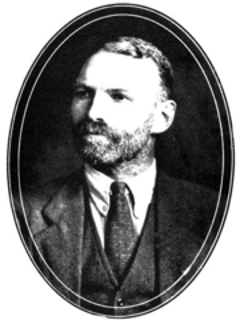
Death of Robert Briscoe, Fianna Fáil Politician

Robert Emmet Briscoe, Fianna Fáil politician who serves as a Teachta Dála (TD) in the Oireachtas from 1927 to 1965, dies on March 11, 1969.

Briscoe is born in Dublin on September 25, 1894, the son of Abraham William Briscoe and Ida Yoedicke, both of whom are Lithuanian-Jewish immigrants. The original family name in Lithuania is believed to have been Cherrick or Chasen. His brother Wolfe Tone Briscoe is named after Theobald Wolfe Tone, one of the leaders of the Irish Rebellion of 1798. His father is the proprietor of Lawlor Briscoe, a furniture factory on Ormond Quay which makes, refurbishes, imports, exports and sells furniture, trading all over Ireland and abroad.

Briscoe is active in the Irish Republican Army (IRA) and Sinn Féin during the Irish War of Independence and accompanies Éamon de Valera to the United States. He speaks for the Sinn Féin cause at public meetings there and is adamant that being a “Hebrew” does not lessen his Irishness. He is sent by Michael Collins to Germany in 1919 to be the chief agent for procuring arms for the IRA. While in Germany in 1921 he purchases a small tugboat named Frieda to be used in transporting guns and ammunition to Ireland. On October 28, 1921, the Frieda slips out to sea with Charles McGuinness at the helm and a German crew with a cargo of 300 guns and 20,000 rounds of ammunition. Some sources cite this shipment as “the largest military shipment ever to reach the IRA” consisting of 1,500 rifles, 2,000 pistols and 1.7 million rounds of ammunition. On November 2, 1921, the Frieda successfully lands its cargo near Waterford Harbour.

In June 1922 during the Irish Civil War, Briscoe is involved in an incident with fellow anti-treaty IRA members who attack pro-treaty politician Darrell Figgis at his home. They enter the house and assault Figgis, cutting off his well-prized beard in the process. This traumatises Figgis’ wife Millie, who had been under the impression Briscoe and his fellow assistants had come to kill Figgis. In November 1924 Millie commits suicide, expressing in a suicide note that she was suffering from depression as a result of the 1922 attack. Figgis himself commits suicide in 1926.

In his biography, Briscoe recalls an incident of being recognised by a pro-Treaty opponent during the Civil War. He merely turns and walks away, confident that his enemy will not shoot him in the back.

Elected to the Dáil in the newly independent Ireland, Briscoe works with Patrick Little to bring through a law limiting the interest that can be charged by moneylenders and also, as he writes, “made it illegal for a married woman to borrow money without the knowledge and consent of her husband, for these foolish ones are always the easiest prey of the moneylenders.”

During World War II, Briscoe, at this time a member of Dáil Éireann, comes under close scrutiny from the Irish security services. His support for Zionism and his lobbying on behalf of refugees is considered potentially damaging to the interests of the state by officials from the Department of Justice. He is an admirer and friend of Ze’ev Jabotinsky and his campaign to liberate the Jews. Between 1939 and 1940, he along with John Henry Patterson, a former commander of both the Zion Mule Corps and later the 38th Battalion of the Royal Fusiliers, are involved in fund raising for the Irgun in the United States. Jabotinsky while head of Irgun visits Dublin to receive training in guerrilla warfare tactics against the British under the instruction of Briscoe. During the period Briscoe describes himself as the “Chair of Subversive Activity against England.” He wishes for Ireland to give asylum to Jews fleeing Nazi Germany but does so discreetly in order not to be accused of compromising the neutrality policy of the Fianna Fáil government.

After World War II Briscoe acts as a special advisor to Menachem Begin in the transformation of Irgun from a paramilitary group to a parliamentary political movement in the form of Herut in the new Israeli state. The party later becomes Likud. As he had already been a key figure in the formation in his own Fianna Fáil party out of the Anti-treaty IRA post Irish independence but not before a bitter Civil War, he prompts Begin to make the transition immediately after the Altalena Affair in order to avoid a similar civil conflict.

Briscoe serves in Dáil Éireann for 38 years and is elected 12 times in the Dublin South and from 1948, Dublin South-West constituencies. He retires at the 1965 Irish general election, being succeeded by his son, Ben, who serves for a further 37 years. In 1956, he becomes the first Jewish Lord Mayor of Dublin, although he is not the first Jewish Mayor in Ireland. That title belongs to William Annyas, who was elected Mayor of Youghal, County Cork in 1555. He serves a one-year term and is re-elected in 1961. His son Ben is also a Fianna Fáil TD, and he too serves as Lord Mayor of Dublin from 1988–1989.

Briscoe’s memoir, For the Life of Me, is published in 1958.


Leave a comment

Birth of Hugh Kennedy, Politician, Barrister & Judge

File source: http://commons.wikimedia.org/wiki/File:Hugh_Kennedy.jpg

Hugh Edward Kennedy, Fine Gael politician, barrister and judge, is born in Abbotstown, Dublin on July 11, 1879. He serves as Attorney General of Ireland from 1922 to 1924, a Judge of the Supreme Court of Ireland from 1924 to 1936 and Chief Justice of Ireland from 1924 to 1936. He serves as a Teachta Dála (TD) for the Dublin South constituency from 1923 to 1927. As a member of the Irish Free State Constitution Commission, he is also one of the constitutional architects of the Irish Free State.

Kennedy is the son of the prominent surgeon Hugh Boyle Kennedy. His younger sister is the journalist Mary Olivia Kennedy. He studies for the examinations of the Royal University of Ireland while a student at University College Dublin and King’s Inns, Dublin. He is called to the Bar in 1902. He is appointed King’s Counsel in 1920 and becomes a Bencher of King’s Inn in 1922.

During 1920 and 1921, Kennedy is a senior legal adviser to the representatives of Dáil Éireann during the negotiations for the Anglo-Irish Treaty. He is highly regarded as a lawyer by Michael Collins, who later regrets that Kennedy had not been part of the delegation sent to London in 1921 to negotiate the terms of the treaty.

On January 31, 1922, Kennedy becomes the first Attorney General in the Provisional Government of the Irish Free State. Later that year he is appointed by the Provisional Government to the Irish Free State Constitution Commission to draft the Constitution of the Irish Free State, which is established on December 6, 1922. The functions of the Provisional Government are transferred to the Executive Council of the Irish Free State. He is appointed Attorney General of the Irish Free State on December 7, 1922.

In 1923, Kennedy is appointed to the Judiciary Commission by the Government of the Irish Free State, on a reference from the Government to establish a new system for the administration of justice in accordance with the Constitution of the Irish Free State. The Judiciary Commission is chaired by James Campbell, 1st Baron Glenavy, who had also been the last Lord Chancellor of Ireland. It drafts the Courts of Justice Act 1924 for a new court system, including a High Court and a Supreme Court, and provides for the abolition, inter alia, of the Court of Appeal in Ireland and the Irish High Court of Justice. Most of the judges are not reappointed to the new courts. Kennedy personally oversees the selection of the new judges and makes impressive efforts to select them on merit alone. The results are not always happy. His diary reveals the increasingly unhappy atmosphere, in the Supreme Court itself, due to frequent clashes between Kennedy and his colleague Gerald Fitzgibbon, since the two men prove to be so different in temperament and political outlook that they find it almost impossible to work together harmoniously. In a similar vein, Kennedy’s legal opinion and choice of words could raise eyebrows amongst legal colleagues and fury in the Executive Council e.g. regarding the Kenmare incident.

Kennedy is also a delegate of the Irish Free State to the Fourth Assembly of the League of Nations between September 3-29, 1923.

Kennedy is elected to Dáil Éireann on October 27, 1923, as a Cumann na nGaedheal TD at a by-election in the Dublin South constituency. He is the first person to be elected in a by-election to Dáil Éireann. He resigns his seat when he is appointed Chief Justice of Ireland in 1924.

On June 5, 1924, Kennedy is appointed Chief Justice of Ireland, thereby becoming the first Chief Justice of the Irish Free State. He is also the youngest person appointed Chief Justice of Ireland. When he is appointed, he is 44 years old. Although the High Court of Justice and the Court of Appeal had been abolished and replaced by the High Court and the Supreme Court respectively, one of his first acts is to issue a practice note that the wearing of wigs and robes will continue in the new courts. This practice is still continued in trials and appeals in the High Court and the Supreme Court (except in certain matters). He holds the position of Chief Justice until his death on December 1, 1936, in Goatstown, Dublin.

In September 2015, a biography by Senator Patrick Kennedy (no relation) is written about Kennedy called Hugh Kennedy: The Great but Neglected Chief Justice.


Leave a comment

Birth of Michael Hayes, Politician & Professor

michael-hayes

Michael Joseph Hayes, Fine Gael politician and professor of Irish, is born in Dublin on December 1, 1889. He serves as Ceann Comhairle of Dáil Éireann from 1922 to 1932, Minister for Foreign Affairs from August 1922 to September 1922 and Minister for Education January 1922 to August 1922. He serves as a Teachta Dála (TD) for the National University of Ireland constituency from 1921 to 1933. He is a Senator from 1938 to 1965.

Hayes is educated at the Synge Street CBS and at University College Dublin (UCD). He later becomes a lecturer in French at the University. In 1913, he joins the Irish Volunteers and fights in Jacob’s biscuit factory during the Easter Rising in 1916. He escapes capture but is arrested in 1920 and interned at Ballykinlar, County Down.

Hayes is first elected to Dáil Éireann as a Sinn Féin TD for the National University of Ireland constituency at the 1921 Irish elections. At the 1922 general election he is elected as a Pro-Treaty Sinn Féin TD. He serves as Minister for Education from January to September 1922, as part of the Dail Aireacht ministry as opposed to the Provisional Government. He has special responsibility for secondary education. He is also acting Minister for Foreign Affairs from August to September 1922. He supports the Anglo-Irish Treaty during the crucial debates in 1922. That same year he is elected Ceann Comhairle of the First Dáil of the Irish Free State. He holds that post for ten years until 1932.

At the 1923 general election, Hayes is elected as a Cumann na nGaedheal TD for two constituencies, Dublin South and National University of Ireland. He resigns his seat in Dublin South following the election.

Hayes loses his Dáil seat at the 1933 general election but is elected to Seanad Éireann in 1938 for Fine Gael. He remains a Senator until 1965, acting as leader of government and opposition there.

Hayes becomes Professor of Irish at University College Dublin in 1951.

Michael Hayes dies at the age of 86 on July 11, 1976, in Dublin.


Leave a comment

Birth of William X. O’Brien, Politician & Trade Unionist

william-x-obrien

William X. O’Brien, politician and trade unionist, is born on January 23, 1881, in Clonakilty, County Cork. He is christened “John William.”

O’Brien moves with his family to Dublin in 1897 and quickly becomes involved in the Irish Socialist Republican Party (ISRP). He is described as “a very significant figure in the ISRP” by ISRP historian David Lynch. He is a member of the Socialist Party of Ireland, serving on its executive.

A close friend and associate of James Connolly, O’Brien helps establish the Irish Transport and General Workers’ Union (ITGWU) in 1909 and is instrumental in the Dublin lock-out strike in 1913.

A member of the Irish Neutrality League and Anti-Conscription Committee during World War I, O’Brien is interned on several occasions by the Dublin Castle government. During one of these instances, he stands in the 1920 Stockport by-election but is refused a release to campaign in it.

With the formation of the Irish Free State, O’Brien is elected as Teachta Dála (TD) for Dublin South at the 1922 general election, and again for Tipperary in June 1927 and again in 1937.

An important figure in the Labour Party in Ireland in its formative days, O’Brien resists James Larkin‘s attempt to gain control of the Party on release from prison. Taking Larkin to court over his occupation of ITGWU headquarters, the Larkin-O’Brien feud results in a split within the labour and trade union movements, and the formation of the Irish Congress of Trade Unions.

In 1930, O’Brien seeks to have Leon Trotsky granted asylum in Ireland, but the head of the Free State government, W. T. Cosgrave, refuses to allow it.

Active in politics and the trade union movement into his 60s, O’Brien retires in 1946 and dies on October 31, 1968.


Leave a comment

Death of Seán Francis Lemass, Taoiseach (1959-1966)

sean-francis-lemass

Seán Francis Lemass, one of the most prominent Irish politicians of the 20th century and Taoiseach from 1959 until 1966, dies at Mater Misericordiae University Hospital in Dublin on May 11, 1971, at the age of 71.

John Francis Lemass is born in Ballybrack, County Dublin before his family moves to Capel Street in Dublin city centre. He is the second of seven children born to John and Frances Lemass. Within the family his name soon changes to Jack and eventually, after 1916, he himself prefers to be called Seán. He is educated at O’Connell School where he was described as studious, with his two best subjects being history and mathematics.

As early as the age of sixteen, Lemass becomes a freedom fighter in the streets of Dublin, engaging in the 1916 Easter Rising, the Irish War of Independence, and the Irish Civil War, landing in jail again and again. He opposes the establishment of the Irish Free State as a dominion under the Anglo-Irish Treaty of 1921 and becomes a member of the headquarters staff of the Irish Republican Army in the civil war of 1922–1923.

Lemass is first elected as a Sinn Féin Teachta Dála (TD) for the Dublin South constituency in a by-election on November 18, 1924, and is returned at each election until the constituency is abolished in 1948, when he is re-elected for Dublin South–Central until his retirement in 1969.

He plays a key role in persuading Éamon de Valera to found a new republican party, Fianna Fáil, in 1926. After de Valera rises to the premiership in 1932, Lemass holds portfolios in all his cabinets for 21 of the next 27 years, notably as Minister for Industry and Commerce, Minister for Supplies, and Tánaiste (deputy prime minister).

When de Valera becomes President of Ireland in 1959, Lemass inherits the office of Taoiseach, serving in this position until 1966. Under him the country takes a more outward-looking approach, and he especially presses for Ireland’s entry into the European Economic Community (EEC), now the European Community embedded in the European Union, and for reconciliation with Northern Ireland.

Ill health forces Lemass to relinquish the leadership of his party in 1966 and he withdraws from politics altogether in 1969. He has been a heavy pipe smoker all his life, smoking almost a pound of tobacco a week in later life. At the time of his retirement, it is suspected that Lemass has cancer, but this is later disproved. In February 1971, while attending a rugby game at Lansdowne Road, he becomes ill, is rushed to hospital, and is told by his doctor that one of his lungs is about to collapse.

On Tuesday, May 11, 1971, Seán Lemass dies in Dublin’s Mater Misericordiae University Hospital. He is afforded a state funeral and is buried in Dean’s Grange Cemetery.

Lemass is widely regarded as the father of modern Ireland, primarily due to his efforts in facilitating industrial growth, bringing foreign direct investment into the country, and forging permanent links between Ireland and the European community. His greatest legacy, Ireland’s membership in the EEC, is not secured until 1973, after his death.