seamus dubhghaill

Promoting Irish Culture and History from Little Rock, Arkansas, USA


Leave a comment

Birth of Sidney Czira, Journalist, Broadcaster, Writer & Revolutionary

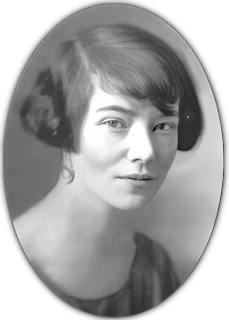
Sidney Sarah Madge Czira (née Gifford), journalistbroadcaster, writer and revolutionary, known by her pen name John Brennan, is born in Rathmines, Dublin, on August 3, 1889. She is an active member of the revolutionary group Inghinidhe na hÉireann (Daughters of Ireland) and writes articles for its newspaper, Bean na h-Éireann, and for Arthur Griffith‘s newspaper Sinn Féin.

Gifford is the youngest of twelve children of Frederick and Isabella Gifford. Isabella Gifford (née Burton), is a niece of the artist Frederic William Burton, and is raised with her siblings in his household after the death of her father, Robert Nathaniel Burton, a rector, during the Great Famine.

Gifford’s parents—her father is Catholic and her mother Anglican—are married in St. George’s Church, a Church of Ireland church on the north side of Dublin, on April 27, 1872. She grows up in Rathmines and is raised as a Protestant, as are her siblings.

Like her sisters, the socialist Nellie GiffordGrace Gifford, who marries Joseph Plunkett, and Muriel Gifford, who marries Thomas MacDonagh, she becomes interested and involved in the suffrage movement and the burgeoning Irish revolution.

Gifford is educated in Alexandra College in Earlsfort Terrace. After leaving school she studies music at the Leinster House School of Music. It is her music teacher, in her teens, who first gives her her first Irish national newspaper, The Leader. She begins reading this secretly and then starts reading Arthur Griffith’s newspaper, Sinn Féin.

Gifford is a member of Inghinidhe na hÉireann, a women’s political organisation active from the 1900s. It is founded by Maud Gonne and a group of working-class and middle-class women to promote Irish culture and help to alleviate the shocking poverty of Dublin and other cities at a time when Dublin’s slums are unfavourably compared with Calcutta‘s. Gifford, who is already writing under the name “John Brennan” for Sinn Féin, is asked to write for its newspaper Bean na h-Éireann. Her articles vary from those highlighting poor treatment of women in the workplace to fashion and gardening columns, some written under the pseudonym Sorcha Ní hAnlúan.

She also works, along with her sisters, in Maud Gonne’s and Constance Markievicz‘s dinner system in St. Audoen’s Church, providing good solid dinners for children in three Dublin schools – poor Dublin schoolchildren often arrive at school without breakfast, go without a meal for the day, and if their father has been given his dinner when they arrive home, might not eat or might only have a crust of bread that night.

In 1911, Gifford is elected (as John Brennan) to the executive of the political group Sinn Féin.

Gifford is a member of Cumann na mBan (The Irish Women’s Council) from its foundation in Dublin on April 2, 1914. Its members learn first aid, drilling and signalling and rifle shooting, and serve as an unofficial messenger and backup service for the Irish Volunteers. During the fight for Irish Independence the women carry messages, store and deliver guns and run safe houses where men on the run can eat, sleep and pick up supplies.

In 1914, Gifford moves to the United States to work as a journalist. Through her connection with Padraic Colum and Mary Colum, whom she had met through her brother-in-law Thomas MacDonagh, she meets influential Irish Americans such as Thomas Addis Emmet and Irish exiles like John Devoy, and marries a Hungarian lawyer, Arpad Czira, a former prisoner of war who is said to have escaped and fled to America. Their son, Finian, is born in 1922.

Czira writes both for traditional American newspapers and for Devoy’s newspaper, The Gaelic American. She and her sister Nellie found the American branch of Cumann na mBan, and she acts as its secretary. Both sisters tour and speak about the Easter Rising and those involved. She is an active campaigner for Irish independence and against the United States joining the war against Germany, seen as a war for profit and expansion of the British Empire, and so to the disadvantage of the work for Irish independence. She helps Nora Connolly O’Brien to contact German diplomats in the United States.

In 1922, Czira returns to Ireland with her son. As a member of the Women’s Prisoners’ Defence League, she is an activist against the ill-treatment of Republican prisoners during the Irish Civil War. She continues to work as a journalist, though she is stymied in her work, as are the women of her family and many of those who had taken the anti-Free State side. In the 1950s her memoirs are published in The Irish Times, and she moves into work as a broadcaster and produces a series of historical programmes.

Czira dies in Dublin on September 15, 1974, and is buried in Dean’s Grange Cemetery.

Leave a comment

Birth of Irish Painter Sir Frederic William Burton RHA

Irish painter Sir Frederic William Burton RHA is born in County Wicklow on April 8, 1816. The third son of Samuel Frederick Burton and his wife Hanna Mallett, he is taken by his parents to live in County Clare on the west coast of Ireland at the age of six. The old Burton seat is Clifden House, Corofin, County Clare, which is built around the middle of the eighteenth century. The artist’s grandparents were Major Edward William Burton, Clifden, who was High Sheriff of Clare in 1799, and his wife, Jane Blood of nearby Roxton, County Clare. In his youth he has strong sympathy with the Young Ireland movement.

Educated in Dublin, Burton is elected an associate of the Royal Hibernian Academy at the age of twenty-one and an academician two years later. In 1842 he begins to exhibit at the Royal Academy. A visit to Germany and Bavaria in 1842 is the first of a long series of trips to various parts of Europe, which give him a profound knowledge of the works of the Old Masters. From 1851 he spends seven years working as a painter in the service of Maximilian II of Bavaria.

Burton works with George Petrie on archaeological sketches and is on the council of the Royal Irish Academy and the Archaeological Society of Ireland. He is elected an associate of the Royal Society of Painters in Watercolours in 1855, and a full member in the following year. He resigns in 1870 and is reelected as an honorary member in 1886.

In 1874 Burton is appointed the third director of the National Gallery, London, in succession to Sir William Boxall RA. In June 1874, he obtains a special grant to acquire the art collection of Alexander Barker, which includes Piero della Francesca‘s Nativity and Sandro Botticelli‘s Venus and Mars. In 1876 a bequest of 94 paintings, mainly by Dutch artists but also including works by Antonio del Pollaiuolo, Dieric Bouts and Canaletto, is made by the British haberdasher Wynne Ellis. Also, in this year an extension to the Gallery by Edward Middleton Barry is completed.

During the twenty years that Burton holds this post he is responsible for many important purchases, among them Leonardo da Vinci‘s Virgin of the Rocks, Raphael‘s Ansidei Madonna, Anthony van Dyck‘s Equestrian portrait of Charles I, Hans Holbein the Younger‘s Ambassadors, and the Admiral Pulido Pareja, by Diego Velázquez (this subsequently attributed to Velázquez’s assistant Juan Bautista Martínez del Mazo). He also adds to the noted series of Early Italian pictures in the gallery. The number of acquisitions made to the collection during his period of office exceeds 500.

Burton’s best-known watercolours, The Aran Fisherman’s Drowned Child (1841) and The Meeting on Turret Stairs (1864) are in the National Gallery of Ireland. The Meeting on Turret Stairs is voted by the Irish public as Ireland’s favourite painting in 2012 from among ten works shortlisted by critics. A knighthood is conferred on him in 1884, and the degree of LL.D. of Dublin in 1889.

Burton dies in Kensington, West End of London on March 16, 1900, and is buried in Mount Jerome Cemetery, Dublin.

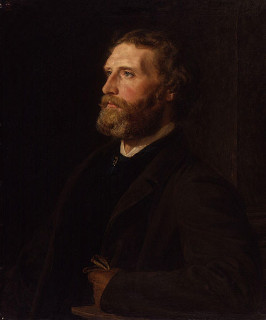
(Pictured: “Sir Frederic William Burton,” painting by Henry Tanworth Wells (died 1903), given to the National Portrait Gallery, London in 1913)


Leave a comment

Death of Irish Artist Sarah Henrietta Purser

sarah-purser-by-john-butler-yeats

Sarah Henrietta Purser, Irish artist mainly noted for her work with stained glass, dies in Dublin on August 7, 1943.

The Purser family had come to Ireland from Gloucestershire in the eighteenth century. Purser is born in Kingstown (now Dún Laoghaire) in County Dublin on March 22, 1848. She is raised in Dungarvan, County Waterford, one of the numerous children of Benjamin Purser, a prosperous flour miller and brewer, and his wife Anne Mallet. She is related to Sir Frederic William Burton, RHA (1816-1900), who is a son of Hannah Mallet. Two of her brothers, John and Louis, become professors at Trinity College Dublin. Her niece Olive Purser, daughter of her brother Alfred, is the first woman scholar at Trinity.

At thirteen Purser attends the Moravian school, Institution Evangélique de Montmirail, Switzerland where she learns to speak fluent French and begins painting. In 1873 her father’s business fails and she decides to become a full-time painter. She attends classes at the Dublin Metropolitan School of Art and joins the Dublin Sketching Club, where she is later appointed an honorary member. In 1874 she distinguishes herself in the National Competition. In 1878 she again contributes to the Royal Hibernian Academy, and for the next fifty years becomes a regular exhibitor, mainly portraits, and shows an average of three works per show.

In 1878-1879, Purser studies at the Académie Julian in Paris where she meets the German painter Louise Catherine Breslau, with whom she becomes a lifelong friend.

Purser becomes wealthy through astute investments, particularly in Guinness, for which several of her male relatives have worked over the years. She is very active in the art world in Dublin and is involved in the setting up of the Municipal Gallery of Modern Art, persuading the Irish government to provide Charlemont House in Parnell Square to house the gallery.

Purser works mostly as a portraitist. Through her talent and energy and owing to her friendship with the Gore-Booths, she is very successful in obtaining commissions. When the Lord Lieutenant of Ireland commissions her to portray his children in 1888, his choice reflects her position as the country’s foremost portraitist. Various portraits painted by Purser are held in the National Gallery of Ireland.

Purser finances An Túr Gloine (The Tower of Glass), a stained-glass cooperative, at 24 Upper Pembroke and runs it from its inauguration in 1903 until her retirement in 1940. Michael Healy is the first of a number of distinguished recruits, such as Catherine O’Brien, Evie Hone, Wilhelmina Geddes, Beatrice Elvery and Ethel Rhind. She is determined the stained-glass workshop should adhere to true Arts and Crafts philosophy. An Túr Gloine archive is held in the Centre for the Study of Irish Art, National Gallery of Ireland.

Purser does not produce many items of stained glass herself. Most of the stained-glass works are painted by other members of the co-operative, presumably under her direction. Two early works are St. Ita (1904) for St. Brendan’s Cathedral, Loughrea and The Good Shepard (1904) for St. Columba’s College, Dublin. Her last stained-glass work is believed to be The Good Shepard and the Good Samaritan (1926) for the Church of Ireland at Killucan, County Westmeath.

Until her death Purser lives for many years in Mespil House, a Georgian mansion with beautiful plaster ceilings on Mespil Road, on the banks of the Grand Canal. Here she is “at home” every Tuesday afternoon to Dublin’s writers and artists. Her afternoon parties are a fixture of Dublin literary life.

Purser dies in Dublin on August 7, 1943, and is buried in Mount Jerome Cemetery beside her brothers John and Louis. Mespil House is demolished after her death and developed into apartments.

Purser is the second woman to sit on the Board of Governors and Guardians, National Gallery of Ireland, 1914-1943. She is made an Honorary Member of the Royal Hibernian Academy in 1890, becoming the first female Associate Member in 1923 and the first female Member in 1924. Also, in 1924 she initiates the movement for the launching of the Friends of the National Collection of Ireland. Archives relating to Sarah Purser are housed in the Centre for the Study of Irish Art, National Gallery of Ireland.

(Pictured: Portrait of Sarah Purser by John Butler Yeats, c. 1880–1885)