seamus dubhghaill

Promoting Irish Culture and History from Little Rock, Arkansas, USA


Leave a comment

The Buttevant Rail Disaster

buttevant-rail-disaster

The Buttevant Rail Disaster, a train crash that occurs at Buttevant Railway Station, County Cork, takes place on August 1, 1980. More than 70 people are injured, and 18 die, resulting as one of Ireland’s worst rail disasters to ever occur and the country’s worst rail disaster during peacetime history.

At 12:45 the 10:00 am Dublin (Heuston) to Cork (Kent) express train enters Buttevant Railway Station carrying some 230 bank holiday passengers. The train is diverted off the main line across a 1:8 temporary set of points into a siding. The locomotive remains upright but carriages immediately behind the engine and generator van jack-knife and are thrown across four sets of rail lines. Two coaches and the dining car are totally demolished by the impact. It results in the deaths of 18 people and over 70 people being injured.

The accident happens because a set of manual facing points are set to direct the train into the siding. These points are installed about four months previously and have not yet been connected to the signal cabin. The permanent way maintenance staff are expecting a stationary locomotive at the Up platform to move into the siding, and set the points for the diversion to the siding, without obtaining permission from the signalman. Upon seeing that this has been done, the signalman at Buttevant manually sets the signals to the Danger aspect and informs the pointsman to reset the points. The train is traveling too fast to stop in time. The train is moving at approximately 60 mph when the derailment occurs.

The train consists of one locomotive, a generator van and eleven coaches. Six of the coaches consist of wooden bodies on steel underframes. Four of these are either destroyed or badly damaged in the impact, the two which survive being at the rear of the train. The remainder of the coaches are light alloy Cravens stock and most survive the crash.

This event, and the subsequent Cherryville junction accident, which kills a further seven people, account for 70% of all Irish rail deaths over a 28-year period. CIÉ and the Government come under severe public pressure to improve safety and to modernise the fleet. A major review of the national rail safety policy is held and results in the rapid elimination of the wooden-bodied coaches that had formed part of the train.

The passengers who are most severely injured or killed are seated in coaches with wooden frames. This structure is incapable of surviving a high speed crash and does not come near to the safety standards provided by modern (post-1950s) metal-body coaches. The expert bodies that review the accident discover that the old timber-frame carriage bodies mounted on a steel frame are totally inadequate as they are prone to complete collapse under the enormous compression forces of a high-speed collision.

The more modern steel-framed carriage bodies survive due to their greater structural rigidity. On this basis the decision to purchase a new fleet of modern intercity coaches based on the British Rail Mark 3 design is quickly made. The Mark 3’s longitudinally corrugated roof can survive compression forces of over 300 tonnes. These coaches, an already well proven design, are built by British Rail Engineering Limited (BREL) in Derby, England and, under licence, at CIÉ’s own workshops at Inchicore Railway Works in Dublin between 1983 and 1989.


Leave a comment

Resignation of Taoiseach Enda Kenny

varadkar-kenny

Enda Kenny formally resigns as Taoiseach on June 13, 2017, after six years as head of Government of Ireland. He is the longest-serving Fine Gael Taoiseach and the first in his party to serve two consecutive terms in the highest political office.

An emotional Kenny makes his final address to Dáil Éireann as Taoiseach, saying he is the first to acknowledge that he had not gotten everything right. “But I can honestly say my motivation was always what I believed was in the best interests of the Irish people,” he added. “I really do believe politics is work worth doing, a noble profession.”

Flanked by Tánaiste Frances Fitzgerald, Minister for Finance Michael Noonan, his successor Leo Varadkar, Minister for Housing Simon Coveney and Minister for Health Simon Harris, Kenny informs the Dáil that he will be going later to Áras an Uachtaráin to submit his resignation to President Michael D. Higgins. He formally submits his letter that evening.

Following his speech in the Dáil, Kenny sits down, visibly emotional, to applause from all sides of the House.

Fianna Fáil leader Micheál Martin describes Kenny as “an Irish patriot and an Irish democrat.” Throughout his time in elected office and in government he had been a proud representative of his community, political tradition and country. He adds that “the mischievous enjoyment he has taken in this has been a genuine joy to behold”.

Sinn Féin leader Gerry Adams says his party and Fine Gael do not agree on many issues but “I always found Enda to be friendly on a personal level. Probably the best leader Fine Gael ever had.” Adams adds, “Let me say I will miss you. I will miss your entertaining tales of meetings you have had and meetings you have not had and recollections of people you have met along the way, like the man with the two pints in one hand.”

Adams says there have been successes including the success of the same-sex marriage referendum. But he also says there have been abject failures, including the Taoiseach’s consistent failure to recognise the State of Palestine, the squandering of the biggest mandate in the history of the State as the Fine Gael-Labour Government reneged on election promises, the clear lack of affinity with Northern Ireland and a clear lack of consistent strategic engagement with the process of change that is under way on the island.

Kenny now becomes a party backbencher until the next general election when he is expected to retire as a Teachta Dála (TD). He is also father of the House as the longest serving TD with 42 years in the Dáil. He is first elected in 1975 in a by-election following the death of his father Henry and faces another 12 elections in his Dáil tenure.

Kenny serves three years as a cabinet minister, serving as Minister for Tourism and Trade during the 1994 to 1997 Rainbow Coalition. He also serves for a year as Minister of State for Youth Affairs from February 1986 to March 1987. He takes over from Michael Noonan as party leader in 2002 after a disastrous general election for the party and in 2007 the party’s numbers in the Dáil rise from 32 to 51 TDs. In the 2011 general election at the height of the economic recession, Fine Gael secures 76 seats, the most in the party’s history, under his leadership.

(From: “Enda Kenny steps down as Taoiseach” by Michael O’Regan and Marie O’Halloran, The Irish Times, June 13, 2017)


Leave a comment

Real IRA Designated Foreign Terrorist Organization

real-irish-republican-army

On May 16, 2001, the United States Department of State designates the Real Irish Republican Army, a splinter group of the Irish Republican Army (IRA) charged with killing 29 people in the August 1998 Omagh bombing, as a “foreign terrorist organisation,” a legal term that brings financial and other sanctions. Under U.S. law, any assets the Real IRA has in the United States are frozen, it is illegal to support the organization, and Real IRA members are not eligible for U.S. visas.

The Real IRA broke off from the main Irish Republican Army and its political wing Sinn Féin in 1998 to oppose the decision by Sinn Féin to support the Northern Ireland peace process and work to end 30 years of fighting in Northern Ireland.

As a result of the FTO designation many activities, including fund-raising, of the Real IRA or its two so-called “front groups” or “political pressure groups” — the “32 County Sovereignty Movement” and the “Irish Republican Prisoner Welfare Association” — are now illegal.

A senior State Department official notes that this is the first time a group with “heavy ties” to the United States, with sympathizers and supporters coming from the United States, has been designated as a terrorist organization. But, in the words of this official, the “British and Irish government publicly asked us to look into this.” The “rigorous” review, begun in the fall of 2000, included volumes of evidence and was an inner-agency process that required the signature of the Secretary of the Treasury, the Attorney General and the Secretary of State.

A second State Department official points out that Irish nationalists have typically received the most support from South Boston, New York City and Chicago, where there are heavy concentrations of Irish Americans.

According to the State Department Patterns of Global Terrorism report in 2000, the Real IRA was formed in February-March 1998, has between 150-200 hard-line members and is dedicated to removing British forces from Northern Ireland and unifying Ireland.

The State Department report goes on to accuse the Real IRA of carrying out the bombing of Hammersmith Bridge and a rocket attack against Secret Intelligence Service (MI-6) headquarters in London in 2000.

State Department officials say they absolutely anticipate the Real IRA to challenge the FTO designation in court. The designation comes as the Irish Republic prepares to prosecute Michael McKevitt, the Real IRA’s alleged leader.

Other designated FTOs include 29 organizations: the Abu Nidal Organization, the Abu Sayyaf group, the Palestinian Liberation Front, Al-Qaeda and Tupac Amaru Revolutionary Movement, to name a few.


Leave a comment

The Opening of Cork Airport

cork-airport

Cork Airport, the second-largest of the three principal international airports in the Republic of Ireland, after Dublin Airport and ahead of Shannon Airport, is opened on October 16, 1961.

In 1957 the Government of Ireland agrees in principle to the building of an airport for Cork. After considering many sites in the area, it is agreed that the airport should be built at Ballygarvan. Tenders are invited for the construction of the airport in 1959 at an estimated cost of £1 million. The airport is officially opened on October 16, 1961, following proving flights four days earlier by Aer Lingus and Cambrian Airways. Vincent Fanning is the first manager at the airport. In its first year the airport handles 10,172 passengers – close to the average number of passengers handled each day at the airport in 2007. Throughout the 1960s the airport expands with the arrival of more advanced aircraft and more destinations. The first jet, a British Overseas Airways Corporation de Havilland DH 106 Comet, lands at Cork Airport on March 29, 1964. By 1969 Aer Lingus is operating to London‘s Heathrow Airport, Manchester Airport and Bristol Airport.

In 1975 Aer Rianta, the then state airports authority, undertakes a passenger terminal study aimed at improving the terminal facilities. The findings result in the provision, over the next two years, of new departure and arrival halls, a new check-in area, office complex, information desk, duty office and executive lounge. The new extensions and facilities are opened in 1978.

The 1980s begin with an extension of the main apron. New services to London Gatwick begin, while Aer Lingus’ commuter division starts a new domestic service to Dublin Airport. In 1985 following significant growth, Aer Rianta carries out a survey of the terminal facilities with a view to carrying out a major expansion and development programme. On June 8, 1987, Ryanair commences services at Cork Airport. Phase I of the Terminal Expansion and Development Plan is completed in 1988. The following year the main runway extension of 1,000 feet is opened.

The 1990s begin with the completion of Phase II of the terminal expansion in 1991 and Phase III being completed in 1992 with the plan being brought to completion in 1994.

In 2001 plans are drawn up for the construction of a new terminal building and ancillary capital investment works at an estimated cost of €140 million. Along with the construction of the terminal, roads are upgraded from single to dual carriageway and re-aligned, and a new short term multistorey car park is constructed. The new terminal opens on August 15, 2006. Designed by HOK and Jacobs Engineering Group, the new terminal is the first built in Ireland in the 21st century.

In June 2008, the Irish Aviation Authority completes a new control tower 1 km from the old terminal to the west of the main runway. However, it takes until mid-October 2009 to get all the new systems tested and working. The new control tower officially opens on 20 October 20, 2009.

In 2013, Cork Airport is placed first for overall customer satisfaction in a global survey of passengers carried out by Airports Council International Europe. The survey measures customer satisfaction across eight categories in 61 regional airports worldwide, with Cork Airport scoring highest.

In June 2017, the airport is named as “Best Airport in Europe under 5 million passengers” at the 27th Airports Council International (ACI) Europe General Assembly.


Leave a comment

Opening of the National Concert Hall

national-concert-hall-dublin

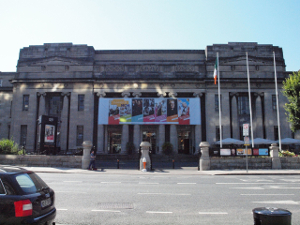
The National Concert Hall is opened in Dublin on September 9, 1981. It is a concert hall located on Earlsfort Terrace, close to St. Stephen’s Green, and is the principal national venue for classical music concerts in Ireland.

Originally built for the Dublin International Exhibition of Arts and Manufactures of 1865, the structure is converted into the central building of University College Dublin (UCD) at the foundation of the National University of Ireland in 1908. When UCD begins to relocate to a new campus at Belfield in the 1960s, part of the building is converted, and reopened as the National Concert Hall in 1981. Since then, the structure has been shared with UCD. In 2005 it is announced that UCD is to relocate all of its faculties to Belfield in the near term, allowing the NCH to develop a major expansion plan on the entire site, bringing it in line with international peers.

Today the National Concert Hall is one of Ireland’s National Cultural Institutions, under the aegis of the Irish Government‘s Department of Culture, Heritage and the Gaeltacht and, as such, is grant-aided by the Irish Government. The National Concert Hall is a statutory corporate body, with a management team, and a Government-appointed Board.

Although its facade is quite impressive, the venue’s architectural acoustics have been criticized. It is also unsuitable for large-scale opera stagings, lacking full stage facilities. Consequently, calls for a purpose-built venue are made from time to time.

Due to its central location, lunchtime concerts and recitals are common and attended by many workers from nearby office buildings. During the summer, outdoor recitals are given in the adjacent Iveagh Gardens. The resident orchestra is the RTÉ National Symphony Orchestra. Other regular performances are made from the rest of the RTÉ Performing Groups.

The National Concert Hall generally makes a small surplus, unlike most of Ireland’s National Cultural Institutions. This is despite the fact that although it has a high level of attendance, it has only a small public funding element, especially compared to the Abbey Theatre.


Leave a comment

Death of James Kelly, Irish Army Intelligence Officer

james-kelly

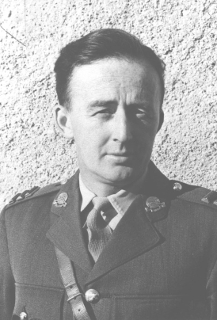
James Kelly, former Irish Army intelligence officer who is found not guilty, along with two former Irish government ministers, of attempting to illegally import arms for the Provisional Irish Republican Army in the Arms Crisis of 1970, dies on July 16, 2003.

Kelly is the eldest of ten children, born on October 16, 1929 into a staunchly Irish republican family from Bailieborough, County Cavan.

Kelly is a central figure in the Arms Crisis, having traveled to Hamburg to arrange the purchase of arms. It emerges later that Neil Blaney had ordered him to do so outside normal legal channels, but before the weapons arrive the Gards Special Detective Unit hears of the plan and informs the Taoiseach, Jack Lynch, aborting the importation and resulting in criminal charges for the plotters. Although in his summation the judge says it is no defence for Kelly to say that he believes that the government authorised the importation of arms, Kelly is acquitted.

Despite his acquittal, Kelly suffers financially because he had felt compelled to resign from the Army even before the prosecution was brought. He prints and publishes a personal memoir in paperback format called Orders for the Captain? in 1971.

Kelly never denies his involvement in extra-legal arms purchase talks, but contends that he had been ordered to do so by some ministers. A typical version of the events is found in a 1993 hostile biography of Charles Haughey, claiming: “As early as October 1969, to the certain knowledge of Charles Haughey, James Gibbons, the Department of Justice, the Special Branch and Army Intelligence, there were meetings with leading members of the IRA, when they were promised money and arms. The critical encounter took place in Bailieborough, County Cavan, on Saturday, 4 October 1969. It had been arranged by Captain James Kelly, an army intelligence officer, and Cathal Goulding. Kelly, at that stage, was already the subject of several security reports to the Secretary of the Department of Justice, Peter Berry, from the Special Branch, implicating Kelly with subversives and with promises of money and of arms.” Kelly never objected to such versions of the events of 1969.

Kelly is elected vice-chairman of Aontacht Éireann. Aontacht Éireann meets with little success at the polls and by 1980 he has joined Fianna Fáil, becoming a member of its national executive. Following the first applications of the 1987 Extradition (European Convention on the Suppression of Terrorism) Act, he resigns from the party in 1989 in opposition to the extradition of Provisional IRA prisoners to the United Kingdom. He also serves twice as President of the 1916-1921 Club. He launches a successful defamation case against Garret FitzGerald over an article in The Irish Times.

James Kelly dies on July 16, 2003 and is buried in Glasnevin Cemetery in Dublin. The epitaph on his grave is “Put not your trust in princes,” a quote from Psalm 146.


Leave a comment

Construction of Royal Hospital Kilmainham Begins

royal-hospital-kilmainham

The first stone of the Royal Hospital Kilmainham in Kilmainham, Dublin, is laid by James Butler, 1st Duke of Ormond, on April 29, 1680. Completed in 1684, it is one of the finest 17th-century buildings in Ireland.

The hospital is built by Sir William Robinson, official State Surveyor General of Ireland for James Butler, 1st Duke of Ormonde and Lord Lieutenant of Ireland to King Charles II, as a home for retired soldiers of the Irish Army and continues in that use for over 250 years. The style is based on Les Invalides in Paris with a formal facade and a large courtyard. The Royal Hospital Chelsea in Chelsea, London is completed two years later and also has similarities in style. A priory, founded in 1174 by Strongbow, exists on the site until the English close it down in the Dissolution of the Monasteries in the 1530s.

The Richmond Tower at the end of the formal avenue leading to the Royal Hospital is designed by Francis Johnston, one of the leading architects of the day. This gateway originally stands beside the River Liffey at Bloody Bridge (now Rory O’More Bridge) but has to be moved after the arrival of the railway in 1844 increases traffic congestion. Johnston places his personal coat of arms above the arch, concealed by a piece of wood painted to match the stone, his idea being that his arms would be revealed to future generations after the wood becomes rotten. However, his little trick is uncovered when the gateway is taken down for removal. The coat of arms currently on the gateway is that of the Royal Hospital.

The Royal Hospital Kilmainham graveyards, including Bully’s Acre, are 400 metres to the west. A cross-shaft in the former cemetery may be the remains of a boundary cross associated with a ninth-century monastery located at this site.

Following the creation of the Irish Free State the Royal Hospital is considered as a potential home for Oireachtas Éireann, the new Irish national parliament. Eventually it is decided to keep parliament in its temporary home in Leinster House. The Hospital remains the home of a dwindling number of soldiers, before being variously used by the Garda Síochána and as a storage location for property belonging to the National Museum of Ireland. The large statue Queen Victoria which used to stand in the forecourt of Leinster House, before its removal in 1947, is stored in the main courtyard of the Hospital, as are various state carriages, including the famously spectacular State Coach of the Lord Chancellor of Ireland. The Royal Hospital Kilmainham is finally restored by the Irish Government in 1984 and controversially opens as the Irish Museum of Modern Art (IMMA). Some people working in heritage organisations criticise the decision to demolish the eighteenth-century barrack rooms in one section of the quadrangle to create open spaces for the IMMA.

Every year on the National Day of Commemoration, the Sunday nearest July 11, the anniversary of the Truce that ends the Irish War of Independence, the President of Ireland, in the presence of members of the Government of Ireland, members of Dáil Éireann and of Seanad Éireann, the Council of State, the Defence Forces, the Judiciary and the Diplomatic Corps, lays a wreath in the courtyard in memory of all Irishmen and Irishwomen who have died in past wars and on service with the United Nations.

In recent years, Royal Kilmainham Hospital has become a popular location for concerts during the summer months. Acts such as Blur, Leonard Cohen, The Flaming Lips, Jack White and Public Enemy have played within the grounds in the past.


1 Comment

The Battle of Kilrush

james-butler-earl-of-ormonde

The Battle of Kilrush, a battle at the start of the Irish Confederate Wars in Ireland, takes place on April 15, 1642, soon after the Irish Rebellion of 1641.

The battle is fought between a Royalist army under the James Butler, 12th Earl of Ormonde, and Richard Butler, 3rd Viscount Mountgarret, who leads Confederate Irish troops raised during the Irish Rebellion of 1641. Ormonde and Mountgarret are cousins, both being members of the Butler dynasty.

Ormonde’s troops leave Dublin on April 2 and march unopposed from Naas to Athy and on to Maryborough, now Portlaoise, arriving on April 8. There they resupply the royalist garrisons and send cavalry forces to support those at Carlow and Birr, before returning to Athy on April 13. Setting out at 6:00 AM on April 15, and having decided to avoid a battle on their return march to Dublin, the government troops are blocked by Mountgarret’s rebel militias at Kilrush, two miles south of Suncroft, between Kilcullen and Moone in southeastern County Kildare.

The land is remarkably flat, with the exception of two ridges that run nearly parallel northward from a castle, with a marsh lying between. The army of Ormonde, consisting of 2,500 foot soldiers and 500 horses, assembles on the high grounds of Ardscull, Fontstown, and Kilrush, while the rebel army under Mountgarret, consisting of 8,000 foot soldiers and 400 horses, proceeds in the same direction along the heights of Birtown, Ballyndrum, Glasshealy, and Narraghmore. Mountgarret, having the advantage in numbers, and anxious for battle, outmarches Ormonde’s forces, and posts himself on Bull Hill and Kilrush, completely intercepting Ormonde’s further progress to Dublin. A general engagement becomes unavoidable. The left wing of the Irish is broken by the first charge. The right wing, animated by their leaders, maintains the contest for some time, but eventually falls back to neighbouring Battlemount. Here they break, flee and are pursued with great slaughter across the grounds they had marched over the previous day. Ormonde’s army then marches on to Dublin, arriving on April 17.

Ormonde’s army suffers twenty fatalities and approximately forty wounded in the Battle of Kilrush. Mountgarret’s rebel army loses more than 700, among which are several colonels. The victory is considered of such consequence that Ormonde is presented with a jewel valued at £50 by the Irish Government.

(Pictured: Sir Peter Lely’s oil painting of James Butler, 12th Earl of Ormonde)


Leave a comment

Assassination of Senator Billy Fox

senator-billy-fox

Billy Fox, Protestant Irish politician and a Fine Gael member of Dáil Éireann from 1969 to 1973, and of Seanad Éireann from 1973 until his death, is assassinated on March 12, 1974, by Irish Republican Army (IRA) gunmen who are carrying out a raid on his girlfriend’s farmhouse. Five members of the Provisional IRA are convicted of involvement in his murder.

Late on the night of Monday, March 11, 1974, about a dozen gunmen arrive at the home of Fox’s girlfriend, Marjorie Coulson. She lives there with her parents and brother, and Fox regularly visits on Monday evenings. The farmhouse is in the rural townland of Tircooney in County Monaghan, near the border with Northern Ireland. The gunmen search the farmhouse and demand the occupants hand over weapons. Shortly after midnight, as this is taking place, Fox drives down the laneway and is stopped by some of the gunmen who are outside. He runs but is shot and killed by a single gunshot through the upper torso. The gunmen then order everyone out of the house, set it on fire, and escape.

The next day, the Ulster Freedom Fighters claim that it had killed Fox because he had links to the Provisional IRA. The IRA issues a statement saying that it is not involved. However, shortly after the shooting, five men from County Monaghan are charged with Fox’s murder and IRA membership. They are convicted in May 1974 and sentenced to penal servitude for life. One of those convicted tells the court they had raided the farm because they received a tip-off that Ulster Volunteer Force (UVF) weapons were being stored there. He says there was an agreement that no shots were to be fired. His understanding is that Fox had taken some of the men by surprise and they had shot to wound, not recognizing him.

It is reported that the tip-off had come from another local family and was the result of a grudge. IRA members are already suspicious that the UVF is receiving local help, following an incident in November 1973. Loyalist gunmen had bombed a house at nearby Legnakelly and shot one of the occupants, a republican activist. In its statement on Fox’s killing, the IRA says, “We have repeatedly drawn attention to the murderous acts of a group of former B Specials from County Fermanagh…led by serving officers of the British Army.” The author, Tim Pat Coogan, however, suggests that members of the Official IRA are responsible for killing Fox.

The Seanad adjourns for a week as a mark of respect. About 500 people attend Fox’s funeral at Aughnamullen, including Taoiseach Liam Cosgrave and the Irish president, Erskine Childers. Fox is the first member of the Oireachtas to be killed since Minister for Justice Kevin O’Higgins by the anti-Treaty Irish Republican Army in 1927. When John Bruton first becomes a Teachta Dála (TD) in 1969 he shares an office with Fox. He says that he is still angry at the murder. The RTÉ documentary Rumours from Monaghan report in detail on the circumstances of Fox’s killing. Because Fox is a Protestant, some suggest that the motive for the killing was sectarian.

One of those convicted for Fox’s killing, Sean Kinsella, later escapes from Portlaoise Prison. He is later convicted of arms offences and attempted murder in England. He is released by the Irish government under the Good Friday Agreement.

The Senator Billy Fox Memorial Park in Aughnamullen is named in his memory.


Leave a comment

Founding of the Arts Council of Ireland

The Arts Council (An Chomhairle Ealaíon), sometimes called the Arts Council of Ireland, is established on May 8, 1951, by the Government of Ireland. The Council’s purpose is to encourage interest in Irish art, including visual art, music, performance, and literature, and to channel funding from the state to Irish artists and arts organisations. This includes encouragement of traditional Irish arts, support for contemporary Irish arts, and finance for international arts events in Ireland. The council is modeled on the Arts Council of Great Britain, founded in 1946, and works closely with the Arts Council of Northern Ireland, formed by the British government in Northern Ireland in 1962 to fulfil a similar role.

The Arts Council consists of twelve members and a chair, each appointed for a five-year term by the Minister for Arts, Heritage, Regional, Rural and Gaeltacht Affairs. The Chair of the Arts Council is entitled to an annual fee of €8,978 and ordinary members are entitled to a fee of €5,985, although some members choose to waive this fee.

The ongoing work of the Arts Council is delivered by the executive. In addition to the Director, a staff of 41 full-time equivalents carries out the daily functions of the organisation. Arts advisers, who provide additional expertise and strategic advice on different aspects of the arts, are retained on a consultancy basis.

The Arts Council of Ireland is the official “Cultural Contact Point” between the European Commission‘s Cultural Programme and Ireland and is a founding member of the International Federation of Arts Councils and Culture Agencies. Visual Artists Ireland, the all-Ireland non-governmental organisation representing Irish artists nationally and internationally, is supported by the Arts Council of Ireland.

For additional information, visit the Arts Council’s website at http://www.artscouncil.ie/home/.