seamus dubhghaill

Promoting Irish Culture and History from Little Rock, Arkansas, USA


Leave a comment

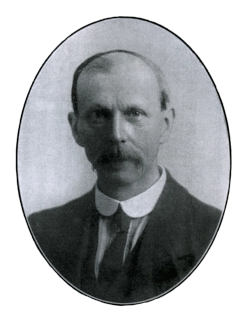
Death of William Thrift, Academic & Politician

William Edward Thrift, Irish academic and politician who serves as the 37th Provost of Trinity College Dublin (TCD) and a Teachta Dála (TD) for the Dublin University constituency from 1921 to 1937, dies in Dublin, on April 23, 1942.

Thrift was born in Halifax, West Yorkshire, England, on February 28, 1870, one of at least two sons and two daughters of Henry George Thrift, civil servant, and Sarah Anne Thrift (née Smith). The family moves in his childhood to Dublin, where his father is an officer in the Inland Revenue.

He is educated at The High School, Dublin, and enters Trinity College Dublin in 1889 with a second sizarship in mathematics, and commences a highly distinguished university career, scoring firsts in several examinations and winning numerous prizes. Elected fellow in mathematics and experimental science, and in mental and moral philosophy in 1896, he becomes Erasmus Smith’s Professor of Natural and Experimental Philosophy at TCD from 1901 to 1929. He is awarded a Doctor of Science (DSc) in 1936. He is appointed Provost of Trinity College Dublin in 1937, serving until his death in 1942.

Thrift is also active in politics. He is elected to the House of Commons of Southern Ireland at the 1921 Irish elections, representing the Dublin University constituency. As an independent Unionist, he does not participate in the Second Dáil. He is re-elected for the same constituency at the 1922 Irish general election and becomes a member of the Third Dáil. He is re-elected at the next five general elections until 1937 when he retires from politics.

While rarely speaking on controversial issues, Thrift opposes the 1925 legislation banning divorce, which he describes as an infringement of individual and minority rights, and a betrayal of commitments made by Arthur Griffith during the Anglo-Irish Treaty debates. His capable service on various Dáil committees is recognised by his election as Leas-Ceann Comhairle (deputy speaker). A long-serving council member of the Royal Dublin Society (RDS) (1902–42), he is a commissioner of charitable donations and bequests, and financial adviser to the General Synod of the Church of Ireland. He sits on the governing boards of the Erasmus Smith schools and of the Incorporated Society for Promoting Protestant Schools in Ireland.

Thrift’s portrait is painted by Leo Whelan. He marries Etta Robinson, a daughter of C. H. Robinson, a medical doctor, and they have three sons and three daughters. He dies at the provost’s house, Trinity College Dublin, on April 23, 1942. He is buried at Mount Jerome Cemetery, Harold’s Cross, County Dublin.

Leave a comment

Birth of Kate Thompson, Author & Accomplished Fiddler

Katharine Anna Thompson, British-Irish author best known for children’s novels, is born in Halifax, West Yorkshire, England, on November 10, 1956. Most of her children’s fiction is fantasy but several of her books also deal with the consequences of genetic engineering.

Thompson is the youngest child of the social historians and peace activists E. P. Thompson and Dorothy Towers. She has lived in Ireland since 1981 and many of her books are set there. She trains racehorses in the UK and United States and travels extensively in India before settling in 1984 in Inagh, County Clare, in the west of Ireland with her partner Conor Minogue. They have two daughters, Cliodhna and Dearbhla. She is an accomplished fiddler with an interest in Irish traditional music, which is reflected in The New Policeman (2005).

Thompson wins two major annual awards for The New Policeman (Bodley Head, 2005), set in modern Kinvara and the Irish mythological Tír na nÓg: the Guardian Children’s Fiction Prize and the Whitbread Children’s Book Award. It also wins the Dublin Airport Authority Children’s Book of the Year Award for 2005.

Thompson wins the Bisto Children’s Book of the Year Award four times, for The Beguilers (2001), The Alchemist’s Apprentice (2002), Annan Water (2004) and The New Policeman. Creature of the Night (2008) is shortlisted for the 2008 Booktrust Teenage Prize and the 2009 Carnegie Medal.

Thompson holds an MA in Irish traditional music performance from the University of Limerick.


Leave a comment

Death of William Rokeby, Statesman, Cleric & Archbishop of Dublin

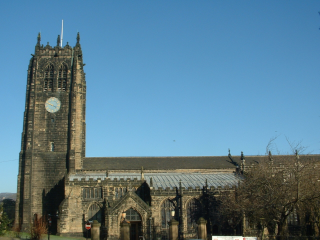
William Rokeby, a leading statesman and cleric in early sixteenth-century Ireland, dies at Kirk Sandall, near Doncaster in South Yorkshire, on November 29, 1521. He holds the offices of Bishop of Meath, Archbishop of Dublin and Lord Chancellor of Ireland. He is commemorated in the Rokeby Chapels in two Yorkshire churches, St. Oswald’s Church, Kirk Sandall, and Halifax Minster.

Rokeby is born at Kirk Sandall, eldest of the five sons of John Rokeby (died 1506). His younger brother, Sir Richard Rokeby (died 1523), is Comptroller of the Household to Cardinal Thomas Wolsey and later Treasurer of Ireland. He retains a deep affection for Kirk Sandall and returns there to die. He goes to school at Rotherham, studies at the University of Oxford and becomes a fellow of King’s Hall, later Trinity College, Cambridge. He becomes vicar of his home parish in 1487 and is transferred to Halifax, another town for which he has a deep attachment, in about 1499. In 1507 he is made Bishop of Meath.

On the death of Walter Fitzsimon in 1511, Rokeby becomes Archbishop of Dublin. It has been suggested that his elevation is due at least in part to his English birth, as the Crown is anxious to place Englishmen high up in the Irish hierarchy. No doubt his brother’s close connection to Wolsey also plays a part. He is Lord Chancellor of Ireland from 1512 to 1513 and from 1516 to 1522.

Writer Roderick J. O’Flanagan believes that Rokeby is a good and diligent Lord Chancellor, although he does not leave behind many written judgments. He is clearly a trusted servant of the Crown; in particular, Thomas Howard, 2nd Duke of Norfolk, the Lord Deputy, Surrey, with the approval of Henry VIII, choose Rokeby in 1520 as mediator in the feud between Maurice FitzGerald, 9th Earl of Desmond, and Piers Butler, 8th Earl of Ormond, which has become exceptionally bitter.

As Archbishop Rokeby makes a reputation as a peacemaker, settling a long and bitter dispute between the Dean and Chapter of St. Patrick’s Cathedral, Dublin. He gives permission to Gerald FitzGerald, 9th Earl of Kildare, for the original foundation of Maynooth College, which is suppressed in 1535. He is frequently at the English Court, so often indeed that he is accused of neglecting his official duties back in Ireland. He participates in the christening of the future Queen Mary I in 1516 and the ceremony by which Wolsey receives his cardinal’s hat.

As Archbishop of Dublin, Rokeby is best remembered for the Synod of 1518. The Synod prohibits the use of any tin chalice at Mass, and the disposal of Church property by laymen; and attempts to regulate the procedure for dealing with intestate estates, the payment of tithes and burial fees and the rules for admission to the clergy. Rather comically, he strictly forbids clergymen to play football.

Rokeby is appointed Archdeacon of Surrey on March 27, 1519. By 1521 his health is failing, and he retires to Kirk Sandall, where he dies on November 29. In his will he leaves £200 to rebuild St. Mary’s Church, Beverley, whose tower had collapsed the previous year.

Rokeby makes elaborate provisions in his will for the disposal of his remains. In accordance with his wishes, his body is buried in St. Oswald’s Church, Kirk Sandall, but his heart and bowels are buried in the Church of St. John the Baptist, Halifax (now known as Halifax Minster). Mortuary chapels are erected at both spots, which still exist today.

O’Flanagan praises Rokeby as a good man, a good bishop and, so far as we can tell from the scanty records, a good judge. Irish author F. Elrington Ball, while acknowledging his good qualities, suggests that he was a failure as Irish Lord Chancellor, due partly to his frequent absences in England.

(Pictured: Halifax Minster, where Rokeby’s heart is buried)


Leave a comment

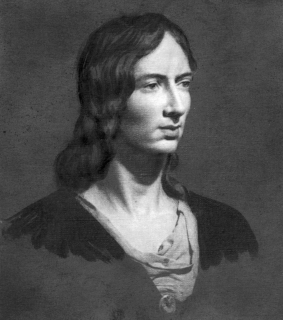
Birth of Emily Brontë, Novelist & Poet

emily-bronte

Emily Brontë, English novelist and poet who produces but one novel, Wuthering Heights (1847), is born on July 30, 1818, in Thornton, West Riding of Yorkshire, England. She is perhaps the greatest of the three Brontë sisters, but the record of her life is extremely meager, for she is silent and reserved and leaves no correspondence of interest, and her single novel darkens rather than solves the mystery of her spiritual existence.

Her father, Patrick Brontë (1777–1861), an Irishman, holds a number of curacies. Hartshead, Yorkshire, is the birthplace of his elder daughters, Maria and Elizabeth, who died young. Nearby Thornton is the birthplace of Emily and her siblings Charlotte, Patrick Branwell, and Anne. In 1820 Patrick Brontë becomes rector of Haworth, remaining there for the rest of his life.

After the death of their mother in 1821, the children are left very much to themselves in the bleak moorland rectory. The children are educated, during their early life, at home, except for a single year that Charlotte and Emily spend at the Cowan Bridge School at Cowan Bridge in Lancashire. In 1835, when Charlotte secures a teaching position at Miss Wooler’s school at Roe Head, Emily accompanies her as a pupil but suffers from homesickness and remains only three months. In 1838 Emily spends six exhausting months as a teacher at Law Hill School, near Halifax, and then resigns.

In an effort to keep the family together at home, Charlotte plans to keep a school for girls at Haworth. In February 1842 she and Emily go to Brussels to learn foreign languages and school management at the Héger Pensionnat. Although Emily pines for home and for the wild moorlands, it seems that in Brussels she is better appreciated than Charlotte. Her passionate nature is more easily understood than Charlotte’s decorous temperament. In October, however, when her aunt dies, Emily returns permanently to Haworth.

In 1845 Charlotte comes across some poems by Emily, and this leads to the discovery that all three sisters have written verse. A year later they publish jointly a volume of verse, Poems by Currer, Ellis and Acton Bell, the initials of these pseudonyms being those of the sisters. It contains 21 of Emily’s poems, and a consensus of later criticism has accepted the fact that Emily’s verse alone reveals true poetic genius. The venture costs the sisters about £50 in all, and only two copies are sold.

By midsummer of 1847 Emily’s Wuthering Heights and Anne’s Agnes Grey have been accepted for joint publication by J. Cautley Newby of London, but publication of the three volumes is delayed until the appearance of their sister Charlotte’s Jane Eyre, which is immediately and hugely successful. Wuthering Heights, when published in December 1847, does not fare well. Critics are hostile, calling it too savage, too animal-like, and clumsy in construction. Only later does it come to be considered one of the finest novels in the English language.

Soon after the publication of her novel, Emily’s health begins to fail rapidly. She had been ill for some time, but now her breathing becomes difficult, and she suffers great pain. She dies of tuberculosis on December 19, 1848, in Haworth. She is buried at St. Michael and All Angels’ Church in Haworth.