seamus dubhghaill

Promoting Irish Culture and History from Little Rock, Arkansas, USA


Leave a comment

Birth of Brendan Gleeson, Actor & Film Director

Brendan Gleeson, Irish actor and film director, is born in Dublin on March 29, 1955. He is the recipient of three Irish Film & Television Academy (IFTA) Awards, two British Independent Film Awards (BIFA), and a Primetime Emmy Award and has been nominated twice for a BAFTA Award, five times for a Golden Globe Award and once for an Academy Award. In 2020, he is listed at number 18 on The Irish Times list of Ireland’s greatest film actors. He is the father of actors Domhnall Gleeson and Brian Gleeson.

Gleeson is the son of Frank and Pat Gleeson. He has described himself as having been an avid reader as a child. He receives his second-level education at St. Joseph’s CBS in Fairview, Dublin, where he is a member of the school drama group. He receives his Bachelor of Arts at University College Dublin (UCD), majoring in English and Irish. After training as an actor, he works for several years as a secondary school teacher of Irish and English at the now defunct Catholic Belcamp College in north County Dublin. He works simultaneously as an actor while teaching, doing semi-professional and professional productions in Dublin and surrounding areas. He leaves the teaching profession to commit full-time to acting in 1991. In an NPR interview to promote Calvary in 2014, he states he was molested as a child by a Christian Brother in primary school but was in “no way traumatised by the incident.”

As a member of the Dublin-based Passion Machine Theatre company, Gleeson appears in several of the theatre company’s early and highly successful plays such as Brownbread (1987), written by Roddy Doyle and directed by Paul Mercier, Wasters (1985) and Home (1988), written and directed by Paul Mercier. He also writes three plays for Passion Machine: The Birdtable (1987) and Breaking Up (1988), both of which he directs, and Babies and Bathwater (1994) in which he acts. Among his other Dublin theatre work are Patrick Süskind‘s one-man play The Double Bass and John B. Keane‘s The Year of the Hiker.

Gleeson starts his film career at the age of 34. He first comes to prominence in Ireland for his role as Michael Collins in The Treaty, a television film broadcast on RTÉ One, and for which he wins a Jacob’s Award in 1992. He acts in such films as Braveheart, I Went Down, Michael Collins, Gangs of New York, Cold Mountain, 28 Days Later, Troy, Kingdom of Heaven, Lake Placid, A.I. Artificial Intelligence, Mission: Impossible 2, and The Village. He wins critical acclaim for his performance as Irish gangster Martin Cahill in John Boorman‘s 1998 film The General.

In 2003, Gleeson is the voice of Hugh the Miller in an episode of the Channel 4 animated series Wilde Stories. While he portrays Irish statesman Michael Collins in The Treaty, he later portrays Collins’ close collaborator Liam Tobin in the film Michael Collins with Liam Neeson taking the role of Collins. He later goes on to portray Winston Churchill in Into the Storm, winning a Primetime Emmy Award for his performance. He plays Barty Crouch, Jr. impersonating Hogwarts professor Alastor “Mad-Eye” Moody in the fourth, and Alastor Moody himself in fifth and seventh Harry Potter films. His son Domhnall plays Bill Weasley in the seventh and eighth films.

Gleeson provides the voice of Abbot Cellach in The Secret of Kells, an animated film co-directed by Tomm Moore and Nora Twomey of Cartoon Saloon, which premieres in February 2009 at the Jameson Dublin International Film Festival. He stars in the short film Six Shooter in 2006, written and directed by Martin McDonagh, which wins an Academy Award for Best Live Action Short Film. In 2008, he stars in the comedy crime film In Bruges, also written and directed by McDonagh. The film, and his performance, enjoy huge critical acclaim, earning him several award nominations, including his first Golden Globe nomination. In the movie, he plays a mentor-like figure for Colin Farrell‘s hitman. In his review of In Bruges, Roger Ebert describes the elder Gleeson as having a “noble shambles of a face and the heft of a boxer gone to seed.”

In July 2012, Gleeson starts filming The Grand Seduction, with Taylor Kitsch, a remake of Jean-François Pouliot‘s French-Canadian La Grande Séduction (2003) directed by Don McKellar. The film is released in 2013. In 2016, he appears in the video game adaptation Assassin’s Creed and Ben Affleck‘s crime drama Live by Night. In 2017, he finishes Psychic, a short in which he directs and stars. From 2017 to 2019 he stars in the crime series Mr. Mercedes. He receives a Golden Globe Award nomination for his performance as Donald Trump in the Showtime series The Comey Rule (2020). In 2022, he reunites with Martin McDonagh in the tragic comedy The Banshees of Inisherin starring opposite Colin Farrell. For his performance as Colm Doherty, he receives numerous awards nominations, including the Academy Award, Golden Globe, and Critics’ Choice Movie Award for Best Supporting Actor. He receives an Emmy Award nomination for Stephen Frears‘s Sundance TV series State of the Union (2022).

Gleeson is a fiddle and mandolin player, with an interest in Irish folklore. He plays the fiddle during his roles in Cold Mountain, Michael Collins, The Grand Seduction, and The Banshees of Inisherin, and also features on Altan‘s 2009 live album. In the Coen brothersThe Ballad of Buster Scruggs (2018), he sings “The Unfortunate Rake.” He also makes a contribution in 2019 to the album by Irish folk group Dervish with a version of “Rocky Road to Dublin.”

Gleeson has been married to Mary Weldon since 1982. They have four sons: Domhnall, Fergus, Brían, and Rory. Domhnall and Brían are also actors. He speaks fluent Irish and is an advocate of the promotion of the Irish language. He is a fan of the English football club Aston Villa, as is his son Domhnall.

Leave a comment

Birth of Actor Colin Farrell

colin-farrell

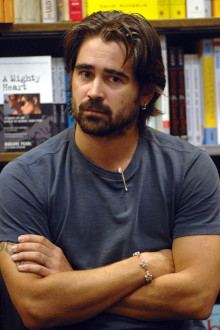
Irish actor Colin James Farrell is born on May 31, 1976, in Castleknock, Dublin.

Farrell is educated at St. Brigid’s National School, followed by secondary school at Castleknock College, an exclusive all boys private school and then Gormanston College in County Meath. He unsuccessfully auditions for the Irish musical group Boyzone around this time.

Farrell is inspired to try acting when Henry Thomas‘ performance in E.T. the Extra-Terrestrial moves him to tears. With his brother’s encouragement, he attends the Gaiety School of Acting, dropping out in 1998 when he is cast as Danny Byrne on Ballykissangel, a BBC drama about a young English priest who becomes part of an Irish rural community.

Farrell makes his film debut in the Tim Roth-directed drama The War Zone in 1999 and is discovered by Hollywood when Joel Schumacher casts him as the lead in the war drama Tigerland in 2000. He then stars in Schumacher’s psychological thriller Phone Booth (2003) where he plays a hostage in a New York City phone booth, and the American thrillers S.W.A.T. (2003) and The Recruit (2003), establishing his international box-office appeal. During this time, he also appears in Steven Spielberg‘s science fiction thriller Minority Report (2002) and as the villain Bullseye in the superhero film Daredevil (2003).

After starring in the independent films Intermission (2003) and A Home at the End of the World (2004), Farrell heads Oliver Stone‘s biopic Alexander (2004) and Terrence Malick‘s The New World (2005). Roles in Michael Mann‘s Miami Vice (2006), the adaptation of John Fante‘s Ask the Dust (2006), and Woody Allen‘s Cassandra’s Dream (2007) follow, underscoring his popularity among Hollywood writers and directors. However, it is his role in Martin McDonagh‘s In Bruges (2008) that earns him a Hollywood Foreign Press Association Golden Globe Award for Best Actor – Motion Picture Musical or Comedy.

Farrell stars in the black comedy film Horrible Bosses (2011), for which he receives critical praise, along with the comedy-horror film Fright Night (2011) and the science fiction action film Total Recall (2012), both remakes, and McDonagh’s second feature, the black comedy crime film Seven Psychopaths (2012). He also stars in the Niels Arden Oplev action film Dead Man Down (2013), and as Travers Goff in the period drama Saving Mr. Banks (2013). In 2014, he stars as Peter Lake in the supernatural fable Winter’s Tale, an adaptation of the novel of the same name by Mark Helprin. In 2015, he stars as Detective Ray Velcoro in the second season of HBO‘s True Detective, and also stars in the film The Lobster, for which he is nominated for his second Golden Globe Award for Best Actor – Motion Picture Musical or Comedy. In 2016, he plays Percival Graves in the Harry Potter spin-off film Fantastic Beasts and Where to Find Them.

In December 2005, Farrell checks into a rehabilitation treatment centre for addictions to recreational drugs and painkillers. He speaks about it on the Late Show with David Letterman after coming out of rehab and continues to do so in the years following. “There was an energy that was created,” he says of the time when he was addicted, “a character that was created, that no doubt benefited me. And then there was a stage where it all began to crumble around me.”

In 2007, Farrell joins other celebrities as a spokesman for the Special Olympics World Games in Shanghai, China. He has also lent his support to the anti-bullying campaign Stand Up! organised by the Irish LGBT youth organisation BeLonG To in March 2012. He appears on The Ellen DeGeneres Show two years earlier to increase awareness of the subject. In 2015 he becomes an official Ambassador of the Homeless World Cup which uses street football to inspire homeless people to change their lives.


Leave a comment

Birth of Fiona Shaw, Actress & Director

fiona-shaw

Fiona Mary Shaw, accomplished classical actress and theatre and opera director, is born in Farranree, County Cork on July 10, 1958. She is best known for her role as Petunia Dursley in the Harry Potter films and her role portraying Marnie Stonebrook in the HBO series True Blood.

Shaw attends secondary school at Scoil Mhuire in Cork. She receives her degree at University College Cork. She trains at the Royal Academy of Dramatic Art (RADA) in London and is part of a ‘new wave’ of actors to emerge from the Academy. She receives much acclaim as Julia in the Royal National Theatre production of Richard Sheridan‘s The Rivals (1983).

Shaw’s theatrical roles include Celia in As You Like It (1984), Madame de Volanges in Les Liaisons Dangereuses (1985), Katherine in The Taming of the Shrew (1987), Lady Franjul in The New Inn (1987), Young Woman in Machinal (1993), for which she wins the Laurence Olivier Award for Best Actress, Winnie in Happy Days (2007), and the title roles in Electra (1988), The Good Person of Sechuan (1989), Hedda Gabler (1991), The Prime of Miss Jean Brodie (1998) and Medea (2000). She performs T. S. Eliot‘s poem The Waste Land as a one-person show at the Liberty Theatre in New York City to great acclaim in 1996, winning the Drama Desk Award for Outstanding One-Person Show for her performance.

Shaw plays Miss Morrison in the 1984 The Adventures of Sherlock Holmes episode “The Adventure of the Crooked Man” and Catherine Greenshaw in Agatha Christie’s Marple episode “Greenshaw’s Folly” in 2013.

Shaw notably plays the male lead in Richard II, directed by Deborah Warner in 1995. She has collaborated with Warner on a number of occasions, on both stage and screen. She has also worked in film and television, including My Left Foot (1989), Mountains of the Moon (1990), Three Men and a Little Lady (1990), Super Mario Bros. (1993), Undercover Blues (1993), Persuasion (1995), Jane Eyre (1996), The Butcher Boy (1997), The Avengers (1998), Gormenghast (2000), and five of the Harry Potter films in which she plays Harry Potter‘s aunt Petunia Dursley. She has a brief but key role in Brian DePalma‘s The Black Dahlia (2006).

In 2009, Shaw collaborates with Deborah Warner again, taking the lead role in Tony Kushner‘s translation of Bertolt Brecht‘s Mother Courage and Her Children. In a 2002 article for The Daily Telegraph, Rupert Christiansen describes their professional relationship as “surely one of the most richly creative partnerships in theatrical history.” Other collaborations between the two women include productions of Brecht’s The Good Woman of Szechuan and Henrik Ibsen‘s Hedda Gabler, the latter adapted for television.

Shaw appears in The Waste Land at Wilton’s Music Hall in January 2010 and in a Royal National Theatre revival of London Assurance in March 2010. In November 2010, she stars in Ibsen’s John Gabriel Borkman at the Abbey Theatre, Dublin alongside Alan Rickman and Lindsay Duncan. The play is also staged in New York’s Brooklyn Academy of Music in 2011.

Shaw appears in season four of American TV show True Blood. Her character, Marnie Stonebrook, has been described as an underachieving palm reader who is spiritually possessed by an actual witch. Her character leads a coven of necromancer witches who threaten the status quo in Bon Temps, erasing most of Eric Northman‘s memories and leaving him almost helpless when he tries to kill her and break up their coven.

In 2012, Shaw appears in the Royal National Theatre revival of Scenes from an Execution by Howard Barker.

The world’s largest solo theatre festival, United Solo Theatre Festival, recognizes her performance in The Testament of Mary on Broadway with the 2013 United Solo Special Award.

In 2018 Shaw begins portraying Carolyn Martens, head of the MI6 Russian Desk, in BBC America‘s Killing Eve, for which she wins the BAFTA Award for Best Actress in a Supporting Role in a Television Series. Later the same year, she plays a senior MI6 officer in Mrs. Wilson.


Leave a comment

Death of Alan Rickman, Actor & Director

alan-rickman

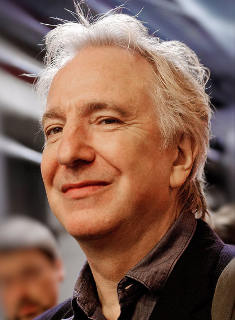
Alan Sidney Patrick Rickman, English actor and director, dies in London on January 14, 2016.

Rickman is born into a working-class family of Irish and Welsh descent in Hammersmith, London, on February 21, 1946. Rickman attends Derwentwater Primary School in Acton, and then Latymer Upper School in London through the Direct Grant system, where he becomes involved in drama. After leaving Latymer, he attends Chelsea College of Art and Design and then the Royal College of Art. After graduation, Rickman and several friends open a graphic design studio called Graphiti, but after three years of successful business, he decides that he is going to pursue acting professionally. He writes to request an audition with the Royal Academy of Dramatic Art (RADA), which he attends from 1972 until 1974.

Upon leaving the Royal Academy of Dramatic Art, Rickman becomes a member of the Royal Shakespeare Company, performing in modern and classical theatre productions. His first big television role comes in 1982, but his big break is as the Vicomte de Valmont in the stage production of Les Liaisons Dangereuses in 1985, for which he is nominated for a Tony Award.

Rickman’s first film role is as the German terrorist leader Hans Gruber in Die Hard (1988). His other film roles include the Sheriff of Nottingham in Robin Hood: Prince of Thieves (1991), for which he receives the BAFTA Award for Best Actor in a Supporting Role, Elliott Marston in Quigley Down Under (1990), Jamie in Truly, Madly, Deeply (1990), P.L. O’Hara in An Awfully Big Adventure (1995), Colonel Brandon in Sense and Sensibility (1995), Éamon de Valera in Neil Jordan‘s Michael Collins (1996), Alexander Dane in Galaxy Quest (1999), Harry in Love Actually (2003) and Judge Turpin in the film adaptation of Stephen Sondheim‘s musical of Sweeney Todd: The Demon Barber of Fleet Street (2007). He gains further notice for his film performances as Severus Snape in the Harry Potter series. He also stars in television films, playing the title character in Rasputin: Dark Servant of Destiny (1996), which wins him a Golden Globe Award, an Emmy Award and a Screen Actors Guild Award, and Dr. Alfred Blalock in the Emmy-winning Something the Lord Made (2004). His final film roles are as Lieutenant General Frank Benson in the thriller Eye in the Sky (2015), and the voice of Absolem, the caterpillar in Alice Through the Looking Glass (2016).

In August 2015, Rickman suffers a minor stroke, which leads to the diagnosis of pancreatic cancer. He reveals the fact that he has terminal cancer to only his closest confidants. He dies of pancreatic cancer on January 14, 2016, at the age of 69. His remains are cremated on February 3, 2016, in the West London Crematorium in Kensal Green. His ashes are given to his wife, Rima Horton. His final two films, Eye in the Sky and Alice Through the Looking Glass, are dedicated to his memory.