After moving to Houston in 1994, Devlin tends bar in Irish pubs and music venues for a number of years before starting his first band. From his perspective behind the bar, he realizes there is a local demand for Irish rock music that nobody is fulfilling. In 1996, to this end he forms a band called On the Dole. Although the band does well for several years, opening for legendary Irish touring acts like The Wolfe Tones and The Saw Doctors, eventually he decides it is time to clear the decks and start again.
In 2003, while hosting a weekly open mic at an Irish pub, Devlin meets bassist and singer Chad Smalley, son of Nobel laureateRichard Smalley and a veteran of the Houston music scene who had recently returned from New York and is looking for a new project. The two of them soon begin singing and performing together every week, developing a tight vocal harmony style.
In July 2004, Devlin and Smalley form Blaggards, along with violinist Turi Hoiseth and drummer Brian Vogel. Hoiseth and Vogel have since left the band, leaving Devlin and Smalley as the only original members.
The song “Big Strong Man” from Blaggards’ first album Standards (2005) appears in the 2010 British film The Kid, directed by Nick Moran.
“Big Strong Man” and “Drunken Sailor” (also from Standards) are both featured in episode 86 of the CBS series The Good Wife, aired on March 24, 2013.
Blaggards’ second album, Live in Texas, is released in 2010. It is a recording of a live performance at Houston’s Continental Club on June 13, 2009. The band’s latest album, Blagmatic, is released on July 14, 2021.
Blaggards, with Arizona-based fiddle player Heide Riggs and drummer Kevin “Turbo” Newton in the current lineup, continue to maintain a rigorous schedule, playing constantly throughout Texas and touring nationally several times a year. Beginning in 2010 (excluding the COVID years), the band does a 10-day Ireland tour every year in the early fall.
On the afternoon of September 8, 1863, Union Navy Lieutenant Frederick Crocker (“Acting Captain”) is in command of the advance squadron composed of four gunboats. Crocker is a veteran officer of considerable recent experience in Union river-gunboat actions and blockade duty. His ship is the USS Clifton, a steam-powered side-wheeler. Besides the USS Clifton, Crocker’s advance squadron includes USS Granite City, USS Sachem, and USS Arizona, all recently commissioned ironclad warships. Less than three miles southeast downriver, well out of range of the Confederate fort’s cannons, are anchored seven U.S. Navy transports carrying most of the Union Army soldiers of the landing force. The USS Suffolk, hosting invasion force commander Union Army Major GeneralWilliam B. Franklin and his staff, heads the seven-vessel squadron. Outside the principal Gulf shore sandbar, an additional two miles downstream of this squadron, lay at anchor the remaining ships of the 22-vessel invasion fleet. The total number of Union infantry assault troops in the landing force is given as 5,000 infantrymen, which includes 500 listed as aboard the USS Granite City, those aboard the six troop transports in the seven-ship squadron headed by USS Suffolk, plus an artillery company somewhere among them. The first wave of 500 men aboard USS Granite City, which steams as close behind USS Clifton as possible but out of range of the fort’s guns, are to land in the open space adjacent to and downstream of the fort. This is a flat, often muddy area already cleared of brush by the Confederate garrison as a clear field of fire for the canister and grapeshot of the fort’s artillery. The Union Army’s invasion plan, therefore, absolutely requires that the Confederate guns be silenced before any troops are debarked. This engagement is to be the largest amphibious assault on enemy territory in the history of the U.S. military to date.
Confederate CaptainLeon Smith, who is at Beaumont, Texas, immediately orders all Confederate troops in Beaumont, some eighty men, aboard the steamer Roebuck and sends them down the river to reinforce Fort Griffin. Smith and a Captain Good ride to the fort on horseback, reaching the fort some three hours before the steamer, arriving just as the Union gunboats USS Clifton and USS Sachem come within range, and assist in the defense of the fort.
Dowling’s well practiced Irish-Texan artillerymen, whose chosen and officially approved unit name is “Jefferson Davis Guards,” had placed range-stakes in the two narrow and shallow river channels. These are the “Texas channel” near the southwest shore and the “Louisiana channel” against the Louisiana shore. The white-painted stakes are for determining accurate range of the fort’s six old smooth-bore cannons. Each “Davis Guards” gun crew during gunnery practice thereby works to predetermine the approximate amount of gunpowder needed for each type of projectile (ball, canister, or grapeshot) available for their specific gun and which specific guns, charges, and loads have the best potential to hit each range-stake.
Crocker’s squadron has no local river pilots, only general knowledge of the river’s channels, no assurance of locations of the constantly varying depths especially of large oystershell “reefs” or “banks” between the river’s two channels. There is no mention in official U.S. Navy reports of whether Union sailors were making observations and taking depth soundings from the gunboats now dangerous top decks, while the Confederate cannon shots pounded and shook their ships. The few maps to which they have access are old and outdated and cannot account for recent changes in river-bottom conditions. On Captain Crocker’s signal the USS Sachem, followed by USS Arizona, advance up the right channel (Louisiana side) as fast as they dare, firing their port-side guns at the fort. USS Clifton approaches in the lead, ascending the Texas channel at full speed. USS Granite City hovers out of range behind USS Clifton, having orders not to risk debarking the 500 assault troops until the fort surrenders or its guns are silenced. As USS Sachem enters among the range-stakes, the Confederates open fire. Then USS Clifton comes into range, followed by USS Arizona. Despite their old smoothbore cannon, one of which has just become inoperable, after only a few rounds it is obvious the Confederate artillerymen’s months of training and target practice is an astounding success as their aim is deadly accurate.
The Confederates capture USS Clifton and USS Sachem with a total of 13 heavy cannon, including at least two new potent Parrott rifles, which are handed over to Leon Smith’s Texas Marine Department. The Union casualties amount to two dozen killed and badly wounded, about 37 missing, and 315 Navy men captured. The combined Union Army and Navy invasion force withdraw and return to New Orleans. The Confederates have no casualties.
In recognition of the victory, the Confederate States Congress passes a resolution of special thanks to the officers and men of the Davis Guard. In addition, Houston residents raise funds to provide medals to the Guard. The Davis Guards Medals are made from silver Mexican pesos by smoothing off the coins, then hand-stamping and hand-engraving on one side the battle name and date and on the other side the initials “D G” and a cross pattée. The medals are hung on green ribbons and presented to the members of the Davis Guard. The official Confederate silver medals are presented in a public ceremony a year later and are the only such medal ever awarded by that government.
The Battle of Sabine Pass is of moderate tactical or strategic significance to the American Civil War. It is successful in ensuring that the anticipated overland Union invasion of Texas is delayed indefinitely. A Confederate supply line from Mexico to Texas had existed out of the Port of Bagdad since the outbreak of the war but is held by the increasingly isolated Mexican Republicans. By the time Imperial French and Mexican forces capture Baghdad in 1864, a supply line to anywhere in the Confederacy east of the Mississippi River is no longer feasible on account of the Union victory at Vicksburg in July 1863. The Confederacy is therefore forced to continue its reliance on blockade running to import valuable materials and resources.
In 1937 a statue of Dowling is unveiled on the site of the fort. In 1998 a bronze plaque honoring Dowling is unveiled at the TuamTown Hall in County Galway.
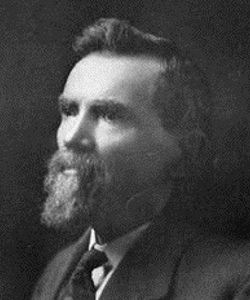
(Pictured: Richard William “Dick” Dowling, circa 1865)
Although born in Dublin, Tynan’s family home is in Johnstown, County Kilkenny. He is born with phocomelia, causing both of his lower legs to be underdeveloped. Although now 6’4″ tall, his legs are unusually short, his feet are splayed outward, and he has three toes on each foot. He is one of a set of twins, his twin brother Edmond dying at 11 months old. At age 20, he has his legs amputated below the knee following a back injury in a car accident. The injury to his back makes it impossible for him to continue using prosthetic legs without the amputation. Within weeks of the accident, he is climbing stairs at his college dormitory on artificial legs. Within a year, he is winning in international competitions in track and field athletics. He represents Ireland in the 1984 and 1988 Summer Paralympics, winning four golds, two silvers, and one bronze medal. Between 1981 and 1984, he wins 18 gold medals from various competitions and sets 14 world records.
In the following years, Tynan becomes the first person with a disability to be admitted to the National College of Physical Education in Limerick. He works for about two years in the prosthetics industry, then goes to Trinity College, Dublin, becomes a physician specialising in Orthopedic Sports Injuries, and graduates in 1993. Encouraged to also study voice by his father Edmund, Tynan wins a series of voice competition awards and joins The Irish Tenors.
Tynan sings for George H. W. Bush at Bush’s Houston home on the day of the president’s death on November 30, 2018. The first song is “Silent Night,” while the second is a Gaelic song. Bush’s friend and former aide James Baker says that while Tynan is singing “Silent Night,” “believe it or not, the president was mouthing the words.”
While a real estate agent and prospective buyer Dr. Gabrielle Gold-von Simson are looking at an apartment in Tynan’s building on Manhattan‘s East Side, Tynan makes what is construed to be an anti-semitic remark. Shortly after this, the New York Yankees cancel Tynan’s performance of “God Bless America” for Game 1 of the 2009 American League Championship Series on October 16, 2009 because of the incident.
According to Tynan’s version of the event, two Jewish women came to view an apartment in his building. Some time afterwards, another real estate agent shows up with a potential client. The agent jokes to Tynan “at least they’re not (Boston) Red Sox fans.” Tynan replies, “As long as they’re not Jewish,” referring to the exacting women he had met earlier. The prospective client, Jewish pediatrician Dr. Gabrielle Gold-Von Simson, takes umbrage and says, “Why would you say that?” Tynan replies, “That would be scary,” and laughs, referring to the previous incident. He subsequently apologises for his remark. The Anti-Defamation League (ADL) accepts his apology. He performs at an ADL event in Manhattan soon thereafter.
Only July 4, 2010 Tynan performs “God Bless America” for the Boston Red Sox at Fenway Park with the support of some in the local Jewish community.
Dowling is born in the townland of Knockballyvishteal, Milltown, County Galway on January 14, 1837, the second of eight children, born to tenant farmer Patrick and Bridget Dowling (née Qualter). Following the eviction of his family from their home in 1845, the first year of the Great Famine, nine-year-old Dowling leaves Ireland in 1846 with his older sister Honora, bound for New Orleans in the United States.
As a teenager, Dowling displays his entrepreneurial skills by successfully running the Continental Coffeehouse, a saloon in the fashionable French Quarter. His parents and siblings follow from Ireland in 1851, but the joy of reunion is short-lived. In 1853, a yellow fever outbreak in New Orleans takes the lives of his parents and one of his younger brothers. With rising anti-Irish feeling growing in New Orleans, following local elections which see a landslide victory for the “Know Nothing” party, Dowling moves to Houston in 1857.
In 1857 Dowling marries Elizabeth Ann Odlum, daughter of Benjamin Digby Odlum, a Kildare-born Irishman, who had fought in the Texas Revolution, being captured at the Battle of Refugio in 1836.
By 1860, Dowling owns a number of saloons. His most successful is named the Bank of Bacchus, located on Courthouse Square in downtown Houston. “The Bank” as it is known locally becomes Houston’s most popular social gathering place in the 1860s and is renowned for its hospitality. He is also involved in setting up Houston’s first gaslight company and is first to have it installed in his home and “The Bank.” He is a founding member of Houston’s Hook and Ladder Company Number One fire department and is also involved in running the city’s first streetcar company.
Prior to the outbreak of the American Civil War, Dowling makes a name for himself as an able and successful entrepreneur. Among other things, he is involved with a predominantly Irish militia company which serves a more social than military role in Houston society. Upon Secession, this militia company is mustered straight into the Confederate States Army, with Dowling being elected First Lieutenant. The unit names themselves the “Jefferson Davis Guards” in honor of Confederate PresidentJefferson Davis. The Davis Guards are initially part of a Texas State Troops/Confederate expedition sent to take over Union Army forts and arsenals along the border with Mexico. The expedition is successfully completed without a shot being fired. They participate in the Battle of Galveston on New Year’s Day 1863, following which they are assigned to a newly constructed artillery post near the mouth of the Sabine River called Fort Sabine.
Sabine Pass was important as a point of arrival and departure for blockade runners. It is suspected that the Union Army will attempt an invasion of Texas via Sabine Pass because of its value as a harbor for blockade runners and its proximity 18 miles southeast of Beaumont, which lies on the railroad between Houston and the eastern part of the Confederacy.
To negotiate Sabine Pass all vessels except small boats take one of the two river channels. No seagoing ship can traverse the Pass without great risk of running aground should it stray from one of the channels. The inevitable course of any steam-powered warship, including shallow-draft gunboats then common to the U.S. Navy, would use one of the channels, both of which are within fair range of the fort’s six smoothbores.
Dowling spends the summer of 1863 at the earthen fort instructing his men in gunnery. On September 8, 1863, a Union Navyflotilla of some 22 gunboats and transports with 5,000 men accompanied by cavalry and artillery arrive off the mouth of Sabine Pass. The plan of invasion is sound, but monumentally mismanaged. Four of the flanking gunboats are to steam up the pass at speed and draw the fire of the fort, two in each channel, a tactic which had been used successfully in subduing the defensive fortifications of Mobile and New Orleans prior to this. This time, however, Dowling’s artillery drills pay off as the Confederates pour a rapid and withering fire onto the incoming gunboats, disabling and capturing two, while the others retreat in disarray. The rest of the flotilla retreats from the mouth of the pass and returns ignominiously to New Orleans, leaving the disabled ships with no option but to surrender to Dowling. With a command of just 47 men, Dowling had thwarted an attempted invasion of Texas, in the process capturing two gunboats, some 350 prisoners and a large quantity of supplies and munitions.
The Confederate government offers its gratitude and admiration to Dowling, now promoted to Major, and his unit, as a result of their battlefield prowess. In gratitude, the ladies of Houston present the unit with specially struck medals, which are actually Mexican eight reale coins with both faces sanded down and inscribed “Sabine Pass, 1864” on one side and a Maltese cross with the letters D and G on the other. Because of the official recognition given to the action, it is now accepted that these Davis Guard Medals are the only medals of honor issued by the Confederate government, and consequently are collector’s items today.
After the battle of Sabine Pass Dowling is elevated to hero status in his hometown of Houston. He subsequently serves as a recruiter for the Confederacy and is personally commended for his action at the battle by Jefferson Davis. After the war he returns to his saloon business and quickly becomes one of the city’s leading businessmen.
Dowling’s promising future is cut short by another yellow fever epidemic which devastates Houston in the late summer of 1867, and he dies on September 23, 1867. He is buried at St. Vincent’s Catholic Cemetery, the oldest Catholic cemetery in Houston.
Browne is born March 23, 1845 in Ballylanders, County Limerick to Michael and Winifred (Hennessy) Browne. His family emigrates to the United States in October 1851. Not long after arriving in New Orleans, his father dies. In 1852, Winifred relocates with her five children to Houston to be closer to family of her mother.
Browne spends much of the 1850s on Spann Plantation in Washington County, Texas at the behest of Father Gunnard, where he also receives an education. At age fourteen in 1859, he leaves the plantation and finds work hauling bricks in Madison County, Texas. He returns to Houston to first work as a baggage hauler, then performs messenger duties for Commercial and Southwestern Express Company before settling in at the Houston and Texas Central Railroad.
Browne joins Company B of the Second Texas Infantry in the Confederate States Army during the American Civil War. He serves in Houston, detached from his unit, maintaining employment with the Houston and Texas Central Railroad, but in a new capacity as a fireman. He is briefly dispatched to the defense of Galveston, Texas. He is officially released from military duty in Houston on June 27, 1865.
Browne returns to messenger service in Houston after the Civil War. He works for Adams Express Company, then for Southern Express Company. He transitions into the grocery business first as a bookkeeper and clerk for H.P. Levy.
Browne is elected to the Houston City Council, representing the Fifth Ward while chairing the Finance Committee in 1887. He runs for Mayor of Houston in 1892 and wins in a landslide: 3900 to 600.
Browne’s first term as Mayor of Houston begins the same year as the Panic of 1893. He had campaigned on a platform of balancing the budget. The City of Houston runs budget deficits during Browne’s first term, but these deficits are proportionately lower than those in previous years. Browne is an advocate for lowering municipal utility bills through municipal ownership of the utilities. However, Browne abandons this option due to excessive costs for building a new waterworks and electrical power plant. He refocuses his efforts on a policy of dedicating all capital spending on street paving and sewerage.
Browne proposes converting the Houston Volunteer Firefighters to a professional department under municipal management. The City of Houston would be required to buy existing equipment and horses from the volunteer department, but can lease firehouses rather than buy them. The Houston City Council drafts an ordinance and passes it.
Browne represents Houston in the Texas House of Representatives from 1897 to 1899, and again in 1907. He is a member of the Ancient Order of Hibernians and the Knights of Columbus.
John Thomas Browne dies on August 19, 1941 of pneumonia in Houston. He is buried at Glenwood Cemetery in Houston. He is survived by six children and thirty-eight grandchildren. In 1979 his former residence in the Fifth Ward is used by an Italian American-owned grocery, Orlando’s Grocery.
Browne’s family emigrates to the United States in October 1851. His father dies not long after they arrive in New Orleans. In 1852, his mother relocates with her five children to Houston, Texas, to be closer to the family of her mother. Browne spends much of the 1850s on Spann Plantation in Washington County, Texas, at the behest of Father Gunnard, where he also receives an education. At age fourteen in 1859, he leaves the plantation and finds work hauling bricks in Madison County, Texas. He returns to Houston to first work as a baggage hauler, then performs messenger duties for Commercial and Southwestern Express Company before settling in at the Houston and Texas Central Railroad.
Browne joins the Confederacy, officially serving in Company A, 36 Texas Cavalry. He serves in Houston, detached from his unit, maintaining employment with the Houston and Texas Central Railroad, but in a new capacity as a fireman. He is briefly dispatched to the defense of Galveston, Texas. He is officially released from military duty in Houston on June 27, 1865.
Browne returns to messenger service in Houston after the Civil War. He works for Adams Express Company, then for Southern Express Company. He transitions into the grocery business first as a bookkeeper and clerk for H.P. Levy. Browne marries Mary Jane “Mollie” Bergin on September 13, 1871. They are the first marriage to be recorded at Annunciation Catholic Church. In 1872, Browne and Charles Bollfrass start a business as wholesale and retail grocers with $500 in capital. By the early 1890s, this grocery is amassing about $340,000 in annual sales. He is also a member of the Ancient Order of Hibernians and the Knights of Columbus.
Browne is elected to the Houston City Council, representing the Fifth Ward while chairing the Finance Committee in 1887. He runs for Mayor of Houston in 1892 and wins in a landslide. Browne’s first term as Mayor of Houston begins the same year as the Panic of 1893. He has campaigned on a platform of balancing the budget. The City of Houston runs budget deficits during Browne’s first term, but these deficits are proportionately lower than those in previous years. Browne had been an advocate for lowering municipal utility bills through municipal ownership of the utilities, however estimates for the City of Houston to build its own waterworks and electrical power plant go up to a range $500,000 to $900,000. Browne abandons this option while favoring a policy of dedicating all capital spending on street paving and sewerage. The Browne administration also hires a city planning expert to study demands based hypothetically on a population of 75,000.
Mayor Browne proposes converting the Houston Volunteer Firefighters to a professional department under municipal management. The City of Houston would have to buy existing equipment and horses from the volunteer department, but could lease firehouses and not be required to buy them. Houston City Council drafts an ordinance and passes it.
In April 1895, the Texas Supreme Court ruling in Higgins v. Bordages, “held that special assessment tax liens were unenforceable against urban homesteads.” The City of Houston imposes special tax levies for road and sewerage projects on owners of property abutting the sections of street being improved. The ruling effectively removes the only tool the city has for enforcing payment of the special assessments by homeowners. Road construction contractors stop all work because they fear the city will not pay them. Many homeowners stop paying their assessment bills.
To meet this immediate revenue crisis, the Browne administration devises a plan to issue $500,000 in municipal bonds to be sold over a three to four year period. The Labor Council opposes the bonding measure and organizes to defeat the measure when the referendum makes it to the ballot. The City of Houston has to find another way to compensate for $300,000 in uncollected taxes.
Browne represents Houston in the Texas House of Representatives from 1897 to 1899, and again in 1907.
John Thomas Browne dies August 19, 1941 died of pneumonia in Houston and is buried at Glenwood Cemetery.




 seamus dubhghaill