
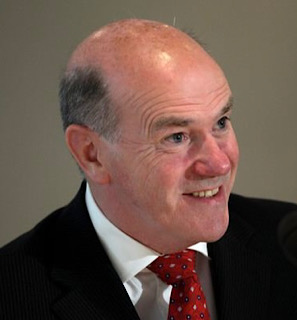
Sir Ronald Flanagan, a retired senior Northern Irish police officer, is born in Belfast, Northern Ireland, on March 25, 1949. He is the Home Office (HO) Chief Inspector of Constabulary for the United Kingdom excluding Scotland. He is previously the Chief Constable of the Police Service of Northern Ireland (PSNI) since its creation in 2001 to 2002, and is Chief Constable of its predecessor, the Royal Ulster Constabulary (RUC) until 2001.
Flanagan joins the Royal Ulster Constabulary (RUC) in 1970 while studying physics at Queen’s University Belfast (QUB). He serves his first three years in the Queen Street Police Station before achieving the rank of sergeant and transferring to the Castlereagh station. He is promoted to Inspector in 1976. In 1982, he becomes a Detective Inspector in the Special Branch and is promoted the following year to Chief Inspector.
In 1990, Flanagan takes on the role of Chief Superintendent and transfers to the Police Staff College in Bramshill, Hampshire, England, where he is the First Director of the Intermediate Command Course, progressing to the Senior Command Course.
In 1992, Flanagan returns to duty with the RUC as Assistant Chief Constable of Operations, later taking on the responsibilities of Operational Commander for Belfast. He is appointed as head of Special Branch in 1994 and is promoted to Acting Deputy Chief Constable the following year. He becomes the Deputy Chief Constable proper in 1996, and when Chief Constable Hugh Annesley retires later that year, he succeeds him. When the PSNI is established in 2001, he serves as Chief Constable until his retirement the following year. He is replaced by Hugh Orde.
Since then Flanagan has served in Her Majesty’s Inspectorate of Constabulary and is appointed as HM Chief Inspector of Constabulary in 2005. He is tasked to review the police arrangements in Iraq in December 2005 as part of the British involvement there. Following his retirement in December 2008, Denis O’Connor succeeds him as Her Majesty’s Acting Chief Inspector of Constabulary.
After leaving British policing, Flanagan takes up the post of strategic adviser to the Abu Dhabi Police Force, a post he holds for almost two years until he succeeds Paul Condon, Baron Condon, as chairman of the International Cricket Council‘s Anti-Corruption & Security Unit (ACSU).
On January 22, 2007, a report by the Police Ombudsman for Northern Ireland, Nuala O’Loan, makes findings of collusion between members of the proscribed paramilitary organisation, the Ulster Volunteer Force (UVF), and officers under the command of Flanagan. The reports are acknowledged by the then Chief Constable Sir Hugh Orde who apologises for the wrongdoing of his officers, and by the then British Secretary of State for Northern Ireland Peter Hain.
Flanagan denies any wrongdoing or acting with any knowledge of the events in question. He agrees that these events had taken place. In the aftermath of the ombudsman’s report, Irish nationalist politicians say he should be forced to resign from his job as Chief Inspector of Constabulary.
The Police Ombudsman criticises Flanagan’s role in the RUC inquiry into the Omagh Bombing of August 15, 1998, in a report published in 2001, to which his response is that he would “publicly commit suicide” if he believed her report was correct, though he later apologises for the form of words he used.
In July 2010, Flanagan appears before the Iraq Inquiry into the UK’s role in the Iraq War. In 2005, he had conducted a review into the UK’s contribution to policing reform in Iraq. As he gives evidence, he has to apologise for the amount of acronyms in his report on Iraq, which is presented to the government in January 2006:
“In my view, and I would like to almost apologise for the number of acronyms in this report – but it wasn’t written with a view to being read publicly. It was written for the people who invented the acronyms…”

 seamus dubhghaill