seamus dubhghaill

Promoting Irish Culture and History from Little Rock, Arkansas, USA


Leave a comment

Death of Isabella Tod, Women’s Rights Activist

Isabella Maria Susan Tod, Irish women’s rights activist, dies at her home at 71 Botanic Avenue in Belfast on December 8, 1896. She is a formidable lady who uses her political skills to great advantage in order to further many causes.

Tod is born on May 18, 1836, in Edinburgh into a well-known Irish Presbyterian family, her uncle being the Rev. Hope Masterton Waddell, one of the earliest Irish Presbyterian missionaries who served with the Scottish Missionary Society in Jamaica and whose great grandfather is the Rev. Charles Masterton, one of the most distinguished minsters of the General Synod of Ulster who ministers at Connor and Rosemary Street, Belfast. She is very proud of her Presbyterian heritage and of her Scottish ancestry.

The daughter of James Banks Tod, an Edinburgh merchant, Tod spends her early years in Edinburgh. She is educated at home by her mother, Maria Isabella Waddell, who comes from County Monaghan. The family moves to Belfast in the 1850s following the death of her father. She and her mother join Elmwood Presbyterian Church. Her Presbyterian background no doubt contributes to her radical views on social issues and women’s rights. She earns her living from writing and journalism, contributing, for example, to the Dublin University Magazine, an independent literary, cultural and political magazine, and to the Banner of Ulster, a Presbyterian newspaper.

Tod becomes one of the leading pioneers in the fight to improve the position of women. She is the only woman called to give evidence to a Select Committee of Enquiry on the reform of the married women’s property law in 1868 and serves on the executive of the Married Women’s Property Committee in London from 1873 to 1874. She successfully campaigns for the repeal of the Contagious Diseases Acts of 1864, 1866 and 1869 which enacted that a woman suspected of being a prostitute could be arrested and forced to undergo medical examination for venereal disease. She sees this legislation as an infringement of a woman’s civil liberties.

Tod is also a strong supporter of the temperance movement and, along with her friend Margaret Byers, forms the Belfast Women’s Temperance Association in 1874. Perhaps she is best known for her tireless campaign to extend the educational provision for middle-class women. For example, in 1878 she organises a delegation to London to put pressure on the Government to include girls in the Intermediate Education Act of 1878. The Ladies’ Collegiate School in Belfast, Alexandra College in Dublin and the Belfast Ladies Institute owe their existence largely to her. She writes a paper entitled “An Advanced Education for Girls in the Upper and Middle Classes” which is presented in 1867 at a meeting of the National Association for the Promotion of Social Science and is among the pamphlets held in the Presbyterian Historical Society of Ireland library.

Tod is also an active campaigner for women’s right to vote, embarking on her first campaign in 1872 and addressing meetings in Belfast, Carrickfergus, Coleraine and Londonderry. Following a meeting in Dublin a suffrage committee is established that later becomes the Dublin Women’s Suffrage Society and in 1873 she forms the North of Ireland Women’s Suffrage Society. She extends her meetings to London, Glasgow and Edinburgh and is a frequent visitor to London to lobby politicians during the parliamentary session.

Tod is very much a staunch opponent of Home Rule, establishing a branch of the London-based Women’s Liberal Federation in Belfast and the Liberal Women’s Unionist Association. She sees unionism as the way to progress. “I knew that all the social work in which I had taken so prominent a part for 20 years was in danger and most of it could not exist a day under a petty legislature of the character which would be inevitable,” she says. “What we dread is the complete dislocation of all society, especially in regard to commercial affairs and organised freedom of action.”

Tod suffers from ill-health in her later days and dies in Belfast of pulmonary illness on December 8, 1896. She is buried in Balmoral Cemetery in South Belfast.


Leave a comment

Enactment of the Intermediate Education Act

File written by Adobe Photoshop? 5.0

The Intermediate Education Act, enacted on August 16, 1878, grants female students the right to participate in public competitive examinations, take university degrees and to enter into careers and professions.

From the early 1870s there had been a growing demand in Ireland for a competitive examinations system which would allow Catholics in particular to enter for the newly created jobs in the Civil Service and for careers in the professions. In response to this pressure, the Irish Intermediate Education Bill is introduced to parliament in 1878. It provides an Examining Board with an annual sum of £32,500 per annum which would cover money prizes for pupils and results fees for schools. Students with the highest marks can gain valuable exhibitions worth up to £50. However, these provisions only apply to boys.

The Bill is in its final stages in parliament, when Isabella Tod of the North of Ireland Women’s Suffrage Society, arrives with a small delegation of women backed by a handful of Irish MPs, to demand that girls should also be included in the provisions of the Bill. Fortunately, attitudes among a majority of English MPs are favourable to the inclusion of girls in the Bill. The most influential of these MPs is William Ewart Gladstone, the leader of the Liberal Party, who believes the proposal to admit women to the benefits of the Bill is reasonable and fair. Although not in favour of giving women the vote, he is prepared to admit that “we have on the whole done rather less than justice to women as compared to men” when it comes to education.

Charles Henry Meldon, MP for Kildare, strongly objects to what he calls “the victory” which the inclusion of girls would give to the advocates of women’s rights, “whose object was not that there should be a limited measure dealing specially with the education of women, but that the same education should be given to girls as given to men.”

Richard O’Shaughnessy, the only Home Rule MP on Isabella Tod’s delegation, assures Meldon that the question at stake is not one of women’s rights but simply of their education and that the object of the amendment “was nothing more nor less than to educate the women of Ireland that they may be better able to discharge their duties as daughters, wives and mothers.”

So, despite the strong objections of most Irish Home Rule MPs, girls are included in the Intermediate Examination Act. Isabella Tod at a meeting in Dublin to promote the extension of the franchise to women thanks O’Shaughnessy and James Stansfield for their support but declares, “We could not help feeling how easy our task would have been if each of these members had owed some votes to women and felt a distinct responsibility to them.”

There is unease felt about public competitive examinations for girls in Ireland. Some believe that the competitive idea should be carefully excluded from the examinations for women. The ladies present at the suffrage meeting are also urged to press the government to avoid publishing the names of girls in order of merit.

This attitude helps explain why it is felt that girls are not ready to compete on an equal basis with boys. In December 1878, the Intermediate Board decides that girls will compete among themselves for the money prizes. A money prize is offered for every ten pupils who pass. These prizes are, therefore, allocated proportionately according to the numbers of boys and of girls who enter for the examinations. During the first twenty years of the Intermediate examinations, three quarters of the entrants are boys and only one quarter are girls. Girls’ schools, especially convent schools, are particularly handicapped because they have few teachers who know Latin or Greek and extra marks are allotted for other traditional boys’ subjects such as mathematics.

The Intermediate examinations have three levels: Junior, Middle and Senior Grades with strict age limits of under 16, 17 and 18 years of age respectively. This represents a problem for girls’ schools since many girls come late to second level schools, being often 14 or 15 years of age.

The fact that public opinion in Ireland is at first generally against such examinations for girls and that many girls have neither the opportunity nor the means to take immediate advantage of the Act, does not alter its crucial importance as a catalyst for changing the role of women in Irish society.

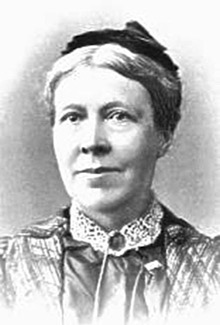
(Pictured: Isabella Tod, Museums and Galleries of Northern Ireland, content from Discovering Women in Irish History, http://womeninhistory.scoilnet.ie)