seamus dubhghaill

Promoting Irish Culture and History from Little Rock, Arkansas, USA


Leave a comment

Death of Dermot Healy, Novelist, Playwright, Poet & Short Story Writer

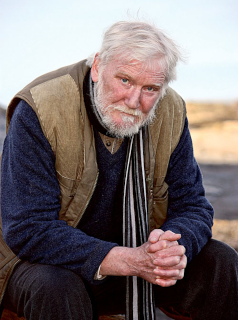
Dermot Healy, Irish novelistplaywrightpoet and short story writer, dies at his home in Ballyconnell, Sligo, County Sligo, on June 29, 2014. A member of Aosdána, he is also part of its governing body, the Toscaireacht. He is described variously as a “master,” a “Celtic Hemingway” and as “Ireland’s finest living novelist.”

Healy is born in FinneaCounty Westmeath, on November 9, 1947, the son of a Guard. As a child the family moves to Cavan, County Cavan, where he attends the local secondary school. In his late teens he moves to London and works in a succession of jobs, including barman, security man and as a labourer. He later returns to Ireland, settling in Ballyconnell, County Sligo, a small settlement on the Atlantic coast.

Often overlooked due to his relatively low public profile, Healy’s work is admired by his Irish literary predecessors, peers and successors alike, many of whom idolise him. Among the writers to have spoken highly of him are Seamus HeaneyEugene McCabeRoddy DoylePatrick McCabe and Anne Enright.

Healy’s work is influenced by an eclectic range of writers from around the world, including Anna AkhmatovaJohn ArdenIsaac BabelMatsuo BashōSamuel BeckettJorge Luis BorgesAngela CarterJ. M. CoetzeeEmily DickinsonMaria EdgeworthT. S. EliotHermann HesseNâzım HikmetAidan HigginsMiroslav HolubEugène IonescoFranz KafkaMary LavinFederico García LorcaGuy de MaupassantEdgar Allan PoeSylvia PlathEzra PoundWilliam Shakespeare and Robert Louis Stevenson. Healy writes in a shed and is fascinated by etymology. However, on being a writer, he is quoted as saying, “I know writing is what I do but I still don’t see myself as one.”

Healy is longlisted for the Booker Prize with his novel A Goats Song. He wins the Hennessy Literary Award (1974 and 1976), the Tom-Gallon Trust Award (1983), and the Encore Award (1995). In 2011, he is shortlisted for the Poetry Now Award for his 2010 poetry collection, A Fool’s ErrandLong Time, No See is nominated for the International Dublin Literary Award, the world’s most valuable literary award for a single work in the English language, by libraries in Russia and Norway.

Healy dies at his home in Ballyconnell on June 29, 2014, while awaiting an ambulance after suddenly being taken ill. He is laid to rest at Carrigans Cemetery following funeral mass by Fr. Michael Donnelly at St. Patrick’s Church in Maugherow, County Sligo.


Leave a comment

Birth of Margaretta D’Arcy, Actress, Writer, Playwright & Activist

Margaretta Ruth D’Arcy, Irish actress, writer, playwright, and activist, is born in London on June 14, 1934. She has been a member of the Irish association of artists, known as Aosdána, since its inauguration and is known for addressing Irish nationalism, civil liberties, and women’s rights in her work.

D’Arcy is born to a Russian-Jewish mother and an Irish Catholic father. She works in small theatres in Dublin from the age of fifteen and later becomes an actress.

D’Arcy is married in 1957 to English playwright and author John Arden. They write several plays together which are highly critical of the British presence in Ireland. They settle in Galway in 1971 and establish the Galway Theatre Workshop in 1976. The couple has five sons, one of whom predeceases his mother.

The couple writes a number of stage pieces and improvisational works for amateur and student players, including The Happy Haven (1960) and The Workhouse Donkey (1964). She writes and produces many plays, including The Non-Stop Connolly Show (1977).

D’Arcy has also written a number of books, including Tell Them Everything (1981), Awkward Corners (with John Arden, 1988), and Galway’s Pirate Women: A Global Trawl (1996).

As an activist, in 1961, D’Arcy joins the anti-nuclear Committee of 100, led by Bertrand Russell. In 1981, her peace-activism results in her incarceration in Armagh Jail, after defacing a wall at the Ulster Museum. Her book Tell Them Everything (Pluto Press, 1981) tells the story of her time during the Armagh and H-Block dirty protests and is one of the earliest accounts about the Armagh women, their republicanism and imprisonment.

D’Arcy also directs Yellow Gate Women (2007), a film about the attempts by women of Greenham Common Women’s Peace Camp to outwit the British and United States military at RAF Greenham Common with bolt cutters and legal challenges. Challenging censorship since 1987, she runs a women’s kitchen pirate radio from her home in Galway.

In 2011, D’Arcy refuses to stand for a minute’s silence to honour Police Service of Northern Ireland (PSNI) officer Ronan Kerr, killed by dissident republicans, at an Aosdána meeting. Her actions are deliberate, she tells the media afterwards, which attracts fierce criticism of her perceived support for armed republican groups in Northern Ireland.

Along with Niall Farrell, D’Arcy is arrested in October 2012 for scaling the perimeter fence of Shannon Airport, in protest at the use of the airport as a stopover for U.S. military flights. As a consequence of her trespassing on airport property, she is imprisoned in 2014 after she refuses to sign a bond saying that she will not trespass on non-public parts of Shannon Airport.


Leave a comment

Death of John Arden, English Playwright

John Arden, English playwright, dies on March 28, 2012, in Galway, County Galway. At the time of his death, he is lauded as “one of the most significant British playwrights of the late 1950s and early 60s.”

Arden is born in Barnsley, South Yorkshire, England, on October 26, 1930. He is the son of the manager of a glass factory. He is educated at Sedbergh School in Cumbria, King’s College, Cambridge and the Edinburgh College of Art, where he studies architecture. He first gains critical attention for the radio play The Life of Man in 1956 shortly after finishing his studies.

Arden is initially associated with the English Stage Company at the Royal Court Theatre in London. His 1959 play, Serjeant Musgrave’s Dance, in which four army deserters arrive in a northern mining town to exact retribution for an act of colonial violence, is considered to be his best. His work is influenced by Bertolt Brecht and epic theatre as in Left-Handed Liberty (1965, on the anniversary of Magna Carta). Other plays include Live Like Pigs, The Workhouse Donkey, and Armstrong’s Last Goodnight, the last of which is performed at the 1963 Chichester Festival by the Royal National Theatre after it was rejected by the Royal Court.

Arden’s 1978 radio play Pearl is considered in a Guardian survey to be one of the best plays in that medium. He also writes several novels, including Silence Among the Weapons, which is shortlisted for the Booker Prize in 1982, and Books of Bale, about the Protestant apologist John Bale. He is a member of the Royal Society of Literature.

With his wife and co-writer Margaretta D’Arcy, Arden pickets the Royal Shakespeare Company (RSC) premiere of his Arthurian play The Island of the Mighty, because they believe the production to be pro-imperialist. They write several plays together which are highly critical of British presence in Ireland, where he and D’Arcy live from 1971 onward.

In 1961, Arden is a founder member of the anti-nuclear Committee of 100, and he also chairs the pacifist weekly Peace News. In Ireland, he is for a while a member of Official Sinn Féin. He is an advocate of civil liberties, and opposes anti-terror legislation, as demonstrated in his 2007 radio play The Scam.

Arden is elected to Aosdána in 2011 before dying in Galway on March 28, 2012. He is waked in a wicker casket.

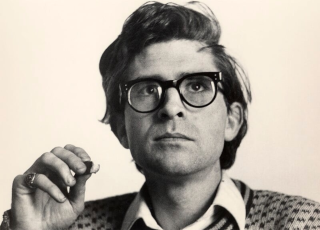
(Pictured: Photograph of John Arden, 1960 bromide print on card mount, credit to Roger Mayne, National Portrait Gallery, London)


Leave a comment

Birth of Dermot Healy, Novelist, Playwright, Poet & Short Story Writer

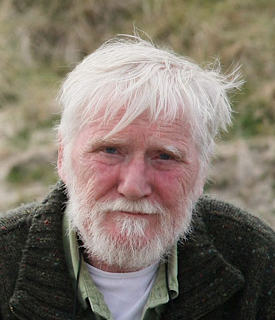
Dermot Healy, Irish novelist, playwright, poet and short story writer, is born in Finnea, County Westmeath, on November 9, 1947. A member of Aosdána, he is also part of its governing body, the Toscaireacht. He is described variously as a “master,” a “Celtic Hemingway” and as “Ireland’s finest living novelist.”

Healy is the son of a Guard. As a child the family moves to Cavan, where he attends the local secondary school. In his late teens he moves to London and works in a succession of jobs, including barman, security man and as a labourer. He later returns to Ireland, settling in Ballyconnell, County Sligo, a small settlement on the Atlantic coast.

Often overlooked due to his relatively low public profile, Healy’s work is admired by his Irish literary predecessors, peers and successors alike, many of whom idolise him. Among the writers to have spoken highly of him are Seamus Heaney, Eugene McCabe, Roddy Doyle, Patrick McCabe and Anne Enright.

Healy’s work is influenced by an eclectic range of writers from around the world, including Anna Akhmatova, John Arden, Isaac Babel, Matsuo Bashō, Samuel Beckett, Jorge Luis Borges, Angela Carter, J. M. Coetzee, Emily Dickinson, Maria Edgeworth, T. S. Eliot, Hermann Hesse, Nâzım Hikmet, Aidan Higgins, Miroslav Holub, Eugène Ionesco, Franz Kafka, Mary Lavin, Federico García Lorca, Guy de Maupassant, Edgar Allan Poe, Sylvia Plath, Ezra Pound, William Shakespeare and Robert Louis Stevenson. Healy writes in a shed and is fascinated by etymology. However, on being a writer, he is quoted as saying, “I know writing is what I do but I still don’t see myself as one.”

Healy is longlisted for the Booker Prize with his novel A Goats Song. He wins the Hennessy Literary Award (1974 and 1976), the Tom-Gallon Trust Award (1983), and the Encore Award (1995). In 2011, he is shortlisted for the Poetry Now Award for his 2010 poetry collection, A Fool’s Errand. Long Time, No See is nominated for the International Dublin Literary Award, the world’s most valuable literary award for a single work in the English language, by libraries in Russia and Norway.

Healy dies at his home in Ballyconnell on June 29, 2014, while awaiting an ambulance after suddenly being taken ill. He is laid to rest at Carrigans Cemetery following funeral mass by Fr. Michael Donnelly at St. Patrick’s Church in Maugherow.


Leave a comment

Birth of English Playwright John Arden

John Arden, English playwright, is born in Barnsley, South Yorkshire, England, on October 26, 1930. At the time of his death he is lauded as “one of the most significant British playwrights of the late 1950s and early 60s.”

Arden is the son of the manager of a glass factory. He is educated at Sedbergh School in Cumbria, King’s College, Cambridge and the Edinburgh College of Art, where he studies architecture. He first gains critical attention for the radio play The Life of Man in 1956 shortly after finishing his studies.

Arden is initially associated with the English Stage Company at the Royal Court Theatre in London. His 1959 play, Serjeant Musgrave’s Dance, in which four army deserters arrive in a northern mining town to exact retribution for an act of colonial violence, is considered to be his best. His work is influenced by Bertolt Brecht and epic theatre as in Left-Handed Liberty (1965, on the anniversary of Magna Carta). Other plays include Live Like Pigs, The Workhouse Donkey, and Armstrong’s Last Goodnight, the last of which is performed at the 1963 Chichester Festival by the Royal National Theatre after it was rejected by the Royal Court.

Arden’s 1978 radio play Pearl is considered in a Guardian survey to be one of the best plays in that medium. He also writes several novels, including Silence Among the Weapons, which is shortlisted for the Booker Prize in 1982, and Books of Bale, about the Protestant apologist John Bale. He is a member of the Royal Society of Literature.

With his wife and co-writer Margaretta D’Arcy, Arden pickets the Royal Shakespeare Company (RSC) premiere of his Arthurian play The Island of the Mighty, because they believe the production to be pro-imperialist. They write several plays together which are highly critical of British presence in Ireland, where he and D’Arcy live from 1971 onward.

In 1961, Arden is a founder member of the anti-nuclear Committee of 100, and he also chairs the pacifist weekly Peace News. In Ireland, he is for a while a member of Official Sinn Féin. He is an advocate of civil liberties, and opposes anti-terror legislation, as demonstrated in his 2007 radio play The Scam.

Arden is elected to Aosdána in 2011 before dying in Galway, County Galway on March 28, 2012. He is waked in a wicker casket.

(Pictured: Photograph of John Arden in 1966, credit to Sam Falk/The New York Times)