seamus dubhghaill

Promoting Irish Culture and History from Little Rock, Arkansas, USA


Leave a comment

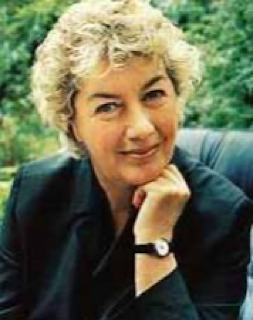
Death of Nuala O’Faolain, Journalist & Writer

Nuala Brigid Anne O’Faolainjournalist and writer, dies in Blackrock, Dublin, on May 9, 2008. Her debut memoirAre You Somebody?, published when she is in her mid-fifties, becomes a sensation in Ireland and a worldwide bestseller.

O’Faolain is born in Dublin on March 1, 1940, the second of nine children of Tomás O’Faolain and Kathleen O’Sullivan. Originally a schoolteacher and Army lieutenant, under the pen name Terry O’Sullivan, her father becomes a prominent social diarist for the Evening Press in Dublin. He is distant from his children and engages in extra-marital affairs which produce at least two half-siblings. Despite earning as much money as the newspaper’s editor, Douglas Gageby, he does not share his income with his family. The family lives in poor conditions, frequently going hungry. Her mother becomes an alcoholic, going to the pub every day at 4 p.m. and not returning home until midnight.

O’Faolain attends convent school in Dublin but is expelled at the age of fourteen after going home from dances with a married man. She then goes to a boarding school in County Monaghan, whose austere environment and strict educational standards benefit her. From there, she studies English literature at University College Dublin (UCD), where she runs in a social circle that includes Mary LavinJohn McGahernPatrick Kavanagh, and Louis MacNeice. Although she drops out of her studies temporarily and spends time working menial jobs in England, with financial assistance from Lavin and others, she graduates in 1961. On scholarships, she studies medieval English at the University of Hull before completing a postgraduate degree in 19th-century English literature at the University of Oxford. She then returns to Dublin to work at UCD as an academic in the English literature department, which brings her into contact with the bohemian Dublin literary scene of the late 1960s and early 1970s.

In 1970, O’Faolain moves to London to work for the BBC. She is a producer at the Community Programme Unit, which seeks to allow members of the public to create programmes for national broadcast on human interest topics like transgender people, anti-pornography protests, and community organising in the Bogside. She also makes programmes with the arts faculty of the Open University, and teaches evening classes at Morley College. During this period, she shows little interest in Ireland, regarding the country as backward and unsophisticated, but a visit to the Merriman Summer School in County Clare in 1974 sparks new enthusiasm. In 1977, she moves back to Dublin to work for the public broadcaster, RTÉ, where she becomes a colleague of female journalists like Doireann Ní BhriainMarian Finucane, and Nell McCafferty – later her partner – who are making programmes about Irish society with a feminist bent. She Is the producer of Women Today, a pioneering radio programme, from 1983 to 1986. One series she works on, Plain Tales, a televised interview programme in which women speak directly to camera about their life experiences, wins a Jacob’s Award in 1985.

O’Faolain has an interest in books from an early age, and credits voracious reading for helping her through a difficult childhood. She works as a book reviewer for The Times. Between 1990 and 1993, she co-presents Booklines, a television programme about books for RTÉ, a programme she says “nobody ever watched because it was on terribly late at night.”

In 1986, Conor Brady, the editor of The Irish Times, offers O’Faolain a newspaper column after hearing her being interviewed by Gay Byrne on the radio. Brady is struck by her ability to “infuse ordinary people’s everyday activities with value and interest.” The column becomes a major success and she is awarded journalist of the year in 1986.

O’Faolain acts as a roving commentator for The Irish Times, covering the 1994 Cregg Wood murders in County Clare, and visiting Northern Ireland at the time of the Good Friday Agreement in 1998. Following periods of leave while she works on her books, she leaves the paper in 2002, and writes a column in the Sunday Tribune from 2005 until her death.

O’Faolain never marries and has no children. Although she writes about her relationships with men and women, she does not identify as bisexual, though others have described her as such. She suffers from alcoholism. After Are You Somebody?, she divides her time between Ireland and New York City. During the final years of her life, she is in a relationship with a Brooklyn-based lawyer, John Low-Beer, whom she meets on Match.com.

O’Faolain is diagnosed with metastatic cancer while living in New York City in early 2008. She experiences a strange feeling in the right side of her body and presents at the emergency department of a hospital, where she is told that she has primary tumours in her lungs which has spread to her brain and liver, and that her cancer is incurable. She refuses chemotherapy.

O’Faolain returns to Ireland and is interviewed by her friend, Marian Finucane, on her radio show about her terminal illness on April 12, 2008. Both O’Faolain and Finucane are in tears during the interview, which is recorded in Galway, where she is undergoing radiotherapy. She tells Finucane: “I don’t want more time. As soon as I heard I was going to die, the goodness went from life”. Her frank discussion of her illness leads to the interview being preceded by a warning that her comments may be upsetting to others with life-threatening conditions. She says that she does not believe in God or an afterlife, but as in the song “Thíos i Lár an Ghleanna,” she is asking for help she knows will not come from a god she does not believe in. The interview has a major public impact in Ireland. After Finucane’s death in 2020, the Irish Independent describes it as “one of the most extraordinary [interviews] in the history of Irish broadcasting.”

In the final weeks of her life, O’Faolain travels Europe with close friends and family, staying in the Ritz Hotel in Paris and visiting the Berlin State Opera and the Prado Museum in Madrid for the first time. She dies in a hospice in Blackrock, Dublin, late on May 9, 2008. Her funeral takes place in the Church of Our Lady of the Visitation in Fairview in north Dublin on May 13. Her ashes are buried in Kilbarrack Cemetery in north Dublin with her maternal grandparents, Terence and Marion O’Sullivan, and her brother, Dermot Phelan.
Leave a comment

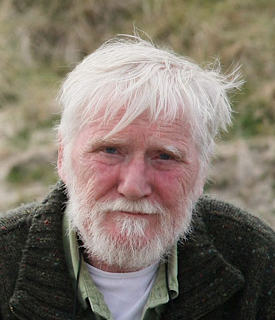
Death of Dermot Healy, Novelist, Playwright, Poet & Short Story Writer

Dermot Healy, Irish novelistplaywrightpoet and short story writer, dies at his home in Ballyconnell, Sligo, County Sligo, on June 29, 2014. A member of Aosdána, he is also part of its governing body, the Toscaireacht. He is described variously as a “master,” a “Celtic Hemingway” and as “Ireland’s finest living novelist.”

Healy is born in FinneaCounty Westmeath, on November 9, 1947, the son of a Guard. As a child the family moves to Cavan, County Cavan, where he attends the local secondary school. In his late teens he moves to London and works in a succession of jobs, including barman, security man and as a labourer. He later returns to Ireland, settling in Ballyconnell, County Sligo, a small settlement on the Atlantic coast.

Often overlooked due to his relatively low public profile, Healy’s work is admired by his Irish literary predecessors, peers and successors alike, many of whom idolise him. Among the writers to have spoken highly of him are Seamus HeaneyEugene McCabeRoddy DoylePatrick McCabe and Anne Enright.

Healy’s work is influenced by an eclectic range of writers from around the world, including Anna AkhmatovaJohn ArdenIsaac BabelMatsuo BashōSamuel BeckettJorge Luis BorgesAngela CarterJ. M. CoetzeeEmily DickinsonMaria EdgeworthT. S. EliotHermann HesseNâzım HikmetAidan HigginsMiroslav HolubEugène IonescoFranz KafkaMary LavinFederico García LorcaGuy de MaupassantEdgar Allan PoeSylvia PlathEzra PoundWilliam Shakespeare and Robert Louis Stevenson. Healy writes in a shed and is fascinated by etymology. However, on being a writer, he is quoted as saying, “I know writing is what I do but I still don’t see myself as one.”

Healy is longlisted for the Booker Prize with his novel A Goats Song. He wins the Hennessy Literary Award (1974 and 1976), the Tom-Gallon Trust Award (1983), and the Encore Award (1995). In 2011, he is shortlisted for the Poetry Now Award for his 2010 poetry collection, A Fool’s ErrandLong Time, No See is nominated for the International Dublin Literary Award, the world’s most valuable literary award for a single work in the English language, by libraries in Russia and Norway.

Healy dies at his home in Ballyconnell on June 29, 2014, while awaiting an ambulance after suddenly being taken ill. He is laid to rest at Carrigans Cemetery following funeral mass by Fr. Michael Donnelly at St. Patrick’s Church in Maugherow, County Sligo.


Leave a comment

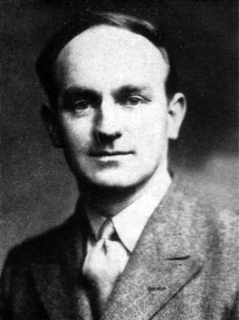
Death of Irish Writer Michael McLaverty

Michael McLaverty, Irish writer of novels and short stories, dies on March 22, 1992, in County Down, Northern Ireland.

McLaverty is born on July 5, 1904, at Magheross, near Carrickmacross, County Monaghan, the son of Michael McLaverty, a waiter, and Kathleen McLaverty (née Brady). His father works in a hotel in the town until they move to Rathlin Island, and later to Belfast, when he is five years old. He attends St. Malachy’s College in the city, where an inspiring teacher instills in him a love of William Shakespeare‘s writings. He entered Queen’s University Belfast (QUB) in October 1924 and studies physics. He obtains a B.Sc. in 1928 and immediately takes his H.Dip.Ed., completing his teaching practice in St. Mary’s University College, Strawberry Hill, London. The following year he begins teaching at St. John’s Primary School in Colinward Street, west Belfast. He is admitted to the degree of M.Sc. at QUB in 1933.

In 1933, McLaverty marries Mary Conroy (formerly Giles), a young widow and fellow teacher at St. John’s. They have two sons and two daughters.

During his time at St. John’s, McLaverty writes his first five novels and fifteen short stories. In the 1930s he has developed a distinctive style in precise, unsentimental, but compassionate short stories. By the late 1930s, however, he switches his energies from short stories to the novel. Call My Brother Back (1939) contrasts the traditional world of Rathlin Island with the northern troubles in a family context. Another novel, Lost Fields (1941), and his collection of short stories, The White Mare (1943), explore the Belfast of his childhood and deal with the underlying tensions in Irish rural life. In the period 1949–55 he publishes five other novels: Three Brothers (1948), Truth in the Night (1951), School for Love (1954), The Choice (1958), and Brightening Day (1965). These novels deal with ordinary people and the dilemmas they encounter in their families and communities. His writings are influenced by Anton Chekhov, Leo Tolstoy, Katherine Mansfield, Gerard Manley Hopkins, and the Irish short story writers Liam O’Flaherty and Daniel Corkery.

As headmaster of St. Thomas’s intermediate school, a large school for boys in Ballymurphy, off the Falls Road, McLaverty gives his first job to the young Seamus Heaney, in whom he cultivates an interest in the writings of Chekhov and Tolstoy and the Irish writers Mary Lavin and Patrick Kavanagh. He deems Heaney to be the only genius he has ever met, and his work and success are a great source of pride and joy to him. His encouragement of the young John McGahern is of as much benefit to McLaverty himself, as their short but intense correspondence give him the energy to resume his writings.

Between his resignation from St. Thomas’s in 1963 and the early 1970s he teaches part-time at St. Joseph’s training college and St. Dominic’s High School, one of Belfast’s best-known grammar schools. In 1981 his old alma mater recognises his contribution to literature by awarding him an honorary master’s degree. In the same year he wins the American Irish literary fellowship, a prestigious literary award of $10,000, in recognition of his “impressive body of work as a short story writer and novelist.”

McLaverty dies on March 22, 1992, in County Down, Northern Ireland.

(From: “McLaverty, Michael” by Éamonn Ó Ciardha, Dictionary of Irish Biography, http://www.dib.ie, October 2009)


Leave a comment

Death of Edward John Moreton Drax Plunkett, 18th Baron Dunsany

Edward John Moreton Drax Plunkett, 18th Baron of Dunsany FRSL, Anglo-Irish writer and dramatist, dies in hospital in Dublin on October 25, 1957, following an attack of appendicitis. Over 90 volumes of fiction, essays, poems and plays appear in his lifetime, and a modest amount of material is published posthumously.

Plunkett, known to his family as “Eddie,” is born in London, England, on July 24, 1878, the first son of John William Plunkett, 17th Baron of Dunsany (1853–1899), and his wife, Ernle Elizabeth Louisa Maria Grosvenor Ernle-Erle-Drax, (née Burton) (1855–1916). From a historically wealthy and famous family, he is related to many well-known Irish figures. He is a kinsman of the Catholic Saint Oliver Plunkett, the martyred Archbishop of Armagh. He is also related to the prominent Anglo-Irish unionist and later nationalist Home Rule politician Sir Horace Plunkett and George Noble Plunkett, Papal Count and Republican politician, father of Joseph Plunkett, executed for his part in the 1916 Easter Rising.

Plunkett’s only grown sibling, a younger brother, from whom he is estranged from about 1916, for reasons not fully clear but connected to his mother’s will, is the noted British naval officer Sir Reginald Drax. Another younger brother dies in infancy.

Plunkett grows up at the family properties, notably, Dunstall Priory in Shoreham, Kent, and Dunsany Castle in County Meath, but also in family homes such as in London. His schooling is at Cheam School, Eton College and the Royal Military College, Sandhurst, which he enters in 1896.

The title passes to Plunkett at his father’s death in 1899 at a fairly young age. The young Lord Dunsany returns to Dunsany Castle in 1901 after war duty. In that year he is also confirmed as an elector for the Representative Peers for Ireland in the House of Lords.

In 1903, Plunkett meets Lady Beatrice Child Villiers (1880–1970), youngest daughter of Victor Child Villiers, 7th Earl of Jersey, who is then living at Osterley Park. They marry in 1904. Their one child, Randal, is born in 1906. Lady Beatrice is supportive of her husband’s interests and helps him by typing his manuscripts, selecting work for his collections, including the 1954 retrospective short story collection, and overseeing his literary heritage after his death.

The Plunketts are socially active in Dublin and London and travel between homes in Meath, London and Kent, other than during the First and Second World Wars and the Irish War of Independence. He circulates with many literary figures of the time. To many of these in Ireland he is first introduced by his uncle, the co-operative pioneer Sir Horace Plunkett, who also helps to manage his estate and investments for a time. He is friendly, for example, with George William Russell, Oliver St. John Gogarty, and for a time, W. B. Yeats. He also socialises at times with George Bernard Shaw and H. G. Wells and is a friend of Rudyard Kipling.

In 1910 Plunkett commissions a two-story extension to Dunsany Castle, with a billiard room, bedrooms and other facilities. The billiard room includes the crests of all the Lords Dunsany up to the 18th.

Plunkett serves as a second lieutenant in the Coldstream Guards in the Second Boer War. Volunteering in World War I and appointed Captain in the Royal Inniskilling Fusiliers, he is stationed for a time at Ebrington Barracks in Derry, Northern Ireland. Hearing while on leave of disturbances in Dublin during the Easter Rising of 1916, he drives in to offer help and is wounded by a bullet lodged in his skull. After recovery at Jervis Street Hospital and what is then the King George V Hospital (now St. Bricin’s Military Hospital), he returns to duty. His military belt is lost in the episode and later used at the burial of Michael Collins. Having been refused forward positioning in 1916 and listed as valuable as a trainer, he serves in the later war stages in the trenches and in the final period writing propaganda material for the War Office with MI7b. There is a book at Dunsany Castle with wartime photographs, on which lost members of his command are marked.

During the Irish War of Independence, Plunkett is charged with violating the Restoration of Order in Ireland Act 1920, tried by court-martial on February 4, 1921, convicted, and sentenced to pay a fine of 25 pounds or serve three months in prison without labour. The Crown Forces had searched Dunsany Castle and had found two double-barreled shotguns, two rook rifles, four Very pistols, an automatic pistol and a large quantity of pistol ammunition, along with shotgun and rifle ammunition.

During World War II, Plunkett signs up for the Irish Army Reserve and the British Home Guard, the two countries’ local defence forces, and is especially active in Shoreham, Kent, the English village bombed most during the Battle of Britain.

Plunkett’s fame arises chiefly from his prolific writings. He is involved in the Irish Literary Revival. Supporting the Revival, he is a major donor to the Abbey Theatre, and he moves in Irish literary circles. He is well acquainted with W. B. Yeats, Lady Gregory, Percy French, George “AE” Russell, Oliver St. John Gogarty, Padraic Colum and others. He befriends and supports Francis Ledwidge, to whom he gives the use of his library, and Mary Lavin.

Plunkett makes his first literary tour to the United States in 1919 and further such visits up to the 1950s, in the early years mostly to the eastern seaboard and later, notably, to California. His own work and contribution to the Irish literary heritage are recognised with an honorary degree from Trinity College Dublin.

In 1940, Plunkett is appointed Byron Professor of English in the University of Athens in Greece. Having reached Athens by a circuitous route, he is so successful that he is offered a post as Professor of English in Istanbul. However, he has to be evacuated due to the German invasion of Greece in April 1941, returning home by an even more complex route, his travels forming a basis for a long poem published in book form (A Journey, in 5 cantos: The Battle of Britain, The Battle of Greece, The Battle of the Mediterranean, Battles Long Ago, The Battle of the Atlantic, special edition January 1944). Olivia Manning‘s character Lord Pinkrose in her novel sequence the Fortunes of War is a mocking portrait of Dunsany in that period.

In 1947, Plunkett transfers his Meath estate in trust to his son and heir and settles in Kent at his Shoreham house, Dunstall Priory, not far from the home of Rudyard Kipling. He visits Ireland only occasionally thereafter and engages actively in life in Shoreham and London. He also begins a new series of visits to the United States, notably California, as recounted in Hazel Littlefield-Smith’s biographical Dunsany, King of Dreams.

In 1957, Plunkett becomes ill while dining with the Earl and Countess of Fingall at Dunsany, in what proves to be an attack of appendicitis. He dies in hospital in Dublin, at the age of 79, on October 25, 1957. He is buried in the churchyard of the ancient church of St. Peter and St. Paul, Shoreham, Kent. His funeral is attended by many family members, representatives of his old regiment and various bodies in which he had taken an interest, and figures from Shoreham. A memorial service is held at Kilmessan in County Meath, with a reading of “Crossing the Bar,” which coincides with the passing of a flock of geese.

Beatrice survives Plunkett, living mainly at Shoreham and overseeing his literary legacy until her death in 1970. Their son Randal succeeds to the barony and is in turn succeeded by his grandson, the artist Edward Plunkett. Plunkett’s literary rights pass from Beatrice to Edward.


Leave a comment

Birth of Edward Plunkett, 18th Baron of Dunsany

Edward John Moreton Drax Plunkett, 18th Baron of Dunsany FRSL, Anglo-Irish writer and dramatist, is born in London, England, on July 24, 1878. Over 90 volumes of fiction, essays, poems and plays appear in his lifetime, and a modest amount of material is published posthumously.

Plunkett, known to his family as “Eddie,” is the first son of John William Plunkett, 17th Baron of Dunsany (1853–1899), and his wife, Ernle Elizabeth Louisa Maria Grosvenor Ernle-Erle-Drax (née Burton) (1855–1916). From a historically wealthy and famous family, he is related to many well-known Irish figures. He is a kinsman of the Catholic Saint Oliver Plunkett, the martyred Archbishop of Armagh. He is also related to the prominent Anglo-Irish unionist and later nationalist Home Rule politician Sir Horace Plunkett and George Noble Plunkett, Papal Count and Republican politician, father of Joseph Plunkett, executed for his part in the 1916 Easter Rising.

Plunkett’s only grown sibling, a younger brother, from whom he is estranged from about 1916, for reasons not fully clear but connected to his mother’s will, is the noted British naval officer Sir Reginald Drax. Another younger brother dies in infancy.

Plunkett grows up at the family properties, notably, Dunstall Priory in Shoreham, Kent, and Dunsany Castle in County Meath, but also in family homes such as in London. His schooling is at Cheam School, Eton College and the Royal Military College, Sandhurst, which he enters in 1896.

The title passes to Plunkett at his father’s death in 1899 at a fairly young age. The young Lord Dunsany returns to Dunsany Castle in 1901 after war duty. In that year he is also confirmed as an elector for the Representative Peers for Ireland in the House of Lords.

In 1903, Plunkett meets Lady Beatrice Child Villiers (1880–1970), youngest daughter of Victor Child Villiers, 7th Earl of Jersey, who is then living at Osterley Park. They marry in 1904. Their one child, Randal, is born in 1906. Lady Beatrice is supportive of her husband’s interests and helps him by typing his manuscripts, selecting work for his collections, including the 1954 retrospective short story collection, and overseeing his literary heritage after his death.

The Plunketts are socially active in Dublin and London and travel between homes in Meath, London and Kent, other than during the First and Second World Wars and the Irish War of Independence. He circulates with many literary figures of the time. To many of these in Ireland he is first introduced by his uncle, the co-operative pioneer Sir Horace Plunkett, who also helps to manage his estate and investments for a time. He is friendly, for example, with George William Russell, Oliver St. John Gogarty, and for a time, W. B. Yeats. He also socialises at times with George Bernard Shaw and H. G. Wells and is a friend of Rudyard Kipling.

In 1910 Plunkett commissions a two-story extension to Dunsany Castle, with a billiard room, bedrooms and other facilities. The billiard room includes the crests of all the Lords Dunsany up to the 18th.

Plunkett serves as a second lieutenant in the Coldstream Guards in the Second Boer War. Volunteering in World War I and appointed Captain in the Royal Inniskilling Fusiliers, he is stationed for a time at Ebrington Barracks in Derry, Northern Ireland. Hearing while on leave of disturbances in Dublin during the Easter Rising of 1916, he drives in to offer help and is wounded by a bullet lodged in his skull. After recovery at Jervis Street Hospital and what is then the King George V Hospital (now St. Bricin’s Military Hospital), he returns to duty. His military belt is lost in the episode and later used at the burial of Michael Collins. Having been refused forward positioning in 1916 and listed as valuable as a trainer, he serves in the later war stages in the trenches and in the final period writing propaganda material for the War Office with MI7b. There is a book at Dunsany Castle with wartime photographs, on which lost members of his command are marked.

During the Irish War of Independence, Plunkett is charged with violating the Restoration of Order in Ireland Act 1920, tried by court-martial on February 4, 1921, convicted, and sentenced to pay a fine of 25 pounds or serve three months in prison without labour. The Crown Forces had searched Dunsany Castle and had found two double-barrelled shotguns, two rook rifles, four Very pistols, an automatic pistol and a large quantity of pistol ammunition, along with shotgun and rifle ammunition.

During World War II, Plunkett signs up for the Irish Army Reserve and the British Home Guard, the two countries’ local defence forces, and is especially active in Shoreham, Kent, the English village bombed most during the Battle of Britain.

Plunkett’s fame arises chiefly from his prolific writings. He is involved in the Irish Literary Revival. Supporting the Revival, he is a major donor to the Abbey Theatre, and he moves in Irish literary circles. He is well acquainted with W. B. Yeats, Lady Gregory, Percy French, George “AE” Russell, Oliver St. John Gogarty, Padraic Colum and others. He befriends and supports Francis Ledwidge, to whom he gives the use of his library, and Mary Lavin.

Plunkett makes his first literary tour to the United States in 1919 and further such visits up to the 1950s, in the early years mostly to the eastern seaboard and later, notably, to California. His own work and contribution to the Irish literary heritage are recognised with an honorary degree from Trinity College Dublin.

In 1940, Plunkett is appointed Byron Professor of English in the University of Athens in Greece. Having reached Athens by a circuitous route, he is so successful that he is offered a post as Professor of English in Istanbul. However, he has to be evacuated due to the German invasion of Greece in April 1941, returning home by an even more complex route, his travels forming a basis for a long poem published in book form (A Journey, in 5 cantos: The Battle of Britain, The Battle of Greece, The Battle of the Mediterranean, Battles Long Ago, The Battle of the Atlantic, special edition January 1944). Olivia Manning‘s character Lord Pinkrose in her novel sequence the Fortunes of War is a mocking portrait of Dunsany in that period.

In 1947, Plunkett transfers his Meath estate in trust to his son and heir and settles in Kent at his Shoreham house, Dunstall Priory, not far from the home of Rudyard Kipling. He visits Ireland only occasionally thereafter and engages actively in life in Shoreham and London. He also begins a new series of visits to the United States, notably California, as recounted in Hazel Littlefield-Smith’s biographical Dunsany, King of Dreams.

In 1957, Plunkett becomes ill while dining with the Earl and Countess of Fingall at Dunsany, in what proves to be an attack of appendicitis. He dies in hospital in Dublin, at the age of 79, on October 25, 1957. He is buried in the churchyard of the ancient church of St. Peter and St. Paul, Shoreham, Kent. His funeral is attended by many family members, representatives of his old regiment and various bodies in which he had taken an interest, and figures from Shoreham. A memorial service is held at Kilmessan in County Meath, with a reading of “Crossing the Bar,” which coincides with the passing of a flock of geese.

Beatrice survives Plunkett, living mainly at Shoreham and overseeing his literary legacy until her death in 1970. Their son Randal succeeds to the barony and is in turn succeeded by his grandson, the artist Edward Plunkett. Plunkett’s literary rights pass from Beatrice to Edward.


Leave a comment

Birth of Dermot Healy, Novelist, Playwright, Poet & Short Story Writer

Dermot Healy, Irish novelist, playwright, poet and short story writer, is born in Finnea, County Westmeath, on November 9, 1947. A member of Aosdána, he is also part of its governing body, the Toscaireacht. He is described variously as a “master,” a “Celtic Hemingway” and as “Ireland’s finest living novelist.”

Healy is the son of a Guard. As a child the family moves to Cavan, where he attends the local secondary school. In his late teens he moves to London and works in a succession of jobs, including barman, security man and as a labourer. He later returns to Ireland, settling in Ballyconnell, County Sligo, a small settlement on the Atlantic coast.

Often overlooked due to his relatively low public profile, Healy’s work is admired by his Irish literary predecessors, peers and successors alike, many of whom idolise him. Among the writers to have spoken highly of him are Seamus Heaney, Eugene McCabe, Roddy Doyle, Patrick McCabe and Anne Enright.

Healy’s work is influenced by an eclectic range of writers from around the world, including Anna Akhmatova, John Arden, Isaac Babel, Matsuo Bashō, Samuel Beckett, Jorge Luis Borges, Angela Carter, J. M. Coetzee, Emily Dickinson, Maria Edgeworth, T. S. Eliot, Hermann Hesse, Nâzım Hikmet, Aidan Higgins, Miroslav Holub, Eugène Ionesco, Franz Kafka, Mary Lavin, Federico García Lorca, Guy de Maupassant, Edgar Allan Poe, Sylvia Plath, Ezra Pound, William Shakespeare and Robert Louis Stevenson. Healy writes in a shed and is fascinated by etymology. However, on being a writer, he is quoted as saying, “I know writing is what I do but I still don’t see myself as one.”

Healy is longlisted for the Booker Prize with his novel A Goats Song. He wins the Hennessy Literary Award (1974 and 1976), the Tom-Gallon Trust Award (1983), and the Encore Award (1995). In 2011, he is shortlisted for the Poetry Now Award for his 2010 poetry collection, A Fool’s Errand. Long Time, No See is nominated for the International Dublin Literary Award, the world’s most valuable literary award for a single work in the English language, by libraries in Russia and Norway.

Healy dies at his home in Ballyconnell on June 29, 2014, while awaiting an ambulance after suddenly being taken ill. He is laid to rest at Carrigans Cemetery following funeral mass by Fr. Michael Donnelly at St. Patrick’s Church in Maugherow.