seamus dubhghaill

Promoting Irish Culture and History from Little Rock, Arkansas, USA


Leave a comment

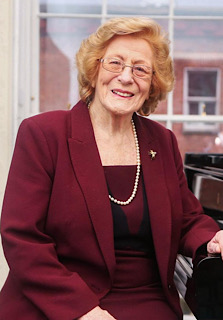
Death of Veronica Dunne, Operatic Soprano & Voice Teacher

Veronica Dunne, Irish operatic soprano and voice teacher also known as Ronnie Dunne, who is described as “an Irish national treasure,” dies on April 5, 2021. After a successful operatic career at the Dublin Opera and the Royal Opera House in London, she focuses on voice teaching in Dublin, where she trains future international singers. The triennial Veronica Dunne International Singing Competition is established in 1995. She receives the National Concert Hall Lifetime Achievement Award in 2014.

Dunne is born in Dublin on August 20, 1927. She is the youngest of three children of a well-to-do family. Her father works as a master builder whose construction firm builds the church in Foxrock, Dublin, in the early 1930s. She begins singing when she is 11 years old. She studies initially in Dublin with Hubert Rooney. She then sells her pony for £125 in order to fund her dream of studying music in Italy. She goes to Rome in 1946 to study with Soldini Calcagni and Francesco Calcatelli. Her family meets with Sarsfield Hogan, the secretary of the Department of Finance at the time, to discuss the issue of her monthly allowance, which would breach foreign exchange controls. Sarsfield permits her to receive the money on the condition that she return to Ireland in the future and teach her young compatriots to sing.

Dunne makes her operatic debut in Dublin in 1948 as Micaëla in Georges Bizet‘s Carmen with the Dublin Grand Opera Society, and appears there in 1949 as Marguerite in Charles Gounod‘s Faust. She wins the Concorso Lirico Milano in 1952, which brings her the role of Mimì in Ruggero Leoncavallo‘s La bohème at the Teatro Nuovo in Milan, which in turn brings her a contract from the Royal Opera House in London, where she first appears as Sophie in Der Rosenkavalier by Richard Strauss. She performs at the house alongside Joan Sutherland and Kathleen Ferrier. In 1958, she appears as Blanche in the first performance at the house of Francis Poulenc‘s Dialogues of the Carmelites. She also performs with the Welsh National OperaScottish Opera, and Wexford Festival Opera. She returns to the stage in 2002 to appear as Countess in Pyotr Ilyich Tchaikovsky‘s The Queen of Spades at the Gaiety Theatre in Dublin.

Dunne gives a number of world premieres of works by contemporary Irish composers including Never to Have Lived is Best (1965) by Seóirse Bodley, as well as Irish Songs (1971) and The Táin (1970) by James Wilson.

Dunne is appointed a voice teacher at the then Dublin College of Music (today Technical University Conservatory of Music and Drama) in 1962. She is awarded an honorific doctorate in 1987. She retires in 1992, but continues to teach at the Leinster School of Music and the Royal Irish Academy of Music. Her students include Patricia Bardon, Orla Boylan, Mary Brennan, Tara Erraught, Lynda Lee, Colette McGahon, Anthony KearnsSuzanne Murphy, and Finbar Wright, who have all sung in the major international opera houses. In 2014, at the age of 87, she continues to teach 39 hours per week.

The triennial Veronica Dunne International Singing Competition, established by the Friends of the Vocal Arts in Ireland in 1995, awards bursaries in her name. Recipients included Orla Boylan, Sarah-Jane Brandon, Tara Erraught, Pumeza Matshikiza and Simon O’Neill. She receives the National Concert Hall Lifetime Achievement Award in 2014.

Dunne marries Peter McCarthy in 1953. The couple has two children.

Dunne dies at the age of 93, on April 5, 2021. Irish President Michael D. Higgins pays tribute to Dunne, saying that she “captivated millions with her singing” and adding, “The legacy she leaves lies in the talents of those scores of others whose talents and performances she unlocked with her enthusiasm, energy and commitment as a teacher and friend.”


Leave a comment

Birth of Herbert Hughes, Composer, Music Critic, Collector & Arranger

Herbert Hughes, Irish composer, music critic and a collector and arranger of Irish folksongs, is born in Belfast on May 16, 1882. He was the father of Spike Hughes.

Hughes is raised in Belfast but completes his formal music education at the Royal College of Music, London, where he studies with Charles Villiers Stanford and Charles Wood, graduating in 1901. Subsequently, he works as a music critic, notably for The Daily Telegraph from 1911 to 1932.

Described as having an “ardent and self-confident manner,” Hughes is first heard of in an Irish musical capacity (beyond being honorary organist at St. Peter’s Church on Antrim Road at the age of fourteen) collecting traditional airs and transcribing folksongs in North Donegal in August 1903 with his brother Fred, Francis Joseph Bigger, and John Patrick Campbell. Dedicated to seeking out and recording such ancient melodies as are yet to be found in the more remote glens and valleys of Ulster, he produces Songs of Uladh (1904) with Joseph Campbell, illustrated by his brother John and paid for by Bigger. Throughout his career, he collects and arranges hundreds of traditional melodies and publishes many of them in his own unique arrangements. Three of his best-known works are the celebrated songs, My Lagan Love, She Moved Through the Fair, and Down by the Salley Gardens, which are published as part of his four collections of Irish Country Songs, his key achievement. These are written in collaborations with the poets Joseph Campbell and Padraic Colum, and W. B. Yeats himself. A dispute with Hamilton Harty over copyright on My Lagan Love is pursued on Bigger’s advice, but fails.

Hughes has a unique approach to arranging Irish traditional music. He calls upon the influence of the French impressionist Claude Debussy in his approach to harmony: “Musical art is gradually releasing itself from the tyranny of the tempered scale. […] and if we examine the work of the modern French school, notably that of M. Claude Debussy, it will be seen that the tendency is to break the bonds of this old slave-driver and return to the freedom of primitive scales.” He regards arrangements as an independent art form on an equal level with original composition: “[…] under his [i.e. the arranger’s] hands it is definitively transmuted into an art-song, an art-song of its own generation.” His folksong arrangements have been sung all across the English-speaking world. John McCormack and Kathleen Ferrier are the first to record them on gramophone records.

An admirer of James Joyce‘s poetry, Hughes in 1933 edits The Joyce-Book, a volume of settings of Joyce’s poetry, with 13 pieces by 13 composers including, besides Hughes himself, Arnold Bax, Arthur Bliss, Herbert Howells, John Ireland, and non-British composers such as George Antheil, Edgardo Carducci-Agustini, and Albert Roussel. The large-format, blue-cloth covered volume has since become a collector’s item.

Hughes also composes a limited amount of original chamber music (a violin sonata is mentioned in a letter to Hughes from Bernard van Dieren dated April 4, 1932), and some scores for the stage (like And So to Bed by James Bernard Fagan) and film. Hughes and John Robert Monsell also create songs for a musical version of Richard Brinsley Sheridan‘s The Rivals called Rivals!, which is staged at the Kingsway Theatre in London in October 1935 by Vladimir Rosing and runs for 86 performances.

Married to Lillian Florence (known as Meena) Meacham and Suzanne McKernan, Hughes has three children: Patrick, known professionally as Spike Hughes, Angela and Helena. He dies in Brighton, England, at the relatively early age of fifty-four on May 1, 1937.