
On July 24, 1294, before the council of Dublin, William de Vesci, Lord Justice of Ireland and inheritor of County Kildare, formally accuses John FitzThomas, 4th Baron of Offaly, of defamation against him before King Edward I and the English council.
The conflict arises from a series of accusations FitzThomas makes in England. He claims that de Vescy has called Edward I “the most perverse knight of the kingdom” and has accused the king of cowardice during the siege of Kenilworth Castle in 1266. He also alleges that de Vescy is organizing an uprising against the king.
These allegations are part of a broader rivalry between the two nobles over claims to the Crown of Connaught and competing political influence in Ireland.
FitzThomas has previously brought the matter to the attention of the Irish commission of inquiry, but de Vescy sought redress before the Dublin council. The dispute escalates to the English court, where both men are summoned to Westminster for a formal hearing.
On the appointed date, July 24, 1294, de Vescy appears in full armor, but FitzThomas does not attend. De Vescy requests a judgment by default in his favor, but the court does not grant it. The matter is not resolved immediately but is later addressed during the Parliament of August 1295.
Although de Vescy technically loses the default judgment, the absence of FitzThomas and the political context likely weakens the case. De Vescy has already been removed from the Lord Justiciarship in October 1294 following a commission of inquiry into his governance in Ireland. He continues to serve the king in other capacities, including in Wales and Gascony, and is summoned to Parliament in 1295.
In summary, the July 24, 1294, event marks the formal accusation of defamation in Dublin, a legal and political clash between two powerful Irish barons, with the case ultimately decided in England’s court at Westminster, where FitzThomas’s non-appearance becomes a key factor in the proceedings.
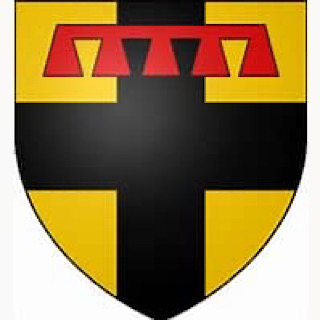
(Pictured: Coat of arms of William de Vescy)

