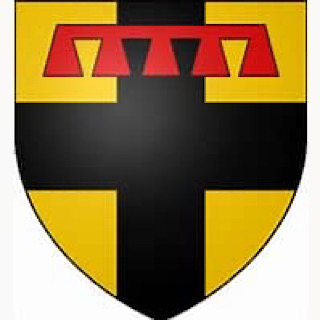
The conflict arises from a series of accusations FitzThomas makes in England. He claims that de Vescy has called Edward I “the most perverse knight of the kingdom” and has accused the king of cowardice during the siege of Kenilworth Castle in 1266. He also alleges that de Vescy is organizing an uprising against the king.
These allegations are part of a broader rivalry between the two nobles over claims to the Crown of Connaught and competing political influence in Ireland.
FitzThomas has previously brought the matter to the attention of the Irish commission of inquiry, but de Vescy sought redress before the Dublin council. The dispute escalates to the English court, where both men are summoned to Westminster for a formal hearing.
On the appointed date, July 24, 1294, de Vescy appears in full armor, but FitzThomas does not attend. De Vescy requests a judgment by default in his favor, but the court does not grant it. The matter is not resolved immediately but is later addressed during the Parliament of August 1295.
Although de Vescy technically loses the default judgment, the absence of FitzThomas and the political context likely weakens the case. De Vescy has already been removed from the Lord Justiciarship in October 1294 following a commission of inquiry into his governance in Ireland. He continues to serve the king in other capacities, including in Wales and Gascony, and is summoned to Parliament in 1295.
In summary, the July 24, 1294, event marks the formal accusation of defamation in Dublin, a legal and political clash between two powerful Irish barons, with the case ultimately decided in England’s court at Westminster, where FitzThomas’s non-appearance becomes a key factor in the proceedings.
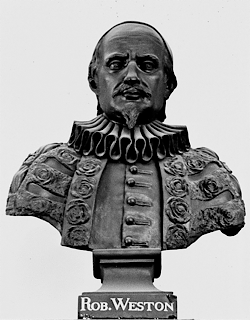
From 1546 to 1549, Weston is a principal of Broadgates Hall (afterwards Pembroke College), and at the same time deputy reader in civil law at the university, under Dr. John Story. He is not a clergyman, and his later appointment to two lucrative deaneries greatly troubles his conscience.
On January 12, 1559, Weston is created Dean of the Arches and is a commissioner for administering the oaths required of ecclesiastics under the Act of Uniformity 1558. He is consulted in regard to the Queen’s Commission issued on December 6, 1559, for confirming Matthew Parker as Archbishop of Canterbury and is included in a commission issued on November 8, 1564, to inquire into complaints of piratical depredations committed at sea on the subjects of the King of Spain.
The Lord Deputy of Ireland, Sir Henry Sidney, requests that Weston be nominated for the post of Lord Chancellor of Ireland in succession to Hugh Curwen, Archbishop of Dublin, in April 1566. After a year, on June 10, 1567, Queen Elizabeth I tells Sidney that after good deliberation she has made the “choice for the supply of room of Chancellor by naming thereunnto our trusty well-beloved Doctor Weston, dean of the arches here, a man for his learning and approved integrity thoroughly qualified to receive and possess the same” and “that for some increase of his living whilst he remaineth in our service there she was pleased to give unto him the Deanery of St. Patrick’s, whereof the Bishop of Armagh, Adam Loftus, is now dean and yet to leave it at our order, as we know he will.”
Weston arrives in Dublin early in August and is sworn into office on August 8, 1567. He is conscientious in performing his duties, and greatly respected for his integrity, although ill-health (he is plagued by gout and gallstones) hampers his effectiveness. He is appalled by the laziness and inefficiency of many of the Irish judges and urges Elizabeth I to replace them with Englishmen wherever possible. He is equally shocked at the poverty and ignorance of many of the Protestant clergy in Ireland. His zeal for reform leads him, though a layman, to become an effective leader of the Church of Ireland for a few years. He cooperates with Adam Loftus, now Archbishop of Dublin, in purging the Archdiocese of Dublin of crypto-Catholics, but is opposed to the persecution of the Roman Catholic majority, or any efforts to forcibly convert them.
Weston dies on May 20, 1573, and is buried beneath the altar in St. Patrick’s Cathedral, Dublin, “leaving behind him an excellent character for uprightness, judgment, learning, courtesy, and piety.”
Weston marries Alice Jenyngs, daughter of Richard Jenyngs of Great Barr, Staffordshire. They have a son, John, and three daughters, of whom most of known of Alice, who marries firstly Hugh Brady, Bishop of Meath, by whom she has numerous children including Luke and Nicholas, and secondly Sir Geoffrey Fenton, by whom she is the mother of Catherine, who marries Richard Boyle, 1st Earl of Cork, and of Sir William Fenton.