seamus dubhghaill

Promoting Irish Culture and History from Little Rock, Arkansas, USA


Leave a comment

The Corporals Killings

British Army corporals Derek Wood and David Howes are killed by the Provisional Irish Republican Army (IRA) on March 19, 1988, in Belfast, Northern Ireland, in what becomes known as the corporals killings. The soldiers, wearing civilian clothes, both armed with Browning Hi-Power pistols and in a silver Volkswagen Passat hatchback, drive into the funeral procession for IRA member Kevin Brady.

The Brady funeral is making its way along the Andersonstown Road toward Milltown Cemetery when the corporals’ car appears from the opposite direction. The car drives straight towards the front of the funeral, which is headed by several black taxis. It drives past a Sinn Féin steward who signals it to turn. Mourners at the funeral say they believed they were under attack from Ulster loyalists, as three days earlier, loyalist Michael Stone had attacked an IRA funeral and killed three people. The car then mounts a pavement, scattering mourners, and turns into a small side road. When this road is blocked, it then reverses at speed, ending up within the funeral procession. Corporal Wood attempts to drive the car out of the procession but his exit route is blocked by a black taxi.

An angry crowd surrounds the car, smashes the windows and attempts to drag the soldiers out. Wood produces a Browning Hi-Power 9mm handgun. He climbs partly out of a window and fires a shot in the air, which briefly scatters the crowd. The crowd then surges back, with some of them attacking the car with a wheel-brace and a stepladder snatched from a photographer. The corporals are eventually pulled from the car and punched and kicked to the ground.

The attack is witnessed by the media and passersby. Journalist Mary Holland recalls seeing one of the men being dragged past a group of journalists. “He didn’t cry out; just looked at us with terrified eyes, as though we were all enemies in a foreign country who wouldn’t have understood what language he was speaking if he called out for help.”

The men are taken to nearby Casement Park sports ground, just opposite. Here they are beaten, stripped to their underpants and socks, and searched by a small group of men. The BBC and The Independent write that the men were “tortured.” A search reveals that the men are British soldiers. Their captors find a military ID on Howes which is marked “Herford,” the site of a British military base in Germany, but it is believed they misread it as “Hereford,” the headquarters of the Special Air Service (SAS).

Redemptorist priest Father Alec Reid, who plays a significant part in the peace process leading to the 1998 Good Friday Agreement, intervenes and attempts to save the soldiers, and asks people to call an ambulance. “I got down between the two of them and I had my arm around this one and I was holding this one up by the shoulder….They were so disciplined, they just lay there totally still and I decided to myself they were soldiers. There was a helicopter circling overhead and I don’t know why they didn’t do something, radio to the police or soldiers to come up, because there were these two of their own soldiers.”

One of the captors warns Father Reid not to interfere and orders two men to take him away.

The two soldiers are placed in a taxi and driven fewer than 200 yards to a waste ground near Penny Lane (South Link), just off the main Andersonstown Road. There they are taken out of the vehicle and shot dead. Wood is shot six times and Howes is shot five times. Each also has multiple injuries to other parts of their bodies. The perpetrators quickly leave the scene. Father Reid hears the shots and rushes to the waste ground. He believes one of the soldiers is still breathing and attempts to give him mouth-to-mouth resuscitation. Upon realizing that the soldiers are dead, he gives them the last rites. According to photographer David Cairns, although photographers have their films taken by the IRA, he is able to keep his by quickly leaving the area after taking a photograph of Reid kneeling beside the almost naked body of Howes, administering the last rites. Cairns’ photograph is later named one of the best pictures of the past 50 years by Life magazine.

The whole incident is filmed by a British Army helicopter hovering overhead. An unnamed soldier of the Royal Scots says his eight-man patrol is nearby and sees the attack on the corporals’ car but are told not to intervene. Soldiers and police arrive on the scene three minutes after the corporals had been shot. A British Army spokesman says the army did not respond immediately because they needed time to assess the situation and were wary of being ambushed by the IRA. The large funeral procession also prevents them getting to the scene quickly.

Shortly after, the IRA releases a statement:

“The Belfast Brigade, IRA, claims responsibility for the execution of two SAS members who launched an attack on the funeral cortege of our comrade volunteer Kevin Brady. The SAS unit was initially apprehended by the people lining the route in the belief that armed loyalists were attacking them and they were removed from the immediate vicinity. Our volunteers forcibly removed the two men from the crowd and, after clearly ascertaining their identities from equipment and documentation, we executed them.”

Two men, Alex Murphy and Harry Maguire, are sentenced to life imprisonment for murder, but are released in 1998 under the terms of the Good Friday Agreement. Several other men receive lesser sentences for their part in the corporals killings.

(Pictured: Catholic priest Father Alec Reid administers the last rights to Corporal David Howes, one of two British soldiers brutally beaten and murdered in Belfast)
Leave a comment

Birth of Eric Bell, Founder Member of Thin Lizzy

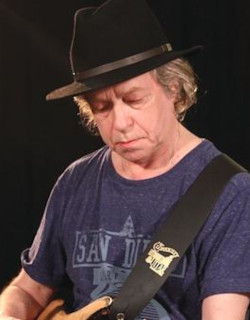
eric-bellEric Robin Bell, Northern Irish rock and blues musician, is born on September 3, 1947 in East Belfast, Northern Ireland. He is best known as a founder member and the original guitarist of the rock group Thin Lizzy. After his time in Thin Lizzy, he briefly fronts his own group before joining The Noel Redding Band in the mid-1970s. He has since released several solo albums and performs regularly with a blues-based trio, the Eric Bell Band.

Bell begins his career with local groups around the Belfast area, including the last incarnation of Them to feature Van Morrison, between September and October 1966. He also plays with a number of other bands including Shades of Blue, The Earth Dwellers and The Bluebeats, before joining an Irish showband named The Dreams. He leaves in 1969 having tired of the showband format and, at the end of that year, forms a band with local musicians Phil Lynott, Eric Wrixon and Brian Downey. Bell names the group Thin Lizzy, after Tin Lizzie, a robot character in The Dandy comic.

Organist Eric Wrixon leaves Thin Lizzy after a few months, and the remaining trio later secure a contract with Decca Records. As lead guitarist, Bell plays on Thin Lizzy’s first three albums, Thin Lizzy, Shades of a Blue Orphanage and Vagabonds of the Western World, as well as their hit single “Whiskey in the Jar.” He co-writes a number of songs with Lynott and Downey, including “The Rocker” which becomes a live favourite throughout the band’s career. He also composes one song on his own, “Ray Gun,” from their first album, Thin Lizzy.

Although Thin Lizzy gains in popularity during the early 1970s, the pressures of recording, touring and the excesses of the rock star lifestyle begin to take their toll. Bell leaves the band after a New Year’s Eve concert in 1973, after throwing his guitar into the air in the middle of the concert, pushing the amplifiers into the audience and storming off stage. He states later that he had no regrets about leaving: “I really had to leave because of ill-health. It was exhaustion, and the majority of things that were available to me… I couldn’t really handle it.” He is temporarily replaced by Gary Moore.

In 1974, after a brief period fronting his own Eric Bell Band, Bell is recruited by ex-Jimi Hendrix sideman Noel Redding, along with guitarist/singer Dave Clarke and drummer Les Sampson, to form The Noel Redding Band. He is initially unsure of the musical direction Redding is taking, but goes on to record two albums with the group before they split in 1976. A third album of unused tracks is released in 1995. He composes the song “Love and War” for the second album, Blowin’.

In 1980, Bell reunites with Thin Lizzy to record a tribute song to Jimi Hendrix, “Song for Jimmy,” which is released as an orange flexi disc and given away with Flexipop in August 1981. It is later included on Thin Lizzy’s Vagabonds Kings Warriors Angels box set in 2002, although much of Bell’s lead guitar work is missing from this version as the relevant master tapes cannot be found. He also appears as a guest on Thin Lizzy’s final tour in 1983, and the accompanying live album, Life.

Bell subsequently joins saxophonist Dick Heckstall-Smith‘s eight-piece blues rock ensemble Mainsqueeze. They tour Europe, record a live album in 1983, and later tour as Bo Diddley‘s backing group, recording the Hey… Bo Diddley: In Concert album in 1986.

Bell continues to perform and record with the Eric Bell Band throughout the 1990s and 2000s, releasing several albums. He also records with the Barrelhouse Brothers.

In 2005, Bell joins Gary Moore onstage to perform “Whiskey in the Jar” at the Phil Lynott tribute concert “The Boy Is Back in Town” in the Point Theatre, Dublin. This is released on a DVD called One Night in Dublin: A Tribute to Phil Lynott. In 2010, he moves from London where he had lived for many years to his new home in West Cork, Ireland.


Leave a comment

Birth of Stage & Screen Actress Siobhán McKenna

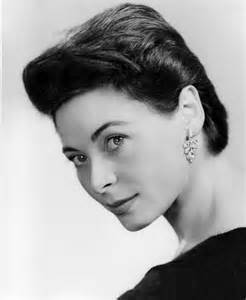
Siobhán McKenna, Irish stage and screen actress, is born Siobhán Giollamhuire Nic Cionnaith into a Catholic and nationalist family in Belfast on May 24, 1923.

McKenna grows up in Galway, where her father is Professor of Mathematics at University College Galway, and in County Monaghan, speaking fluent Irish. She is still in her teens when she becomes a member of an amateur Gaelic theatre group and makes her stage debut at Galway’s Gaelic theatre, the Taibhdhearc na Gaillimhe, in 1940.

McKenna is remembered for her English language performances at the Abbey Theatre in Dublin where she eventually stars in what many consider her finest role in the George Bernard Shaw play, Saint Joan.

While performing at the Abbey Theatre in the 1940s, she meets actor Denis O’Dea, whom she marries in 1946. Until 1970 they live in Richmond Street South, Dublin. They have one child, a son Donnacha O’Dea, who swims for Ireland at the 1968 Summer Olympics and later wins a World Series of Poker bracelet in 1998.

In 1947, McKenna makes her debut on the London stage in The Chalk Garden. She reprises the role on Broadway in 1955, for which she receives a Tony Award nomination for “Best Actress in a Leading Role, Drama.” In 1956, she appears in the Cambridge Drama Festival production of Saint Joan at the Off-Broadway Phoenix Theatre. Theatre critic Elliot Norton calls her performance the finest portrayal of Joan of Arc in memory. Siobhán McKenna’s popularity earns her the cover of Life magazine. She receives a second Tony Best Actress nomination for her role in the 1958 play, The Rope Dancers, in which she stars with Art Carney and Joan Blondell.

Although primarily a stage actress, McKenna appears in a number of made-for-television films and dramas. She also appears in several motion pictures such as King of Kings in 1961, as the Virgin Mary. In 1964, she performs in Of Human Bondage and the following year in Doctor Zhivago. She also appears in the miniseries The Last Days of Pompeii as Fortunata, wife of Gaius, played by Laurence Olivier. She stars in the title role of the Tales of the Unexpected episode “The Landlady.”

McKenna is awarded the Gold Medal of the Éire Society of Boston, for having “significantly fulfilled the ideals of the Éire Society, in particular, spreading awareness of the cultural achievements of the Irish people.”

McKenna’s final stage appearance comes in the 1985 play Bailegangaire for the Druid Theatre Company. Despite surgery, she dies of lung cancer on November 16, 1986, in Dublin, at 63 years of age. She is buried at Rahoon Cemetery in County Galway.

In 1988, two years after her death, McKenna is inducted into the American Theater Hall of Fame. The Siobhán McKenna Theatre in Cultúrlann McAdam Ó Fiaich, in her native Belfast is named in her honour.