seamus dubhghaill

Promoting Irish Culture and History from Little Rock, Arkansas, USA


Leave a comment

Birth of Thomas Steele, Engineer & Political Activist

Thomas (Tom) Steele, engineer and political activist, is born on November 3, 1788, at Derrymore, County Clare, the son of William Steele, gentleman, and Catherine Steele (née Bridgeman).

In July 1805 Steele enters Trinity College Dublin, graduating BA in the spring of 1810. He then studies at Magdalene College, Cambridge, where he graduates MA in 1820, becoming an associate member of the Institution of Civil Engineers in the same year. In 1821 he inherits Cullane House, near Craggaunowen, County Clare, on the death of his uncle. Of an enthusiastic and adventurous nature, in 1823 he decides to support the cause of the liberals in Spain who had rebelled against the autocratic rule of Ferdinand VII in 1820. Mortgaging the house and lands at Cullane, he purchases a large quantity of arms and ships them to Spain on board the ship Iris. Commissioned in the Legion Estrenjera of the liberal army, he distinguishes himself in the Battle of Trocadero and the defence of Madrid. He later publishes an account of his experiences, Notes on the war in Spain (London, 1824).

Returning from Spain with his fortunes ruined, Steele begins experiments with underwater diving apparatus, patenting “Steele’s improved diving-bell” in 1825. In the same year he becomes a partner in the Vigo Bay Co., which attempts to recover gold and silver bullion from Spanish ships which sank in Vigo Bay in 1702. After extensive diving operations using Steele’s diving-bell, the company is wound up at an acrimonious meeting of shareholders in September 1826. Despite claims by some of the shareholders that bullion had been found, the scheme is a total failure.

Steele is involved in the Catholic Association and, a close friend of Daniel O’Connell, is active in the emancipation campaign although himself a protestant. In 1828 he seconds O’Connell’s nomination for Clare in the general election of that year. Appointed by O’Connell as ‘Head Pacificator,’ he tours the country collecting weapons and discouraging the rural population from engaging in faction fighting. There is a certain irony in this appointment, as Steele’s own volatile temper is well known. A noted duelist, he fights an inconclusive duel in 1829 with William Smith O’Brien, who had opposed O’Connell’s second candidature for County Clare. In 1828 he is a founder of the Limerick Independent Club.

An associate of the diving pioneers John and Charles Deane, Steele dives on the wreck of the Intrinsic, off the Clare coast in January 1836, using their new diving helmet. He then begins developing equipment to provide underwater illumination, and in 1840 dives with the Deane brothers off Plymouth on the wreck of Henry VIII‘s ship, the Mary Rose. Yet he is in serious financial difficulties, which are not helped by some of his more eccentric building projects. It is said of him that “he seemed utterly incapable of rationally estimating the value of money in his own case.” He begins renovating, at great expense, a ruined castle that stands on his land at Cullane. He also later has a large standing stone, known as the ‘Umbilicus Hiberniae’ (‘Navel of Ireland’), removed from Birr, King’s County (now County Offaly), and taken to his house. At Cullane it is set up as an altar and used for mass whenever O’Connell or members of the Catholic Association visit. It is not returned to Birr until 1974.

Known as “Honest Tom Steele,” Steele is deeply devoted to O’Connell, and is one of his key lieutenants during the repeal campaigns of the 1830s and 1840s. He takes his title and responsibilities as O’Connell’s “Head Pacificator” so seriously and generally expresses himself with such long-winded pomposity that he becomes something of a figure of fun for opponents of O’Connell and for many of the younger men in the Repeal Association. Tried on conspiracy charges after the prohibition of the Clontarf monster meeting, he is one of the six “traversers” imprisoned with O’Connell in Richmond jail from May to September 1844. Strongly supporting O’Connell’s repudiation of physical force, he chairs and takes a prominent part in the peace resolution debates of July 1846 in which the Young Ireland group walks out of the Repeal Association.

After the death of O’Connell on May 15, 1847, Steele falls into a deep depression and, financially ruined, jumps from Waterloo Bridge in London on April 19, 1848. Pulled from the river by a Thames boatman, he survives for a number of weeks. Former political opponents, including Lord Brougham, offer financial help but he refuses. He dies on June 15, 1848, and his remains are taken to Dublin, where he is waked at Conciliation Hall, the headquarters of the Repeal Association, on Burgh Quay. He is buried in Glasnevin Cemetery, beside O’Connell’s tomb. He appears as one of the figures on the O’Connell memorial in O’Connell Street, Dublin.

Steele never marries but harbours an unrequited passion for a Miss Eileen Crowe of Ennis, County Clare, and is often to be seen standing on a large rock, which comes to be known as “Steele’s Rock,” on the banks of the River Fergus in Ennis as he tries to catch a glimpse of Miss Crowe, who lives across the river.

(From: “Steele, Thomas (Tom)” by David Murphy, Dictionary of Irish Biography, http://www.dib.ie | Pictured: (L to R) Thomas Steele, Daniel O’Connell and O’Gorman Mahon by Joseph Patrick Haverty)

Leave a comment

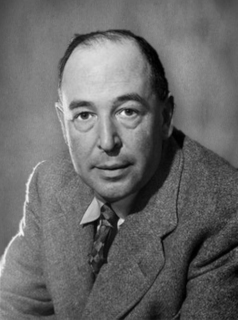
Birth of C.S. Lewis, Poet & Novelist

clive-staples-lewis

Clive Staples Lewis, novelist, poet, academic, medievalist, literary critic, essayist, lay theologian, and Christian apologist, is born in Belfast on November 29, 1898. He is best known for his works of fiction, especially The Screwtape Letters, The Chronicles of Narnia, and The Space Trilogy, and for his non-fiction Christian apologetics, such as Mere Christianity, Miracles, and The Problem of Pain.

Lewis is schooled by private tutors until age nine when his mother dies in 1908 from cancer. His father then sends him to live and study at Wynyard School in Watford, Hertfordshire. After the school is closed soon afterward, he attends Campbell College in the east of Belfast about a mile from his home, but leaves after a few months due to respiratory problems. He is then sent to the health-resort town of Malvern, Worcestershire, where he attends the preparatory school Cherbourg House. It is during this time that he abandons his childhood Christian faith and becomes an atheist. In September 1913, he enrolls at Malvern College. After leaving Malvern, he studies privately with William T. Kirkpatrick, his father’s old tutor and former headmaster of Lurgan College.

Lewis holds academic positions in English literature at both the University of Oxford (Magdalen College, 1925–1954) and the University of  Cambridge (Magdalene College, 1954–1963).

Lewis and fellow novelist J. R. R. Tolkien are close friends. They both serve on the English faculty at Oxford University and are active in the informal Oxford literary group known as the Inklings. He returns to Anglicanism at the age of 32, owing to the influence of Tolkien and other friends, and he becomes an “ordinary layman of the Church of England.” His faith profoundly affects his work, and his wartime radio broadcasts on the subject of Christianity bring him wide acclaim.

Lewis writes more than 30 books which have been translated into more than 30 languages and have sold millions of copies. The books that make up The Chronicles of Narnia have sold the most and have been popularised on stage, television, radio and cinema. His philosophical writings are widely cited by Christian apologists from many denominations.

In early June 1961, Lewis begins suffering from nephritis, which results in blood poisoning. He recovers but on July 15 of that year he falls ill and is admitted to the hospital where he suffers a heart attack the following day, lapses into a coma and awakens the next day. After he is discharged from the hospital his condition continues to decline. He is diagnosed with end-stage renal failure in mid-November. He collapses and dies in his bedroom on November 22. He is buried in the churchyard of Holy Trinity Church, Headington, Oxford.

Media coverage of Lewis’s death is almost completely overshadowed by news of the assassination of United States President John F. Kennedy, which takes place approximately 55 minutes after Lewis’s collapse.

In 2013, on the 50th anniversary of his death, Lewis is honoured with a memorial in Poets’ Corner in Westminster Abbey.


Leave a comment

Death of C.S. Lewis, Novelist & Poet

Clive Staples Lewis, novelist, poet, academic, medievalist, literary critic, essayist, lay theologian, broadcaster, lecturer, and Christian apologist, dies in Oxford, England, on November 22, 1963.

Lewis is born in Belfast on November 29, 1898. When he is seven, his family moves into “Little Lea,” the family home of his childhood, in the Strandtown area of East Belfast. He was schooled by private tutors until age 9, when his mother dies from cancer. His father then sends him to live and study at Wynyard School in Watford, Hertfordshire. The school closes soon afterwards due to a lack of pupils. He then attends Campbell College in the east of Belfast about a mile from his home, but leaves after a few months due to respiratory problems. He is then sent to the health-resort town of Malvern, Worcestershire, where he attends the preparatory school Cherbourg House. It is during this time that Lewis abandons his childhood Christian faith and becomes an atheist. In September 1913, he enrolls at Malvern College, where he remains until the following June. After leaving Malvern, he studies privately with William T. Kirkpatrick, his father’s old tutor and former headmaster of Lurgan College.

Lewis holds academic positions at both Oxford University (Magdalen College, 1925–1954) and Cambridge University (Magdalene College, 1954–1963). He is best known for his works of fiction, especially The Screwtape Letters, The Chronicles of Narnia, and The Space Trilogy, and for his non-fiction Christian apologetics, such as Mere Christianity, Miracles, and The Problem of Pain.

Lewis and fellow novelist J.R.R. Tolkien are close friends. They both serve on the English faculty at Oxford University, and are active in the informal Oxford literary group known as the Inklings. According to Lewis’s memoir Surprised by Joy, he is baptised in the Church of Ireland, but fell away from his faith during adolescence. He returns to Anglicanism at the age of 32, owing to the influence of Tolkien and other friends, and he becomes an “ordinary layman of the Church of England.” His faith profoundly affects his work, and his wartime radio broadcasts on the subject of Christianity bring him wide acclaim.

Lewis writes more than 30 books, which have been translated into more than 30 languages and have sold millions of copies. The books that make up The Chronicles of Narnia have sold the most and have been popularised on stage, TV, radio, and cinema. His philosophical writings are widely cited by Christian apologetics from many denominations.

In early June 1961, Lewis begins suffering from nephritis, which results in blood poisoning. His illness causes him to miss the autumn term at Cambridge, though his health gradually begins improving in 1962 and he returns that April. His health continues to improve and he is fully himself by early 1963. On July 15 of that year he falls ill and is admitted to hospital. At 5:00 PM the following day he suffers a heart attack and lapses into a coma, unexpectedly awaking the following afternoon. After he is discharged from the hospital he is too ill to return to work. As a result, he resigns from his post at Cambridge in August. His condition continues to decline, and in mid-November he is diagnosed with end-stage renal failure. On November 22, exactly one week before his 65th birthday, he collapses in his bedroom at 5:30 PM and dies a few minutes later. He is buried in the churchyard of Holy Trinity Church, Headington, Oxford.

Media coverage of Lewis’s death is almost completely overshadowed by news of the assassination of U.S. President John F. Kennedy, which occurs on the same day approximately 55 minutes following Lewis’s collapse, as does the death of English writer Aldous Huxley, author of Brave New World.

In 2013, on the 50th anniversary of his death, Lewis is honoured with a memorial in Poets’ Corner in Westminster Abbey. His works enter the public domain in 2014 in countries where copyright expires 50 years after the death of the creator, such as Canada.


Leave a comment

Lord Killanin Becomes President of the International Olympic Committee

Michael Morris, 3rd Baron Killanin, journalist, author, and sports official, becomes the first Irish president of the International Olympic Committee (IOC) on August 23, 1972.

Morris is born in London on July 30, 1914, the son of Irish Catholic Lt. Col. George Henry Morris who is from Spiddal in County Galway. The Morrises are one of the fourteen families making up the “Tribes of Galway.”

Morris is educated at Summerfields, St. Leonards-on-Sea, Eton College, the Sorbonne in Paris and then Magdalene College, Cambridge, where he is President of the renowned Footlights dramatic club. He succeeds his uncle as Baron Killanin in the Peerage of the United Kingdom in 1927, which allows him to sit in the House of Lords at the Palace of Westminster as Lord Killanin upon turning 21. In the mid-1930s, he begins his career as a journalist on Fleet Street, working for the Daily Express, the Daily Sketch and subsequently the Daily Mail.

In November 1938, Lord Killanin is commissioned into the Queen’s Westminsters, a territorial regiment of the British Army, where he is responsible for recruiting fellow journalists, including future The Daily Telegraph editor Bill Deedes, and friends who are musicians and actors. He reaches the rank of major and takes part in the planning of D-Day and the Invasion of Normandy in 1944, acting as brigade major for the 30th Armoured Brigade, part of the 79th Armoured Division. He is appointed, due to the course of operations, a Member of the Order of the British Empire (MBE). After being demobilised, he goes to Ireland. He resigns his TA commission in 1951.

In 1950, Lord Killanin becomes the head of the Olympic Council of Ireland (OCI) and becomes his country’s representative in the IOC in 1952. He becomes senior vice-president in 1968, and succeeds Avery Brundage, becoming President-elect at the 73rd IOC Session (August 21–24) held in Munich prior to the 1972 Summer Olympics. He takes office soon after the Games.

During Lord Killanin’s presidency, the Olympic movement experiences a difficult period, dealing with the financial flop of the 1976 Summer Olympics in Montreal and the boycotts of the 1980 Summer Olympics in Moscow. Denver, originally selected to host the 1976 Winter Olympics, withdraws and has to be replaced by Innsbruck. The cities of Lake Placid, New York and Los Angeles are chosen for 1980 Winter Olympics and 1984 Summer Olympics by default due to a lack of competing bids. He resigns just before the Moscow Olympics in 1980, and his position is taken over by Juan Antonio Samaranch. He is later unanimously elected Honorary Life President.

Lord Killanin serves as Honorary Consul-General of Monaco in Ireland from 1961 to 1984 and as Chairman of the Race Committee for Galway Racecourse from 1970 to 1985. A keen horse racing enthusiast, he also serves as a steward of the Irish Turf Club on two occasions and on the National Hunt Steeplechase Committee. In his business life Lord Killanin is a director of many companies including Irish Shell, Ulster Bank, Beamish & Crawford and Chubb Ireland. He is a founder member of An Taisce (The National Trust for Ireland) and is chairman of the National Monuments Advisory Council until his death.

Lord Killanin dies at his home in Dublin on April 25, 1999, at the age of 84 and, following a bilingual funeral Mass at St. Enda’s Church in Spiddal, County Galway, he is buried in the family vault in the New Cemetery, Galway.

(Pictured: Lord Killanin by Bert Verhoeff / Anefo (Nationaal Archief) [CC BY-SA 3.0 nl (http://creativecommons.org/licenses/by-sa/3.0/nl/deed.en)%5D, via Wikimedia Commons)