seamus dubhghaill

Promoting Irish Culture and History from Little Rock, Arkansas, USA


Leave a comment

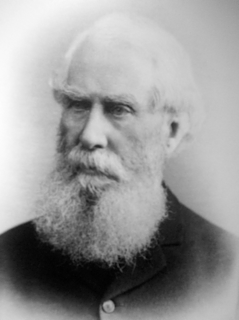
Birth of Bindon Blood Stoney, Civil Engineer

Bindon Blood Stoney FRS, a civil engineer who also makes some significant contributions to astronomy, is born on June 13, 1828, at Oakley Park, King’s County (now County Offaly).

Stoney is the younger son of George Stoney and Anne Blood, second daughter of Bindon Blood of Cranagher and Rockforest, County Clare. His brother is the physicist George Johnstone Stoney, known for coining the term electron for the fundamental unit of electricity. He is also the uncle of another Irish physicist George Francis FitzGerald, the son of his sister Anne Frances. His nieces are Edith Anne Stoney, a pioneer medical physicist, and Florence Stoney, the first female radiologist in the United Kingdom. Both serve in hospitals near the front line during World War I.

Stoney is privately educated at home while his father’s properties lose value in the post-Napoleonic depression and are sold during the famine of 1845–49. He then attends Trinity College Dublin (TCD), where in 1850 he obtains his BA and a diploma in civil engineering with distinction. He marries Susannah Frances Walker on October 7, 1879; they have four children.

In 1850–52, prior to beginning his engineering work, Stoney assists William Parsons, 3rd Earl of Rosse at Parsonstown. There he accurately maps the spiral form of the Andromeda Galaxy and observes 105 New General Catalogue (NGC) objects and 8 Index Catalogues (IC) objects. Ninety-one of the NGC objects and all of the IC objects are new. On March 1, 1851, he discovers the spiral galaxy NGC 5609, which is the most distant visually observed galaxy in the NGC catalogue.

Bindon’s career in engineering commences when he works on surveys for the Aranjuez to Almansa railway in Spain from 1852 to 1853. Upon returning to Ireland in 1854, he is appointed as resident engineer under James Barton on the Boyne railway viaduct until its completion in 1855. This viaduct claims to have the longest span in the world and has the world’s longest girders at the time.

Bindon’s groundbreaking work building a metal bridge with a span of such dimensions using shock-absorbent wrought-iron latticed bars instead of a continuity of plate with Barton is possibly the first of its kind. It is the basis for his later two-volume publication The theory of strains in girders and similar structures, with observations on the strength and other properties of materials (1866), nicknamed “Stoney on strains” and reproduced in two further editions.

Bindon becomes an associate of the Institution of Civil Engineers (ICE) in January 1858 and a full member in November 1863.

In 1856, Bindon is appointed as assistant engineer to George Halpin, Jr. at the Ballast Board on Westmoreland Street and in 1859 he is appointed as Executive Engineer. He is ambitious and an engineering innovator who comes up with a cheap way to develop the Dublin Port – something appreciated by the board but they also do not want to upset Halpin. When Halpin retires, Stoney becomes the new inspector of works and in 1868, becomes the first chief engineer of the newly constituted Dublin Port and Docks Board.

Bindon designs a large dredging plant and rebuilds nearly 7,000 feet of quay walls along both north and south banks of the River Liffey, replacing the tidal berths by deep water berths. Additionally, the northern quays are lengthened eastward and the formation of Alexandra Basin begins in 1871 and is partially completed by 1885. In addition to harbour works, he is in charge of the design and construction of two major bridges that cross the River Liffey. In 1872–1875 he largely rebuilds Essex Bridge, designed in the 1750s by George Semple to his own flamboyant design. It is renamed Grattan Bridge after Henry Grattan. In 1877–80 he redesigns the 1790s Carlisle Bridge of James Gandon, renamed O’Connell Bridge after Daniel O’Connell, to provide a crossing linking Sackville (later O’Connell) Street with the converging streets to the south. He builds a new iron swing bridge in 1877–1879, just west of The Custom House named Beresford Bridge.

Stoney invents a diving bell, and means to use precast concrete. Toward the end of his career, he erects the North Bull Lighthouse (1877–80) to replace the inadequate light on the Bull Wall marking the northern side of the Dublin port channel entrance opposite Poolbeg Lighthouse before finally retiring in 1898.

Stoney is admitted to the Royal Irish Academy (RIA) in 1857. He is given an honorary degree by University College Dublin (UCD) in recognition of his achievements and is later elected President of the Institution of Engineers of Ireland in 1871. In 1874, he is awarded the Telford Medal and Telford premium of the Institution of Civil Engineers for a paper documenting his work on the northern quays. He is elected Fellow of the Royal Society on June 2, 1881.

Stoney dies in Dublin on May 5, 1909, and he is buried in Mount Jerome Cemetery. Stoney Road in East Wall is named after him.


Leave a comment

Birth of Thomas Steele, Engineer & Political Activist

Thomas (Tom) Steele, engineer and political activist, is born on November 3, 1788, at Derrymore, County Clare, the son of William Steele, gentleman, and Catherine Steele (née Bridgeman).

In July 1805 Steele enters Trinity College Dublin, graduating BA in the spring of 1810. He then studies at Magdalene College, Cambridge, where he graduates MA in 1820, becoming an associate member of the Institution of Civil Engineers in the same year. In 1821 he inherits Cullane House, near Craggaunowen, County Clare, on the death of his uncle. Of an enthusiastic and adventurous nature, in 1823 he decides to support the cause of the liberals in Spain who had rebelled against the autocratic rule of Ferdinand VII in 1820. Mortgaging the house and lands at Cullane, he purchases a large quantity of arms and ships them to Spain on board the ship Iris. Commissioned in the Legion Estrenjera of the liberal army, he distinguishes himself in the Battle of Trocadero and the defence of Madrid. He later publishes an account of his experiences, Notes on the war in Spain (London, 1824).

Returning from Spain with his fortunes ruined, Steele begins experiments with underwater diving apparatus, patenting “Steele’s improved diving-bell” in 1825. In the same year he becomes a partner in the Vigo Bay Co., which attempts to recover gold and silver bullion from Spanish ships which sank in Vigo Bay in 1702. After extensive diving operations using Steele’s diving-bell, the company is wound up at an acrimonious meeting of shareholders in September 1826. Despite claims by some of the shareholders that bullion had been found, the scheme is a total failure.

Steele is involved in the Catholic Association and, a close friend of Daniel O’Connell, is active in the emancipation campaign although himself a protestant. In 1828 he seconds O’Connell’s nomination for Clare in the general election of that year. Appointed by O’Connell as ‘Head Pacificator,’ he tours the country collecting weapons and discouraging the rural population from engaging in faction fighting. There is a certain irony in this appointment, as Steele’s own volatile temper is well known. A noted duelist, he fights an inconclusive duel in 1829 with William Smith O’Brien, who had opposed O’Connell’s second candidature for County Clare. In 1828 he is a founder of the Limerick Independent Club.

An associate of the diving pioneers John and Charles Deane, Steele dives on the wreck of the Intrinsic, off the Clare coast in January 1836, using their new diving helmet. He then begins developing equipment to provide underwater illumination, and in 1840 dives with the Deane brothers off Plymouth on the wreck of Henry VIII‘s ship, the Mary Rose. Yet he is in serious financial difficulties, which are not helped by some of his more eccentric building projects. It is said of him that “he seemed utterly incapable of rationally estimating the value of money in his own case.” He begins renovating, at great expense, a ruined castle that stands on his land at Cullane. He also later has a large standing stone, known as the ‘Umbilicus Hiberniae’ (‘Navel of Ireland’), removed from Birr, King’s County (now County Offaly), and taken to his house. At Cullane it is set up as an altar and used for mass whenever O’Connell or members of the Catholic Association visit. It is not returned to Birr until 1974.

Known as “Honest Tom Steele,” Steele is deeply devoted to O’Connell, and is one of his key lieutenants during the repeal campaigns of the 1830s and 1840s. He takes his title and responsibilities as O’Connell’s “Head Pacificator” so seriously and generally expresses himself with such long-winded pomposity that he becomes something of a figure of fun for opponents of O’Connell and for many of the younger men in the Repeal Association. Tried on conspiracy charges after the prohibition of the Clontarf monster meeting, he is one of the six “traversers” imprisoned with O’Connell in Richmond jail from May to September 1844. Strongly supporting O’Connell’s repudiation of physical force, he chairs and takes a prominent part in the peace resolution debates of July 1846 in which the Young Ireland group walks out of the Repeal Association.

After the death of O’Connell on May 15, 1847, Steele falls into a deep depression and, financially ruined, jumps from Waterloo Bridge in London on April 19, 1848. Pulled from the river by a Thames boatman, he survives for a number of weeks. Former political opponents, including Lord Brougham, offer financial help but he refuses. He dies on June 15, 1848, and his remains are taken to Dublin, where he is waked at Conciliation Hall, the headquarters of the Repeal Association, on Burgh Quay. He is buried in Glasnevin Cemetery, beside O’Connell’s tomb. He appears as one of the figures on the O’Connell memorial in O’Connell Street, Dublin.

Steele never marries but harbours an unrequited passion for a Miss Eileen Crowe of Ennis, County Clare, and is often to be seen standing on a large rock, which comes to be known as “Steele’s Rock,” on the banks of the River Fergus in Ennis as he tries to catch a glimpse of Miss Crowe, who lives across the river.

(From: “Steele, Thomas (Tom)” by David Murphy, Dictionary of Irish Biography, http://www.dib.ie | Pictured: (L to R) Thomas Steele, Daniel O’Connell and O’Gorman Mahon by Joseph Patrick Haverty)