seamus dubhghaill

Promoting Irish Culture and History from Little Rock, Arkansas, USA


Leave a comment

Birth of “Buckey” O’Neill, Sheriff, Editor & Member of the Rough Riders

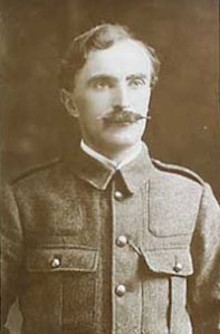
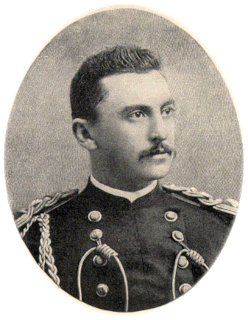
William Owen “Buckey” O’Neill, a sheriff, newspaper editor, miner, politician, Georgist, gambler and lawyer, mainly in Arizona, is born the first of four children to John Owen, an Irish immigrant, and Mary O’Neill (nee McMenimin) in St. Louis, Missouri, on February 2, 1860.

O’Neill’s father most likely arrived in the United States during the 1850s. By Spring 1862, the family has moved to Philadelphia, Pennsylvania. When the American Civil War begins, his father joins the 116th Pennsylvania Volunteers. On December 13, 1862, during the Battle of Fredericksburg, he is wounded and serves the rest of the war as a member of the Invalid Corps. The younger O’Neill is educated at Gonzaga College High School and Georgetown Law School.

During the first part of 1879, O’Neill responds to an item in The Washington Star calling for men to migrate to the Arizona Territory. He arrives in Phoenix, riding a burro, in September of the same year. Upon his arrival in town, he is hired as a printer by the Phoenix Herald. By late 1880, he has become bored with the position and seeks to experience the “Real West” in the boomtown of Tombstone, Arizona.

In Tombstone, O’Neill takes the opportunity to experience the local saloons before taking a job with The Tombstone Epitaph. By mid-1881 he again feels a wanderlust and leaves town. Where he goes next is unknown, one story having him journey to Hawaii, unlikely due to the travel time, and then traveling through California. He is known to visit Santa Fe before going to Albuquerque, New Mexico and works briefly as a court reporter. In early 1882, he is back in Phoenix working as a deputy to Marshal Henry Garfias. Several weeks later he moves to Prescott, his home for the next fifteen years.

In Prescott O’Neill rapidly progresses in his journalistic career. Starting as a court reporter, he soon founds his own newspaper, Hoof and Horn, a paper for the livestock industry. He becomes the editor of the Arizona Miner weekly newspaper in 1884 to February 1885.

In 1886, O’Neill becomes captain of the Prescott Grays, the local unit of the Arizona Militia. On February 5, 1886, Dennis Dilda, a convicted murderer, is hanged. O’Neill and the Prescott Grays stand honor guard for the event. When the trap drops, O’Neill faints, which causes him severe embarrassment. He later writes a story called “The Horse of the Hash-Knife Brand.” In it, a member of a posse admits to nearly fainting at the hanging of a horse thief.

On April 27, 1886, O’Neill marries Pauline Schindler. They have a son, but he dies shortly after being born premature.

In 1888, while serving as Yavapai County, Arizona judge, O’Neill is elected county sheriff, running on the Republican ticket.

On March 20, 1889, four masked men, William Sterin, John Halford, Daniel Harvick, and J. J. Smith, rob the Atlantic and Pacific Railroad passenger train in Canyon Diablo. A four-man posse, made up of O’Neill, Jim Black, Carl Holton, and Ed St. Clair, is soon formed and they take off after the robbers. On April 1, the posse catches up with the robbers. After exchanging rifle shots, the posse captures the four men. During the fight, no men are injured, but one of the robber’s horses is killed. All four are sent to the Yuma Territorial Prison but are pardoned eight years later. There is unfounded speculation that, in 1898, Sterin enlists under a false name in the Rough Riders and is killed in action in the Battle of San Juan Hill.

After his term is up, O’Neill is unanimously elected mayor of Prescott. In 1894 and 1896 he runs for Delegate to the United States House of Representatives from Arizona Territory, running on the People’s Party ticket.

In 1897, after years of speculating on mines, O’Neill sells a group of claims near the Grand Canyon to Chicago backers, who also propose building a railroad from Williams to the mines and the South Rim. He becomes a director of the development companies, and soon begins railroad surveys, mine developments, and building a smelter. He also uses profits to begin building rental buildings, leading him to financial independence.

O’Neill also helps introduce a bill allowing women to vote in municipal elections in 1897. Although he convinces his Populist friends to sign the bill into law, the high court dismisses the bill in 1899.

In 1898, war breaks out between the United States and Spain. O’Neill joins Theodore Roosevelt‘s Rough Riders and becomes Captain of Troop A. First Lieutenant Frank Frantz serves as O’Neil’s Deputy Commander. Along with Alexander Brodie and James McClintock, he tries to make an entire regiment made up of Arizona cowboys. Eventually though, only three troops are authorized.

The Rough Riders land at Daiquirí on June 22, 1898. Two Buffalo Soldiers of the 10th Cavalry Regiment fall overboard. Upon seeing this, O’Neill jumps into the water in full uniform and sabre. He searches for the men for two minutes before having to come up for breath.

On June 25, 1898, the Rough Riders see their first action. O’Neill leads his men at the front of the line in the Battle of Las Guasimas, capturing the Spanish flank. During the action he sees several men, who he believes to be Spaniards, across the road from him, and shouts “Hostiles on our right, fire at will!” He learns after the firing ceases that the men he exchanged shots with were Cuban rebels.

On July 1, 1898, at about 10:00 a.m., the Rough Riders and the 10th Cavalry are stationed below Kettle Hill. The Spaniards, who are on top of the hill, pour Mauser rifle fire down on the Americans. O’Neill is killed in action.

Before the fighting is over, O’Neill’s men bury him on the slope of San Juan Hill. After the war, his family and friends enlist help from the United States Department of War to find and recover his body. After six men fail to find the site, the War Department sends Henry Alfred Brown, the Rough Riders’ Chaplain, to find him. Despite it being eight months since O’Neill’s death, Chaplain Brown locates the site within two hours after arriving in Santiago de Cuba. The well-preserved body is exhumed, placed in a coffin, and returned to the United States on the Army transport Crook. He is buried at Arlington National Cemetery, in Arlington County, Virginia. The epitaph on his gravestone reads, “Who would not die for a new star on the flag?”

On July 3, 1907, a monument by sculptor Solon Borglum is dedicated to O’Neill and the other Rough Riders in their memory in Prescott, Arizona. Seven thousand people gather to witness the unveiling.

O’Neill Spring, in the Pumphouse Wash wetlands south of Flagstaff, Arizona, is named after O’Neill, as is O’Neill Butte in the Grand Canyon and Bucky O’Neill Hill in Bisbee, Arizona. Bucky (sic) O’Neill is a main character in the TNT movie Rough Riders, portrayed by Sam Elliott.

4 Comments

The Wellington Barracks Attack

During the early morning hours of November 8, 1922, the Anti-Treaty Irish Republican Army (IRA) makes its most determined attack on Wellington Barracks in Dublin during the Irish Civil War.

The attack seems to be part of a general “hit-up” by the Republicans in the city. Other military barracks around the city are also attacked in the same week.

The Barracks’ orderly clerk is attending the morning parade, where National Army soldiers, mostly unarmed, are listening to the orders of the day, read by the regimental sergeant major. When he hears machine gun fire, the clerk first believes it to be practice firing. Then he sees puffs of dust spring up from the ground as bullets land around him. He throws himself to the ground.

Another soldier tells The Irish Times, “The first outburst crashed in on us just like a flash of lightning and did most of the damage. All of us that could crawled around for cover, it was simply death to walk in the square at that time.”

The IRA has occupied the upper stories and roofs of the houses across the Grand Canal, at the rear of the barracks. From there, they rake the parade square with gunfire. The sound is deafening to the stricken soldiers. One says, “It seemed as if marbles were being rained down from an immense height.”

A total of eighteen soldiers are hit. One is killed instantly and fourteen wounded, seven of whom require surgery. As the firing starts, a butcher’s van owned by one R. McGurk of Harold’s Cross is making a delivery to the barracks. The storm of bullets peppers the unfortunate deliverymen, killing their horse and mortally wounding the driver. According to the soldier, “the whole thing lasted about 15 minutes, the rest of the soldiers came out then and started some Lewis guns going.”

One hundred soldiers had been lined up on the square shoulder to shoulder. The National Army believes the IRA used a Lewis machine gun and tells the press there were up to forty attackers armed with rifles and machine guns. But in fact, IRA reports show that their squad, a party from the Dublin Brigade active service unit (ASU), led by William Roe, has only eleven men, broken up into four parties, with only two of the parties firing ninety rounds with a Thompson submachine gun and fifteen with a “Peter the Painter” Mauser automatic.

The IRA volunteers make their escape across country, through the villages of Kimmage and Crumlin, pursued by Irish Free State troops. They are seen carrying two badly wounded men of their own. The Army later claims the two were killed in the firefight, but there is no indication that this is true.

(From: “Wellington Barracks, Dublin, 1922 – A Microcosm of the Irish Civil War” by John Dorney, The Irish Story, http://www.theirishstory.com, June 2010)


Leave a comment

The Hanging of IRA Soldier Kevin Barry

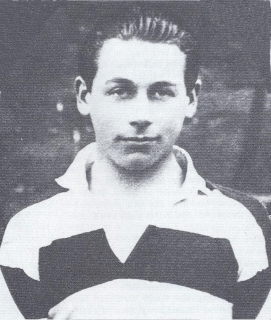
Kevin Gerard Barry, an 18-year-old Irish Republican Army (IRA) soldier, is executed by the British Government on November 1, 1920, during the Irish War of Independence. He is sentenced to death for his part in an attack upon a British Army supply lorry which results in the deaths of three British soldiers.

Barry’s execution inflames nationalist public opinion in Ireland, largely because of his age. The timing of the execution, only seven days after the death by hunger strike of Terence MacSwiney, the republican Lord Mayor of Cork, brings public opinion to a fever-pitch. His pending death sentence attracts international attention, and attempts are made by United States and Vatican officials to secure a reprieve. His execution and MacSwiney’s death precipitate an escalation in violence as the Irish War of Independence enters its bloodiest phase, and Barry becomes an Irish republican martyr.

Barry is born on January 20, 1902, at 8 Fleet Street, Dublin, to Thomas and Mary (née Dowling) Barry. The fourth of seven children, two boys and five sisters, he is baptised in St. Andrew’s Church, Westland Row. As a child he attends the National School in Rathvilly, County Carlow, and the O’Connell Schools in Dublin, before enrolling in the Preparatory Grade at St. Mary’s College, Dublin, in September 1915. He remains at that school until May 31, 1916, when it is closed by its clerical sponsors. With the closure of St. Mary’s College, he transfers to Belvedere College, a Jesuit school in Dublin.

In October 1917, during his second year at Belvedere, Barry joins Company C, 1st Battalion of the Dublin Brigade of the Irish Volunteers. When Company C is later reorganized, he is reassigned to the newly formed Company H, under the command of Captain Seamus Kavanagh. The following year he is introduced by Seán O’Neill and Bob O’Flanagan to the Clarke Luby Club of the Irish Republican Brotherhood (IRB), and at some point in time he is sworn as a member of this secret society which is led by Michael Collins.

Two Dublin Volunteers notice that a British army lorry guarded by an armed party of soldiers makes twice weekly trips to Monk’s Bakery on Church Street to obtain bread. Based on these observations, John Joe Carroll of Company H conducts a reconnaissance of the bakery. In addition to its main entrance on Church Street, he observes that the bakery yard is also accessible by a corridor leading from a shop on North King Street. He concludes that this makes the bakery an attractive site for an ambush.

On the morning of September 20, 1920, Barry goes to Mass, then joins a party of IRA volunteers on Bolton Street in Dublin. Their orders are to ambush a British army lorry as it picks up a delivery of bread from the bakery and capture their weapons. The ambush is scheduled for 11:00 AM, which gives him enough time to take part in the operation and return to class in time for an examination he has at 2:00 PM. The truck arrives late and is under the command of Sergeant Banks.

Armed with a .38 Mauser Parabellum, Barry and members of C Company are to surround the lorry, disarm the soldiers, take the weapons and escape. He covers the back of the vehicle and, when challenged, the five soldiers comply with the order to lay down their weapons. A shot is then fired, possibly a warning shot from an uncovered soldier in the front. Barry and the rest of the ambush party then open fire. His gun jams twice and he dives for cover under the vehicle. His comrades flee and he is left behind. He is then spotted and arrested by the soldiers. One soldier is killed and two other later die of their wounds.

The War Office orders that Barry be tried by court-martial under the Restoration of Order in Ireland Act 1920, which received royal assent on August 9, 1920. Barry is charged on three counts of the murder of Private Marshall Whitehead. In accordance with military procedure the verdict is not announced in court. He is returned to Mountjoy Prison. Later that night the district court-martial officer enters his cell and reads out the sentence: death by hanging. The public learns on October 28 that the date of execution has been fixed for November 1.

Barry is hanged on November 1, 1920, after hearing two Masses in his cell. Canon Waters, who walks with him to the scaffold, writes to Barry’s mother later, “You are the mother, my dear Mrs. Barry, of one of the bravest and best boys I have ever known. His death was one of the most holy, and your dear boy is waiting for you now, beyond the reach of sorrow or trial.”

Barry’s body is buried at 1:30 PM, in a plot near the women’s prison. His comrade and fellow-student Frank Flood is buried alongside him four months later. A plain cross marks their graves and those of Patrick Moran, Thomas Whelan, Thomas Traynor, Patrick Doyle, Thomas Bryan, Bernard Ryan, Edmond Foley and Patrick Maher who are hanged in the same prison before the Anglo-Irish Treaty of July 1921 which ends hostilities between Irish republicans and the British. The men are buried in unconsecrated ground on the jail property and their graves are unidentified until 1934. They become known as the Forgotten Ten by republicans campaigning for the bodies to be reburied with honour and proper rites. On October 14, 2001, the remains of these ten men are given a state funeral and moved from Mountjoy Prison to be re-interred at Glasnevin Cemetery in Dublin.


Leave a comment

Birth of Josephine Bracken, Common-law wife of José Rizal

Marie Josephine Leopoldine Bracken, the common-law wife of Philippine national hero José Rizal, is born in Victoria Barracks in Victoria, British Hong Kong, on August 9, 1876.

Bracken is born to Irish parents James Bracken, a corporal in the British Army, and Elizabeth Jane McBride, of Belfast. After her mother dies shortly after childbirth, her father gives her up for adoption. She is taken in by her godfather, the American George Taufer, a blind, and fairly well-to-do engineer of the pumping plant of the Hong Kong Fire Department, and his late Portuguese wife. He later remarries another Portuguese woman from Macau, Francesca Spencer, with whom he has another daughter.

After the second Mrs. Taufer dies in 1891, Taufer decides to remarry again but the new wife turns out to be difficult to deal with for Bracken. She spends two months in the Convent of the Canossian Sisters, where she previously attended early years of school. She decides to go back only after Taufer calls at the convent’s door pleading with her to come back home as his third wife turned out to be a bad housekeeper. A few months later she has trouble again with the third Mrs. Taufer and haunts her out of the house.

Bracken later recommends that her blind adoptive father see José Rizal, who is a respected ophthalmologist who had practiced at Rednaxela Terrace in Hong Kong. By this time, he is a political exile in Dapitan, Zamboanga del Norte in southern Philippines. The family sails to the Philippines and arrives in Manila on February 5, 1895, and later that month Bracken and Taufer sail to Dapitan.

Taufer’s double cataract is beyond Rizal’s help, but he falls in love with Bracken. Taufer vehemently opposes the union but finally listens to reason. She accompanies Taufer to Manila on his way back to Hong Kong, together with Rizal’s sister, Narcisa, on March 14, 1895. Rizal applies for marriage but because of his writings and political stance, the local priest Father Obach, will only agree to the ceremony if Rizal obtains permission from the Bishop of Cebu. Either the Bishop does not write him back or Rizal is not able to mail the letter because of Taufer’s sudden departure.

Before heading back to Dapitan to live with Rizal, Bracken introduces herself to members of his family in Manila. His mother suggests a civil marriage, which she believes to be a lesser “sacrament” but free from hypocrisy — and thus less a burden to Rizal’s conscience — than making any sort of political retraction. Nevertheless, Bracken and Rizal live together as husband and wife in Barangay Talisay, Dapitan, beginning in July 1895. The couple has a son, Francísco Rizal y Bracken, who is born prematurely and dies within a few hours of birth.

On the evening before his execution on December 30, 1896, on charges of treason, rebellion and sedition by the Spanish colonial government, the Catholic Church claims that Rizal returned to the faith and is married to Bracken in a religious ceremony officiated by Father Vicente Balaguer, S.J. sometime between 5:00 AM and 6:00 AM, an hour before his scheduled execution at 7:00 AM. Despite claims by Father Balaguer and Bracken herself, some sectors, including members of Rizal’s family, dispute that the wedding had occurred because no records are found attesting to the union.

Following Rizal’s death, Bracken joins revolutionary forces in Cavite province, where she takes care of sick and wounded soldiers, boosting their morale, and helping operate reloading jigs for Mauser cartridges at the Imus Arsenal under revolutionary general Pantaleón García. Imus is under threat of recapture, so Bracken, making her way through the thicket and mud, moves with the operation to the Cavite mountain redoubt of Maragondon. She witnesses the Tejeros Convention on March 22, 1897, before returning to Manila, and is later summoned by the Spanish Governor-General, who threatens her with torture and imprisonment if she does not leave the colony. Owing however to her adoptive father’s American citizenship, she cannot be forcibly deported, but she voluntarily returns to Hong Kong upon the advice of the American consul in Manila.

Upon returning to Hong Kong, Bracken once more lives in her father’s house. After his death, she marries Vicente Abad, a Cebuano mestizo, who represents his father’s tabacalera company in the British territory. A daughter, Dolores Abad y Braken, is born to the couple on April 17, 1900. A later testimony of Abad affirms that her mother “was already suffering from tuberculosis of the larynx” at the time of the wedding.

Bracken dies of tuberculosis on March 15, 1902, in Hong Kong and is interred at the Happy Valley Cemetery.


2 Comments

Death of Michael Joseph O’Rahilly

michael-joseph-o-rahilly

Michael Joseph O’Rahilly, Irish republican and nationalist known as The O’Rahilly, dies in Dublin on April 29, 1916, during the Easter Rising. He is a founding member of the Irish Volunteers in 1913 and serves as Director of Arms. Despite opposing the rising, he takes part and is killed in a charge on a British machine gun post covering the retreat from the General Post Office (GPO) during the fighting.

O’Rahilly is born in Ballylongford, County Kerry to Richard Rahilly, a grocer, and Ellen Rahilly (née Mangan). He has two siblings who live to adulthood, Mary Ellen “Nell” Humphreys (née Rahilly) and Anno O’Rahilly, both of whom are active in the Irish revolutionary period. He is educated in Clongowes Wood College (1890–1893). As an adult, he becomes a republican and a language enthusiast. He joins the Gaelic League and becomes a member of An Coiste Gnotha, its governing body. He is well traveled, spending at least a decade in the United States and in Europe before settling in Dublin.

In 1913 O’Rahilly is a founding member of the Irish Volunteers, who organize to work for Irish independence and resist the proposed Home Rule. He serves as the IV Director of Arms. He personally directs the first major arming of the Irish Volunteers, the landing of 900 Mausers at the Howth gun-running on July 26, 1914.

O’Rahilly is not party to the plans for the Easter Rising, nor is he a member of the Irish Republican Brotherhood (IRB), but he is one of the main people who trains the Irish Volunteers for the coming fight. The planners of the Rising go to great lengths to prevent those leaders of the Volunteers who are opposed to unprovoked, unilateral action from learning that a rising is imminent, including its Chief-of-Staff Eoin MacNeill, Bulmer Hobson, and O’Rahilly. When Hobson discovers that an insurrection is planned, he is kidnapped by the Military Council leadership.

Learning this, O’Rahilly goes to Patrick Pearse‘s school, Scoil Éanna, on Good Friday. He barges into Pearse’s study, brandishing his revolver as he announces, “Whoever kidnaps me will have to be a quicker shot!” Pearse calms him down, assuring him that Hobson is unharmed and will be released after the rising begins.

O’Rahilly takes instructions from MacNeill and spends the night driving throughout the country, informing Volunteer leaders in Cork, Kerry, Tipperary, and Limerick that they are not to mobilise their forces for planned manoeuvres on Sunday.

Arriving home, O’Rahilly learns that the Rising is about to begin in Dublin on the following day, Easter Monday, April 24, 1916. Despite his efforts to prevent such action, he sets out to Liberty Hall to join Pearse, James Connolly, Thomas MacDonagh, Tom Clarke, Joseph Plunkett, Countess Markievicz, Seán Mac Diarmada, Éamonn Ceannt and their Irish Volunteers and Irish Citizen Army troops. Arriving in his De Dion-Bouton motorcar, he gives one of the most quoted lines of the rising – “Well, I’ve helped to wind up the clock…I might as well hear it strike!” His car is used to fetch supplies during the siege and later as part of a barricade on Prince’s Street, where it is burned out.

O’Rahilly fights with the GPO garrison during Easter Week. One of the first British prisoners taken in the GPO is Second Lieutenant AD Chalmers, who is bound with telephone wire and lodged in a telephone box by the young Volunteer Captain and IRB activist, Michael Collins. Chalmers later recalls O’Rahilly’s kindness to him. In a statement to a newspaper reporter, he says that he was taken from the phone box after three hours and brought up to O’Rahilly, who ordered, “I want this officer to watch the safe to see that nothing is touched. You will see that no harm comes to him.”

On Friday, April 28, with the GPO on fire, O’Rahilly volunteers to lead a party of men along a route to Williams and Woods, a factory on Great Britain Street, now Parnell Street. A British machine gun at the intersection of Great Britain and Moore streets cuts him and several of the others down. He slumps into a doorway on Moore Street, wounded and bleeding badly but, hearing the English marking his position, makes a dash across the road to find shelter in Sackville Lane, now O’Rahilly Parade. He is wounded diagonally from shoulder to hip by sustained fire from the machine-gunner.

According to ambulance driver Albert Mitchell in a witness statement more than 30 years later, O’Rahilly still clung to life 19 hours after being severely wounded, long after the surrender had taken place on Saturday afternoon.

Desmond Ryan‘s The Rising: The Complete Story of Easter Week maintains that it “was 2:30 PM when Miss O’Farrell reached Moore Street, and as she passed Sackville Lane again, she saw O’Rahilly’s corpse lying a few yards up the laneway, his feet against a stone stairway in front of a house, his head towards the street.”


Leave a comment

Birth of Sir Thomas Myles, Home Ruler & Surgeon

thomas-myles

Sir Thomas Myles, a prominent Irish Home Ruler and surgeon, is born in Limerick, County Limerick on April 20, 1857. He is involved in the importation of arms for the Irish Volunteers in 1914.

Myles is the third of eleven children born to John Myles (1807-1871), a wealthy corn merchant, and his second wife Prudence, daughter of William Bradshaw of Kylebeg, County Tipperary. The Myles family has been prominent merchants in and around Limerick city since Oliver Cromwell‘s time.

A prominent sportsman from an early age, Myles graduates in medicine at Trinity College Dublin in 1881. One of his duties in his first job as resident surgeon at Dr. Steevens’ Hospital is to render medical assistance to the victims of the Phoenix Park murders on May 6, 1882.

From 1900 until 1902, Myles is President of the Royal College of Surgeons in Ireland. After stepping down, he is appointed a Knight Bachelor in the 1902 Coronation Honours list published on June 26, 1902, and knighted by the Lord Lieutenant of Ireland, George Cadogan, 5th Earl Cadogan, at Dublin Castle on August 11, 1902. He also receives the honorary freedom of his native city.

Myles is also an active Home Ruler. He owns a yacht, the Chotah. In 1914, he is recruited by James Creed Meredith to help in the importation of guns for the Irish Volunteers with Erskine Childers, Edward Conor Marshall O’Brien and others. Childers lands his part of the consignment from the Asgard at Howth on July 26, 1914. Myles’s cargo is landed by the Chotah at Kilcoole, County Wicklow a week later. Meredith himself helps out aboard the Chotah during the operation. On August 1, 1914, 600 Mauser rifles and 20,000 rounds of ammunition are landed at the beach in Kilcoole. Once the arms are landed, they are taken away by Volunteers on bicycles and in vehicles. The arms are taken to Patrick Pearse‘s St. Enda’s School, in Rathfarnham, County Dublin.

Myles is appointed temporary Lieutenant Colonel in the Royal Army Medical Corps on November 21, 1914, and also becomes Honorary Surgeon in Ireland to the King. He is appointed to be an Additional Member of the Military Division of the Third Class, or Companion, of the Most Honourable Order of the Bath, for services rendered in connection with the war, the appointment to date from January 1, 1917.

Sir Thomas Myles dies at the St. Lawrence’s Hospital in Dublin on July 14, 1937, and is buried at Deansgrange Cemetery in Dublin. Every year at the University of Limerick, the Sir Thomas Myles lecture is delivered as part of the Sylvester O’Halloran Surgical Meeting in honour of this remarkable surgeon and son of Limerick.


Leave a comment

Birth of Michael Joseph O’Rahilly, Republican & Nationalist

Michael Joseph O’Rahilly, Irish republican and nationalist known as The O’Rahilly, is born in BallylongfordCounty Kerry, on April 22, 1875.

O’Rahilly is educated in Clongowes Wood College. As an adult, he becomes a republican and a language enthusiast. He joins the Gaelic League and becomes a member of An Coiste Gnotha, its governing body. He is well travelled, spending at least a decade in the United States and in Europe before settling in Dublin.

O’Rahilly is a founding member of the Irish Volunteers in 1913, which is organized to work for Irish independence and resist the proposed Home Rule. He serves as the IV Director of Arms. He personally directs the first major arming of the Irish Volunteers, the landing of 900 Mausers at the Howth gun-running on July 26, 1914.

O’Rahilly is not party to the plans for the Easter Rising, nor is he a member of the Irish Republican Brotherhood (IRB), but he is one of the main people who train the Irish Volunteers for the coming fight. The planners of the Rising go to great lengths to prevent those leaders of the Volunteers who are opposed to unprovoked, unilateral action from learning that a rising is imminent, including its Chief-of-Staff Eoin MacNeillBulmer Hobson, and O’Rahilly. When Hobson discovers that an insurrection is planned, he is kidnapped by the Military Council leadership.

Learning this, O’Rahilly goes to Patrick Pearse‘s school, Scoil Éanna, on Good Friday. He barges into Pearse’s study, brandishing his revolver as he announces, “Whoever kidnaps me will have to be a quicker shot!” Pearse calms O’Rahilly, assuring him that Hobson is unharmed, and will be released after the rising begins.

O’Rahilly takes instructions from MacNeill and spends the night driving throughout the country, informing Volunteer leaders in CorkKerryTipperary, and Limerick that they are not to mobilise their forces for planned manoeuvres on Sunday.

Arriving home, O’Rahilly learns that the Rising is about to begin in Dublin on the next day, Easter Monday, April 24, 1916. Despite his efforts to prevent such action which he feels can only lead to defeat, he sets out to Liberty Hall to join Pearse, James ConnollyThomas MacDonaghTom ClarkeJoseph PlunkettCountess MarkieviczSeán Mac DiarmadaEamonn Ceannt and their Irish Volunteers and Irish Citizen Army troops. Arriving in his De Dion-Bouton motorcar, he gives one of the most quoted lines of the rising, “Well, I’ve helped to wind up the clock — I might as well hear it strike!”

O’Rahilly fights with the General Post Office (GPO) garrison during Easter Week. On Friday, April 28, with the GPO on fire, O’Rahilly volunteers to lead a party of men along a route to Williams and Woods, a factory on Great Britain Street, now Parnell Street. A British machine-gun at the intersection of Great Britain and Moore streets cuts him and several of the others down. Wounded and bleeding badly, O’Rahilly slumps into a doorway on Moore Street, but hearing the English marking his position, makes a dash across the road to find shelter in Sackville Lane, now O’Rahilly Parade. He is wounded diagonally from shoulder to hip by sustained fire from the machine-gunner.

The specific timing of O’Rahilly’s death is very difficult to pin down but understanding can be gained from his final thoughts. Despite his obvious pain, he takes the time to write a message to his wife on the back of a letter he received from his son in the GPO. It is this last message to Nancy that artist Shane Cullen etches into his limestone and bronze sculpture. The text reads:

Written after I was shot. Darling Nancy I was shot leading a rush up Moore Street and took refuge in a doorway. While I was there, I heard the men pointing out where I was and made a bolt for the laneway I am in now. I got more [than] one bullet, I think. Tons and tons of love dearie to you and the boys and to Nell and Anna. It was a good fight anyhow. Please deliver this to Nannie O’ Rahilly, 40 Herbert Park, Dublin. Goodbye Darling.


Leave a comment

Birth of Thomas Patrick Ashe

thomas-patrick-ashe

Thomas Patrick Ashe, a member of the Gaelic League, the Irish Republican Brotherhood (IRB), and a founding member of the Irish Volunteers, is born in Lispole, County Kerry, on January 12, 1885. Ashe enters De La Salle Training College, Waterford, in 1905 and begins a teaching career as principal of Corduff National School, Lusk, County Dublin, in 1908.

Ashe plays a major part in the 1916 Easter Rising outside the capital city commanding the Fingal battalion of the Irish Volunteers. Ashe is commandant of the 5th battalion of the Dublin brigade, a force of 60–70 men engaging British forces around north County Dublin during the rising. They are armed only with a few rounds, about a dozen service rifles, a dozen Mausers, and a dozen Martini-Henry carbines. Some of Ashe’s men are armed only with a shotgun against the well-equipped army regulars.

Ashe’s battalion wins a major victory in Ashbourne, County Meath, where they engage a much larger force. They capture a significant quantity of arms and up to twenty Royal Irish Constabulary (RIC) vehicles. Eleven RIC members, including County Inspector Alexander Gray, and two volunteers are killed during the 5-1/2-hour battle. Twenty-four hours after the rising collapses, Ashe’s battalion surrenders on the orders of Patrick Pearse. On May 8, 1916, Ashe and Éamon de Valera are court-martialled and sentenced to death. The sentences are commuted to penal servitude for life. Ashe is imprisoned in Lewes Prison in Lewes, East Sussex, England.

De Valera, Ashe, and Thomas Hunter lead a prisoner hunger strike on May 28, 1917. With accounts of prison mistreatment appearing in the Irish press and mounting protests in Ireland, Ashe and the remaining prisoners are freed on June 18, 1917, by David Lloyd George as part of a general amnesty.

Upon his release, Ashe returns to Ireland and begins a series of speaking engagements. In August 1917, he is arrested and charged with sedition for a speech that he makes in Ballinalee, County Longford, where Michael Collins is also speaking. He is detained at the Curragh but is then transferred to Mountjoy Prison in Dublin. He is convicted and sentenced to two years hard labour. Ashe and other prisoners, including Austin Stack, demand prisoner of war status. On September 20, 1917, Ashe again goes on hunger strike. He dies at the Mater Hospital on September 25, 1917, after being force fed by prison authorities. At the inquest into his death, the jury condemns the staff at the prison for the “inhuman and dangerous operation performed on the prisoner, and other acts of unfeeling and barbaric conduct.” His body lies in state at Dublin City Hall and is buried in Glasnevin Cemetery in Dublin.

Ashe is a relative of Catherine Ashe, the paternal grandmother of American actor Gregory Peck, who emigrates to the United States in the 19th century. The Ashe Memorial Hall built in 1928, housing the Kerry County Museum, in Tralee, County Kerry, is named after him while Nelson Street, also in Tralee, is renamed Ashe Street.