seamus dubhghaill

Promoting Irish Culture and History from Little Rock, Arkansas, USA


Leave a comment

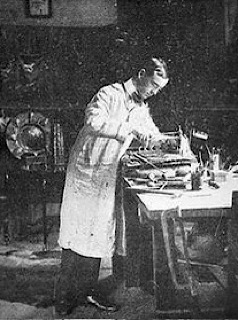
Death of Denis Santry, Architect & Cartoonist

Denis Santry, Irish architect and cartoonist, dies in Durban, South Africa, on April 14, 1960. He is a pioneer of animated cartoons in South Africa and the architect of the several prominent structures in Singapore, including the Sultan Mosque and The Cenotaph.

Santry is born in Cork, County Cork, on May 14, 1879, to Denis Santry, Sr., a carpenter and joiner. He studies at the Cork Municipal School of Art from 1894 to 1896 after serving an apprenticeship as a cabinetmaker. In 1895, he also studies at the Crawford School of Art. In 1897, he is articled to architect James Finbarre McMullen. From 1897 to 1898, he studies at the Royal College of Art in London under a Lane scholarship. While he is at the college, he wins the Queen’s prize for freehand drawing. After graduating, he returns to McMullen’s office and works there for the next two years.

Santry comes to South Africa at the end of 1901 due to ill health. He settles in Cape Town and is employed at Tully & Waters, an architectural firm, from 1901 to 1902. He then spends a year working for architect William Patrick Henry Black. In 1903, his cartoons begin to appear in local newspapers and magazines, including the South African Review. He uses the pseudonym “Adam” in his cartoons. He continues to work as an architect until 1910 when he begins working as a cartoonist, as well as a metalworker, sculptor and filmmaker. He then moves to Johannesburg and is employed at the Sunday Times and The Rand Daily Mail as a cartoonist. During World War I, his cartoons are reproduced in several other countries. He becomes a pioneer of animated cartoons in South Africa. He is a member of the Royal Society of Arts and a council member of the South African Society of Artists.

Santry comes to Singapore in 1918 and joins the architectural firm Swan & Maclaren as a partner. While in Singapore, he serves as the architect of several prominent buildings and monuments, including the Sultan Mosque, The Cenotaph, the Maritime Building, the Hongkong and Shanghai Bank Building and the Telok Ayer Chinese Methodist Church. He serves as the first president of the St. Patrick’s Society Singapore, the first president of the Singapore Amateur Boxing Association, the chairman of the Singapore Art Club, a member of the board of control of the Victoria Theatre and Concert Hall, a member of the Censorship Appeal Board and the vice-president of the Straits Settlements Association. He is also a frequent contributor to the Straits Produce, a satirical magazine. He helps to found the Singapore Society of Architects and the Institute of Architects of Malaya and is the founder and the chairman of the Singapore Musical Society. He retires to England in March 1934.

Santry returns to South Africa in 1940. Following the end of World War II, he resumes his practice as a result of lost income caused by the Japanese occupation of Malaya. In 1950, he becomes a member of the Institute of South African Architects. He designs several private houses in Hillcrest, KwaZulu-Natal.

Santry marries Madeline Hegarty in 1904. From 1910 to 1918, he lives in Kleine Schuur on Rhodes Avenue in Johannesburg. The house is designed by prominent architect Herbert Baker. He dies in Durban, South Africa, on April 14, 1960.


Leave a comment

Death of Philanthropist Thomas John Barnardo

Thomas John Barnardo, philanthropist and founder and director of homes for poor children, dies in London on September 19, 1905. From the foundation of the first Barnardo’s home in 1867 to the date of his death, nearly 60,000 children are taken in.

Barnardo is born in Dublin on July 4, 1845. He is the fourth of five children of John Michaelis Barnardo, a furrier who is of Sephardic Jewish descent, and his second wife, Abigail, an Englishwoman and member of the Plymouth Brethren. In the early 1840s, John emigrates from Hamburg to Dublin, where he establishes a business. Barnardo moves to London in 1866. At that time he is interested in becoming a missionary.

Barnardo establishes “Hope Place” ragged school in the East End of London in 1868, his first attempt at aiding the estimated 30,000 ‘destitute’ children in Victorian London. Many of these children are not only impoverished, but orphaned, as the result of a recent cholera outbreak. For those unable to afford private education, the school offers education which, although Christian-based in nature, is not exclusively religion-focused, and works to provide tutelage on various common trades of that time.

In 1870, Barnardo is prompted to form a boys’ orphanage at 18 Stepney Causeway after inspecting the conditions within which London’s orphaned population sleep. This is the first of 122 such establishments, caring for over 8,500 children, founded before his death in 1905. Significant provisions are available to occupants. Infants and younger children are sent to rural districts in attempt to protect them from industrial pollution. Teenagers are trained in skills such as carpentry and metalworking, to provide them a form of basic financial stability.

In June 1873, Barnardo marries Sara Louise Elmslie, known as Syrie, the daughter of an underwriter for Lloyd’s of London. She shares her husband’s interests in evangelism and social work. The couple settles at Mossford Lodge, Essex, where they have seven children, three of whom die in early childhood.

Barnardo’s homes do not just accommodate boys. In 1876 the “Girls’ Village Home” is established and by 1905 accommodates 1,300 girls, who are trained for “domestic occupation.” Another establishment, the “rescue home for girls in serious danger,” aims to protect girls from the growing tide of child prostitution.

Barnardo’s work is carried on by his many supporters under the name Dr. Barnardo’s Homes. Following societal changes in the mid-20th century, the charity changes its focus from the direct care of children to fostering and adoption, renaming itself Dr. Barnardo’s. Following the closure of its last traditional orphanage in 1989, it takes the still simpler name of Barnardo’s.

Barnardo dies of angina pectoris in London on September 19, 1905, and is buried in front of Cairn’s House, Barkingside, Essex. The house is now the head office of the children’s charity he founded, Barnardo’s. A memorial stands outside Cairn’s House.

After Barnardo’s death, a national memorial is instituted to form a fund of £250,000 to relieve the various institutions of all financial liability and to place the entire work on a permanent basis. At the time of his death, his charity is caring for over 8,500 children in 96 homes.

At the time of the Whitechapel murders, due to the supposed medical expertise of the Ripper, various doctors in the area are suspected. Barnardo is named a possible suspect long after his death. Ripperologist Gary Rowlands theorises that due to Barnardo’s lonely childhood he had anger which may have led him to murder prostitutes. However, there is no evidence whatsoever that he committed the murders. Critics have also pointed out that his age and appearance do not match any of the descriptions of the Ripper.


Leave a comment

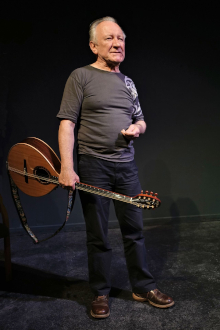
Birth of Dónal Lunny, Irish Folk Musician & Producer

donal-lunny

Dónal Lunny, Irish folk musician and producer, is born on March 10, 1947, in Tullamore, County Offaly. He plays left-handed guitar and bouzouki, as well as keyboards and bodhrán. As a founding member of popular bands Planxty, The Bothy Band, Moving Hearts, Coolfin, Mozaik, LAPD, and Usher’s Island, he has been at the forefront of the renaissance of Irish traditional music for over five decades.

Lunny attends secondary school at Newbridge College and, in 1963, joins the Patrician Brothers’ school for the Intermediate Certificate year. As a teenager, he joins an occasional trio called Rakes of Kildare, with his elder brother Frank and Christy Moore. They play mostly in pubs and are also booked for a couple of gigs, one at Hugh Neeson’s pub in Newbridge for Easter Monday in 1966.

In 1965, Lunny enrolls at Dublin‘s National College of Art & Design where he studies Basic Design and Graphic Design. He also develops an interest in metalwork leading him to become a skilled gold-and-silversmith, although he only practises the craft for a short time before devoting his energies fully to music. During his time in Dublin, he plays in a band called The Parnell Folk, with Mick Moloney, Sean Corcoran, Johnny Morrissey and Dan Maher.

When Moving Hearts breaks up in 1985, Lunny diversifies and becomes a producer. He is closely involved in the establishment of a new Irish record label, Mulligan Records (acquired in 2008 by Compass Records), and produces and plays on many of its early releases.

Lunny is the producer and music director of the soundtrack of Bringing It All Back Home, a BBC Television documentary series charting the influence of Irish music throughout the world. He produces albums for Paul Brady, Elvis Costello, Indigo Girls, Sinéad O’Connor, Clannad, Maurice Lennon, Baaba Maal, and Five Guys Named Moe. He appears on the compilation albums The Gathering (1981) and Common Ground (1996). In 1994, he produces Irish Australian singer/songwriter Mairéid Sullivan’s first recording, Dancer.

Lunny pushes new boundaries with his band Coolfin (1998) which includes uilleann piper John McSherry. He appears at the 2000 Cambridge Folk Festival, and the album that commemorates it. In 2001 he collaborates with Frank Harte on the album My Name is Napoleon Bonaparte. He produces the album Human Child (2007) by Faeroese Eivør Pálsdóttir, which is published in two versions, one English and one Faeroese.

As an arranger, Lunny works for The Waterboys, Fairground Attraction and Eddi Reader. Journey (2000) is a retrospective album. During 2003–2005, he is part of the reunited Planxty concert tour. He also produces Jimmy MacCarthy‘s album entitled Hey-Ho Believe, which is released on November 12, 2010.

Lunny is the brother of musician and producer Manus Lunny. He has a son, Shane, whose mother is singer Sinéad O’Connor.

(Pictured: Dónal Lunny at the Craiceann Bodhrán Festival 2016, Inis Oirr)