seamus dubhghaill

Promoting Irish Culture and History from Little Rock, Arkansas, USA


Leave a comment

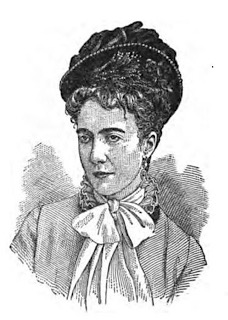
Fanny Parnell Launches the Ladies’ Land League in New York

Fanny Parnell, the Irish American poet and nationalist, launches the Ladies’ Land League in New York on October 24, 1880. She is a sister of Charles Stewart Parnell and a vocal supporter of the Irish National Land League’s campaign against “rack-rents” and for tenant ownership.

In 1880, while living in Bordentown, New Jersey, Parnell becomes active in fundraising for the Land League in the United States. Her 1880 pamphlet The Hovels of Ireland explains the Irish land crisis to American audiences, and she also works for the Famine Relief Fund in New York.

By October 1880, Parnell has taken the initiative to launch a Ladies’ Land League in New York. This is an auxiliary group aimed at supporting the Irish National Land League’s work, especially after its leaders become at risk of imprisonment. The New York committee she sets up is part of a broader plan by Michael Davitt to ensure the movement can continue if male leaders are jailed. Davitt and the League’s treasurer, Patrick Egan, later persuade the Central Committee to formally establish the Ladies’ Land League in Dublin on January 31, 1881, with Anna Parnell as its first president.

The Ladies’ Land League quickly becomes the first political association of Irish women, organizing branches in Ireland, Britain, the United States, Canada, Australia, and New Zealand. They maintain a detailed “Book of Kells” register of estates, tenants, and evictions, and provide financial and material aid to evicted tenants, including erecting prefabricated huts when possible. Their work is both political and humanitarian, challenging gender norms while maintaining a public image of respectability.

Fanny Parnell’s October 1880 launch in New York is thus a key early step in mobilizing Irish American women for the Land War, laying the groundwork for the League’s transnational activism and its role in sustaining the movement during its most turbulent years.

Leave a comment

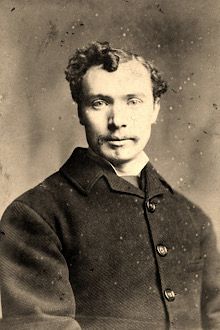
Birth of Thomas Brennan, Co-founder of the Irish National Land League

Thomas Brennan, an Irish republican, agrarian radical, and co-founder and joint secretary of the Irish National Land League, is born on July 28, 1853, at Yellow Furze, County Meath. He plays a key role in Irish land reform and nationalist activism.

Brennan is the second of two children to Patrick Brennan of the Catholic parish of Beauparc and Catherine Brennan (née Rourke). Little is recorded of his early education, but he develops a reputation as an intelligent and articulate public speaker. At age 18, he begins working as a clerk at Murtagh Bros., a Dublin-based bakery, alongside his uncle James Rourke. Through his connections with Patrick Egan, he and his uncle join the Irish Republican Brotherhood (IRB) and become active in election campaigns and nationalist organizing.

By 1877–1878, Brennan has become the civil secretary of the Leinster IRB and honorary secretary of the Dublin Mechanics Institute. In 1879, he plays an instrumental role in establishing the Land League of Mayo, acting alongside Michael Davitt and Patrick Egan. When the Irish National Land League is formally founded in October 1879, Brennan is appointed assistant secretary, effectively helping manage the League’s operations and campaigns for tenant farmers.

Brennan is known for his eloquence at public rallies, often linking land agitation to Irish nationalist objectives and espousing radical, egalitarian ideas. During the Land League’s activities, he faces trial for encouraging non-payment of rent but is not convicted. He later takes on the duties of national secretary after Davitt’s arrest and authorizes the issuance of the “No Rent Manifesto” from Kilmainham Gaol in 1881, a pivotal document in Ireland’s land struggle.

Following internal shifts in Irish nationalist politics and limitations placed on his influence by Charles Stewart Parnell, Brennan emigrates to the United States. He works for Patrick Ford’s Irish World newspaper in New York City, critiquing aspects of the Irish Parliamentary Party (IPP) and emphasizing non-violent republican principles. By 1883, he settles in Omaha, Nebraska, partnering with Patrick Egan in the Omaha Mortgage Company, specializing in real estate, investment, and insurance. He becomes a respected businessman and seeks to maintain connections with the Irish American nationalist community.

Brennan never marries and eventually dedicates himself to business in Omaha. He passes away on December 19, 1912, in Omaha, Nebraska, having left a lasting impact on Irish land reform efforts and the nationalist movement. He is buried in Holy Sepulchre Cemetery in Omaha.

Brennan is remembered as a founder and key administrator of the Irish National Land League, a signatory of the “No Rent Manifesto,” and a prominent voice in the Irish republican movement. His advocacy helps shape the course of land reform in Ireland and fosters Irish nationalist sentiment both domestically and among the diaspora.

Sources confirm that his activism, speeches, and organizational skill were central to the Land League’s influence, and he remains a notable figure in 19th-century Irish political history.