seamus dubhghaill

Promoting Irish Culture and History from Little Rock, Arkansas, USA


Leave a comment

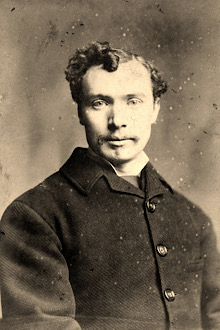
Birth of Thomas Brennan, Co-founder of the Irish National Land League

Thomas Brennan, an Irish republican, agrarian radical, and co-founder and joint secretary of the Irish National Land League, is born on July 28, 1853, at Yellow Furze, County Meath. He plays a key role in Irish land reform and nationalist activism.

Brennan is the second of two children to Patrick Brennan of the Catholic parish of Beauparc and Catherine Brennan (née Rourke). Little is recorded of his early education, but he develops a reputation as an intelligent and articulate public speaker. At age 18, he begins working as a clerk at Murtagh Bros., a Dublin-based bakery, alongside his uncle James Rourke. Through his connections with Patrick Egan, he and his uncle join the Irish Republican Brotherhood (IRB) and become active in election campaigns and nationalist organizing.

By 1877–1878, Brennan has become the civil secretary of the Leinster IRB and honorary secretary of the Dublin Mechanics Institute. In 1879, he plays an instrumental role in establishing the Land League of Mayo, acting alongside Michael Davitt and Patrick Egan. When the Irish National Land League is formally founded in October 1879, Brennan is appointed assistant secretary, effectively helping manage the League’s operations and campaigns for tenant farmers.

Brennan is known for his eloquence at public rallies, often linking land agitation to Irish nationalist objectives and espousing radical, egalitarian ideas. During the Land League’s activities, he faces trial for encouraging non-payment of rent but is not convicted. He later takes on the duties of national secretary after Davitt’s arrest and authorizes the issuance of the “No Rent Manifesto” from Kilmainham Gaol in 1881, a pivotal document in Ireland’s land struggle.

Following internal shifts in Irish nationalist politics and limitations placed on his influence by Charles Stewart Parnell, Brennan emigrates to the United States. He works for Patrick Ford’s Irish World newspaper in New York City, critiquing aspects of the Irish Parliamentary Party (IPP) and emphasizing non-violent republican principles. By 1883, he settles in Omaha, Nebraska, partnering with Patrick Egan in the Omaha Mortgage Company, specializing in real estate, investment, and insurance. He becomes a respected businessman and seeks to maintain connections with the Irish American nationalist community.

Brennan never marries and eventually dedicates himself to business in Omaha. He passes away on December 19, 1912, in Omaha, Nebraska, having left a lasting impact on Irish land reform efforts and the nationalist movement. He is buried in Holy Sepulchre Cemetery in Omaha.

Brennan is remembered as a founder and key administrator of the Irish National Land League, a signatory of the “No Rent Manifesto,” and a prominent voice in the Irish republican movement. His advocacy helps shape the course of land reform in Ireland and fosters Irish nationalist sentiment both domestically and among the diaspora.

Sources confirm that his activism, speeches, and organizational skill were central to the Land League’s influence, and he remains a notable figure in 19th-century Irish political history.


1 Comment

Birth of Patrick Ford, Irish American Journalist & Land Reformer

Patrick Ford, Irish American journalist, Georgist land reformer and fund-raiser for Irish causes, is born in Galway, County Galway, on April 12, 1837.

Ford is the son of Edward Ford (1805-1880) and Anne Ford (1815-1893). He emigrates with his parents to Boston, Massachusetts, in 1845, never returning to Ireland. Although he devotes his life to Irish causes, he writes in The Irish World in 1886 that “I might as well have been born in Boston. I know nothing of England. I brought nothing with me from Ireland—nothing tangible to make me what I am. I had consciously at least, only what I found and grew up with in here.”

Ford is educated in Boston’s public schools and the Latin school of the parish of St. Mary in the North End. He leaves school at the age of thirteen and two years later is working as a printer’s devil for William Lloyd Garrison‘s abolitionist newspaper The Liberator. He begins writing for Boston newspapers in 1855 and by 1861 is editor and publisher of the Boston Tribune, also known as the Boston Sunday Tribune or Boston Sunday Times. He is an abolitionist and pro-union.

During the American Civil War, Ford serves in the Union Army with his father and brother. He serves in the 9th Massachusetts Infantry Regiment and sees action in the Northern Virginia campaign, including the Battle of Fredericksburg on December 13, 1862.

After the Civil War, Ford spends four years in Charleston, South Carolina, editing the South Carolina Leader which promotes the welfare of newly freed slaves. He later edits the Irish American Charleston Gazette. He settles in New York City in 1870 and founds the populist The Irish World, which promotes Irish and Catholic interests and becomes the principal newspaper of Irish America. It promises “more reading material than any other paper in America” and outsells John Boyle O’Reilly‘s Boston Pilot. In 1878, he re-titles his newspaper The Irish World and American Industrial Liberator. During the early 1880s, he promotes the writings of land reformer Henry George in his paper.

The American economic depression of 1873 convinces Ford that the Irish rural poor and the American urban poor share the same plight. He believes that the Homestead Act of 1862 is exploited by big business, especially the railroads, and by speculators who leave the poor without access to the western land meant for settlement. He calls for land reform with the belief that land monopoly is the cause of poverty and that a single tax based on land valuation is the solution. In the mid–1870s he leaves the Democratic Party. Critical of Tammany corruption and attracted to the fiscal policies of the Greenback Party, he is a member of the party’s New York State central committee as early as 1876 and backs the Greenback presidential candidates Peter Cooper and James B. Weaver in 1876 and 1880. Even the Greenbacks fail to offer the land reforms envisaged by Ford, so he forms the short-lived National Cooperative Democracy Party in 1879.

In 1880, Ford begins to solicit donations through The Irish World to support Land League activities in Ireland. Funds received are tabulated weekly under the heading “Land League Fund.” Between January and September 1881 alone, more than $100,000 is collected in donations. British Prime Minister William Ewart Gladstone later states that without the funds from The Irish World, “there would have been no agitation in Ireland.”

In the 1884 and 1888 elections, Ford turns to the Republican Party, encouraging Irish American voters to abandon their traditional loyalty to the Democrats for the Republican candidate James G. Blaine, whom he promotes in The Irish World as supportive of labour and of Ireland. The Republican patronage of the financially troubled The Irish World is a factor in the endorsement, but he believes Blaine’s promise to introduce high trade tariffs will protect American labour interests.

After the Irish Parliamentary Party split in 1891, Ford supports the Parnellite faction of John Redmond and endorses the terms of the Third Home Rule Bill of 1912.

Ford dies on September 23, 1913, at his home at 350 Clermont Street, Brooklyn. After an impressive funeral, he is buried in Brooklyn’s Holy Cross Cemetery.

In 1863, Ford marries Odele McDonald, who predeceases him. They have eleven children, three daughters and eight sons. At the time of his death, his son Patrick is managing editor of The Irish World, and his brother Augustine is business manager and publisher. He appears to have destroyed his personal papers. The files of The Irish World are the best record of his life and work.


Leave a comment

Birth of Patrick Ford, Irish American Journalist

patrick-ford

Patrick Ford, Irish American journalist, Georgist land reformer and fund-raiser for Irish causes, is born in Galway, County Galway on April 12, 1837.

Ford is born to Edward Ford (1805-1880) and Ann Ford (1815-1893), emigrating with his parents to Boston, Massachusetts in 1845, never returning to Ireland. He writes in the Irish World in 1886 that “I might as well have been born in Boston. I know nothing of England. I brought nothing with me from Ireland — nothing tangible to make me what I am. I had consciously at least, only what I found and grew up with in here.”

Ford leaves school at the age of thirteen and two years later is working as a printer’s devil for William Lloyd Garrison‘s The Liberator. He credits Garrison for his advocacy for social reform. He begins writing in 1855 and by 1861 is editor and publisher of the Boston Tribune, also known as the Boston Sunday Tribune or Boston Sunday Times. He is an abolitionist and pro-union.

During the American Civil War (1861–1865) Ford serves in the Union Army in the Ninth Massachusetts Regiment with his father and brother. He sees action in northern Virginia and fights in the Battle of Fredericksburg.

Ford spends four years after the war in Charleston, South Carolina, editing the Southern Carolina Leader, printed to support newly freed slaves. He settles in New York City in 1870 and founds the Irish World, which becomes the principal newspaper of Irish America. It promises “more reading material than any other paper in America” and outsells John Boyle O’Reilly‘s The Pilot.

In 1878, Ford re-titles his newspaper, the Irish World and American Industrial Liberator. During the early 1880s, he promotes the writings of land reformer, Henry George in his paper.

In 1880, Ford begins to solicit donations through the Irish World to support Irish National Land League activities in Ireland. Funds received are tabulated weekly under the heading “Land League Fund.” Between January and September 1881 alone, more than $100,000 is collected in donations. British Prime Minister William Ewart Gladstone later states that without the funds from the Irish World, there would have been no agitation in Ireland.”

Patrick Ford dies on September 23, 1913.