seamus dubhghaill

Promoting Irish Culture and History from Little Rock, Arkansas, USA


Leave a comment

Birth of Thomas Brennan, Co-founder of the Irish National Land League

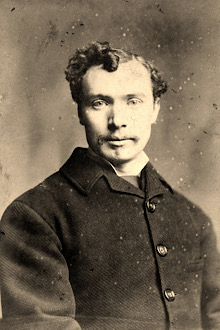
Thomas Brennan, an Irish republican, agrarian radical, and co-founder and joint secretary of the Irish National Land League, is born on July 28, 1853, at Yellow Furze, County Meath. He plays a key role in Irish land reform and nationalist activism.

Brennan is the second of two children to Patrick Brennan of the Catholic parish of Beauparc and Catherine Brennan (née Rourke). Little is recorded of his early education, but he develops a reputation as an intelligent and articulate public speaker. At age 18, he begins working as a clerk at Murtagh Bros., a Dublin-based bakery, alongside his uncle James Rourke. Through his connections with Patrick Egan, he and his uncle join the Irish Republican Brotherhood (IRB) and become active in election campaigns and nationalist organizing.

By 1877–1878, Brennan has become the civil secretary of the Leinster IRB and honorary secretary of the Dublin Mechanics Institute. In 1879, he plays an instrumental role in establishing the Land League of Mayo, acting alongside Michael Davitt and Patrick Egan. When the Irish National Land League is formally founded in October 1879, Brennan is appointed assistant secretary, effectively helping manage the League’s operations and campaigns for tenant farmers.

Brennan is known for his eloquence at public rallies, often linking land agitation to Irish nationalist objectives and espousing radical, egalitarian ideas. During the Land League’s activities, he faces trial for encouraging non-payment of rent but is not convicted. He later takes on the duties of national secretary after Davitt’s arrest and authorizes the issuance of the “No Rent Manifesto” from Kilmainham Gaol in 1881, a pivotal document in Ireland’s land struggle.

Following internal shifts in Irish nationalist politics and limitations placed on his influence by Charles Stewart Parnell, Brennan emigrates to the United States. He works for Patrick Ford’s Irish World newspaper in New York City, critiquing aspects of the Irish Parliamentary Party (IPP) and emphasizing non-violent republican principles. By 1883, he settles in Omaha, Nebraska, partnering with Patrick Egan in the Omaha Mortgage Company, specializing in real estate, investment, and insurance. He becomes a respected businessman and seeks to maintain connections with the Irish American nationalist community.

Brennan never marries and eventually dedicates himself to business in Omaha. He passes away on December 19, 1912, in Omaha, Nebraska, having left a lasting impact on Irish land reform efforts and the nationalist movement. He is buried in Holy Sepulchre Cemetery in Omaha.

Brennan is remembered as a founder and key administrator of the Irish National Land League, a signatory of the “No Rent Manifesto,” and a prominent voice in the Irish republican movement. His advocacy helps shape the course of land reform in Ireland and fosters Irish nationalist sentiment both domestically and among the diaspora.

Sources confirm that his activism, speeches, and organizational skill were central to the Land League’s influence, and he remains a notable figure in 19th-century Irish political history.

Leave a comment

Irish National Land League Outlawed by the British Government

The Irish National Land League, also known as the Land League, is outlawed by the British government on October 20, 1881. From the start, the League is a thorn in the side of the government of British Prime Minister William Ewart Gladstone.

The Irish National Land League is an Irish political organisation of the late 19th century which organises tenant farmers in their resistance to exactions of landowners. Its primary aim is to abolish landlordism in Ireland and enable tenant farmers to own the land they work on. The period of the Land League’s agitation is known as the Land War.

The Irish National Land League is founded at the Imperial Hotel in Castlebar, County Mayo, on October 21, 1879. At that meeting Charles Stewart Parnell, the prominent Home Rule Member of Parliament, is elected president of the league. Andrew Kettle, Michael Davitt and Thomas Brennan are appointed as honorary secretaries. This unites practically in a single organisation all the different strands of land agitation and tenant rights movements on the nationalist side of the increasingly frozen sectarian-political divide in Ireland. 

The government had introduced the Landlord and Tenant (Ireland) Act 1870, the first Land Act, which proves largely ineffective. It is followed by further marginally more effective Irish Land Acts of 1880 and 1881. These establish the Irish Land Commission that starts to reduce some rents. The passage of the second Land Act in 1881 fails to mollify many of the leaders of the Land League, mainly due to the fact that close to 300,000 tenants behind in their rents are excluded from its benefits. Parnell together with all of his party lieutenants, including Father Eugene Sheehy, known as “the Land League priest,” go into a bitter verbal offensive.

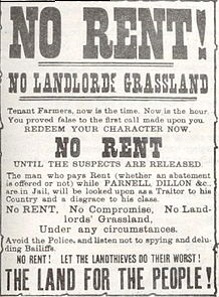
William Ewart Gladstone has them arrested and imprisoned in Kilmainham Gaol in October 1881 under the Irish Coercion Act for “sabotaging the Land Act,” from where the No Rent Manifesto is issued, calling for a national tenant farmer rent strike until “constitutional liberties” are restored, and the prisoners freed. It has a modest success In Ireland and mobilizes financial and political support from the Irish diaspora. Many other leaders of the League, including Michael Davitt, whose name is added to the bottom of the document by others, and other moderate elements in Ireland oppose this move.

Perhaps sensing weakness in the League organization, the government outlaws the League on October 20, 1881, but the work of the League is then continued by the Ladies’ Land League, which had been founded earlier by Parnell’s sister Anna. In 1882, Parnell is released from jail after reaching a written compact with the government, which extends the benefits of the Land Act to those excluded earlier, while Parnell pledges to help end land-agitation violence in Ireland and cooperate with Gladstone’s Liberal party.

In October 1882, Parnell forms the Irish National League, replacing the Land League. The Land League passes into history, but it has helped show Irish peasants that if they all stand together there is strength in numbers.

(Pictured: Irish land League poster dating from the 1880s)


Leave a comment

Founding of the Irish National Land League

land-league-poster

The Irish National Land League, one of the most important political organizations in Irish history which seeks to help poor tenant farmers, is founded at the Imperial Hotel in Castlebar, County Mayo, on October 21, 1879. Its primary aim is to abolish landlordism in Ireland and enable tenant farmers to own the land they work on. The national organization is modeled on the Land League of Mayo, which Michael Davitt had helped found earlier in the year.

At the founding meeting Charles Stewart Parnell is elected president of the league. Davitt, Andrew Kettle, and Thomas Brennan are appointed as honorary secretaries. This unites practically all the different strands of land agitation and tenant rights movements under a single organisation.

Parnell, Davitt, John Dillon, and others including Cal Lynn then go to the United States to raise funds for the League with spectacular results. Branches are also set up in Scotland, where the Crofters Party imitates the League and secures a reforming Act in 1886.

The government introduces the Landlord and Tenant (Ireland) Act 1870, which proves largely ineffective. It is followed by the marginally more effective Land Acts of 1880 and 1881. These establish a Land Commission that starts to reduce some rents. Parnell together with all of his party lieutenants including Father Eugene Sheehy, known as “the Land League priest,” go into a bitter verbal offensive and are imprisoned in October 1881 under the Protection of Person and Property Act 1881 in Kilmainham Gaol for “sabotaging the Land Act.” It is from here that the No-Rent Manifesto is issued, calling for a national tenant farmer rent strike until “constitutional liberties” are restored and the prisoners freed. It has a modest success In Ireland and mobilizes financial and political support from the Irish Diaspora.

Although the League discourages violence, agrarian crimes increase widely. Typically, a rent strike is followed by eviction by the police and the bailiffs. Tenants who continue to pay the rent can be subject to a boycott by local League members. Where cases go to court, witnesses would change their stories, resulting in an unworkable legal system. This in turn leads on to stronger criminal laws being passed that are described by the League as “Coercion Acts.”

The bitterness that develops helps Parnell later in his Home Rule campaign. Davitt’s views as seen in his famous slogan: “The land of Ireland for the people of Ireland” is aimed at strengthening the hold on the land by the peasant Irish at the expense of the alien landowners. Parnell aims to harness the emotive element, but he and his party are strictly constitutional. He envisions tenant farmers as potential freeholders of the land they have rented.