seamus dubhghaill

Promoting Irish Culture and History from Little Rock, Arkansas, USA


Leave a comment

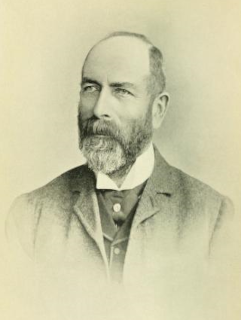
Death of Patrick Weston Joyce, Historian, Writer & Music Collector

Patrick Weston “P. W.” Joyce, Irish historian, writer and music collector, dies in Dublin on January 7, 1914. He is known particularly for his research in Irish etymology and local place names of Ireland.

Joyce is born in Ballyorgan, County Limerick, in the Ballyhoura Mountains, on the border of counties Limerick and Cork, and grows up in nearby Glenosheen. The family claims descent from one Seán Mór Seoighe (fl. 1680), a stonemason from Connemara, County Galway. Robert Dwyer Joyce is a younger brother.

Joyce is a native Irish speaker who starts his education at a hedge school. He then attends school in Mitchelstown, County Cork.

Joyce starts work in 1845 with the Commission of National Education. He becomes a teacher and principal of the Model School, Clonmel. In 1856 he is one of fifteen teachers selected to re-organize the national school system in Ireland. Meanwhile he earns his B.A. in 1861 and M.A. in 1863 from Trinity College Dublin.

Joyce is principal of the Training College, Marlborough Street, in Dublin from 1874 to 1893. As a member of the Society for the Preservation of the Irish Language he writes an Irish Grammar in 1878. He is President of the Royal Society of Antiquaries of Ireland from 1906 to 1908, an association of which he is a member from 1865.

Joyce is a key cultural figure of his time. His wide interests include the Irish language, Hiberno-English, music, education, Irish literature and folklore, Irish history and antiquities, place names and much else. He produces many works on the history and culture of Ireland. His most enduring work is the pioneering The Origin and History of Irish Names of Places (first edition published in 1869). He is a member of the Royal Irish Academy.

In 1856 Joyce marries Caroline Waters of Baltinglass, County Wicklow, with whom he has two daughters and three sons, one of whom is the author Weston St. John Joyce. He dies on January 7, 1914, at his home, Barnalee, Rathmines, Dublin, and is buried two days later in Glasnevin Cemetery.

The P.W. Joyce collection at the Cregan Library in St. Patrick’s College, Drumcondra, Dublin, reflects many of Joyce’s interests and includes several rarities. These include autographed presentation copies by Joyce and his brother Robert, as well as books from Joyce’s own library. The collection also contains nine manuscripts associated with Joyce and his family members, including a manuscript in P.W. Joyce’s own hand of Echtra Cormaic itir Tairngiri agus Ceart Claíd Cormaic (Adventures of Cormac in the Land of Promise), a passage from the Book of Ballymote, which Joyce translated into English.

Leave a comment

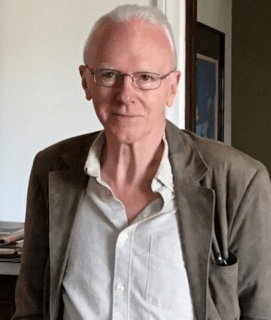
Birth of Irish Poet Trevor Joyce

Irish poet Trevor Joyce is born in Dublin on October 26, 1947. He co-founds New Writers’ Press (NWP) in Dublin in 1967 and is a founding editor of NWP’s The Lace Curtain, a magazine of poetry and criticism in 1968.

Joyce is brought up between Mary Street, in the city centre, and the Galway Gaeltacht. Galway is the ancestral home of both his mother’s and father’s families, and Patrick Weston Joyce, historian, writer and collector of Irish music, and Robert Dwyer Joyce, poet, writer and fellow collector of music, are numbered among his great granduncles. Recent poems such as “Trem Neul” see Joyce appropriate elements of the folk music gathered by Patrick Weston Joyce and engage ideas of lineage and transmission.

In Dublin and Oxford, in the early eighties, Joyce conducts seminars and lectures on classical Chinese poetry. Having studied Philosophy and English at University College Dublin (UCD), he moves in 1984 to Cork, where he reads Mathematical Sciences at University College Cork (UCC). He now resides in the city.

Joyce’s early books include Sole Glum Trek (1967), Watches (1969), Pentahedron (1972) and The Poems of Sweeny Peregrine: A Working of the Corrupt Irish Text (1976). The last of these is a version of the Middle-Irish Buile Shuibhne, well known from Seamus Heaney‘s later translation in Sweeney Astray (1983).

After a near-total silence for 20 years, Joyce resumes publishing in 1995 with stone floods, followed by Syzygy and Without Asylum (1998). In 2001, with the first dream of fire they hunt the cold is published, which gathers all of the poet’s major work from 1966 to 2000. In 2007, What’s in Store: Poems 2000–2007 appears, and in 2009 he publishes Courts of Air and Earth. His work appears in many anthologies, including Keith Tuma’s Anthology of Twentieth-Century British and Irish Poetry and Patrick Crotty’s The Penguin Book of Irish Poetry.

Joyce’s poetry employs a wide range of forms and techniques, ranging from traditional to modern experimentalism. He has published notable versions from Chinese and from the middle-Irish, which he refers to as “workings” rather than “translations” to emphasise that they are poetic reimaginings in the tradition of Ezra Pound rather than “straight” translations.

A collected poems up to 2000, including his “workings” from the Irish and Chinese, is published as with the first dream of fire they hunt the cold (2001). He also experiments with web-based poetry projects such as the collaborative project OffSets. A collection of his post-with the first dream work, What’s in Store, is published in 2007. A separate collection of new and old translations from the Irish, entitled Courts of Air and Earth, is issued by Shearsman in 2009 and is shortlisted for the Popescu Prize for European Poetry in Translation 2009.

Joyce also publishes several papers on contemporary poetics, and lectures and gives public readings of his work throughout Ireland, the UK and the United States.

Awarded a Literary Bursary by the Irish Arts Council in 2001, Joyce is a Fulbright Scholar for the year 2002–03. In 2004 he is elected a member of Aosdána, the Irish affiliation of artists, and is the first writer to be awarded a fellowship by the Ballinglen Arts Foundation. He holds the Judith E. Wilson Fellowship for poetry to the University of Cambridge for 2009-10. In 2017 he is named by previous winner, the English poet Tom Raworth, as the latest recipient of the biennial N. C. Kaser prize for poetry.

Joyce has residencies at Cill Rialaig, County Kerry, and at the University of Galway. He is also co-founder and director of the annual SoundEye Festival that is held in Cork City.