seamus dubhghaill

Promoting Irish Culture and History from Little Rock, Arkansas, USA


2 Comments

Death of Brian Dillon, Republican Leader & IRB Member

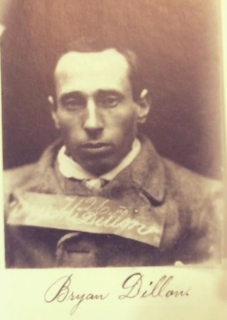
Brian Dillon, Irish republican leader and a member of the Irish Republican Brotherhood (IRB), dies at his home in Cork, County Cork, on August 17, 1872. He is a central figure in the Cork Fenian movement.

Dillon is born in Glanmire, County Cork, in 1830. As a child, he is injured in a heavy fall which results in curvature of the spine and general ill health. His family moves to a house near the corner of Old Youghal Road and Ballyhooly Road. He attends the School of Art for several years and becomes quite talented with brush and pencil. He lives through the Great Famine and becomes an ardent nationalist.

Dillon is appointed a Fenian leader in Cork by James Stephens, the head of the Irish Republican Brotherhood. Under his supervision the Fenian recruits drill on the Fair Field and at Rathpeacon and are hoping for a rebellion in 1865 when the Fenians are at their strongest. He often associates with other Cork Fenians such as John J. Geary, James Mountaine and John Lynch. He chairs the Fenian meetings at Geary’s pub.

In September 1865, police arrest Fenian leaders James Stephens and Jeremiah O’Donovan Rossa in Dublin, and Dillon in Cork. The police search his home and find a pair of field glasses, some drawings and some incriminating letters sewn into the mattress of his bed. He is remanded in Cork City Gaol until his trial.

On December 18, Dillon and another Cork Fenian, John Lynch, are tried together in the dock in Cork Courthouse by Judge Keogh. The charges are primarily based on information provided by an informer named John Warner, an ex-military pensioner. Isaac Butt and Mr. Waters represent the defendants. The charges are “in one indictment with having conspired to depose the Queen, &c., and with illegally drilling and being drilled in furtherance of that design.” Both are found guilty, based primarily on the testimony of informants, although John Warner’s account is very weak and unsatisfactory under cross-examination. The defendants are sentenced to ten years’ penal servitude.

Dillon is brought under armed guard by train from Cork to Dublin and then thrown into Mountjoy Gaol. He spends nearly a month there and suffers from lack of sleep. In January 1866, he and John Sarsfield Casey are handcuffed together on the tough and rough sea crossing between Kingstown and Holyhead. On arrival at Holyhead, they are then taken by train to Pentonville Prison. This is a very cold prison, and he becomes seriously ill in May 1866. He is transferred to the hospital wing of Woking Convict Invalid Prison, and this is to be his home for the next four-and-a-half years. Here he becomes Convict Number 2658.

In 1870, after five years imprisonment, a commission is set up to investigate the Fenian prisoners, and on account of his bad health, this commission recommends that Dillon be allowed home to Cork. In January 1871 he is transferred to Millbank Prison London and is set free two weeks later on February 8. The following day he arrives in Dublin and after a few days’ rest, he returns to Cork by train. All along the route thousands of people wait on the platforms to greet him and read special addresses of welcome. The train reaches Cork at 8:00 p.m. and even though a carriage and pair are waiting, he is glad to seek refuge in the first covered car he can find, so dense is the crowd all around him wanting to shake his hand. The triumphal procession from the station to his home then begins and the hills all along the route are lighted with tar barrels.

Amid emotional scenes Dillon meets his family and afterwards appears at one of the windows of the house and thanks the people of Ireland for the great reception he has received everywhere on his journey home to Cork. He is now in very poor health and his mother begins the task of nursing him back to health. Everything that loving care and money could do is done, and from New York comes a cheque for £50 from the generous-hearted O’Donovan Rossa. Other friends also contribute, but all to no avail. On Saturday, August 17, 1872, he dies at his home surrounded by his sorrowing relatives.

Dillon’s funeral is one of the biggest ever seen in Cork. The cortege is headed by the Barrack Street Band, and at least ten other bands take part. All have their instruments dressed in sombre black. On Monday, August 18, his remains are privately borne to St. Joseph’s cemetery, to a temporary resting place, as it has been decided to build a vault in the family burial ground in Rathcooney which will not be ready for a few days. Later the funeral route travels from Turners Cross along Anglesea Street, South Mall, Grand Parade, Patrick Street, McCurtain Street and St. Luke’s. The funeral procession stops outside his home and prayers are recited for the repose of his soul. The procession then moves on toward Ballyvolane and up the steep hill toward the graveyard at Rathcooney. On arrival at the newly built tomb, so dense is the crowd milling around the hearse that considerable difficulty is experienced in getting the coffin to the grave. The priests then read the burial service, and, in a hushed silence, Canon Freeman asks the entire assembly to kneel and recite the Lord’s Prayer aloud. He blesses the grave, and the mortal remains of Brian Dillon are lowered to rest. The coffin is then covered, and after Colonel Ricard O’Sullivan Burke‘s oration, the crowd quietly disperses.

Today Dillon’s name is inscribed in the National Monument on the Grand Parade and in street names like Dillon’s Cross, Brian Dillon Park and Brian Dillon Crescent. The Brian Dillons GAA club in the same area of Cork city is also named after him.

(Pictured: A mug shot of Brian Dillon)


Leave a comment

First Issue of “The Irish People” Printed in Dublin

The Irish People, a nationalist weekly newspaper supportive of the Fenian movement, is first printed in Dublin on November 28, 1863. It is suppressed by the British Government in 1865.

Other republican newspapers namely, the United Irishman, The Irish Tribune, The Irish Felon, and then the Repeal Association-supporting paper, The Nation, are suppressed in 1848 after their writers, Young Irelanders and members of the Irish Confederation, are accused of promoting sedition. James Stephens is a Young Irelander and part of the Young Ireland rebellion of 1848 that follows the closures of these newspapers. He flees to France after the rebellion’s failure. In 1856, he returns to Ireland and makes connections with former rebels. Two years later, he founds the Irish Republican Brotherhood (IRB).

In 1863, Stephens tells friends he is to start a newspaper. With funds through John O’Mahony, founder of the Fenian Brotherhood in the United States, he sets up an office at 12 Parliament Street. John O’Leary becomes the editor, with Thomas Luby, Charles Kickham, and Denis Mulcahy as editorial staff and Luby as a proprietor. Jeremiah O’Donovan Rossa is the business manager and James O’Connor his assistant and bookkeeper. The newspaper is printed by John Haltigan. Most of the articles are written by O’Leary and Kickham. The first issue comes out on Saturday, November 28, 1863. Its sympathies are clear. A front-page advertisement offers to ship old copies of the United Irishman and The Irish Felon to any address in the UK and editorial content is critical of the political status quo. Superintendent Daniel Ryan of G Division of the Dublin Metropolitan Police, which is largely concerned with Fenianism, notes the new publication’s birth and comments on its low circulation.

Plans for a rising in Ireland, hatched in the United States, are found at Kingstown station in July 1865 in an envelope containing a £500 New York bankers’ draft payable to Stephens’ brother-in-law. This is handed over to Dublin Castle and the link proves to be decisive for what follows. Later, a letter to the Tipperary IRB calling for a nationalist uprising is found by Pierce Nagle, a police informer working for The Irish People. Nagle had visited British officials while in New York in 1864 and offers his services after being upset by Stephens’ manner. After Nagle provides the information, the offices of The Irish People are raided on September 15. The last issue comes out the following day.

The paper is suppressed by the Lord Lieutenant of Ireland, John Wodehouse. Luby, O’Leary, O’Donovan Rossa and O’Connor are arrested and held at Richmond Bridewell prison. Stephens and Kickham join them a month later. Stephens escapes from prison on November 24. A Special Commission is opened on November 27 and forty-one people are charged are ultimately charged. Luby, O’Leary, O’Connor, O’Donovan Rossa and Kickham are charged with the most serious crime of treason felony, first used against the republicans of 1848. Evidence used for the prosecution includes the letter found by Nagel and his testimony about Fenian connections, articles from The Irish People as far back as the first issue, in which Irish Catholic judges including one of the presiding judges, the current Attorney-General for Ireland and Privy Councillor William Keogh, had been strongly criticised, and a devastating secret document from 1864 written by Stephens and entrusted to Luby granting Luby, O’Leary and Kickham executive powers over the IRB. Kickham is unaware of the document. The conflicts of interest, also with the other judge, John David FitzGerald, who is involved in the defendants’ arrest, are highlighted by the defending counsel, former Tory MP Isaac Butt. Also noted is the striking, if not unusual, jury packing, an act where in a mostly Catholic land, some of the juries involved are entirely Protestant.

Luby, O’Leary and O’Connor receive sentences of twenty years. O’Donovan Rossa is sentenced to life imprisonment because of his previous convictions. The frail Kickham, lifelong near blind and deaf, gets twelve years. Judge Keogh praises his intellect and expresses sympathy with his plight, despite having refused his request for a writ of corpus to bring Luby and Charles Underwood O’Connell to his trial concerning his ignorance of the “executive document,” as Luby had already begun his sentence in Pentonville Prison.

(Pictured: The masthead of the first issue of The Irish People | This file is licensed under the Creative Commons Attribution 4.0 International license)


2 Comments

Imprisonment of Fenian Charles Kickham

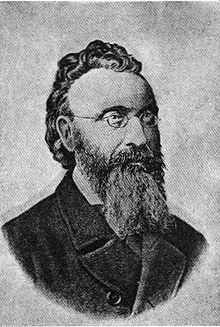
charles-kickham

Sentenced to fourteen years hard labour for treason, Irish nationalist and Fenian Charles Kickham is incarcerated in Pentonville Prison on February 10, 1865. He is released in 1869, partly due to ill health. He is a contributor to The Irish People and the organiser of the Fenian movement and the Irish Republican Brotherhood (IRB), which the English authorities deem seditious. He also authors a number of novels including the critically acclaimed Knocknagow (1873).

The revolutionary movement which comes to be known as Fenianism is unlike that of 1848 in the character of its leaders. The older political agitation is associated with a brilliant outburst of intellectual effort. The majority of the leaders have left behind high intellectual heritage, or asserted under other skies, and in more favourable circumstances, their possession of great intellectual powers. The Fenian movement, on the other hand, is poor in its literary products. Few of its leading spirits reach to any lofty position since its collapse. The best part of Fenian literature is found in The Irish People, the journalistic organ of the association. Along with Kickham, the chief contributors to the journal are Thomas Clarke Luby and John O’Leary.

Kickham is born at Mullenahone, County Tipperary on May 9, 1828. At the age of thirteen he meets with an accident that deprives him of his hearing. He probably owes the many fine productions of his pen to this accident. At around 18 years of age, he begins to contribute poems and tales to Irish journals and magazines and when The Irish People is started, he becomes one of its chief lead writers. As a result of his involvement in the Fenian movement, he draws the attention of the government and is tried, convicted and sentenced to fourteen years of penal servitude. His comment at the conclusion of the trial is terse: “I have endeavoured to serve Ireland, and now I am prepared to suffer for Ireland.” Four years after his conviction he is released.

Kickham publishes two complete stories, Sally Cavanagh, or The Untenanted Graves, and Knocknagow, or The Homes of Tipperary. These stories have been read wherever there is an Irish home and have made sad or joyous thousands of Irish hearts. They have also found approval in the columns of English and not friendly journals, which have found themselves able to meet him in friendliness on the impartial ground of literature. His books deserve their popularity with the peasant and the approval of the critic. His pictures of life, especially of peasant life, are wonderfully true to nature, full of keen observation, humour, and fidelity. In his attention to minute details and homely incident he resembles in a great degree the style of Erckmann-Chatrian.

Kickham’s ballads are equally popular and are just what ballads for the people should be – simple in language, direct in purpose, and in an easy and common measure. A collected edition of his works is published by Duffy & Son of Dublin.

Charles Kickham dies at the age of 54 on August 22, 1882, at the house of James O’Connor, a former member of the IRB and afterwards MP for Wicklow, 2 Montpelier Place, Blackrock, Dublin, where he had been living for many years and had been cared for by the poet Rose Kavanagh. He is buried in Mullinahone, County Tipperary.

(From: The Cabinet of Irish Literature, Volume 4, edited by T. P. O’Connor)


Leave a comment

Roger Casement Hanged for Treason

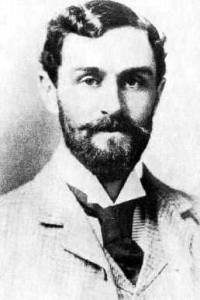
roger-casement

Sir Roger David Casement, Irish diplomat who is knighted by King George V in 1911, is executed on August 3, 1916, for his role in the 1916 Easter Rising.

Casement is an Irish Protestant who serves as a British diplomat during the early part of the 20th century. He wins international acclaim after exposing the illegal practice of slavery in the Congo and parts of South America. Despite his Ulster Protestant roots, he becomes an ardent supporter of the Irish independence movement and, after the outbreak of World War I, travels to the United States and then to Germany to secure aid for an Irish uprising against the British.

Germany, which is at war with Great Britain, promises limited aid, and Casement is transported back to Ireland in a German submarine. On April 21, 1916, just a few days before the outbreak of the Easter Rising in Dublin, he lands in County Kerry and is picked up by British authorities almost immediately. By the end of the month, the Easter Rising has been suppressed and a majority of its leaders executed.

Casement is tried separately because of his illustrious past but nevertheless is found guilty of treason on June 29. On August 3, he is hanged by John Ellis and his assistants at Pentonville Prison in London. Casement is the last to be executed as a result of the Easter Rebellion.


Leave a comment

Death of Jeremiah O’Donovan Rossa

jeremiah-odonovan-rossa

Jeremiah O’Donovan Rossa, Irish Fenian leader and prominent member of the Irish Republican Brotherhood, dies suddenly in Staten Island, New York, on June 29, 1915.

Jeremiah O’Donovan Rossa is born Jeremiah O’Donovan at Reenascreena, Rosscarbery, County Cork, on September 10, 1831. Rossa becomes a shopkeeper in Skibbereen where, in 1856, he establishes the Phoenix National and Literary Society, the aim of which is “the liberation of Ireland by force of arms.” This organisation later merges with the Irish Republican Brotherhood (IRB), founded two years later in Dublin.

In December 1858, Roosa is arrested and jailed without trial until July 1859. He is charged with plotting a Fenian rising in 1865, put on trial for high treason, and sentenced to penal servitude for life due to previous convictions. He serves his time in Pentonville, Portland, and Chatham prisons in England.

In an 1869 by-election, Roosa is returned to the British House of Commons for the Tipperary constituency, defeating the Liberal Catholic Denis Caulfield Heron by 1054 to 898 votes. The election is declared invalid because Rossa is an imprisoned felon.

After giving an understanding that he will not return to Ireland, Rossa is released as part of the Fenian Amnesty of 1870. Boarding the S.S. Cuba, he leaves for the United States with his friend John Devoy and three other exiles. Together they were dubbed “The Cuba Five.”

Rossa takes up residence in New York City, where he joins Clan na Gael and the Fenian Brotherhood. He organises the first ever bombings by Irish republicans of English cities in what is called the “dynamite campaign.” The campaign lasts through the 1880s and makes him infamous in Britain. The British government demands his extradition from America but without success.

In 1885, Rossa is shot outside his office near Broadway by an Englishwoman, Yseult Dudley, but his wounds are not life-threatening. He is allowed to visit Ireland in 1894, and again in 1904. On the latter visit, he is made a “Freeman of the City of Cork.”

Rossa is seriously ill in his later years and is finally confined to a hospital bed in St. Vincent’s Hospital, Staten Island, where he dies at the age of 83 on June 29, 1915. His body is returned to Ireland for burial and a hero’s welcome. The funeral at Glasnevin Cemetery on August 1, 1915, is a huge affair, garnering substantial publicity for the Irish Volunteers and the IRB at time when a rebellion, later to emerge as the Easter Rising, is being actively planned. The graveside oration given by Patrick Pearse remains one of the most famous speeches of the Irish independence movement stirring his audience to a call to arms.


Leave a comment

Birth of Thomas James Clarke, Irish Revolutionary Leader

thomas-james-clarke

Thomas James “Tom” Clarke, Irish republican revolutionary leader and arguably the person most responsible for the 1916 Easter Rising, is born to Irish parents on March 11, 1858, at Hurst Castle, Milford-on-Sea, Hampshire, England opposite the Isle of Wight. Clarke’s father, a sergeant in the British Army, is transferred to Dungannon, County Tyrone, in 1865 and it is there that Tom grows up.

In 1878, following the visit to Dungannon of John Daly, Clarke joins the Irish Republican Brotherhood (IRB) and soon becomes head of the local IRB circle. In August, in retaliation to the killing of a man by a member of the Royal Irish Constabulary (RIC), Clarke and other IRB members attack some RIC men in Irish Street but are driven back. Fearing arrest, Clarke flees to the United States.

In 1883, Clarke is sent to London to blow up London Bridge as part of the Fenian dynamite campaign advocated by Jeremiah O’Donovan Rossa. He is arrested along with three others and tried and sentenced to penal servitude for life on May 28, 1883, at London’s Old Bailey. He subsequently serves 15 years in Pentonville and other British prisons. In 1896, a series of public meetings in Ireland call for the release of Clarke and the other four remaining Fenian prisoners.

Following his release in 1898, Clarke moves to Brooklyn, New York where he marries Kathleen Daly, 21 years his junior and niece of John Daly. Clarke works for the Clan na Gael under John Devoy. In 1906, the couple moves to a 30-acre farm in Manorville, New York and purchases another 30 acres in 1907 shortly before returning to Ireland.

In Ireland, Clarke opens a tobacconist shop in Dublin and immerses himself in the IRB which is undergoing a substantial rejuvenation under the guidance of younger men such as Bulmer Hobson and Denis McCullough.

Clarke takes a keen interest when the Irish Volunteers are formed in 1913 but takes no part in the organisation feeling that his criminal record would lend discredit to the Volunteers. With several IRB members taking important roles in the Volunteers, it becomes clear that the IRB will have substantial to total control of the Volunteers. This proves largely to be the case until John Redmond, leader of the Irish Parliamentary Party, demands the Provisional Committee accept 25 additional members of the Party’s choosing, giving IPP loyalists a majority stake. Though most of the hard-liners stand against this, Redmond’s decree is accepted, partially due to the support given by Bulmer Hobson. Clarke never forgives him for what he considers a treasonous act.

Following Clarke’s falling out with Hobson, Sean MacDermott and Clarke become almost inseparable. In 1915, Clarke and MacDermott establish the Military Committee of the IRB to plan what later becomes the Easter Rising. The members are Patrick PearseÉamonn Ceannt, and Joseph Plunkett, with Clarke and MacDermott adding themselves shortly thereafter. When Jeremiah O’Donovan Rossa dies in 1915, Clarke uses his funeral to mobilise the Volunteers and heighten expectation of imminent action. When an agreement was reached with James Connolly and the Irish Citizen Army in January 1916, Connolly is added to the committee. Thomas MacDonagh is added at the last minute in April. These seven men are the signatories of the Proclamation of the Irish Republic, with Clarke as the first signatory.

Clarke is stationed at headquarters in the General Post Office during the events of Easter Week of 1916, where rebel forces are largely composed of Irish Citizen Army members under the command of Connolly. Though he holds no formal military rank, Clarke is recognised by the garrison as one of the commanders and is active throughout the week in the direction of the fight. Following their surrender on April 29, Clarke is held in Kilmainham Gaol until his execution by firing squad on May 3 at the age of 59. He is the second person to be executed following Patrick Pearse.

Before his execution, Clarke asks his wife to give this message to the Irish People:

“I and my fellow signatories believe we have struck the first successful blow for Irish freedom. The next blow, which we have no doubt Ireland will strike, will win through. In this belief, we die happy.”


Leave a comment

Roger Casement’s Remains Returned to the Republic of Ireland

roger-casement

Irish patriot Roger Casement‘s body is returned to Ireland from the United Kingdom on February 23, 1965, forty-nine years after his execution for treason.

In October 1914, Roger Casement sails for Germany where he spends most of his time seeking to recruit an Irish Brigade from among more than 2,000 Irish prisoners-of-war taken in the early months of World War I and held in the prison camp of Limburg an der Lahn. His plan is that they will be trained to fight against Britain in the cause of Irish independence.

In April 1916, Germany offers the Irish 20,000 Mosin–Nagant 1891 rifles, ten machine guns and accompanying ammunition, but no German officers. It is a fraction of the quantity of arms that Casement has hoped. Casement does not learn of the Easter Rising until after the plan is fully developed. The German weapons never land in Ireland as the Royal Navy intercepts the ship transporting them.

In the early hours of April 21, 1916, three days before the beginning of the rising, Casement is taken by a German submarine and is put ashore at Banna Strand in Tralee Bay, County Kerry. Suffering from a recurrence of malaria and too weak to travel, he is discovered at McKenna’s Fort in Rathoneen, Ardfert, and arrested on charges of treason, sabotage, and espionage against the Crown. He is imprisoned in the Tower of London.

Casement’s trial for treason is highly publicized and he is ultimately convicted and sentenced to be hanged. He unsuccessfully appeals the conviction and death sentence. Among the many people who plead for clemency are Sir Arthur Conan Doyle, W. B. Yeats, and George Bernard Shaw.

On the day of his execution, Casement is again received into the Catholic Church at his request. He is attended by two Irish Catholic priests, Dean Timothy Ring and Father James Carey, from the East London parish of St. Mary and St. Michael’s. Casement is hanged at Pentonville Prison in London on August 3, 1916. His body is buried in quicklime in the prison cemetery at the rear of the prison.

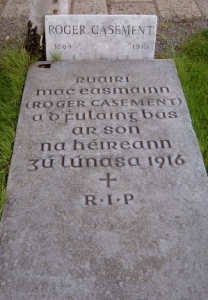
roger-casement-glasnevin-grave

During the decades after his execution, many formal requests for repatriation of Casement’s remains are refused by the U.K. government. Finally, February 23, 1965, Casement’s remains are repatriated to the Republic of Ireland. Casement’s last wish, to be buried at Murlough Bay on the North Antrim coast, in what is now Northern Ireland, may never be satisfied as U.K. Prime Minister Harold Wilson‘s government releases the remains only on condition that they cannot be brought into Northern Ireland, as “the government feared that a reburial there could provoke Catholic celebrations and Protestant reactions.”

Casement’s remains lay in state at Arbour Hill in Dublin for five days, during which time an estimated half a million people file past his coffin. After a state funeral on March 1, the remains are buried with full military honours in the Republican plot in Glasnevin Cemetery in Dublin, with other militant republican heroes. The President of the Republic of Ireland, Éamon de Valera, who is in his mid-eighties and the last surviving leader of the Easter Rising, defies the advice of his doctors and attends the ceremony, along with an estimated 30,000 others.