seamus dubhghaill

Promoting Irish Culture and History from Little Rock, Arkansas, USA


Leave a comment

Death of Noel Sheridan, Painter & Actor

Cecil Noel Sheridan, influential Irish painter, performance artistinstallation artist and actor, dies on July 12, 2006, in Perth, Western Australia. He is known for his abstract landscapes and conceptual art, with a significant impact on art institutions in Ireland and Australia.

Sheridan is born in Dublin on December 12, 1936, to Cecil Brinsley Sheridan, a noted comic actor, and Ann ‘Nan’ Doyle. He attends Synge Street CBS and later pursues a Bachelor of Commerce (BCom) at Trinity College Dublin, while also joining the Trinity Players drama group, reflecting his early interest in both theatre and visual arts. He later earns a Master of Fine Arts from Columbia University in New York City in 1967, where he is influenced by the emerging conceptual art movement.

Sheridan begins exhibiting in the late 1950s, participating in the annual Living Art exhibitions and the Biennale de Paris in 1960. He wins the Carroll Prize for Painting in 1965 and 1969. Initially focused on abstract landscapes, his work evolves to include conceptual, performance, and installation art, integrating multimedia elements. Notable works include Everybody Should Get Stones (1975) and On Reflection (2001).

Sheridan is also deeply engaged in the international art scene. He represents Ireland at the 1962 UNESCO Convention of Young Painters in Paris and contributes to avant-garde movements in Australia, including serving as the first Professor of Conceptual Arts in Sydney during the 1970s. He directs the Experimental Art Foundation in Adelaide from 1975 to 1980, introducing experimental and post-object art to Australian audiences.

From 1980 to 2002, Sheridan serves as Director of the National College of Art and Design (NCAD) in Dublin, with a four-year hiatus to direct the Perth Institute of Contemporary Arts in Australia. His leadership shapes art education in Ireland and helps modernize institutional structures, curricula, and multimedia practices.

Sheridan is also a member of Aosdána, an elite Irish association of artists, and a committee member of Rosc, an important art exhibition initiative in Ireland.

Sheridan’s early works consist of abstract and lyrical landscapes, which later expand to include conceptual and performance art, often engaging audience participation and multimedia formats. He is known for his wit, charisma, and generosity as both a teacher and an arts administrator, influencing a generation of artists in Ireland and Australia.

Sheridan’s art is represented in major institutions, including the Irish Museum of Modern Art and the Centro de Arte Moderna Gulbenkian in Lisbon, with numerous works having been sold at auction, achieving prices up to $7,624 USD for pieces like Window. Retrospectives of his work are held at the Royal Hibernian Academy in Dublin in 2001, accompanied by publications that compile his artistic philosophy and contributions.

Sheridan is married to Liz Murphy, and they have five children. His commitment to both art and education continues throughout his life until he dies on July 12, 2006, in Perth, Western Australia. Paul Durcan writes a poem in his honour after his death.

In summary, Sheridan’s career spans painting, performance, installation, and education. His innovative approach, international influence, and dedication to teaching and institutional development mark him as a pivotal figure in postwar and contemporary Irish art.

2 Comments

Death of William Drennan, Physician, Poet & Political Radical

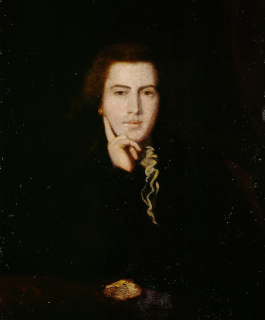
William Drennan, physician, poet and political radical, dies on February 5, 1820, in Belfast. He is one of the chief architects of the Society of United Irishmen and is known as the first to refer in print to Ireland as “the emerald isle” in his poem When Erin first rose.

Drennan is born on May 23, 1754, in Belfast, the son the son of Reverend Thomas Drennan (1696–1768), minister of Belfast’s First Presbyterian Church on Rosemary Street. Thomas Drennan is an educated man from the University of Glasgow and is ordained to the congregation of Holywood, County Down in 1731. Drennan is heavily influenced by his father, whose religious convictions serve as the foundation for his own radical political ideas. His sister, Martha, marries fellow future United Irishman Samuel McTier in 1773.

In 1769 Drennan follows in his father’s footsteps by enrolling in the University of Glasgow where he becomes interested in the study of philosophy. In 1772 he graduates in arts and then in 1773 he commences the study of medicine at Edinburgh. After graduating in 1778 he sets up practice in Belfast, specialising in obstetrics. He is credited with being one of the earliest advocates of inoculation against smallpox and of hand washing to prevent the spread of infection. He also writes much poetry, coining the phrase “Emerald Isle” and is the founder and editor of a literary periodical, Belfast Magazine. He moves to Newry in 1783 but eventually moves to Dublin in 1789 where he quickly becomes involved in nationalist circles.

Like many other Ulster Presbyterians, Drennan is an early supporter of the American Colonies in the American Revolution and joins the Volunteers who had been formed to defend Ireland for Britain in the event of French invasion. The Volunteer movement soon becomes a powerful political force and a forum for Protestant nationalists to press for political reform in Ireland eventually assisting Henry Grattan to achieve legislative independence for the Irish parliament in 1782. However, Drennan, like many other reformers, quickly becomes dismayed by the conservative and sectarian nature of the Irish parliament and in 1791 he co-founds the Society of United Irishmen with Wolfe Tone and Thomas Russell.

Drennan writes many political pamphlets for the United Irishmen and is arrested in 1794 for seditious libel, a political charge that is a major factor in driving the United Irishmen underground and into becoming a radical revolutionary party. Although he is eventually acquitted, he gradually withdraws from the United Irishmen but continues to campaign for Catholic Emancipation.

On February 8, 1800, Drennan marries Sarah Swanwick, “an English lady of some wealth” from Shropshire. They have one daughter and four sons.

Drennan settles in Belfast in 1807. In 1810 he co-founds the non-denominational Royal Belfast Academical Institution. As a poet, he is best remembered for his poem The Wake of William Orr, written in memory of a United Irishman executed by the British. Despite his links with revolutionary republicans, he gradually becomes alienated from the post-Union nationalism of the period. His abiding concern for Liberalism and post union realities make him contemplate his political ideas anew.

Drennan dies in Belfast on February 5, 1820. He directs that his coffin be carried by an equal number of Catholics and Protestants with clergy from different denominations in attendance.

Drennan’s son, John Swanwick Drennan, is a noted poet who, along with his brother William Drennan, write a biography of him for Richard Davis Webb‘s A Compendium of Irish Biography. Through his daughter Sarah, who marries John Andrews of a prominent family of flax merchants, he has several notable descendants, including William Drennan Andrews, judge of the High Court of Justice in Ireland, Sir James Andrews, 1st Baronet, Lord Chief Justice of Northern Ireland, John Miller Andrews, Prime Minister of Northern Ireland, Thomas Andrews who drew up the plans for the RMS Titanic and was aboard and drowned when she sank, and Thomas Drennan, performance artist known primarily for his seminal work ‘Journey to the Centre of Drennan.’


Leave a comment

Birth of William Drennan, Physician, Poet & Political Radical

william-drennan

William Drennan, physician, poet and political radical, is born on May 23, 1754, in Belfast. He is one of the chief architects of the Society of United Irishmen and is known as the first to refer in print to Ireland as “the emerald isle” in his poem When Erin first rose.

Drennan is son the son of Reverend Thomas Drennan (1696–1768), minister of Belfast’s First Presbyterian Church on Rosemary Street. Thomas Drennan is an educated man from the University of Glasgow and is ordained to the congregation of Holywood, County Down in 1731. Drennan is heavily influenced by his father, whose religious convictions serve as the foundation for his own radical political ideas. His sister, Martha, marries fellow future United Irishman Samuel McTier in 1773.

In 1769 Drennan follows in his father’s footsteps by enrolling in the University of Glasgow where he becomes interested in the study of philosophy. In 1772 he graduates in arts and then in 1773 he commences the study of medicine at Edinburgh. After graduating in 1778 he sets up practice in Belfast, specialising in obstetrics. He is credited with being one of the earliest advocates of inoculation against smallpox and of hand washing to prevent the spread of infection. He also writes much poetry, coining the phrase “Emerald Isle” and is the founder and editor of a literary periodical, Belfast Magazine. He moves to Newry in 1783 but eventually moves to Dublin in 1789 where he quickly becomes involved in nationalist circles.

Like many other Ulster Presbyterians, Drennan is an early supporter of the American Colonies in the American Revolution and joins the Volunteers who had been formed to defend Ireland for Britain in the event of French invasion. The Volunteer movement soon becomes a powerful political force and a forum for Protestant nationalists to press for political reform in Ireland eventually assisting Henry Grattan to achieve legislative independence for the Irish parliament in 1782. However, Drennan, like many other reformers, quickly becomes dismayed by the conservative and sectarian nature of the Irish parliament and in 1791 he co-founds the Society of United Irishmen with Wolfe Tone and Thomas Russell.

Drennan writes many political pamphlets for the United Irishmen and is arrested in 1794 for seditious libel, a political charge that is a major factor in driving the United Irishmen underground and into becoming a radical revolutionary party. Although he is eventually acquitted, he gradually withdraws from the United Irishmen but continues to campaign for Catholic Emancipation.

On February 8, 1800, Drennan marries Sarah Swanwick, “an English lady of some wealth” from Shropshire. They have one daughter and four sons.

Drennan settles in Belfast in 1807. In 1810 he co-founds the non-denominational Royal Belfast Academical Institution. As a poet, he is best remembered for his poem The Wake of William Orr, written in memory of a United Irishman executed by the British. Despite his links with revolutionary republicans, he gradually becomes alienated from the post-Union nationalism of the period. His abiding concern for Liberalism and post union realities make him contemplate his political ideas anew.

Drennan dies on February 5, 1820. He directs that his coffin be carried by an equal number of Catholics and Protestants with clergy from different denominations in attendance.

Drennan’s son, John Swanwick Drennan, is a noted poet who, along with his brother William Drennan, write a biography of him for Richard Davis Webb‘s A Compendium of Irish Biography. Through his daughter Sarah, who marries John Andrews of a prominent family of flax merchants, he has several notable descendants, including William Drennan Andrews, judge of the High Court of Justice in Ireland, Sir James Andrews, 1st Baronet, Lord Chief Justice of Northern Ireland, John Miller Andrews, Prime Minister of Northern Ireland, Thomas Andrews who drew up the plans for the RMS Titanic and was aboard and drowned when she sank, and Thomas Drennan, performance artist known primarily for his seminal work ‘Journey to the Centre of Drennan.’