seamus dubhghaill

Promoting Irish Culture and History from Little Rock, Arkansas, USA


Leave a comment

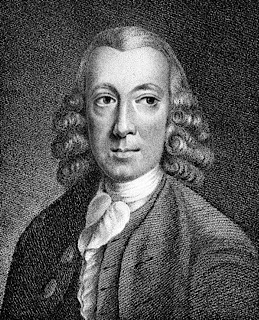
Death of Henry Brooke, Novelist & Dramatist

Henry Brooke, Irish novelist and dramatist, dies in Dublin on October 10, 1783.

Brooke is born and raised at Rantavan House near Mullagh, a village in the far south of County Cavan. He later studies law at Trinity College Dublin, but embraces literature as a career.

Brooke is the son of  The Reverend William Brooke, the well-off Church of Ireland Rector of Killinkere and Mullagh within the Church of Ireland Diocese of Kilmore. He first begins his career as a poet. His now forgotten philosophical poem Universal Beauty is published in 1735, and Alexander Pope thinks its sentiments and poetry fine. He then turns dramatist by adapting extant plays, such as The Earl of Essex. He writes from the Tory point of view and becomes one of the most important figures in Augustan drama, although not for his successes. 

Brooke’s Gustavus Vasa (1739) has the distinction of being the first play banned by the Licensing Act 1737. The play concerns the liberation of Sweden from Denmark in 1521 by Riksföreståndare (Protector of the Realm or Regent) Gustav Vasa (who later becomes King Gustav I of Sweden). Sir Robert Walpole believes that the villain of the play resembles him. Further, a facetious “attack” on it is the first public writing of Samuel Johnson, whose A Complete Vindication of the Licensers of the English Stage feigns support for Walpole while it drives the censor’s argument to reductio ad absurdum.

Brooke lives in Ireland most of his life, but he spends time in London when his plays are on the stage. In politics, he is somewhat radical in arguing publicly for loosening the laws persecuting Roman Catholics in the United Kingdom. His daughter, Charlotte Brooke, is herself an important figure in the history of Irish literature, publishing Reliques of Irish Poetry (1789) and working to increase the profile of Irish language poetry.

Later, Brook’s Earl of Essex comes back to the boards in a revival. Again, Samuel Johnson offers his public support of Brooke, but when he hears the Earl saying at the end of Act II, “Who rules o’er free men must himself be free,” Johnson replies, “Who drives fat oxen must himself be fat.” Although Johnson is objecting to the misuse and overuse of “freedom” and is at that time in a vexatious debate over the American Revolutionary War (saying, “Why is it that we hear the loudest cries for liberty from the drivers of Negroes?”), Brooke is mortified by Johnson’s parody and changes the line for his Collected Works.

Brooke has a difficult life and makes a very poor living. The Licensing Act 1737 robs him of his primary avenue to making a living, for, after the Act, he is the first man banned by it. Whatever fame this lends him is made up for by his inability to get new plays performed. His greatest commercial successes come from the Earl of Essex and his two novels, The Fool of Quality (1760-1772) and Juliet Grenville (1774), which are two of the finest sentimental novels.  John Wesley is so fond of The Fool of Quality, in which Brooke declares his belief in universal salvation, that he seeks to have a copy of it given out to all new Methodist churches.

Brooke has twenty-two children. Of these, only Charlotte survives adolescence. She shepherds his Works through the press after his death.

The death of Brooke’s wife after a long illness and the loss of so many of his children, leaves Brooke’s physical and mental health increasingly unstable. His decline is evident in the last volume of The Fool of Quality and his final three-volume novel Juliet Grenville. He dies in Dublin on October 10, 1783, and is buried in his father’s churchyard in Mullagh.

2 Comments

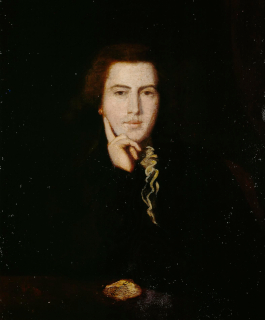
Death of William Drennan, Physician, Poet & Political Radical

William Drennan, physician, poet and political radical, dies on February 5, 1820, in Belfast. He is one of the chief architects of the Society of United Irishmen and is known as the first to refer in print to Ireland as “the emerald isle” in his poem When Erin first rose.

Drennan is born on May 23, 1754, in Belfast, the son the son of Reverend Thomas Drennan (1696–1768), minister of Belfast’s First Presbyterian Church on Rosemary Street. Thomas Drennan is an educated man from the University of Glasgow and is ordained to the congregation of Holywood, County Down in 1731. Drennan is heavily influenced by his father, whose religious convictions serve as the foundation for his own radical political ideas. His sister, Martha, marries fellow future United Irishman Samuel McTier in 1773.

In 1769 Drennan follows in his father’s footsteps by enrolling in the University of Glasgow where he becomes interested in the study of philosophy. In 1772 he graduates in arts and then in 1773 he commences the study of medicine at Edinburgh. After graduating in 1778 he sets up practice in Belfast, specialising in obstetrics. He is credited with being one of the earliest advocates of inoculation against smallpox and of hand washing to prevent the spread of infection. He also writes much poetry, coining the phrase “Emerald Isle” and is the founder and editor of a literary periodical, Belfast Magazine. He moves to Newry in 1783 but eventually moves to Dublin in 1789 where he quickly becomes involved in nationalist circles.

Like many other Ulster Presbyterians, Drennan is an early supporter of the American Colonies in the American Revolution and joins the Volunteers who had been formed to defend Ireland for Britain in the event of French invasion. The Volunteer movement soon becomes a powerful political force and a forum for Protestant nationalists to press for political reform in Ireland eventually assisting Henry Grattan to achieve legislative independence for the Irish parliament in 1782. However, Drennan, like many other reformers, quickly becomes dismayed by the conservative and sectarian nature of the Irish parliament and in 1791 he co-founds the Society of United Irishmen with Wolfe Tone and Thomas Russell.

Drennan writes many political pamphlets for the United Irishmen and is arrested in 1794 for seditious libel, a political charge that is a major factor in driving the United Irishmen underground and into becoming a radical revolutionary party. Although he is eventually acquitted, he gradually withdraws from the United Irishmen but continues to campaign for Catholic Emancipation.

On February 8, 1800, Drennan marries Sarah Swanwick, “an English lady of some wealth” from Shropshire. They have one daughter and four sons.

Drennan settles in Belfast in 1807. In 1810 he co-founds the non-denominational Royal Belfast Academical Institution. As a poet, he is best remembered for his poem The Wake of William Orr, written in memory of a United Irishman executed by the British. Despite his links with revolutionary republicans, he gradually becomes alienated from the post-Union nationalism of the period. His abiding concern for Liberalism and post union realities make him contemplate his political ideas anew.

Drennan dies in Belfast on February 5, 1820. He directs that his coffin be carried by an equal number of Catholics and Protestants with clergy from different denominations in attendance.

Drennan’s son, John Swanwick Drennan, is a noted poet who, along with his brother William Drennan, write a biography of him for Richard Davis Webb‘s A Compendium of Irish Biography. Through his daughter Sarah, who marries John Andrews of a prominent family of flax merchants, he has several notable descendants, including William Drennan Andrews, judge of the High Court of Justice in Ireland, Sir James Andrews, 1st Baronet, Lord Chief Justice of Northern Ireland, John Miller Andrews, Prime Minister of Northern Ireland, Thomas Andrews who drew up the plans for the RMS Titanic and was aboard and drowned when she sank, and Thomas Drennan, performance artist known primarily for his seminal work ‘Journey to the Centre of Drennan.’


Leave a comment

Birth of General Sir Abraham Roberts

abraham-roberts

General Sir Abraham Roberts GCB, British East India Company Army general who serves nearly 50 years in India, is born in Waterford, County Waterford on April 11, 1784.

Abraham Roberts is a member of a famous Waterford city family. He is the son of Anne Sandys and The Reverend John Roberts, a magistrate in County Waterford and a rector of Passage East. He marries Frances Isabella Ricketts, daughter of George Poyntz Ricketts, on July 20, 1820. On the death of his first wife he marries Isabella Bunbury, daughter of Abraham Bunbury, on August 2, 1830.

Roberts gains the rank of colonel in the service of the Honourable East India Company and is the commander of the 1st Bengal European Regiment and the Lahore Division. He also fights in the First Anglo-Afghan War.

Roberts is invested as a Knight Grand Cross of the Order of the Bath (GCB). He leaves India in 1853 to live in Ireland with his second wife, who outlives him. He also has a house at 25 Royal York Crescent, Bristol, Somerset, England.

From 1862 until his death on December 28, 1873, Roberts is Colonel of the 101st Regiment of Foot (Royal Bengal Fusiliers).

Roberts had two sons, Major General George Ricketts Roberts by Frances Isabella and Field Marshal Frederick Sleigh Roberts, 1st Earl Roberts (1832-1914) by Isabella Bunbury, who both obtain the highest ranks in the British Army. Frederick and a grandson, Frederick Hugh Sherston Roberts (1872-1899), receive the Victoria Cross, the highest decoration for bravery in the face of the enemy in the British Army.