seamus dubhghaill

Promoting Irish Culture and History from Little Rock, Arkansas, USA


Leave a comment

Death of John Purser, Mathematician & Professor

John Purser, Irish mathematician and professor at Queen’s College, Belfast, dies in Dublin on October 18, 1903.

Purser is born in Dublin on August 24, 1835, the son of John Tertius Purser (1809–1893), the general manager of the well-known A Guinness, Son & Co. brewery, and Anna Benigna Fridlezius (1803-1881). He is educated in a wealthy family, which includes artists, as his cousin Sarah Purser, or engineers, as his brother-in-law John Purser Griffith. He is the brother of mathematician Frederick Purser. He receives his early education at the private boarding school run by his uncle, Dr. Richard W. Biggs, at Devizes, Wiltshire. He completes his schooling at Devizes and begins his university studies at Trinity College, Dublin, graduating BA in mathematics in 1856. He is the best mathematician of his year at the University and in 1855 he gains the Lloyd Exhibition.

Purser becomes a tutor to the four sons of William Parsons, 3rd Earl of Rosse (1800-1867) in 1857. Lord Rosse’s 72-inch reflecting telescope, built in 1845 and colloquially known of as the “Leviathan of Parsonstown,” is the world’s largest telescope when it is built and continues to hold this distinction until the early 20th century. As well as acting as tutor to the children, Purser does become involved in Lord Rosse’s interest in astronomy but never does any observing.

In 1863, Purser is appointed professor of mathematics at Queen’s College, Belfast, a position he maintains until his retirement in 1901.

Purser is much better known as a teacher than as a researcher, and he has a good number of notable students, including Sir Joseph Larmor, theoretical physicist who serves as Lucasian Professor of Mathematics at the University of Cambridge; Charles Parsons, the inventor of the steam turbine; Sir John Henry MacFarland, who becomes Chancellor of the University of Melbourne; and William McFadden Orr.

Purser never marries. When his father dies on April 5, 1893, Rathmines Castle passes to him. He dies at Rathmines Castle on October 18, 1903, a very wealthy man. In his will he leaves £100,000 to his brother Frederick Purser, £40,000 to his sister Anna Griffith and £5,000 to each of her children. In addition to the money, he owns property in Blessington Street, Essex Street and Eustace Street which he leaves to his brother-in-law John Purser Griffith. Other properties and interests that he owns he divides between his brother Frederick and his sister Anna. After his death, his sister Anna and her husband John Purser Griffith move into Rathmines Castle although, at this time, its ownership has gone to Frederick Purser. After Frederick dies in August 1910, the Castle and his considerable wealth passes to Anna.

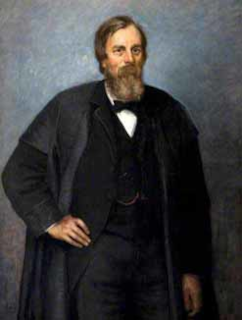
(Pictured: Portrait of John Purser painted by the artist Sarah Purser, daughter of Tertius Purser’s brother Benjamin Purser. The portrait hangs in Queen’s College, Belfast.)


Leave a comment

Birth of William Whitla, Physician & Politician

william-whitla

Sir William Whitla, Irish physician and politician, is born at The Diamond, Monaghan, County Monaghan on September 15, 1851.

Whitla is the fourth son of Robert Whitla, a woolen draper and pawnbroker, and his wife Anne, daughter of Alexander Williams of Dublin. His first cousin is painter Alexander Williams. Educated at the town’s Model School, he is articled at fifteen to his brother James, a local pharmacist, completing his apprenticeship with Wheeler and Whitaker, Belfast‘s leading pharmaceutical firm. Proceeding to study medicine at Queen’s College, Belfast, he takes the LAH, Dublin, and the LRCP and LRCS of Edinburgh in 1873.

With his qualifications Whitla obtains a post as resident medical officer at the Belfast General Hospital. He next spends some time in London, at St. Thomas’s Hospital, where he meets his future wife, Ada Bourne, daughter of George Bourne, a prominent Staffordshire farmer. She is a ward sister and friend of Florence Nightingale and a member of The Salvation Army.

The pair are married in 1876, settling in Belfast where Whitla establishes a general medical practice. He is awarded the MD of the Queen’s University of Ireland in 1877, with first class honours, gold medal, and commendation.

Whitla is appointed physician to the Belfast Royal Hospital and the Ulster Hospital for Children and Women in 1882. He holds post at the Belfast Royal Hospital and in the Royal Victoria Hospital, of which it is the forerunner, until his retirement in 1918. He succeeds Seaton Reid as professor of materia medica at the Queen’s College in 1890 and is twice president of the Ulster Medical Society (1886–1887, 1901–1902). Appointed a Knight Bachelor in the 1902 Coronation Honours list published on June 26, 1902, he is knighted by the Lord Lieutenant of Ireland, George Cadogan, 5th Earl Cadogan, at Dublin Castle on August 11, 1902.

In 1906 Whitla is appointed a governor of Methodist College Belfast, and he takes a keen interest in the school’s affairs. In 1919, he retires as Professor of Materia Medica in the university.

A strong unionist, Whitla is elected to parliament in 1918, serving until 1923 as representative of the Queen’s University at Westminster. He is appointed honorary physician to the king in Ireland in 1919 and is subsequently university pro-chancellor.

During the 1920s Whitla’s public appearances are fewer and, after a stroke in 1929, he is confined to his room. Lady Whitla dies in 1932. He dies at their Belfast residence, Lennoxvale, on December 11, 1933, and is given a civic funeral two days later. He is buried at Belfast City Cemetery.

During Whitla’s lifetime his gifts to his profession include the Good Samaritan stained glass window erected in the Royal Hospital and a building to house the Ulster Medical Society. At his death Lennoxvale is bequeathed to Queen’s University as a residence for the Vice-Chancellor. The university also is his residuary legatee and acts on his suggestion that the available funds should provide an assembly hall. The Sir William Whitla Hall is opened in 1949.

Whitla also leaves £10,000 to Methodist College Belfast to build a chapel, library or hall. The Whitla Hall at the Methodist College is opened in 1935.


Leave a comment

Birth of Robert McCarrison, Physician & Nutritionist

robert-mccarrison

Major General Sir Robert McCarrison, physician and nutritionist in the Indian Medical Service, is born in Portadown, County Armagh in what is now Northern Ireland on March 15, 1878.

McCarrison is credited with being the first to experimentally demonstrate the effect of deficient dietaries upon animal tissues and organs. He also carries out human experiments aimed at identifying the cause of goitre, and includes himself as one of the experimental subjects. Much of his work is pioneering. His 1921 book Studies in Deficiency Disease is considered notable at the time, being published at a time when knowledge of vitamins and their role in nutrition is crystallizing.

McCarrison qualifies in Medicine at Queen’s College, Belfast in 1900. At age 23, he goes to India, where he spends 30 years on nutritional problems. His research in India on the cause of goitre wins widespread recognition and in 1913 he is promoted to do research. He attains the rank of major-general in the Indian Medical Service and founds the Nutritional Research Laboratories in Coonoor, where he remains until his retirement from the Indian Medical Service in 1935. After retiring, he returns to England and gives a series of three Cantor lectures on successive Mondays at the Royal Society of Arts, about the influence of diet on health. The first lecture focuses on the processes of nutrition; the second, on food essentials and their relationship to bodily structure and function; the third on disease prevention and physique improvement by attention to diet. The lectures are subsequently published in book form under the title Nutrition and Health, and at the time of the third edition in 1962, are still seen as relevant, with the advances of the preceding 25 years largely filling the details of the principles previously recognised by McCarrison.

McCarrison is made a Companion of the Order of the Indian Empire (CIE) in 1923, receives a knighthood in July 1933, and is appointed as Honourable Physician to the King in 1935.

After World War II, from 1945 to 1955, McCarrison serves as director of postgraduate medical education at the University of Oxford. He dies on May 18, 1960.