seamus dubhghaill

Promoting Irish Culture and History from Little Rock, Arkansas, USA


Leave a comment

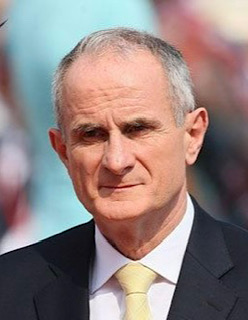
Birth of Martin McAleese, Politician, Dentist & Accountant

Martin McAleese, Irish politician, dentist and accountant who has served as the Chancellor of Dublin City University (DCU) since August 2011, is born in Belfast, Northern Ireland, on March 24, 1951. He serves as a Senator from 2011 to 2013, after being nominated by the Taoiseach. He is the husband of the former president of IrelandMary McAleese.

McAleese is educated at St. Mary’s Christian Brothers’ Grammar School, Belfast. He then studies at Queen’s University Belfast (QUB), obtaining an honours Bachelor of Science in Physics. He plays Gaelic football for the Antrim Minors and is captain of the team in 1969. In 1972, after he graduates he moves to Dublin and trains there as an accountant with the chartered accountancy firm of Stokes, Kennedy, Crowley. He later works as financial controller for an Aer Lingus subsidiary.

McAleese marries Mary Leneghan in 1976. The couple resides in Scholarstown, Dublin, for a short period, and then for almost twelve years near RatoathCounty Meath. In 1980, he returns to full-time education at Trinity College Dublin (TCD), to study as a dentist, subsequently moving back, with his family, to Northern Ireland, where he practises as a dentist in Crossmaglen and BessbrookCounty Armagh.

While his wife serves as President of Ireland, McAleese initiates a series of meetings with senior Ulster loyalist paramilitary leaders to pursue peace negotiations. These actions do not take place without controversy, but are widely viewed as instrumental in bringing loyalist paramilitary groups to peace talks.

In May 2011, McAleese is appointed as a Senator by the Taoiseach Enda Kenny. In August 2011, he is appointed the Chancellor of Dublin City University, taking over from David Byrne.

On February 1, 2013, McAleese announces his intention to resign as a member of Seanad Éireann.

McAleese accepts an appointment as Chairman of the Inter-Departmental Committee which is set up by the Government of Ireland to investigate the Magdalene laundries. His findings have been criticised by some survivors and researchers from the Magdalene Names project.

On October 18-19, 2014, McAleese attends the One Young World Summit in Dublin as a keynote speaker. Here, he hosts a special session for the One Young World Peace and Conflict Resolution Project alongside former Ulster Defence Association (UDA) prisoner Jackie McDonald and former Irish Republican Army (IRA) prisoner Sean Murray. They address young people from 191 countries to share and develop ideas to strengthen efforts at conflict resolution in their own countries.

McAleese and his wife Mary have three children. The family moves to RostrevorCounty Down, in 1987, when he sets up practice in County Armagh.


Leave a comment

Death of Richard Pigott, Journalist, Newspaper Owner & Forger

Richard Pigott, Irish journalist, newspaper owner, and forger, best known for his forging of evidence that Charles Stewart Parnell of the Irish National Land League had been sympathetic to the perpetrators of the Phoenix Park Murders, dies of an apparent self-inflicted gunshot wound on March 1, 1889, in Madrid, Spain.

Pigott is born in Ratoath, County Meath, in 1835, the son of George Pigott of Ratoath, and his wife, a woman from Roscommon. As a young man he supports Irish nationalism and works on the publications The Nation and The Tablet before acting as manager of The Irishman, a newspaper founded by Denis Holland. James O’Connor later claims Pigott embezzled funds from The Irishman and covered his tracks by not keeping written records. He also works for the Irish National Land League, departing in 1883 after accusing its treasurer, Mr. Fagan, of being unable to account for £100,000 (equivalent to £10,700,000 in 2021) of its funds and for keeping inadequate records. Nothing is done about his accusation, and he turns against the League, which is allied to the Irish Parliamentary Party (IPP) led by the League’s president, Charles Stewart Parnell.

In 1879 Pigott is proprietor of three newspapers, which he soon sells to the League. Hitherto a zealous nationalist, from 1884 onwards he vilifies his former associates and sells information to their political opponents. In an effort to destroy Parnell’s career, he forges several letters which purport that Parnell had supported the perpetrators of the Phoenix Park murders of 1882.

The Times purchases Pigott’s forgeries for £1,780 (equivalent to £211,000 in 2021) and publishes the most damning letter on April 18, 1887. Parnell immediately denounces it as “a villainous and barefaced forgery.” In February 1889, the Parnell Commission vindicates him by proving that the letters are fake. They included misspellings (specifically ‘hesitency [sic]’) which Pigott had written elsewhere. A libel action instituted by Parnell also vindicates him, and his parliamentary career survives the Pigott accusations.

The Commission eventually produces thirty-seven volumes of evidence, covering not just the forgeries but also the surrounding violence that follows from the Plan of Campaign.

After admitting his forgeries to Henry Labouchère, Pigott flees to Spain and apparently shoots himself on March 1, 1889, in a hotel room in Madrid, a city in which O’Shea has a network of connections, and Pigott himself apparently has none. Parnell then sues The Times for libel, and the newspaper pays him £5,000 (equivalent to £588,000 in 2021) in an out-of-court settlement, as well as considerably more in legal fees. When Parnell next enters the House of Commons, he receives a hero’s reception from his fellow Members of Parliament.

(Pictured: Pigott as caricatured by Spy (Leslie Ward) in Vanity Fair, March 1889)


Leave a comment

Richard Pigott Exposed as Forger of Phoenix Park Letters

richard-pigott

Richard Pigott, an Irish journalist, is exposed as the forger of The Times Phoenix Park letters on February 10, 1889.

Pigott is born in 1835 in Ratoath, County Meath. As a young man he supports Irish nationalism and works for The Nation and The Tablet before acting as manager of The Irishman, a newspaper founded by Denis Holland. James O’Connor later claims Pigott embezzled funds from the paper and covered his tracks by not keeping written records. Pigott also works for the Irish National Land League, departing in 1883 after accusing its treasurer, Mr. Fagan, of being unable to account for £100,000 of its funds, and for keeping inadequate records. Nothing is done about his accusation, which is publicised in the newspapers, and he turns against the League, which is allied to several Irish nationalist groups including the Irish Parliamentary Party led by Charles Stewart Parnell.

In 1879 Pigott is proprietor of three newspapers, which he soon sells to the Irish Land League, of which Charles Stewart Parnell is president. Hitherto a violent Nationalist, from 1884 Pigott begins to vilify his former associates and to sell information to their political opponents. In an effort to destroy Parnell’s career, Pigott produces fake letters, which purports that Parnell had supported one of the Phoenix Park murders.

The Times purchases Pigott’s forgeries for £1,780 and publishes the most damning letter on April 18, 1887. Parnell immediately denounces it as “a villainous and barefaced forgery.” In February 1889, the Parnell Commission vindicates him by proving that the letters are forgeries. They include misspellings which Pigott has written elsewhere. A libel action instituted by Parnell also vindicates him and his parliamentary career survives the Pigott accusations.

The Commission eventually produces 37 volumes in evidence, covering not just the forgeries but also the surrounding violence that follows from the Plan of Campaign.

After admitting his forgeries to Henry Labouchère, Pigott flees to Spain, and shoots himself in a Madrid hotel room. Parnell then sues The Times for libel, and the newspaper pays him £5,000 in an out-of-court settlement, as well as considerably more in legal fees. When Parnell next enters the House of Commons, he receives a hero’s reception from his fellow Members of Parliament.

(Pictured: Pigott as caricatured by Spy (Leslie Ward) in Vanity Fair, March 1889)