The Hot Press Irish Music Hall of Fame is created to celebrate and preserve the best of Irish musical talent over decades, from traditional acts like Christy Moore and The Dubliners to modern icons such as U2, Boyzone, and Ash. It is based around a new multimedia exhibition in Dublin city centre, highlighting the history and development of Irish rock and pop.
Morrison, born in Belfast, Northern Ireland, is widely regarded as Ireland’s greatest living legend. Hall of Fame director Niall Stokes, the editor of Hot Press, praises him as a “multi-talented creative force” with an “astonishing body of work of great depth and beauty.” Geldof calls him “the only genius in Irish music.”
This induction marks Morrison’s first major honour in Ireland, though he has already been inducted into the Rock and Roll Hall of Fame in Cleveland, Ohio, in 1993. The Hot Press Irish Music Hall of Fame is distinct from the U.S. Rock and Roll Hall of Fame, which has been operating since 1983.
The 1999 induction cements Morrison’s status not only as a global rock icon but also as a defining figure in Irish music history. It is a milestone moment for the Hall of Fame, setting the stage for future inductees chosen by a panel of industry experts.
With her distinctive, sensual mezzo soprano sound, she is an important blue-eyed soul singer and, at her peak, is one of the most successful British female performers, with six top 20 singles on the United StatesBillboard Hot 100 and sixteen on the United Kingdom Singles Chart from 1963 to 1989. She is a member of both the U.S. Rock and Roll Hall of Fame and UK Music Hall of Fame. International polls name Springfield among the best female rock artists of all time. Her image, supported by a peroxide blonde bouffant hairstyle, evening gowns, and heavy make-up, as well as her flamboyant performances on the black and white television of the 1960s, make her an icon of the Swinging Sixties.
As a fan of U.S. pop music, she brings many little-known soul singers to the attention of a wider UK record-buying audience by hosting the first national TV performance of many top-selling Motown artists beginning in 1965. Although she is never considered a Northern Soul artist in her own right, her efforts contribute a great deal to the formation of the genre.
Partly owing to these efforts, a year later she eventually becomes the best-selling female singer in the world and tops a number of popularity polls, including Melody Maker‘s Best International Vocalist. She is the first UK singer to top the New Musical Express readers’ poll for Female Singer.
To boost her credibility as a soul artist, Springfield goes to Memphis, Tennessee to record Dusty in Memphis, an album of pop and soul music with the Atlantic Records main production team. Released in 1969, it has been ranked among the greatest albums of all time by the U.S. magazine Rolling Stone and in polls by VH1 artists, New Musical Express readers, and Channel 4 viewers. The album is also awarded a spot in the Grammy Hall of Fame. Despite its current recognition, the album does not sell well and after its release Springfield experiences a career slump for several years. However, in collaboration with Pet Shop Boys, she returns to the Top 10 of the UK and U.S. charts in 1987 with “What Have I Done to Deserve This?” Two years later, she has two other UK hits on her own with “Nothing Has Been Proved” and “In Private.” Subsequently in the mid-1990s, owing to the inclusion of “Son of a Preacher Man” on the Pulp Fiction soundtrack, interest in her early output is revived.
In January 1994, while recording her penultimate album, A Very Fine Love, in Nashville, Springfield falls ill. When she returns to the UK a few months later, her physicians diagnose breast cancer. She receives months of chemotherapy and radiation treatment, and the cancer goes into remission. In 1995, in apparent good health, she sets about promoting the album, which is released that year. By mid-1996, the cancer returns, and, in spite of vigorous treatments, she dies in Henley-on-Thames on March 2, 1999. Her induction into the Rock and Roll Hall of Fame in Cleveland, Ohio, is scheduled just two weeks after her death. Her friend Elton John helps induct her into the Hall of Fame, declaring, “I’m biased but I just think she was the greatest white singer there ever has been … Every song she sang, she claimed as her own.”
Springfield is cremated and some of her ashes are buried at Henley-on-Thames, while the rest are scattered by her brother, Tom Springfield, at the Cliffs of Moher, County Clare, Ireland.
In 1991, On a Friday sign a six-album record contract with EMI and changes their name to Radiohead. They find early success with their 1992 single “Creep“. Their third album, OK Computer (1997), propels them to international fame and is often acclaimed as one of the best albums of all time. O’Brien becomes depressed during the extensive OK Computer tour. After the tour, he returns to Oxford and falls further into depression.
Radiohead’s next albums, Kid A (2000) and Amnesiac (2001), are recorded simultaneously and mark a dramatic change in sound, incorporating influences from electronic music, classical music, jazz and krautrock. O’Brien keeps an online diary of Radiohead’s progress during the recording and initially struggles with the band’s change in direction. At the suggestion of Michael Brook, creator of the Infinite Guitar, he begins using sustain units, which allow guitar notes to be sustained infinitely. He combines these with looping and delay effects to create synthesiser-like sounds. By 2011, Radiohead has sold more than 30 million albums worldwide.
O’Brien lives in London with his wife, Susan Kobrin, who worked for Amnesty International. The couple have a son, Salvador, born in January 2004, and a daughter, Oona, born in 2006. He is a cricket fan and supports Manchester United Football Club. Around 2000, he gives up alcohol and takes up meditation. In 2011, he and his family move to Brazil and live for a year on a farm near Ubatuba. In 2020, he announces that he believes he has contracted COVID-19 but is recovering in isolation.
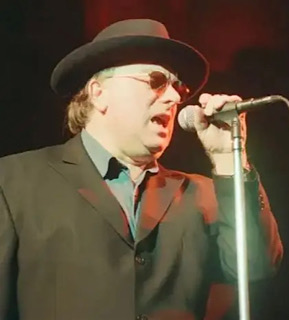
Known as “Van the Man,” Morrison starts his professional career when, as a teenager in the late 1950s, he plays a variety of instruments including guitar, harmonica, keyboards and saxophone for various Irish showbands, covering the popular hits of the time. He rises to prominence in the mid-1960s as the lead vocalist of the Northern Irish R&B band Them, with whom he records the garage band classic “Gloria.” His solo career begins under the pop-hit oriented guidance of Bert Berns with the release of the hit single “Brown Eyed Girl” in 1967. After Berns’ death, Warner Bros. Records buys out his contract and allows him three sessions to record Astral Weeks (1968). Though this album gradually garners high praise, it is initially a poor seller.
Moondance (1970) establishes Morrison as a major artist, and he builds on his reputation throughout the 1970s with a series of acclaimed albums and live performances. He continues to record and tour, producing albums and live performances that sell well and are generally warmly received, sometimes collaborating with other artists, such as Georgie Fame and The Chieftains.
Van Morrison has received six Grammy Awards, the 1994 Brit Award for Outstanding Contribution to Music, and has been inducted into both the Rock and Roll Hall of Fame and the Songwriters Hall of Fame. In 2016, he is knighted for his musical achievements and his services to tourism and charitable causes in Northern Ireland.
(Pictured: Van Morrison performing at Glasgow Royal Concert Hall on January 26, 2015 | Image: Getty)
Paul David Hewson, Irish singer-songwriter, musician, venture capitalist, businessman, and philanthropist known by his stage name Bono, is born in the Rotunda Hospital, Dublin, on May 10, 1960.
Bono writes almost all U2 lyrics, frequently using religious, social, and political themes. During U2’s early years, his lyrics contribute to their rebellious and spiritual tone. As the band matures, his lyrics become inspired more by personal experiences shared with the other members. Bono wins numerous awards with U2, including twenty-two Grammy Awards and the 2003 Golden Globe Award for best original song, “The Hands That Built America,” for the film Gangs of New York.
In 2005, the U2 band members are inducted into the Rock and Roll Hall of Fame in their first year of eligibility. In November 2008, Rolling Stone magazine ranks Bono as the 32nd-greatest singer of all time.
In 1992, Bono, along with The Edge, purchase and refurbish Dublin’s two-star 70-bedroom Clarence Hotel, converting it into a five-star 49-bedroom hotel.
Bono is on the board of Elevation Partners, a private equity firm, which attempts to purchase Eidos Interactive in 2005 and has since gone on to invest in other entertainment businesses. Bono invests in the Forbes Media group in the United States through Elevation Partners. Elevation Partners becomes the first outsider to invest in the company, taking a minority stake in Forbes Media LLC, a new company encompassing the 89-year-old business which includes Forbes magazine, the Forbes.com website and other assets. The terms of the deal are not disclosed, but reports say the stake is worth about $250 million. The firm also owns a 1.5 percent stake in the social networking site Facebook, originally purchased for $210 million.
Bono is also widely known for his activism concerning Africa, for which he co-founds DATA, EDUN, the ONE Campaign and Product Red. He organises and plays in several benefit concerts and meets with influential politicians. Over the years, Bono is praised and criticised for his activism and involvement with U2.
In 2007, Bono is named in the UK‘s New Year Honours list as an honorary Knight Commander of the Order of the British Empire. On March 29, 2007, he is formally granted knighthood by Queen Elizabeth II of the United Kingdom for “his services to the music industry and for his humanitarian work.” He is also made a Commandeur of the French Ordre des Arts et des Lettres (Order of Arts and Letters). Together with Bill and Melinda Gates, Bono is named Time Person of the Year in 2005, among other awards and nominations.
With her distinctive sensual mezzo soprano sound, she is an important blue-eyed soul singer and, at her peak, is one of the most successful British female performers, with six top 20 singles on the United States Billboard Hot 100 and sixteen on the United Kingdom Singles Chart from 1963 to 1989. She is a member of both the U.S. Rock and Roll Hall of Fame and U.K. Music Hall of Fame. International polls name Springfield among the best female rock artists of all time. Her image, supported by a peroxide blonde bouffant hairstyle, evening gowns, and heavy make-up, as well as her flamboyant performances on the black and white television of the 1960s, make her an icon of the Swinging Sixties.
As a fan of U.S. pop music, she brings many little-known soul singers to the attention of a wider U.K. record-buying audience by hosting the first national TV performance of many top-selling Motown artists beginning in 1965. Although she is never considered a Northern Soul artist in her own right, her efforts contribute a great deal to the formation of the genre.
Partly owing to these efforts, a year later she eventually becomes the best-selling female singer in the world and tops a number of popularity polls, including Melody Maker‘s Best International Vocalist. She is the first U.K. singer to top the New Musical Express readers’ poll for Female Singer.
To boost her credibility as a soul artist, Springfield goes to Memphis, Tennessee to record Dusty in Memphis, an album of pop and soul music with the Atlantic Records main production team. Released in 1969, it has been ranked among the greatest albums of all time by the U.S. magazine Rolling Stone and in polls by VH1 artists, New Musical Express readers, and Channel 4 viewers. The album is also awarded a spot in the Grammy Hall of Fame. Despite its current recognition, the album does not sell well and after its release and Springfield experiences a career slump for several years. However, in collaboration with Pet Shop Boys, she returns to the Top 10 of the U.K. and U.S. charts in 1987 with What Have I Done to Deserve This? Two years later, she has two other U.K. hits on her own with Nothing Has Been Proved and In Private. Subsequently in the mid-1990s, owing to the inclusion of Son of a Preacher Man on the Pulp Fiction soundtrack, interest in her early output is revived.
In January 1994, while recording her penultimate album, A Very Fine Love, in Nashville, Dusty Springfield falls ill. When she returns to the United Kingdom a few months later, her physicians diagnose breast cancer. She receives months of chemotherapy and radiation treatment, and the cancer goes into remission. In 1995, in apparent good health, Springfield sets about promoting the album, which is released that year. By mid-1996, the cancer has returned, and, in spite of vigorous treatments, she dies in Henley-on-Thames on March 2, 1999. Her induction into the Rock and Roll Hall of Fame in Cleveland, Ohio, has been scheduled two weeks after her death. Her friend Elton John helps induct her into the Hall of Fame, declaring, “I’m biased but I just think she was the greatest white singer there ever has been … Every song she sang, she claimed as her own.”
Springfield is cremated and some of her ashes are buried at Henley-on-Thames, while the rest are scattered by her brother, Tom Springfield, at the Cliffs of Moher, County Clare, Ireland.



 Sir George Ivan Morrison, best known as


