seamus dubhghaill

Promoting Irish Culture and History from Little Rock, Arkansas, USA


Leave a comment

Death of Francis McCloskey, First Fatality of “The Troubles”

the-troubles

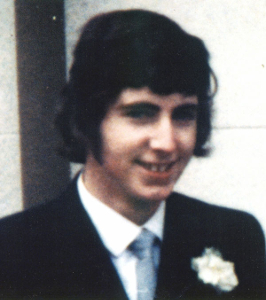
Francis McCloskey, a 67-year-old Catholic civilian, dies on July 14, 1969, one day after being hit on the head with a baton by an officer of the Royal Ulster Constabulary (RUC) during street disturbances in Dungiven, County Derry. McCloskey is sometimes considered to be the first fatality of The Troubles.

McCloskey is found unconscious on July 13 near the Dungiven Orange Hall following a police baton charge against a crowd who had been throwing stones at the hall. Witnesses later say they had seen police beating a figure with batons in the doorway where McCloskey is found, although police claim he had been unconscious before the baton charge and may have been hit with a stone.

The Troubles is the common name for the ethno-nationalist conflict in Northern Ireland that begins in the late 1960s and is deemed by most to end with the Good Friday Agreement of 1998. Although the Troubles mainly take place in Northern Ireland, violence spills over at times into parts of the Republic of Ireland, England, and mainland Europe.

The conflict is primarily political, but it also has an ethnic or sectarian dimension, although it is not a religious conflict. A key issue is the constitutional status of Northern Ireland. Unionists and loyalists, who are mostly Protestants and consider themselves British, generally want Northern Ireland to remain within the United Kingdom. Irish nationalists and republicans, who are mostly Catholic and consider themselves Irish, generally want it to leave the United Kingdom and join a united Ireland. The conflict begins amid a campaign to end discrimination against the Catholic/nationalist minority by the Protestant/unionist government and police force in 1968. The campaign is met with violence, eventually leading to the deployment of British troops and subsequent warfare.

The main participants in the Troubles are republican paramilitaries such as the Provisional Irish Republican Army (IRA) and Irish National Liberation Army (INLA), loyalist paramilitaries such as the Ulster Volunteer Force (UVF) and Ulster Defence Association (UDA), the British Army and Royal Ulster Constabulary (RUC), and political activists and politicians. The security forces of the Republic of Ireland play a smaller role. More than 3,500 people are killed in the conflict, of whom 52% were civilians, 32% are members of the British security forces, and 16% are members of paramilitary groups. There has been sporadic violence since the signing of the Good Friday Agreement, including a campaign by anti-ceasefire republicans.


1 Comment

Edward Martin Hurson Dies on Hunger Strike

edward-martin-hursonEdward Martin Hurson, a volunteer in the East Tyrone Brigade of the Provisional Irish Republican Army (IRA), dies on July 13, 1981, after 46 days on hunger strike.

Hurson, from Cappagh, County Tyrone, Northern Ireland, is one of nine children born to Johnnie and Mary Ann Hurson. He is educated to a primary level at Crosscavanagh Primary School in Galbally and at secondary level in St. Patrick’s, Galbally.

After leaving school, he works as a welder for a while before going to England where he stays for eighteen months with his brother Francis and works in the building trade. Returning to County Tyrone at the end of 1974, both he and his brother spend time in Bundoran, County Donegal, a known IRA training and supply centre.

In November 1976, Hurson, together with Kevin O’Brien, Dermot Boyle, Peter Kane, and Pat O’Neill are arrested. Hurson is tried and convicted of involvement in three IRA landmine incidents, one at Cappagh in September, one at Galbally, County Tyrone in November 1975 and a third at Reclain in February 1976, when several members of the Royal Ulster Constabulary and Ulster Defence Regiment narrowly escape being killed. He receives concurrent sentences of twenty, fifteen, and five years for these convictions.

Hurson becomes engaged to his long-term girlfriend, Bernadette Donnelly, while in prison. He is part of the blanket protest and joins the 1981 Irish Hunger Strike on May 28, replacing Brendan McLaughlin who withdraws following a perforated stomach ulcer.

He loses the ability to hold down water after about 40 days on hunger strike, and dies of dehydration after only 46 days, considerably shorter than any other hunger striker (the next shortest is Francis Hughes at 59 days). Near the end, his family considers the possibility of intervening to save his life, but they are told that he would probably have permanent brain damage.


Leave a comment

Gerry Adams Assassination Attempt

adams-assassination-attempt

Sinn Féin president Gerry Adams is seriously wounded in an assassination attempt in central Belfast on March 14, 1984. As the car containing Adams and four other leading Sinn Féin members leaves Belfast Magistrate’s Court, a vehicle pulls alongside and three Ulster Defence Association (UDA) gunmen fire approximately 20 shots into the car. Adams is shot in the neck and shoulder, Seán Keenan in the face, Joe Keenan in the body and hands, and Kevin Rooney in the body. Bob Murray is the only person in the car to escape without injury.

The republicans are in Belfast facing charges of obstruction after the Royal Ulster Constabulary (RUC) attempt to remove an Irish tricolour from a Sinn Féin election cavalcade. After the shooting, Adams is rushed to the Royal Victoria Hospital, where he undergoes surgery to remove the three bullets.

The three loyalist death squad members who carry out the assassination attempt are arrested shortly after the attack by off-duty RUC and British soldiers who open fire on them before ramming their car. One of the UDA gunmen accidentally shoots himself in the foot during the escape attempt.

Following his release from the hospital later in the month, Gerry Adams says it is “quite obvious that British Intelligence were aware” of the operation and that “they wanted myself and my comrades out of the way.” Democratic Unionist Party (DUP) Stormont Assembly member George Seawright expresses regret that Adams has not been killed. The Ulster Unionist Party (UUP) and the British Government remain tight-lipped while Will Glendinning of the Alliance Party of Northern Ireland uses the attack to remind voters he was “totally opposed to the politics of Gerry Adams.”

A Sinn Féin statement released just hours after the attack says, “If the shooting was an attempt to drive us off the streets or underground, it has already failed.” The party says that such attacks are a constant danger, and that it is a testament to Sinn Féin that they continue their work despite such threats.


Leave a comment

The End of the “Border Campaign”

united-irishman-1962

On February 26, 1962, due to lack of support, the Irish Republican Army (IRA) ends what it calls “The Campaign of Resistance to British Occupation,” which is also known as the “Border Campaign.”

The Border Campaign is the first major military undertaking carried out by the IRA since the harsh security measures of the Republic of Ireland and Northern Ireland governments had severely weakened it in the 1940s.

The campaign is launched with simultaneous attacks by approximately 150 IRA members on targets on the Border in the early hours of December 12, 1956. A BBC relay transmitter is bombed in Derry, a courthouse is burned in Magherafelt, a B-Specials post near Newry is burned, and a half-built Army barracks at Enniskillen is blown up. A raid on Gough barracks in Armagh is beaten off after a brief exchange of fire.

On December 14, an IRA column under Seán Garland detonates four bombs outside Lisnaskea Royal Ulster Constabulary (RUC) station before raking it with gunfire. Further attacks on Derrylin and Roslea RUC barracks on the same day are beaten off.

On the evening of December 30, 1956, the Teeling Column attacks the Derrylin RUC barracks again, killing RUC constable John Scally, the first fatality of the campaign. The new year of 1957 begins with Seán Garland and Dáithí Ó Conaill planning an attack on the Police station at Brookeborough but they assault the wrong building. Two IRA men, Seán South and Fergal O’Hanlon, are killed in the abortive attack. Garland is seriously wounded in the raid. He and the remainder of the group are pursued back over the border by British soldiers.

The year 1957 is the most active year of the IRA’s campaign, with 341 incidents recorded. In November, the IRA suffers its worst loss of life in the period when four of its members die preparing a bomb, which explodes prematurely, in a farmhouse at Edentubber, County Louth. The civilian owner of the house is also killed.

By 1958, the campaign’s initial impetus has largely dissipated with many within the IRA in favour of calling the campaign off. By mid-year, 500 republicans are in gaol or interned. The decline in IRA activity leads the Fianna Fáil government in the South to end internment in March 1959.

Following their release, some of the interned leaders met Seán Cronin in a farmhouse in County Laois and are persuaded to continue the campaign “to keep the flame alive.” The number of incidents falls to just 26 in 1960, with many of these actions consisting of minor acts of sabotage.

The final fatality of the conflict comes in November 1961, when an RUC officer, William Hunter, is killed in a gun battle with the IRA in south County Armagh.

By late 1961, the campaign is over and has cost the lives of eight IRA men, four republican supporters, and six RUC members. In addition, 32 RUC members are wounded. A total of 256 Republicans are interned in Northern Ireland during the campaign and another 150 or so in the Republic.

The Campaign is officially called off on February 26, 1962, with a press release drafted by Ruairí Ó Brádaigh and several other persons including members of the Army Council. The statement is released by the Irish Republican Publicity Bureau and signed “J. McGarrity, Secretary.”